

What is Strawberry Spinach and Why Grow It in Your Garden?
Strawberry spinach is an interesting plant to consider for those who are interested in growing a range of edible plants that also look attractive in a garden.
If you want your garden to be productive and look good, growing edible and ornamental plants together is a great idea. But there are many plants that are both edible and ornamental, and one interesting option to consider is strawberry spinach.
What is Strawberry Spinach?
Strawberry spinach is one common name used for the plant Blitum capitatum. In the Chenopodiaceae, or goosefoot plant family, this plant is native to most of North America, through it is also found in parts of Europe and New Zealand.
This plant is related to other useful edible plants, like Good King Henry, Orache, quinoa and amaranths. It is also related to the weed fat hen, and to spinach itself.
This is an annual which grows to around 60cm tall. It is in flower in July-August and the fruits form from August to September.
Though not a UK native, it can be an interesting annual to grow in many UK gardens.
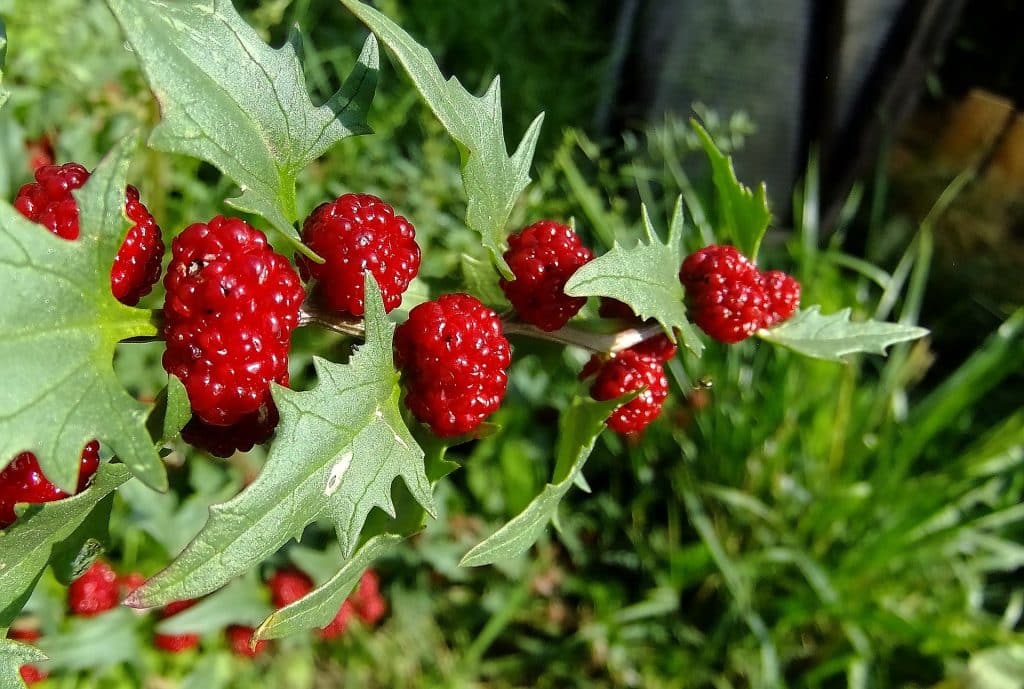
Before we go any further – don’t get your hopes up too high because of the name. This plant does have small, pulpy bright red fruits which look superficially like strawberries perhaps. (Actually, up close, they look more like red mulberries.)
Unfortunately, they don’t taste like strawberries at all. They have a slightly sweet, though rather insipid flavour. So while they can be useful in salads, as a novelty, and can also be used in desserts, they largely have value as an ornamental in the garden, and for natural dye or food colouring.
The comparison to spinach in the name is much more apt. The leaves can indeed be eaten raw when young, or as a cooked green vegetable, and are much like spinach when used in this way. However, one thing to note is that the plant contains oxalates and saponins, which means that they should only be eaten raw in moderation.
Why Grow Strawberry Spinach?
If you like finding and growing new and interesting edible and attractive plants then strawberry spinach could be an interesting plant to consider growing where you live. It looks interesting when fruiting and is certainly a talking point for a UK garden.
As mentioned above, care must be taken in eating the leaves raw. But they are fine for most in moderation when young, and can also (more safely) be used as a cooked green/ pot herb. These leaves are a good source of vitamins C and A.
The fruits, though rather insipid, are mildly sweet, and can be added to salads as an intriguing ingredient that your guests may wonder over. They can also be used in desserts. The fruits also, as mentioned above, have use as a natural dye or food colourant.
Historically, they have been used in cosmetics or paint, and this has lead to the plant being called Indian paint or Indian ink in some places. A gold/green dye can also be obtained from the rest of the plant.
How to Grow Strawberry Spinach
Fortunately, this annual is fairly easy to grow, and once you have sown it in a suitable location, it will frequently self-seed. Though sometimes seen as a disadvantage, self-seeding plants can be very useful if you want to have an abundance of edible produce in your garden.
Where to Grow Strawberry Spinach
Strawberry spinach can succeed in most soils, but does need a moist growing environment, and plenty of sun, and won’t thrive in the shade. If you have a problem with ordinary spinach bolting, then this could be a less bolt-prone alternative to consider.
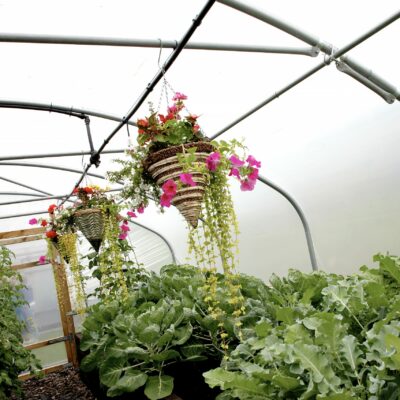
Growing within a well-watered section of a domestic polytunnel could be a good idea, and within such a protected structure, germination and self-seeding may be more reliable in the UK.
Can You Grow Strawberry Spinach In Containers?
This plant can also be suitable for container growing as long as you choose a container that is large and deep enough, and keep the growing medium within it moist throughout the growing season. Though note that growing in containers takes a little more work than growing in the ground.
Sowing Strawberry Spinach
Strawberry spinach is often best sown where it is to grow in spring, as it does not really like to be transplanted. Germination will typically take place within a couple of weeks.
However, where the spring is slow to warm, you may do better if you sow indoors from February onwards, growing on in a greenhouse or polytunnel before pricking out seedlings into individual pots as soon as the first pair of true leaves emerges.
You can also sow the seeds into biodegradable pots that can go out in the garden completely to reduce impact on the root system of the tender young plant.
Planting Strawberry Spinach
If you have chosen not to direct sow, plant out indoors sown strawberry spinach after the last frost date in your area. Space the plants 20-40cm apart.
If you have direct sown, thin the seedlings after germination to this same spacing.
You can also pot up seedlings into larger containers, as mentioned above.
Companion Plants for Strawberry Spinach
Strawberry spinach grows well alongside other self-seeding edible ornamentals and a range of perennials that like similarly sunny yet fertile and reasonably moist growing conditions. It will do well in an informal ‘edimental’ border with borage, strawberries, perennial brassicas, perennial alliums etc. and can also sometimes work well as part of a fruit tree guild.
You can also grow strawberry spinach as an annual (deadheading if you don’t want it to go to seed and self-seed). In a vegetable garden, you can grow it alongside peas, lettuce, and radishes, for example.
Caring for Strawberry Spinach
After planting, mulch around the plant with organic matter such as a good quality home-made compost.
Water during dry spells and try to keep the conditions consistently moist, yet reasonably free-draining.
Other than this, strawberry spinach will require little care, especially if you do not mind it going to seed, then the only other job is harvesting.
Common Problems When Growing Strawberry Spinach
Though this plant is generally hassle-free, it can be bothered by a range of common pests, including aphids, caterpillars and cutworms, slugs and snails.
However, if you practice good integrated pest management in your organic garden, then numbers of these pests should be kept down to reasonable levels through natural predation. Of course, growing this plant as part of mixed polycultures of plants that work well together can aid in natural pest control.
Harvesting Strawberry Spinach
You can expect to harvest leaves around 40-60 days after sowing, but should not take too many if you are keen to enjoy the flowers and fruit.
After the plants flower attractively the fruits will form. The fruits are ready to pick when they are deep red, which shows that they are fully ripe. Don’t pick them before this as the flavour will likely be disappointing.
How to Use Strawberry Spinach
Harvest a few young leaves for salads in spring if you wish – but remember the cautionary note about saponins and oxalates above.
Cook older leaves as you would spinach, and use them anywhere cooked spinach might be used. You can wild the leaves down in stir fries etc., or use them in a range of soups, stews, curries and other recipes. These leaves have a mild and slight nutty flavour.
Both the leaves and fruits won’t store long when fresh, so it is best to harvest just before you plan to use them.
The fruits are best tossed into a salad for a mild, though slightly sweet flavour, a little texture and a tiny bit of crunch from the seeds within the fruits. Seeds may be toxic if consumed raw in great quantity but a few are absolutely fine.
Not everyone loves the slightly more vegetable than fruit taste of the berries, and their texture. But others will really enjoy them.
The seeds can also be separated, and though small and fiddly, can be soaked overnight to remove the saponins and then ground and used as a meal that can be added to breads etc.
Either way, this plant is an interesting novelty to consider growing if you are looking for a new edible plant to try where you live.
References:
https://www.gardeningknowhow.com/edible/herbs/strawberry-spinach/growing-strawberry-spinach.htm