

What is Good King Henry and Why Grow It in Your Garden?
Good King Henry plant is one perennial vegetable all uk growers would be wise to consider. Seeking out and making use of perennial plants that can provide food over a number of years is a wonderful way to make the most of your garden, without a whole ton of work.
In this article, we will explore Good King Henry and how to grow it, and explain why it is such a good choice for many gardens by showing you all the uses for this extremely valuable plant.
What is Good King Henry?

Good King Henry, Blitum bonus-henricus, formerly classified as Chenopodium bonus-henricus is sometimes known as ‘poor man”s asparagus’ and was once commonly eaten as a vegetable in parts of Europe.
It is related to the common edible weed lambsquarter, as well as to quinoa and was once a stable crop in UK cottage gardens. However, what was once widely grown is now little known, having fallen out of favour broadly after cultivated crops such as improved spinach and beet became available, it is now sadly often considered a weed.
Originally native to Southern Europe, this plant is believed to have spread northwards and been brought to the British Isles by the Romans. Good King Henry was a feature of many Tudor gardens and also played an importance role within the Anglo-Saxon diet. It grows in the wild and is today cultivated by those with an interest in sustainable food production.
Historically, the crop was valuable to poorer countryside workers and Scottish crofters who often turned to the crop for a source of nourishment after field clearances. It was extensively grown by farmers in Lincolnshire and is strongly associated with that area, though it fares very well and can be easily grown through much of the UK.
Where To Grow Good King Henry
Good King Henry likes a sunny spot, though it also thrives in the dappled shade below deciduous trees, so can be grown within a forest garden or other perennial polyculture scheme.
When deciding where to place it, note that it has a limited spread of around 30-40cm, and grows up to around 40-80cm tall.
This plant prefers a fertile, humus rich and moist soil, but is tolerant of a range of different soil types and soil pH levels.
Can You Grow Good King Henry in Containers?
Good King Henry has a deep tap root and is a dynamic accumulator plant. So it does best in a deep soil. However, it can also be grown in a container as long as the container is deep enough, and as long as a fertile, soil-based growing medium is used and kept moist through the growing season.
How To Plant Good King Henry
Good King Henry can be grown from seed, which should be sown indoors in spring, or directly where the plants are to grow in early summer. The seeds can be challenging to germinate, and germination rates are improved when the seeds are stratified (chilled) for a period before sowing.
You can also purchase and plant out young plants in your garden in spring or autumn, which will mean that you will obtain a harvest sooner and more easily.
After planting, it is a good idea to lay a mulch of organic matter around the plants for fertility, to protect the soil, conserve soil moisture and suppress weeds, which is especially important while the plants establish themselves.
Caring For Good King Henry
Ensure that you keep the soil or growing medium moist through the year. Aside from this, and mulching well each spring, these low-maintenance plants will require little care.
These plants are remarkable trouble free and are generally untroubled by pests or diseases.
Why Grow Good King Henry?
As you can see from the above, Good King Henry is pretty easy to grow and care for. This alone makes it a very useful plant to grow. But as you will discover, there are also numerous other reasons to grow this plant.
Good King Henry may die down a little in the winter but it will pop right back up in the spring and with frost protection for plants can last through the coldest weather in most of the UK. This means that it can provide you with edible yields of different kinds through much of the year, with very little work or effort from you.
The multiple yields (discussed below) that you can obtain from Good King Henry plant make this a great use of space in your garden. And while it will not be the star of the show, it looks fairly attractive too, so can be quite at home in an ornamental garden, as well as one solely focussed on food production.
How To Use Good King Henry
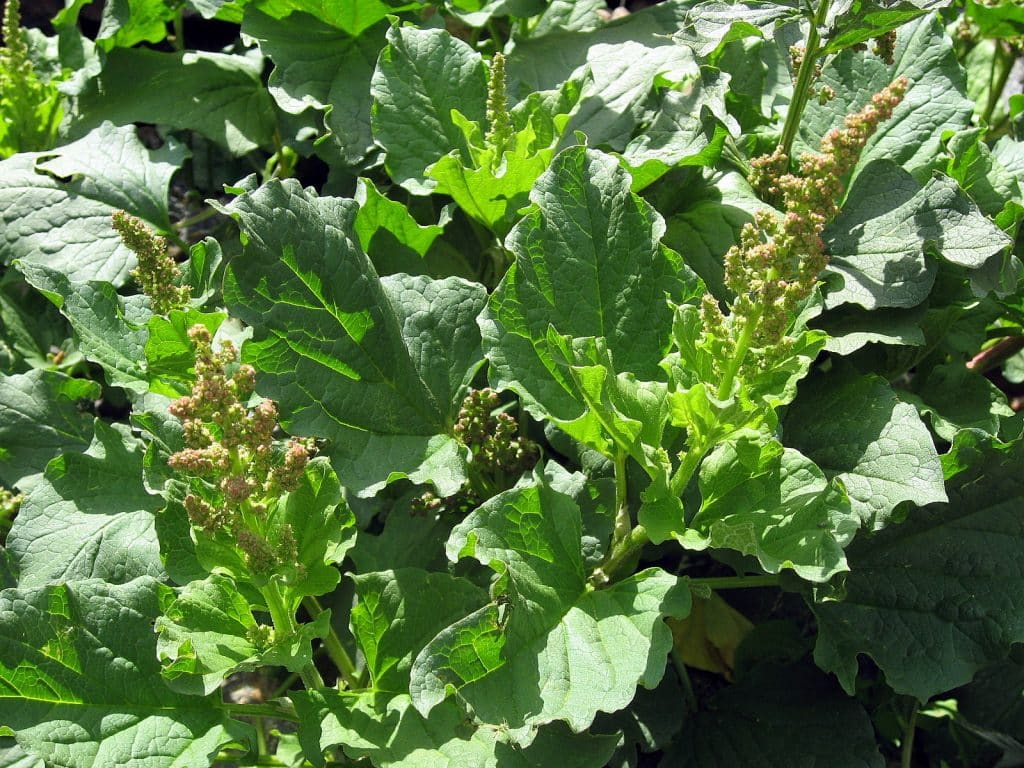
When it comes to harvesting and using Good King Henry, you have a range of options as to which portion of the plant you harvest, and what you do with it.
Before we begin talking about the edible uses, note that while it can be eaten raw, in careful moderation, this is typically not a good idea. Not only does the plant contain saponins and oxalic acid, it also does not taste that great before cooking.
However, cooking and eating this plant really brings rewards – with an excellent nutritional profile and, with the right strategies, great taste.
Use Edible Shoots Used As an Asparagus Substitute in Spring
Some people are confused by this as when plants are young, they do not always produce the flowering shoots that they do when they mature more.
In spring, after the first leaves emerge, thicker shoots (typically growing to around pencil thickness in healthy plants) will emerge and flowers and seeds will later be produced on top of these shoots.
When these are around 20cm tall, they can be picked and used as an asparagus substitute. But while they may not taste exactly the same, they are tasty when grilled and can be used in much the same ways as asparagus. The benefit, however, is that the season for picking these young shoots is much, much longer in Good King Henry than with asparagus – often several months.
If, in autumn, you add a thick layer of autumn leaves or other carbon rich mulch around the crowns of the plants, these shoots will be pale and a little more tender.
Pick these shoots only after the plant has been established, not in the first season after planting, then only sparingly in subsequent years. As you will learn below, there are also benefits to allowing these shoots to grow.
Pick Spinach-Like Leaves To Use in Cooked Recipes
Throughout the year, you can take the leaves and use these as a cooked green. Younger leaves tend to be the tastiest, and least bitterness, and bitterness tends to increase as the leaves age. But this is not overpowering in general, and they still make a great cooked green when combined with other more neutral tasting or sweeter greens.
To me, the younger leaves are pretty much indistinguishable from spinach when cooked – though I personally don’t much care for them in a salad. Pick in moderation and you can continue to harvest from a healthy plant in this way year after year.
Pick and Eat Broccoli-Like Flower Buds
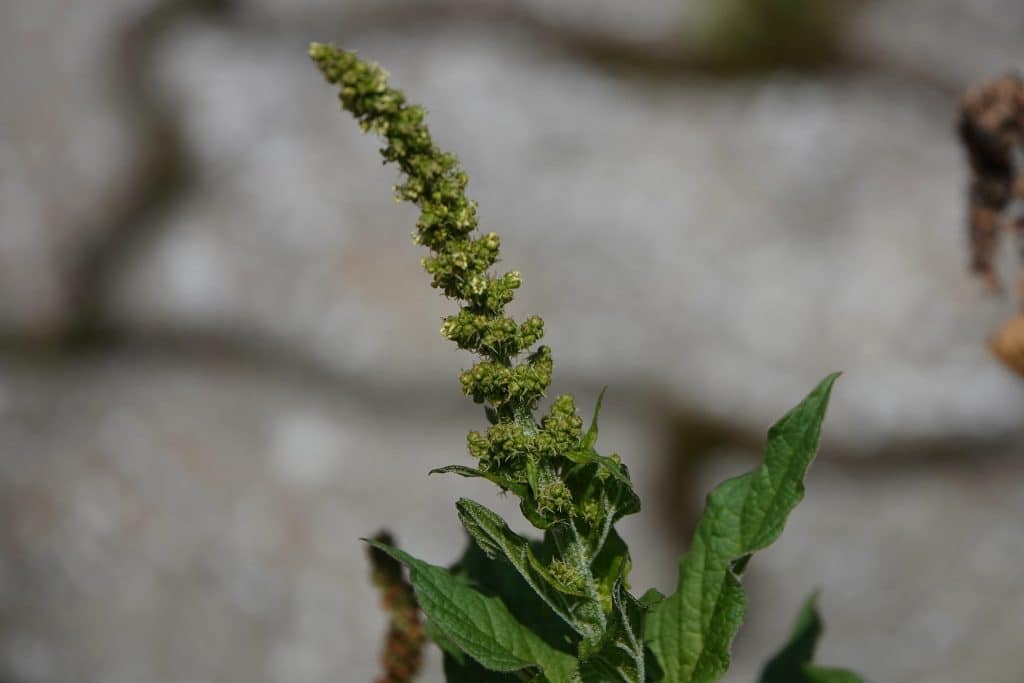
When the shoots grow, and flower buds form, these are another edible yield. In fact, these are my favourite yield from these plants. Boiled briefly, or stir fried, these are very much like a sprouting broccoli and I don’t find ours to be bitter at all.
Use Good King Henry Seeds
However, there is a reason why you might want to leave some of the flowering stems in place. The seeds are yet another yield from these perennial plants. Remember, this plant is related to quinoa and the seeds can be used in a similar way.
Stripped from the plants when they turn brown, and winnowed from the chaff, these seeds can be sprouted as a healthy addition to the diet. They can also be boiled and used like quinoa, and have a similar taste, or ground and made into a hearty flour which can be mixed with other flours and used in a range of recipes.
Obtain Green/ Gold Dyes From Your Plants
One final thing to mention is that in addition to obtaining all of these edible yields from these plants, the plants also yield natural dyes in green and gold hues.
All of these yields certainly make this a worthwhile perennial plant to grow in your garden.
References:
https://pfaf.org/user/plant.aspx?latinname=Chenopodium+bonus-henricus
https://backyardlarder.co.uk/2018/08/good-king-henry-grain/