


There is no need to stop harvesting fresh salad leaves when summer ends. Learning how to grow winter salads in a polytunnel can help you stay supplied with crisp, nutritious leaves through much of the colder months, with a little planning and the right varieties.
I find winter salads particularly rewarding because they do not demand the same level of attention as summer crops. Once established, many hardy leaves simply sit quietly through the darkest part of the year, ready to harvest whenever you need them. The trick is to sow early enough, choose varieties suited to winter and keep the tunnel well ventilated.
In this guide, I will look at which salads to grow, when to sow them, how to care for them and how to harvest in a way that keeps plants productive.
Grow cold-hardy winter salads and vegetables in your polytunnel
Key Takeaways
- Many hardy salad crops can continue growing in an unheated polytunnel through winter.
- Sowing at the right time is more important than trying to encourage growth during the coldest months.
- Succession sowing helps provide a steady supply of young leaves rather than one large harvest.
- Good ventilation is essential, even in winter, to reduce condensation and the risk of mould.
- Cut-and-come-again harvesting allows you to take what you need while leaving plants to produce more leaves.
Why Grow Winter Salads in a Polytunnel?
A polytunnel gives winter crops a layer of protection without needing to heat the growing space.
Temperatures inside will still fall during cold weather, and growth slows considerably as daylight levels drop. However, plants are protected from wind, heavy rain and the worst of the weather. This can make a significant difference to how long salad crops remain usable.
There are several advantages to growing winter salads under cover:
- A longer harvesting season: You can continue picking fresh leaves well after outdoor crops have finished.
- Greater reliability: The protected environment reduces exposure to severe weather.
- Less frost damage: A tunnel provides a useful buffer against outdoor temperatures.
- Better use of space: Beds that might otherwise be empty can continue producing food.
- Fresh leaves through the darker months: Winter salads are a welcome alternative to relying entirely on stored vegetables.
It is worth remembering that a polytunnel does not turn winter into summer. During December and January, plants may barely appear to grow. This is perfectly normal. The aim is to establish healthy plants before conditions deteriorate, then harvest gradually as needed.
The Best Winter Salads to Grow
Choosing hardy crops is the foundation of successful winter salad growing. Some summer salad varieties struggle as temperatures fall, while others are naturally much better suited to the colder season.
Lettuce
Lettuce is still worth growing through winter, but choose varieties bred or recommended for colder conditions. Autumn sowings can establish before the darkest part of the year, allowing you to harvest leaves gradually.
I prefer to grow several small batches rather than sowing a whole bed at once. This gives a succession of different-sized plants.
Lamb’s lettuce
Lamb’s lettuce is one of the classic winter salad crops. It forms small rosettes of tender leaves and is particularly valuable when other salad plants have slowed down.
Rocket
Rocket is quick to establish and provides plenty of flavour in a small space. It can be harvested young, making it well suited to cut-and-come-again growing.
Mizuna
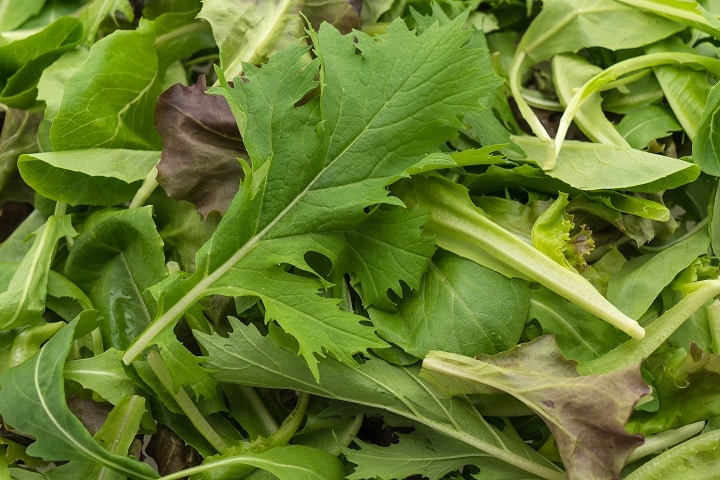
Mizuna has attractive, finely divided leaves and a mild mustard flavour. It is one of those crops that earns its place in the winter tunnel because it can provide both bulk and variety.
Winter purslane
Also known as miner’s lettuce, winter purslane produces succulent leaves that are well suited to salads. It is particularly useful for adding something different to a winter crop.
Mustard greens
Mustards bring a stronger, peppery flavour and can be harvested young. They are useful when you want to make winter salads more interesting rather than simply growing several types of lettuce.
Chicory and land cress
Both add variety to a winter salad bed. Land cress is especially useful if you enjoy peppery leaves, while chicory provides a more bitter flavour that works well alongside milder greens.
Grow cold-hardy winter salads and vegetables in your polytunnel

When to Sow Winter Salads
The biggest mistake with winter salads is waiting until winter to sow them.
By the time December arrives, there is very little sunlight available and growth has slowed considerably. You want your plants to establish while there is still enough warmth and light to support healthy growth.
A simple winter sowing calendar
| Time | What to Do |
|---|---|
| Late summer | Begin sowing hardy salad crops for autumn and winter |
| Early autumn | Continue succession sowing and plant out young seedlings |
| Mid-autumn | Make final sowings for winter harvests where appropriate |
| Late autumn | Concentrate on establishing existing crops |
| Winter | Harvest gradually and sow only crops suited to the conditions |
| Early spring | Begin increasing sowing as light levels improve |
The exact timing depends on the variety and your local conditions, so always check the instructions supplied with your seed.
Succession sowing
Rather than sowing everything at once, sow small quantities at intervals.
For example, you might sow one small row, then another a couple of weeks later. This means the plants reach harvestable size at different times.
It is a simple technique, but it can make a big difference to how consistently you harvest.
Preparing Your Polytunnel for Winter Growing
Before sowing, I like to give the growing space a little attention.
There is no need for anything elaborate. The most important things are healthy soil, good drainage and sensible organisation.
Winter preparation checklist
- Remove weeds and spent crops.
- Add well-rotted compost where the soil needs improvement.
- Check that beds drain freely.
- Make sure irrigation does not leave the soil excessively wet.
- Check doors and ventilation.
- Plan where successive sowings will go.
- Label different varieties and sowing dates.
Avoid assuming that because plants are growing under cover they need more water. Winter conditions are different, and excessive moisture can cause more problems than slightly dry soil.
If beds are going to be empty between crops, you can also improve soil health with cover crops between winter salad harvests.
How to Sow and Plant Winter Salads
Winter salad crops can be sown directly into prepared beds or started in modules before planting out.
I use both methods depending on the crop and the space available.
1. Prepare the soil
Remove weeds and create a reasonably fine seed bed. Salad seeds are often small, so they do not need a deeply cultivated surface.
2. Sow according to the packet
Do not bury small seeds deeply. Follow the recommended sowing depth and spacing for the particular crop.
3. Water gently
Water after sowing, taking care not to wash seeds away. Keep the soil reasonably moist while seeds are germinating, but avoid keeping it saturated.
4. Thin seedlings
Crowded seedlings compete for light, water and nutrients. Thin them to the recommended spacing once they are large enough to handle.
5. Label everything
Winter can make the garden surprisingly confusing. A simple label with the crop and sowing date makes it much easier to keep track of what you have planted.
6. Succession sow
Leave some space for later sowings rather than filling every available bed immediately.
Caring for Winter Salad Crops
Winter maintenance is mostly about resisting the temptation to do too much.
Water carefully
Plants need less water when temperatures are low and growth is slow. Check the soil rather than watering automatically.
Watering earlier in the day gives excess moisture time to evaporate before temperatures fall overnight.
Ventilate the polytunnel
This is one of the most important winter jobs.
It is tempting to keep the tunnel closed because it is cold outside, but stagnant, humid air encourages condensation and fungal problems.
Open doors or vents when conditions allow, particularly on mild days. The aim is to balance protection from cold weather with adequate air circulation.
Maintain the ideal growing conditions throughout the seasons
Remove damaged leaves
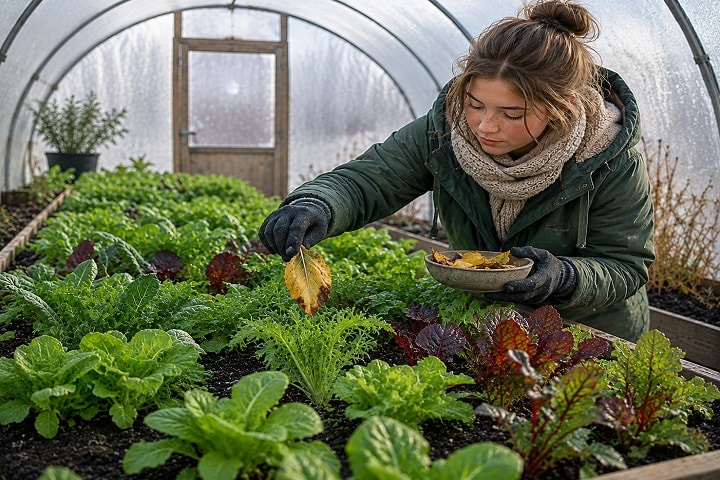
Pick off yellowing, dead or diseased leaves rather than allowing them to accumulate around healthy plants.
Watch for slugs
Slugs do not necessarily disappear just because winter has arrived. Check beneath leaves and around the edges of beds, particularly where conditions remain damp.
Protect during severe cold
Hardy winter salads can tolerate considerably more cold than tender summer crops, but particularly severe weather can still cause damage.
The best protection is often a combination of suitable varieties, a well-positioned tunnel and healthy plants rather than trying to create warm conditions artificially.
Harvesting Winter Salads for Continuous Crops
One of my favourite things about winter salads is that you do not need to harvest the whole plant.
Use the cut-and-come-again method
With suitable crops, pick the outer or larger leaves while leaving the centre of the plant intact.
A simple routine is:
- Choose the largest outer leaves.
- Harvest them cleanly.
- Leave the growing point undamaged.
- Allow the plant to produce more leaves.
- Return when another harvest is ready.
This works particularly well with crops such as rocket, mizuna, mustard greens and some lettuces.
Harvest little and often
Rather than taking a large harvest once a week, pick what you need.
This keeps plants productive and means you always have fresh young leaves available.
Succession sowing and cut-and-come-again harvesting work particularly well together. While one sowing is being harvested, another can be establishing and a third can be waiting to mature.
Common Problems and How to Avoid Them
| Problem | Likely Cause | What to Do |
|---|---|---|
| Slow growth | Low winter light and temperature | Be patient and sow earlier |
| Condensation | Poor ventilation or excess moisture | Ventilate and reduce unnecessary watering |
| Grey mould | Damp, stagnant conditions | Remove affected leaves and improve airflow |
| Poor germination | Incorrect moisture or temperature | Check sowing conditions and seed freshness |
| Slugs | Damp protected environment | Check plants regularly and use appropriate controls |
| Yellowing leaves | Overwatering, ageing leaves or poor conditions | Check moisture and remove damaged foliage |
Slow growth
This is usually not a problem in itself. Winter has limited light and plants naturally slow down.
The solution is often to plan ahead rather than trying to force growth. Sow early enough for plants to establish before the darkest part of the year.
Condensation and mould
A polytunnel should not be completely sealed throughout winter. Open it when weather permits and avoid excessive watering.
Good airflow is particularly important when plants are packed closely together.
Poor germination
Cold temperatures can slow germination considerably. Make sure your sowing dates and chosen varieties are suitable for the time of year.
Conclusion
Growing winter salads in a polytunnel is one of the simplest ways to keep harvesting fresh leaves when the outdoor garden has largely gone quiet.
The key is to plan ahead rather than fight the season. Choose hardy crops, sow while conditions are still favourable, use succession sowing and allow plants to grow at their natural winter pace.
A little regular ventilation, careful watering and occasional harvesting is usually all that is needed once crops are established.
A polytunnel also gives you the opportunity to make productive use of space throughout the year rather than leaving beds empty until spring.
Discover more expert advice on growing fruit and vegetables in a polytunnel
Frequently Asked Questions
What salad leaves grow best in a polytunnel during winter?
Hardy options include lamb’s lettuce, winter lettuce, rocket, mizuna, winter purslane, mustard greens, chicory and land cress. Choosing varieties suited to autumn and winter growing is important.
When should I sow winter salads in the UK?
Most winter salads should be sown in late summer or early autumn so they have time to establish before winter. Some can be succession sown into autumn, depending on the crop and conditions.
Can lettuce survive frost inside a polytunnel?
Hardy winter lettuce varieties can tolerate cold conditions, although a polytunnel does not guarantee frost-free temperatures. Choose suitable varieties and sow early enough for plants to establish before severe weather.
Do winter salads need watering during cold weather?
Yes, but usually much less than during summer. Check the soil before watering and avoid keeping it consistently wet. Watering earlier in the day can be helpful when temperatures are low.
Why are my winter salad leaves growing slowly?
Low light and low temperatures naturally slow growth during winter. This is not necessarily a sign that anything is wrong. The best way to maintain a winter supply is to sow early and use succession sowing.
Can I grow winter salads without heating my polytunnel?
Yes. Many winter salad crops are hardy enough to grow in an unheated polytunnel. The tunnel provides shelter rather than summer-like warmth, so choose crops suited to cold conditions and accept that growth will slow during the darkest part of winter.
Sources:
Royal Horticultural Society (RHS) (2026) Vegetables: growing for winter. Available at: https://www.rhs.org.uk/vegetables/growing-for-winter (Accessed: 30 August 2026).