


Purple-sprouting broccoli is one of my favourite polytunnel crops. Sown in spring, it can potentially provide food from autumn through to spring, and sown in June/July, it is a great ‘hungry gap’ harvest that will provide an abundant spring crop.
What is Purple-Sprouting Broccoli?

Purple-sprouting broccoli is a Brassica, in the cabbage family. Like other broccoli such as the familiar Calabrese (the large green broccoli heads that most people are used to, and think of as broccoli), this is a name that describes cultivars in the Italica group of Brassica oleracea.
As the name suggests, purple-sprouting broccoli is a broccoli that forms purple-hued flowering heads. These heads are much smaller than those of Calabrese broccoli but form in abundance. Each plant will produce many heads, and not just one large central one.
While Calabrese is harvested in summer, purple-sprouting broccoli is harvested during the winter and/or the spring of the following year.
Why Grow Purple-Sprouting Broccoli?
Purple-sprouting broccoli is a wonderful crop that can tolerate temperatures that dip well below zero. It is versatile, and can be sown at different times depending on when you wish to harvest your crop, so you can time sowing to ensure that the plants become ready to harvest at a time when there may be far less food available.
This plant provides abundant yields, and can be harvested over a surprisingly long period of time. As some heads are harvested, others will develop for regular cropping.
Another great thing about this crop, of course, is that it is very good for you to eat. It is known to contain many beneficial nutrients, vitamins, minerals and anti-oxidants.
When you grow the right brassica family plants, you can be harvesting these healthy vegetables throughout the whole of the year. For harvesting in spring, purple-sprouting broccoli and other sprouting broccoli falls right into the cropping gap between Brussels sprouts and spring cabbages.
When To Sow Purple-Sprouting Broccoli
Purple-sprouting broccoli can be sown any time between March and July, and as mentioned above, when it is sown will determine the timing of the harvest.
If you sow in March you can enjoy your harvest in the autumn/ early winter. Sow between April and June, can enjoy your harvest over the winter, and into the spring. I prefer to sow purple-sprouting broccoli in my polytunnel in summer, for a harvest in spring before any spring sown crops are ready to eat. They are wonderfully prolific and are harvested early in spring as soon as things begin to warm up.
Typically, you will sow indoors, before transplanting the young brassica plants into your garden. Sow the seeds into seed trays or small pots, then prick out seedlings once they are large enough to handle into their own individual pots or blocks.
However, it is also possible to direct sow this crop in your polytunnel, or elsewhere in your garden. Direct sowing is typically possible from April on. But look out for birds, and also other pests like slugs and snails that may eat the seedlings before they have the opportunity to prosper.
When to Plant Purple-Sprouting Broccoli
Purple-sprouting broccoli should be planted out once the young plants are around 7-15cm tall, with healthy root systems, and are growing strongly in their individual pots or blocks.
Water each plant well before you transplant it, and make sure that you plant your broccoli in a fertile soil rich in organic matter, that is moist yet reasonably free-draining. This crop can be planted in full sun, or, where the soil or growing medium is suitable, in light shade.
Like other brassicas, purple-sprouting broccoli likes a firm footing. So make sure when planting that you firm the soil down well around each plant.
When transplanting indoors sown purple-sprouting broccoli, aim to leave around 30cm between your plants. If you are row planting, leave 45cm or so between your rows. But remember, these spacing guidelines are just that – guidelines – and not hard and fast rules.
If you have direct sown your purple-sprouting broccoli, then the plants should also be thinned to give a similar spacing.
Remember to think about companions for your broccoli. Planting aromatic herbs and alliums like onions close by can help with pest control. And legumes planted close by can help ensure that there is nitrogen present in the soil for the uptake of these nitrogen-hungry plants.
One other companion planting suggestion is to intercrop lettuce or another quick growing leafy crop between the brassicas that take longer to grow. The lettuce can then be harvested before the broccoli needs the space.
You might also think about placing purple sprouting broccoli in an ornamental bed – perhaps alongside other ‘edimental’ (edible and ornamental) plants. Since this is a crop that can hold its own in an attractive planting scheme. It is just as attractive as it is useful as a culinary crop.
Another thing to think about is crop rotation. Brassicas should be part of a three or four year crop rotation and should ideally not be grown in the same growing area over multiple years. So make sure you consider crop rotation as well as companion planting when deciding what to plant where in your vegetable beds, in your polytunnel or elsewhere in your garden.
How to Grow and Care for Purple-Sprouting Broccoli
Purple-sprouting broccoli is generally speaking a very easy crop to grow.
- After planting, it is a good idea to mulch around your broccoli to meet its nutritional needs with a homemade compost, well-rotted manure or other organic matter.
- Water consistently through the growing season, watering plants at the base to ensure that the water ends up where it is required. Typically, when it is growing in the ground, you can expect to water this crop every 10 to 14 days in dry weather conditions.
- Net your broccoli or grow undercover in a polytunnel or under a row cover if birds or other crops pose a risk. Birds like pigeons can often eat brassica crops down to the ground before they even get the chance to become established.
- Protection over your crop will also help you to avoid issues with other pests, like cabbage white caterpillars, for example.
- Feed with an organic liquid plant feed (high in nitrogen) if growth seems poor or flowering heads fail to form.
- Once harvesting period is over, you can if you wish leave some heads of purple-flowering broccoli to flower. While you may wish to remove the crop to make way for summer plantings in your vegetable garden, leaving some in place can be beneficial. Having brassica flowers in your garden in spring and summer can draw in pollinators and other beneficial insects that will help you with your pest control and with the pollination of other crops.
When To Harvest Purple-Sprouting Broccoli
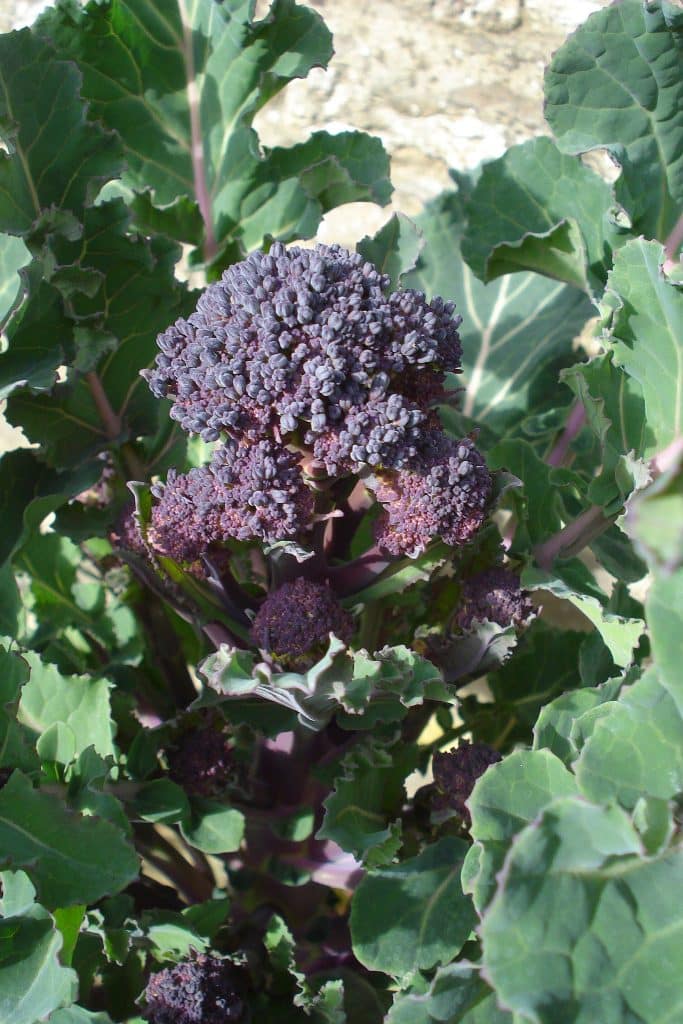
You will find it easy to see when it is time to harvest purple-sprouting broccoli because the purple heads will form. You should harvest, as with other broccoli, when the buds are still closed tight and before the heads spread and the flowers open.
As mentioned above, the harvest time will depend on when you sowed the seeds, since depending on when you sow, you can be harvesting any time from early winter through to around May, or even a little later.
Simply cut the flowering heads off the plants when they are ready. These can then be used right away, or preserved for later use.
What to Do With Purple-Sprouting Broccoli
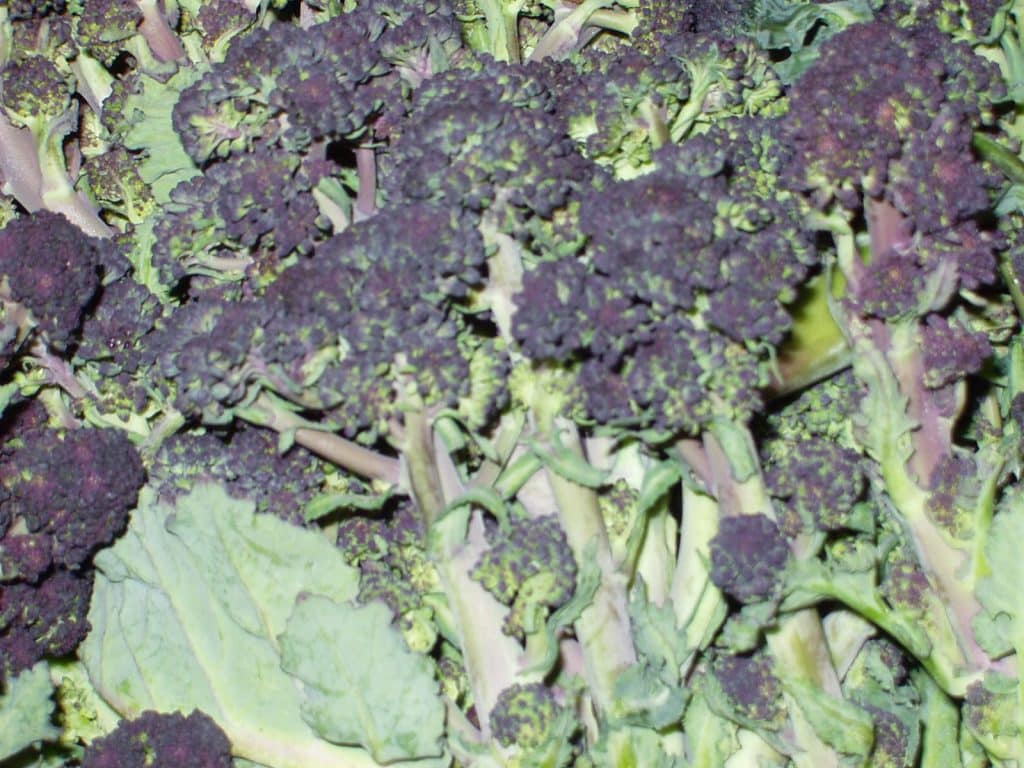
Once you have harvested purple-sprouting broccoli it is best to use it as soon as possible. The more quickly you get it from plant to table, the more healthy and nutrient-filled it will be.
You can eat the shoots and buds raw, in a salad, or cook them by steaming, boiling, grilling or roasting… or in a range of other ways. This is a versatile crop that you can use in a wide range of recipes.
As well as eating them raw in salads (our favourite way to eat this vegetable) we also like to use the shoots and budding heads lightly steamed as a side vegetable, and also enjoy adding the shoots to things like quiche, frittatas or omelettes.
If you want to save some purple-sprouting broccoli for later use then the best way to preserve your crop is to blanch and then freeze it. That way, you can simply pop these in your freezer and use them as needed over the rest of the year.
Learn about other weird coloured crops now.
FAQs
What are some culinary uses for purple-sprouting broccoli?
Purple-sprouting broccoli can be steamed, boiled, stir-fried, or roasted. It pairs well with flavours such as garlic, chili, and anchovies, and makes a colorful and nutritious addition to many dishes.
Can purple-sprouting broccoli be grown in containers?
Yes, it can be grown in containers, but ensure the pot is deep enough (at least 12 inches) and wide enough to accommodate the plant’s growth. Regular watering and feeding are even more crucial in container gardening.
Sources:
Wilson, N., (2019) 25 Colourful Crops for a Vibrant Vegetable Garden. Nic Wilson. [online] Available at:
https://nicwilson.co.uk/2019/02/11/25-colourful-crops-for-a-vibrant-vegetable-garden/ [accessed 19/11/2024]