

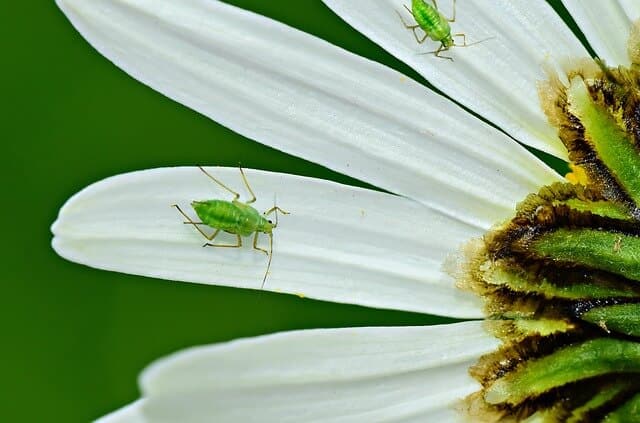
Aphids are small insects 2mm to 4mm in length which eat sap from plants and foliage. They are also known by other names, including greenfly or blackfly, though their colour can vary. Although a few aphids in your garden can be beneficial, an infestation can be a disaster. So, here’s how to get rid of aphids from your garden once and for all.
What Are Aphids?

Aphids have an interesting life cycle, one in which offspring can be born already pregnant with the next generation of aphids. This is called telescopic development and does not require a male Aphid. They are seasonal insects, and each generation begins with the previous season’s Aphid eggs hatching onto the host plant. Those eggs hatch and mature into female flightless aphids. These female aphids then produce female nymphs. These nymphs are likely pregnant in their own right. The larvae mature quickly and give birth to their own offspring, leading to an explosive population in a short space of time.
As the season progresses, aphids produce winged female offspring capable of flight. With this mechanism, the species increases its footprint by colonising other plants. Finally, with the coming of Autumn, the aphids focus on laying eggs to ensure the species’ survival for the following spring season.
Root Aphids
Though many species of aphids choose to live above ground on the underside of leaves and soft fleshy plant stems, root aphids live on the roots of plants. As with their surface-dwelling relatives, aphids feed on the sap of the plants they live on. They can obtain this through the roots below ground. Aphids are classified as common pests, but an infestation can be harder to detect as they live below ground.
Signs of Aphids
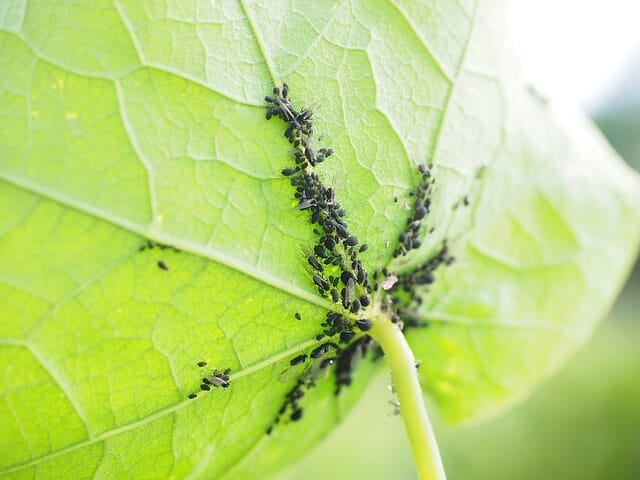
In general, it is possible to see aphids easily. Simply look under leaves and towards the tips of branches where new growth is emerging. Aphids prefer softer fleshy growth, so concentrate your search on the new and younger leaves.
If not caught and dealt with, aphids will cause physical symptoms in your plants. These include:
- Yellowed leaves from feeding damage
- Stunted growth
- Deformed and twisted leaves
- Black mould developing underneath leaves and on stem plants
Discarded white skin remains of previous aphid generations on plant leaves[i] Root aphids can be detected by a powdery mould forming on the roots. Often, these roots then split and become decayed. Severe infestations will be visible through the sheer number of aphids involved.
Aphids persist throughout the growing season, from emergence as Spring comes to an increase of activity as the first of the season’s generations of aphids are born. However, they are most active during the mornings, which can be the best time to remove them.
How To Get Rid of Aphids
Aphids can be a pest in your garden, so it stands to reason that you will want to do what you can to get rid of them. Thankfully, you can use many methods when considering how to get rid of aphids.
Manually Remove Aphids From Your Plants
Aphids are slow-moving insects and, if the numbers are not excessive, are easily removed by hand. They have very soft bodies and squash quickly between your fingers. Wipe them off the undersides of leaves using a damp cloth. Wear gloves while doing this to protect your hands. Most of the aphids will likely be concentrated in specific areas of your plants but be sure to check everywhere to ensure you have removed them.
- Use Water Pressure to Remove Them
Using a water spray, either from a pump-up sprayer or, for larger infestations, directly from a garden hose can dislodge the aphids from the plant and wash them away. Use a spray head pointed at the undersides of the plant’s leaves. Be careful to regulate the water pressure and avoid physical damage to your plants. Ideally, you should spray affected plants twice a day until the infestation subsides. However, make sure that your aphid treatment doesn’t end up waterlogging and overwatering plants. This method works best for established plants as they are less susceptible to water spray damage.
2. Trim and Prune Affected Plants
Sometimes there is no option other than cutting back the areas of a plant that aphids are affecting. Prune back the heavily-infested areas, then safely dispose of the cuttings without further spreading the aphids. Spray the plant with water afterwards to dislodge any remaining aphids and water the plant. This method works best with isolated infestations where only a specific part of the plant is infected.
3. Remove Them By Hand
You can use water sprays from a garden hose, which is most effective before an infestation can set in, but jets of water isn’t always suitable. For example, it is likely to harm young or delicate plants. So, you may want to pull on some gloves and simply pick them off by hand. Of course, this won’t work if you have a full-blown infestation on your hands, but if you’ve some curious aphids, removing them quickly is best to put them off.
Attract Beneficial Wildlife
Aphids are the basis of many food chains, meaning there are plenty of insects that may be able to deal with your infestation for you. These helpful insects and organisms fall into two classes: predators and parasitoids.
Predators kill aphids immediately for food. Parasitoids are slower to control aphids; they lay their eggs within the aphid’s body. Then, the parasitoid young consume the aphid’s body as they grow. This is eventually fatal for the aphid.
Most predators eat aphids and other garden insects, whereas parasitoids tend to be specialists and focus upon a particular type of aphid.
Many predators consume aphids, but here are the most common:
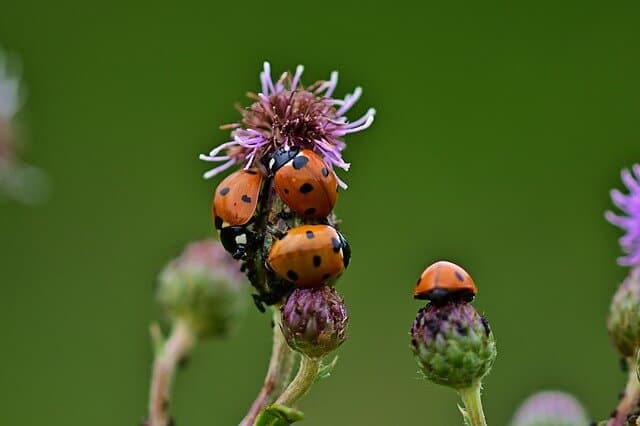
- Ladybirds – Both adult ladybirds and their larvae consume aphids. Ladybirds seek out Aphid colonies within which to lay their eggs. Once the new ladybirds hatch, they consume the Aphid colony around them as they mature. Ladybirds are available from garden centres for pest control. For the best efficacy against the aphids, release them during the evening, close to the aphid infestation. Releasing them at night will help keep them local to your garden. Most effectively, ladybirds can be utilised within polythene tunnels or enclosed greenhouses. Here, they will stay and consume aphids all day long. One ladybird can kill 5,000 aphids[ii], so your infestation will be dealt with promptly if you bring enough in.
- Lacewings – Lacewings are another predator that will eat aphids amongst other prey insects. Like ladybirds, female lacewings tend to lay eggs close to Aphid infestations. Larger garden centres may carry Lacewings for pest control. You can buy them as eggs or larvae, though the adult insects are somewhat larger than Ladybirds. The larvae will prove to be the form of lacewing with the greatest appetite for aphids.
- Parasitoids and Aphid specific predators – The most encountered beneficial Parasitoids that are effective against aphids are parasitic wasps. These wasps are available in some garden centres, but they are also common and occur naturally in significant numbers[iii].
Planting specific species in your garden for the sole purpose of attracting Aphid predators can work well to bolster nature’s own balance in your favour. For example, members of the carrot family like Caraway and members of the mustard family attract Aphid predators. As the seasons progress, parasitic wasps prefer different plants with the start of the growing season seeing mustard being attractive, but then giving way to Buckwheat and then mint later in the year. Your garden may require some experimentation to choose the most beneficial insect attracting plants for your garden.
Grow The Right Plants
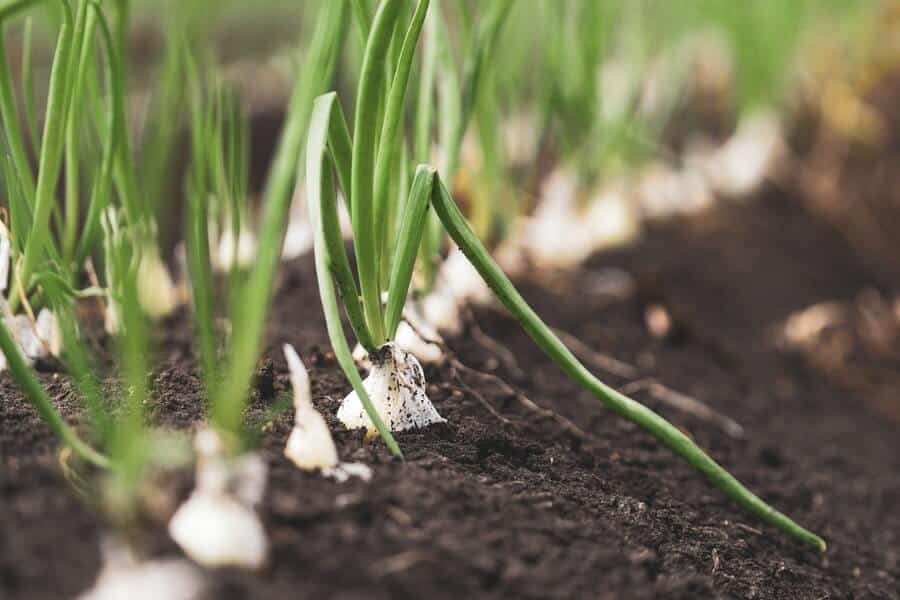
Growing aphid deterrent plants alongside those that you are trying to protect is often effective in controlling aphids. As well as deterring aphids with planting, you can also plant sacrificial plants that aphids are strongly attracted to and can be removed along with the infestation which has hopefully formed on it in preference to your own plants. Plants that will work for aphid infestations include:
- Garlic
- Onions
- Nasturtiums
- Sage
- Chives
- Leeks
- Mint
- Marigolds
- Catnip
- Rue
- Basil
- Rosemary
- Lavender[iv]
Use Organic Insecticides
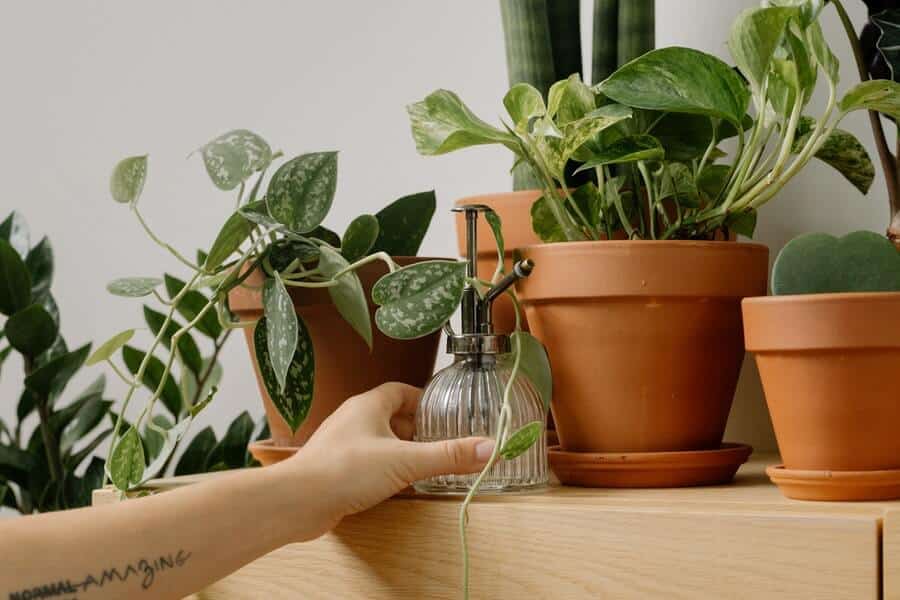
A simple solution of warm water with a few drops of washing up liquid per litre will deter and remove aphids. Repeated applications of this solution will kill the remaining aphids with repeated applications over a few days.
To add repellent properties to your homemade Aphid solution, add some Cayenne pepper to the solution before applying it. This is best applied with either a hand sprayer or a pressure sprayer. Again, be selective with your application; the solution will not discriminate between aphids and other insects that can benefit our plants and gardens.
For Extreme Infestations
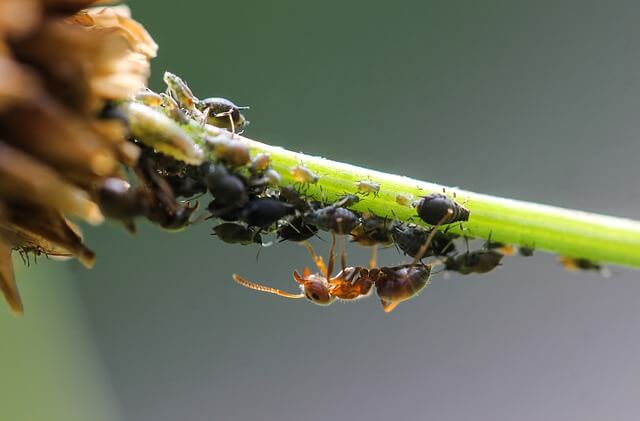
For extreme infestations, you may feel the need to use a commercial insecticide. These synthetic products can produce fast results. They work by killing the aphids with chemical action. However, the same action also kills beneficial insects indiscriminately.
But, if you are trying to look after your garden in the best natural way possible, organic products will always be best for the plants, environment, and beneficial ecosystem.
You could try Tomato leaf spray, which you can make at home and apply easily. All that is required to make the spray is a bucket, water and chopped tomato leaves. Steep the leaves in the water overnight; this will release alkaloids from the tomato leaves, this natural insecticide will help and doesn’t pose a risk to you or your garden.
Alternatively, you can make another effective spray using chopped garlic cloves in a little mineral oil. Ideally, you should leave this mixture to steep, then strain and dilute it with water to spray on infested plants. Again, be sure to try a little of the solution on an inconspicuous part of the plant to make sure it is not going to harm the plant when applied[v].
The Final Word On How To Get Rid of Aphids
Controlling aphid infestations can be challenging, and although insecticides may be your first thought, they do not always produce the desired result. Instead, utilising the sealed and controllable space offered by a polytunnel can be a great way of ensuring aphids stay out and beneficial insects remain within. If growing outdoors a combined approach utilising manual removal, clever planting and organic sprays will prove the most effective over time.
Do you have any tips on how to get rid of aphids? Let us know!
[i] https://www.bioforce.co.nz/pests/Aphids.html
[ii] https://www.kansascity.com/living/liv-columns-blogs/kc-gardens/article252233013.html
[iii] https://insectcop.net/aphid-predators-who-eats-aphids/
[iv] https://growing-guides.co.uk/plants-that-repel-aphids/
[v] https://www.thespruce.com/homemade-sprays-for-fighting-aphids-2539831