


Our gardens are often a haven for various animals, from birds to hedgehogs to squirrels. However, there’s one animal that no one wants to find nibbling at their plants, and that is mice. Wild mice are a destructive pain, snacking on freshly sown seeds and taking refuge in sheds and garages. To help you take control of your property back, here are the best ways to get rid of mice in your garden naturally.
Why Are There Mice In The Garden?

Mice are common all across the U.K., and it’s not that unusual to find them in gardens up and down the country. They prefer plenty of sheltered spaces to hide in and access to a wide range of food sources, so gardens are their ideal habitats. Usually, one or two mice in the garden isn’t a cause for alarm – you probably won’t even be aware that they’re there. However, if mice are beginning to cause a serious issue on your property, this is likely to be because of plants, seeds or bulbs that you have growing outdoors or any food you leave out for pets or wildlife.
Will Mice Come Into The House?
Wood mice and field mice can easily get in your home since they are small enough to squeeze in almost anywhere. However, they are more likely to shelter in garages, sheds, and outhouses because they provide easier access to the outside world. So, although the mice you see in your garden may come into your home, they are more likely to take refuge in your outhouses instead. You’re more likely to see mice inside during the autumn and winter months, so you should remain particularly vigilant around this time.
The Law On Removing Mice

Before you can take precautions against mice, you must understand how to deal with the animals legally. Many of the most common mice found in gardens and homes – the house mouse, field mouse and yellow-necked field mouse – are all considered pests, so they must be treated in accordance with the laws of pest control.
Under U.K. law, rodent species do not have legal protection. But the law does state the ways you can control pests on your property. These include:
- Only killing or trapping permitted animals
- Using permitted methods to kill animals
- Only using poison to kill the pests it’s intended for
Only using traps that have been approved for use with the species you are trying to control[ii]In short, you can only eradicate a species from your property humanely, without deliberately causing any prolonged harm to the animal.
Finally, mice are an important food source to other wildlife, including foxes and owls. Because of their importance to the ecosystem, you should only take the necessary steps to free your property of mice if the animals become troublesome.
Signs of Mice In The Garden

Mice are nocturnal, and spotting them in your garden is highly unlikely during normal waking hours. However, there are several signs that may point to a mouse infestation in your garden. These include:
- Mouse Holes In Garden Soil – Finding holes in the soil, particularly near seeds, bulbs or root vegetables, is a tell-tale sign of mice. They like to eat seeds, insects, and fungi and will dig up your flower beds to find them. Also, mice have been known to create their beds underground, which may be the culprit of holes in the soils.
- Bite Marks On The Stems of Plants and Trees – Mice will try to eat your plants, vegetables and even trees. Often their teeth aren’t strong enough to completely break a plant in half, but they will leave tell-tale nibble marks.
- Freshly Sown Seeds Disappearing – Freshly sown seeds are easy pickings for mice because they’re so easy to get to. If the gardeners among you are noticing seeds you’ve only just sown disappearing or not growing, mice may be the reason.
- A Musky Odour – Mice use scent as a way of communicating, which allows them to identify members of their group and establish their territory. This smell is musky, like stale urine, and is most evident in more enclosed spaces, such as log piles, undergrowth, outhouses, and garages.
- Mouse Droppings – These are usually black and similar in size and shape to a grain of rice. One mouse can leave approximately 80 droppings per day, so if you fear mice are a big problem, this may be the biggest sign to look out for.
How To Get Rid of Mice In The Garden Naturally
1. Protect Your Plants
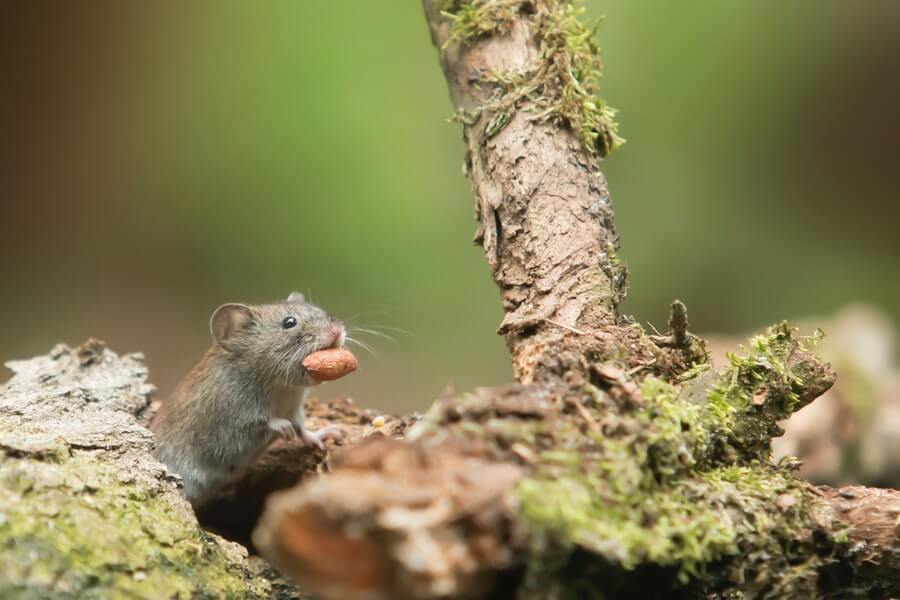
The biggest attraction to mice in your garden is likely to be your plants. Of course, you don’t want to give in and completely remove them! You can protect your plants through polytunnel growing, which will keep seeds and plants safe from wildlife and weather. To keep freshly sown seeds and bulbs safe, try spreading mesh wire over the top of the soil or plant pots. Mice’s’ teeth aren’t strong enough to chew through metal, and they hate the sensation, so they will give in quickly.
2. Plant Smartly
If you can’t bear to be without your blossoming outdoor flower beds, there are several plants that deter mice. By strategically planting them as borders, mice and other rodents will quickly go looking for easier pickings. Plants that deter mice include:
- Lavender
- Marigolds
- Daffodils
- Grape Hyacinth
- Tomatoes
- Black Pepper
- Peppermint
- Onions
3. Sweep Potential Nesting Areas
Mice make their nests in little nooks and crannies with plenty of cover and safety. Log piles, garden shed/outhouses, sheltered areas in garden, look for holes in the ground and see if you can locate any beds under the ground. If you find a nest, ensure that you wear protective gloves and a face mask before removing it. If there are mice inside, quickly place the nest in a deep bucket. It is up to you how you deal with the animals – you may kill them using humane methods only, or take them a distance away from your home, though there is always the chance that they could make their way back.
4. Get A Cat
Cats are mice’s biggest predators, and even the sound and smell of them is enough to scare them away. Getting a cat should make a big difference almost instantly as mice will recognise this new presence quickly, but you might be subject to several tailed gifts for a few weeks. Try not to let your cat eat any mice it catches though, as mice can spread diseases.
5. Choose Your Mulch Carefully
You may inadvertently be giving mice a place to live by spreading mulch in your garden. Avoid using fluffy mulches or straw, as these will provide adequate cover for mice, and they may start nesting in there. Also, when spreading suitable mulch, do so thinly and try not to mulch too near the base of trees.
6. Attack Their Sense of Smell
There are plenty of scents that deter mice because their sense of smell is so strong. Spread these smells around your garden, with particular focus on troublesome areas like food sources and nesting spots, regularly to notice a difference. Scents that deter mice include:
- Cinnamon
- Vinegar
- Peppermint
- Teabags
- Mint
- Ammonia
- Cloves
- Cayenne pepper
7. Invest In Ultrasonic Devices
Devices that produce high-frequency waves may scare mice away because the noise is reported to irritate their senses. These devices are best placed around potential food sources, such as your flower beds or vegetable patches, and nesting grounds to deter mice and drive them to new territory. The success of electronic repellents is disputed, though they allegedly drive away a range of pests, including foxes and birds, so they are definitely worth a try.
8. Put Out Traps
If more humane methods haven’t worked, you can lay out traps to capture mice. Snap traps are the most compassionate and effective. Lay them along pathways that you think mice are travelling and bait them with food or nesting materials. Once triggered, a metal bar will snap and kill the rodent. You must dispose of the body safely wearing gloves.
9. Try Rodenticides
A less messy way of disposing of mice is through rodenticides, which are pesticides designed to kill rodents. Rodenticides are usually presented as bait to attract the animals. Once they have eaten the rodenticide, it will take anywhere up to 24 hours for the animal to die. However, rodenticides will attract a range of other animals and household pets, so be wary when placing rodenticide.
10. Call In The Pest Control
As a last resort, you may call in a local pest control company to deal with your problem. Pest control professionals may use several ways of eradicating mice, though the most common is by laying traps and chemical baits or using mechanical devices. They will also give you advice on deterring mice for the future.
Be Free of Mice In Your Garden
Mice are not an animal anyone wants to live with, but now you’re equipped to deal with those pests once and for all! Do you have any tips for dealing with mice in the garden? Let us know in the comments below.
FAQs
Should I worry if I see a mouse outside my house?
Generally, there’s no need for immediate concern if you see a mouse outside your house as it’s common for mice to be in outdoor environments. However, you should ensure there are no entry points into your home to prevent an infestation.
Do garden mice come out during the day?
Mice are typically nocturnal, but it’s not unusual for garden mice to be active during the day, especially if it’s quiet and there are opportunities for food.
Should I be worried if I see a mouse in my garden?
Seeing a mouse in your garden doesn’t necessarily warrant worry, as it is a natural habitat for them. It’s important to keep garden debris and tall grass cleared to avoid attracting more mice.
Sources
Rentokil. (2014) Common Mice Species UK. [online] Available at: https://www.rentokil.co.uk/mice/species/ [accessed 23/07/24]
GOV.UK. (2015) Pest control on your property. [online] Available at: https://www.gov.uk/pest-control-on-your-property [accessed 23/07/24]
McElreath, A., (2020) Why Do Mice Stink? Pets on Mom.com. [online] Available at: https://animals.mom.com/mice-stink-3703.html [accessed 23/07/24]
BPCA. (2020) A-Z of Pests. [online] Available at: https://bpca.org.uk/a-z-of-pest-advice/mouse-control-how-to-get-rid-of-and-prevent-mice-bpca-a-z-of-pests-/189003 [accessed 23/07/24]
Schulze, J., (2021) Repel Rodents From The Garden. David’s Garden Seeds. [online] Available at: https://davidsgardenseeds.com/blogs/news/repel-rodents-from-the-garden [accessed 23/07/24]