Yes, you really can grow tea in England and other parts of the UK – and not just herbal infusions, but true tea as well. With the right plants, protection, and expectations, growing tea in the UK is both achievable and deeply rewarding.
For many gardeners, the idea of growing tea still feels exotic, something reserved for misty hillsides in China or India. Yet here in England, interest in growing tea is steadily increasing. From traditional tea plants to a wide range of herbal alternatives, home-grown tea offers flavour, freshness, and a stronger connection to the plants we consume daily.
In this guide, I’ll explore whether you can grow tea in the UK, which types of tea are most realistic to grow, how to care for them, and the potential risks to be aware of. I’ll focus particularly on growing tea in a polytunnel, which opens up far more possibilities in our climate.
Key Takeaways
- You can grow tea in England, especially with protection such as a polytunnel
- True tea comes from Camellia sinensis, but learning how to grow your own herbal tea is much easier
- Growing tea in the UK requires patience, careful watering, and protection from extremes
- Different tea plants have very different needs and timelines
- Polytunnels make it possible to grow a wider range of tea plants more reliably
Can You Grow Tea In The UK?
The short answer is yes – but with some caveats.
When people ask “can you grow tea in the UK?” they are usually referring to true tea, made from the leaves of Camellia sinensis.
This evergreen shrub prefers mild temperatures, high humidity, acidic soil, and protection from harsh winds and frost. While the UK climate is cooler than traditional tea-growing regions, it is not impossible to grow tea here, particularly in southern areas or sheltered gardens.
In fact, small-scale commercial tea is already grown in parts of England. However, growth is slower, yields are lower, and careful management is essential. This is where growing tea in a polytunnel becomes especially valuable, as it allows gardeners to create a more stable microclimate.
From a single home-grown Camellia sinensis plant in the UK, you can realistically expect around 20–60 cups of tea per year once the plant is mature, and far fewer in the early years.
Growing Camellia sinensis in England is best thought of as a long-term, low-yield crop. Most gardeners grow it alongside herbal teas (mint, lemon balm, chamomile) that provide daily drinking tea, while Camellia sinensis becomes a special, occasional harvest.
Alongside true tea, there is a wide range of plants that can be used to grow your own herbal tea. These are often much easier to grow in the UK and are ideal for gardeners who want results more quickly.
How To Grow Your Own Tea
When thinking about how to grow your own tea, it helps to divide plants into two broad categories: true tea plants and herbal tea plants. Both have a place in a home garden, but their requirements and timelines differ significantly.
Growing True Tea (Camellia sinensis)
True tea – whether green, black, white, or oolong – all comes from Camellia sinensis. The differences between these teas lie entirely in how the leaves are handled after harvesting, rather than in the plant itself. While tea is often associated with warmer regions of the world, it is entirely possible to grow Camellia sinensis in the UK with the right approach and realistic expectations.
In the UK climate, Camellia sinensis grows best in a sheltered position with protection from cold winds, late frosts, and extreme temperature fluctuations.
For most gardeners, growing in a container is the most practical option. Containers allow you to control soil conditions more easily and move plants if needed. An acidic growing medium is essential, so I use ericaceous compost, sometimes mixed with a little grit to improve drainage. The plant prefers moist but free-draining soil and will quickly suffer if roots sit in waterlogged conditions.
Light levels should be bright but not harsh. Filtered sunlight works far better than full, intense sun, particularly during hot spells. A polytunnel can provide an ideal environment by moderating temperature, increasing humidity, and protecting plants from wind and frost. However, good airflow is crucial. Regular ventilation helps prevent fungal diseases, which can be a risk in enclosed, humid conditions.
Growth is slow, especially in the first few years. This is a long-term crop rather than a quick harvest. It usually takes three to five years before you can begin harvesting leaves in any meaningful quantity, and even then, harvests should be light to avoid stressing the plant.
Regular watering is important during the growing season, but feeding should be gentle. Overfeeding encourages soft growth that is more vulnerable to damage.
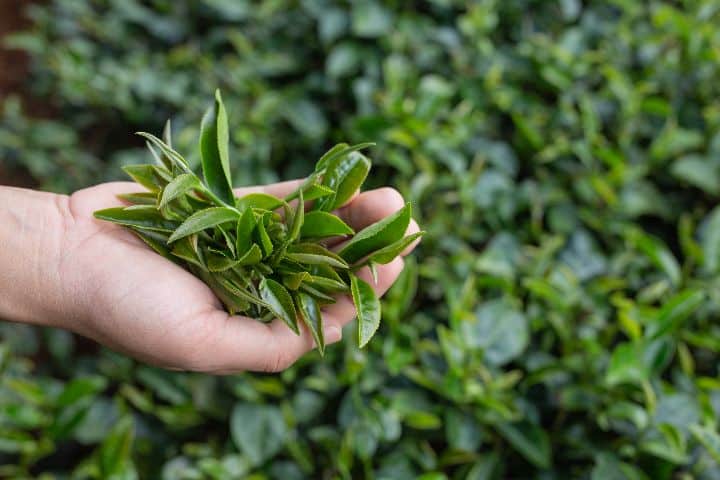
Harvesting typically involves picking the youngest two leaves and the bud from each shoot. This encourages fresh growth and keeps the plant compact. Processing the leaves is where true tea is created.
For green tea, leaves are quickly heated after harvesting to stop oxidation, then dried.
For black tea, leaves are allowed to wither, rolled to bruise them, left to oxidise until they darken, and then dried.
White tea involves minimal processing, with young leaves gently dried soon after picking. Oolong sits somewhere between green and black tea, with partial oxidation.
Home processing is necessarily small-scale and experimental, but it offers a deeper understanding of how tea is made. While yields will be modest in the UK, growing Camellia sinensis is a satisfying, hands-on way to connect with one of the world’s most widely enjoyed drinks.
Mint Tea
Mint is one of the easiest and most reliable options if you want to grow your own herbal tea. It thrives in the UK climate and produces abundant leaves throughout the growing season.
Mint prefers moist, fertile soil and partial shade, though it will tolerate sun if kept well watered. I always grow mint in containers, as it spreads aggressively if left unchecked.
Leaves can be harvested regularly and used fresh or dried. Mint tea is refreshing, calming, and extremely forgiving for beginners.
Lemon Balm Tea
Lemon balm is another excellent choice for growing tea in England. It is a hardy perennial with a gentle lemon scent and calming properties.
It grows well in sun or partial shade and tolerates a wide range of soils. Like mint, it can self-seed freely, so some control is helpful. Regular harvesting encourages bushier growth and improves flavour.
Lemon balm tea is particularly useful in the evening, and I find it one of the most reliable herbal teas to grow year after year.
Chamomile Tea
Chamomile is well suited to UK gardens and produces delicate daisy-like flowers that are harvested for tea.
There are two main types: Roman chamomile, which is perennial, and German chamomile, which is annual. German chamomile is more commonly used for tea and grows easily from seed.
Chamomile prefers full sun and well-drained soil. Flowers should be harvested on dry days and dried promptly to preserve their flavour.
Fennel Tea
Fennel produces aromatic seeds that make a soothing, digestive tea. It prefers full sun and free-draining soil and can grow quite tall.
Once established, fennel is relatively low maintenance, though it does not like being disturbed. Harvest seeds once they turn from green to brown and dry them thoroughly before use.
Rosehip Tea
Rosehips, produced by wild and cultivated roses, are rich in flavour and colour and can be used to make a tangy, vitamin-rich tea.
They are best harvested in autumn after the first frost, which softens the hips and improves flavour. Drying is essential, and care should be taken to remove irritating hairs inside the hips before use.
Rosehip tea is a good example of how ornamental plants can also be productive in unexpected ways.
Raspberry Leaf Tea
Raspberry leaf tea has a mild, earthy flavour and blends well with mint, lemon balm, or rosehip.
Leaves are best harvested in late spring or early summer, before the plant flowers or fruits heavily, when flavour is at its best.
Pick healthy, unblemished leaves and avoid taking more than a third of the plant at any one time. Leaves can be used fresh, but are more commonly dried by spreading them in a single layer in a warm, well-ventilated place until crisp.
Lavender Tea
Lavender can be used sparingly to add fragrance to herbal tea blends. It thrives in well-drained soil and full sun and is particularly well suited to drier parts of the garden.
Only small amounts are needed, as the flavour is strong. Harvest flowers just as they open and dry them quickly in a warm, airy place.
Sage and Thyme Teas
Both sage and thyme can be used as herbal teas, often valued for their warming and soothing qualities.
They prefer free-draining soil and full sun and benefit from being kept slightly on the dry side. Regular pruning keeps plants compact and productive.
These herbs are particularly useful in winter when fresh growth is slower but evergreen leaves remain available.
Caring for Tea Plants in a Polytunnel
Growing tea in a polytunnel offers greater control over temperature, moisture, and shelter. This is especially important for more delicate plants such as Camellia sinensis.
Good airflow is essential, so vents or doors should be opened regularly. Watering needs vary, but consistent moisture without saturation is key.
Using appropriate polytunnel accessories such as shading, irrigation, and ventilation systems can make a significant difference to plant health and ease of management.
Processing and Using Home-Grown Tea
Once harvested, most tea plants need some form of processing before use.
Herbal teas are usually dried, though some can be used fresh. True tea requires more complex processing, including withering, rolling, and drying. This can be done on a small scale at home, though results will vary.
Some gardeners experiment with light fermentation when making tea, a process related to those used in the best fermented foods, though this should be approached carefully and with realistic expectations.
Risks of Growing Tea in the UK
Growing tea in the UK does come with challenges, and it’s important to be realistic.
Cold weather is the biggest risk, particularly for true tea plants. Frost protection is essential, and even hardy herbal teas can suffer in severe winters.
High humidity combined with poor airflow can lead to fungal diseases, especially in enclosed spaces. Regular ventilation helps reduce this risk.
Slow growth can also be frustrating. True tea plants require patience, and herbal teas often taste best when grown slowly rather than pushed with excessive feeding.
Finally, not all plants will thrive in all locations. Experimentation and observation are key.
True tea plants may take three to five years before producing a worthwhile harvest in the UK.
Growing Tea Successfully Under Cover
Growing tea in England becomes far more achievable when plants are protected from the elements. Polytunnels allow gardeners to moderate temperature, reduce wind exposure, and extend the growing season, all of which are crucial for tea plants.
Using well-chosen accessories to manage ventilation, watering, and shading helps create the stable conditions tea plants prefer. This not only improves plant health but also makes growing tea more consistent and enjoyable, particularly for gardeners experimenting with less familiar crops such as Camellia sinensis.
Growing tea in England is about matching plants to place and managing expectations. While true tea requires patience and protection, many herbal teas are easy, reliable, and deeply satisfying to grow. With thoughtful choices and the right growing environment, growing your own tea can become a rewarding part of a productive garden.