Have you thought about staple crops to grow in your self sufficient garden?
In a home garden, we can grow a huge range of healthy and nutrient-rich plants to include in our home-grown diets. There are numerous fruits, vegetables and herbs that we can grow in order to eat well throughout the year.
But while growing our own leafy crops for salads, and other delicious edibles, we may find that while these foods are nutritious and delicious, they don’t really meet a high proportion of our calorific needs.
In order to aim for greater self-sufficiency, we need to seek out and grow staple crops. By growing certain staple crops to provide for the bulk of our calories (as well as diversifying and growing plenty of other crops too), we can ensure that we meet as many of our own nutritional needs in our gardens as possible.
What are Staple Crops?
When we talk about staple crops, we are talking about the crops that can make up the bulk of our diets, providing for a high proportion of our calorific needs. Of course, there are numerous plants that we can grow that can help to sustain us and give us the energy and nutrients that we need.
But in order to become more self-sufficient, it can be important to look at which crops we can grow to really fill us up and meet our key requirements for carbohydrates, fats and protein in our diets. While crops like cabbages, carrots and tomatoes can also help to sustain us, these crops that are, relatively speaking, much lower in calories cannot provide us with all the calories we need.
A relatively small number of staple crops are commonly grown for human diets around the world. However, only a few of these are suitable for growing at home in our cool temperate climate.
Here in the UK, it can be useful to think about which crops you might grow in your self sufficient garden to provide us with the carbohydrates, fats and proteins we need, as well as other vitamins and minerals.
Staple Crops for Carbohydrates
The first area to look at are plants that can provide us with the carbohydrates we need. It can be a good idea to look not only at plants containing plant sugars, such as fruits and some vegetables, but also at starchy foods, that fill us up.
Cereal Grains

In the UK, we tend to focus in agricultural production on cereal grains that grow well in our climate – such as wheat, maize, and oats, for example. If you have a large enough garden then you can of course consider growing these cereal grains for domestic use.
However, many of us do not have the space to grow enough of these grains to meet all of our needs throughout the year. But we might grow enough wheat, oats or other grains to make our own flour and perhaps make a loaf of bread or two. Bread is a staple for many of us in our diets. And we can also grow grains, seeds etc. to add to staple grains that we purchase to make our own breads at home.
As a general rule, it is often stated that to produce the requisite number of calories from vegetables/ grains and achieve a balanced vegetarian diet you will require 0.44 acres (approx. 1,780 sq m). However, many gardeners have shown that it is possible to grow enough food for a balanced vegetarian diet in far less space.
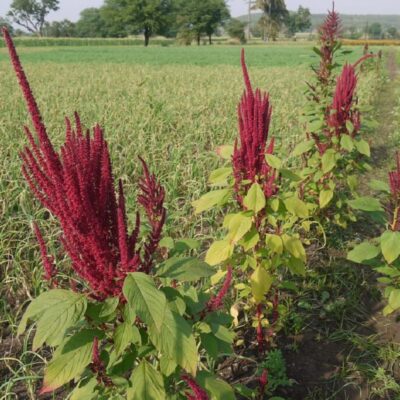
Small-scale production of traditional cereal grains could be an interesting option to consider, even if you cannot meet all of your household needs. And you might be able to help keep heritage grains alive, which is another interesting thing to consider. You might also grow grains like amaranth and quinoa, which can be a good option in some areas for small-scale production. These can, of course, also help to meet our protein needs as well as our carbohydrate requirements.
Potatoes
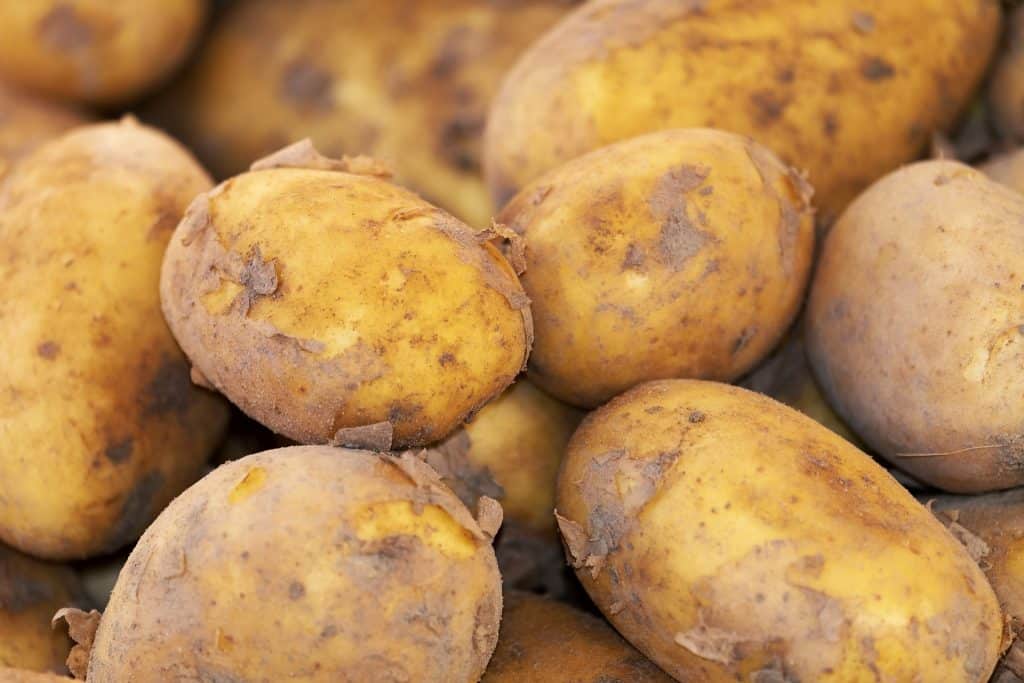
Potatoes are, of course, another important staple crop here in the UK. They are also a good source of starchy carbohydrates and other nutrients in our home-grown diets.
Potatoes are a staple that it is very easy to grow here, and which can be grown even in a much smaller space when they are grown in containers or grow bags. With the right timings, variety choices and care, we can potentially eat potatoes we have grown in our gardens all year round.
Other Roots & Tubers
As well as growing potatoes we might consider growing other higher carbohydrate foods to make sure we can meet our calorific needs when trying to grow as much of our own food at home as possible.
Growing more usual tubers could be an option – and considering other options can allow you to branch out from growing potatoes to try something new. Especially if you have a polytunnel, there are a number of different, unusual tubers that you might try.
Of course, there are also other vegetables that are starchy foods, higher in calories and carbohydrates than others. A number of other root crops, and also fruits like squash and pumpkins, for example, can also be staples to provide the carbohydrates we need in a home-grown diet.
Staple Crops for Fats & Protein
Another key area to look at when it comes to growing staple crops are plants that can provide good sources of fats and protein in a vegetarian or vegan diet. Whether or not you also include meat and dairy in your diet, you should think about growing vegetarian staple crops to provide these elements of your diet.
Pulses
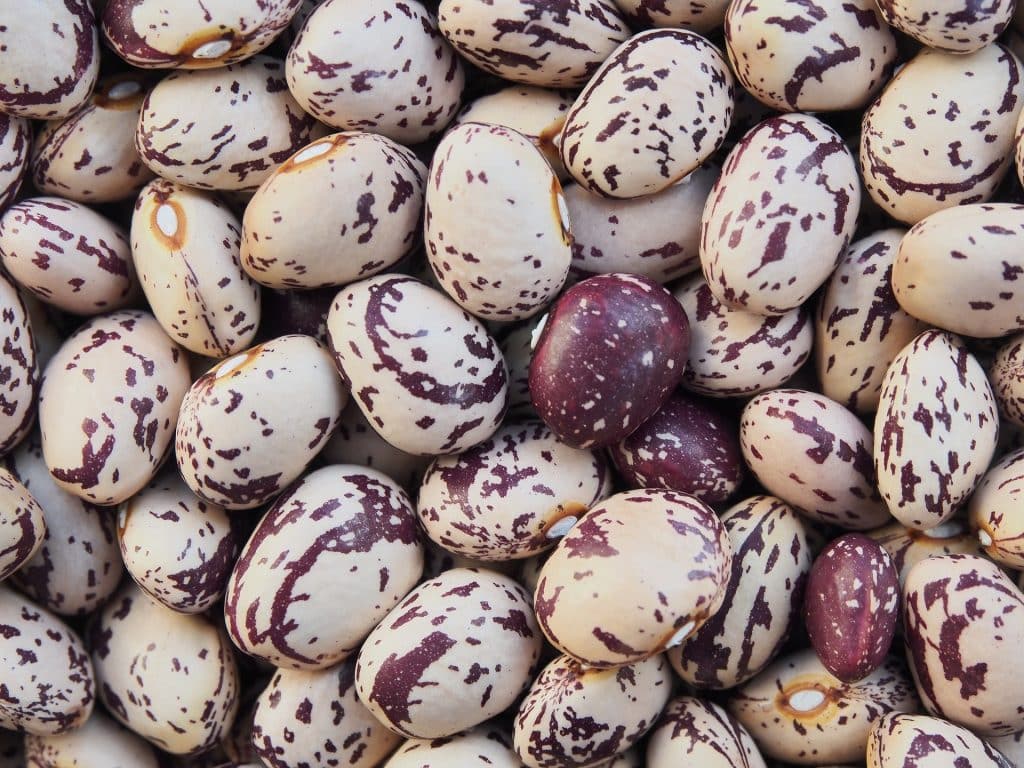
Among the most useful protein providing crops that we you can grow in a self sufficient garden in the UK are legumes (peas and beans) that can be dried and used as a pulse. Here, I wrote at some length about pulses, what they are and why we should grow and eat them.
Formerly, these were an integral and crucial part of the diet here in the UK. And there are many reasons why we should all be growing them as staple crops today.
Here are some tips for growing pulses and which ones you might consider growing here.
Nuts
So far, we have focussed largely on annual crops that can be considered as higher calorie staple crops here in the UK. But it is worthwhile also looking at perennial staple crops. Seeking perennial staple crops can help us to move away from damaging agricultural practices, and grow food to feed our population in a more sustainable way.
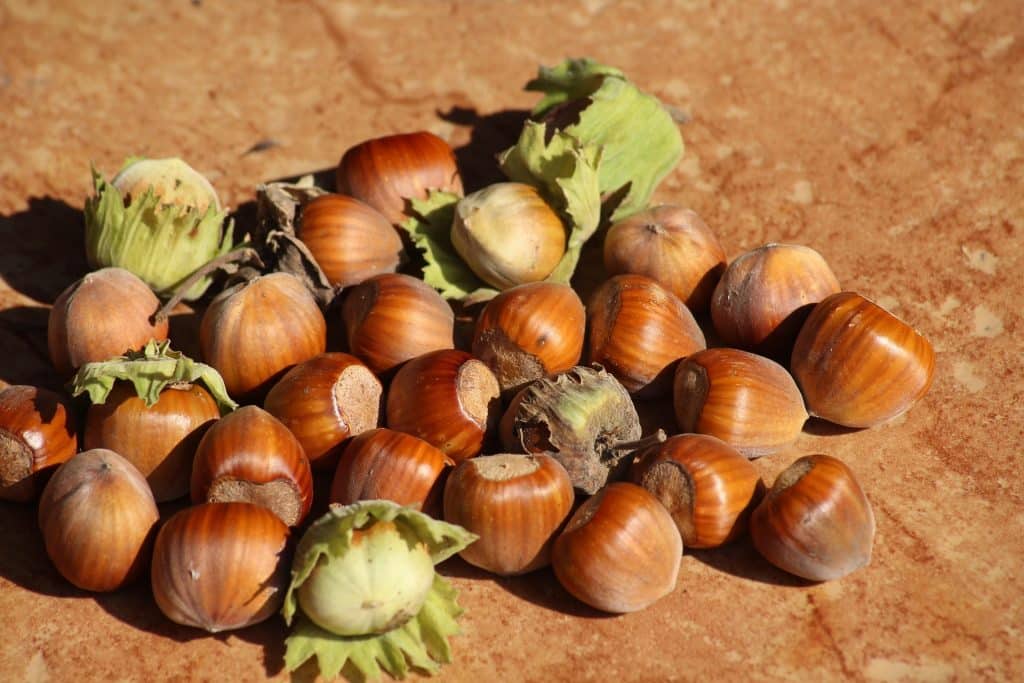
Nut trees can be a very useful option to consider. And there are several nut trees that might be grown in a self sufficient garden. While it will take a while before we can obtain a yield from our trees, planting them today will help us to prepare for tomorrow.
Hazels are one of the most useful nuts to grow across much of the UK. They provide protein-rich nuts in abundance after less time than many but trees take to bear. Chestnuts, oaks, pines, and walnuts, for example, might also be considered in some areas.
Thinking about staple crops to grow to meet major nutritional needs can help us make sure that we are able to grow foods that fill us up and sustain us in our gardens, and not simply plants that can add to the bulk ingredients of our diets.
Of course, we also need to grow a diversity of other crops that can make up a proportion of our diets, and be eaten on a regular basis.
Brassica crops are crucial for UK growers, for example, providing abundant yields of green leaves and flowering heads, stems etc. throughout the year. Tomatoes grown in a polytunnel can be preserved for year-round use. And root crops like carrots, parsnips and beetroot can be wonderful additions to our diets.
Remember, we should not only grow staple crops, but also a wide range of different fruits and vegetables to meet all of our nutritional needs. But thinking about staple crops is important – especially when you want to meet as many of your calorific needs as possible from your self sufficient garden.
References:
https://pfaf.org/user/cmspage.aspx?pageid=40