

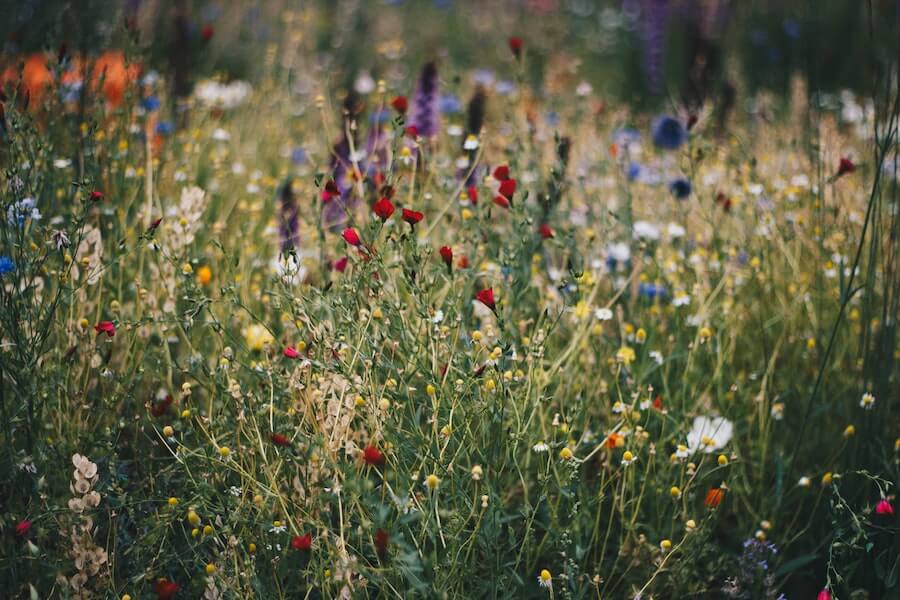
There are many wildflowers for bees to attract them into your garden, including plenty of wildflowers that are native to at least certain parts of the British Isles. The key to doing the right things for British native bees is choosing native plants that can provide nectar for different bee species throughout as much of the year as possible.
There are of course numerous options to choose from, and which ones will be right for your garden will depend on your precise location and the conditions to be found there.
Wildflowers are of course found in a wide range of different settings, so it is always important to look at their specific needs and whether those needs can be met in your own particular garden to choose the right plants for the right places.
Remember, creating a bee-friendly garden is not just about making sure that individual flowers are in bloom throughout the seasons. It is also about creating holistic habitat for bees and other pollinators, as well as other wildlife that you want to welcome to your garden.
The RHS has useful lists of plants for pollinators, which can be useful as you determine which flowers to include in your garden for bees. Don’t forget blossoming trees and flowering shrubs, as well as herbaceous flowering plants. The more variety you can include in your garden, the happier the bees will be.
We could not possibly list all of your options in just one article. But here is a list of twelve of our favourites – fantastic British wildflowers for bees that you might like to include in your garden:
Wood Anemone
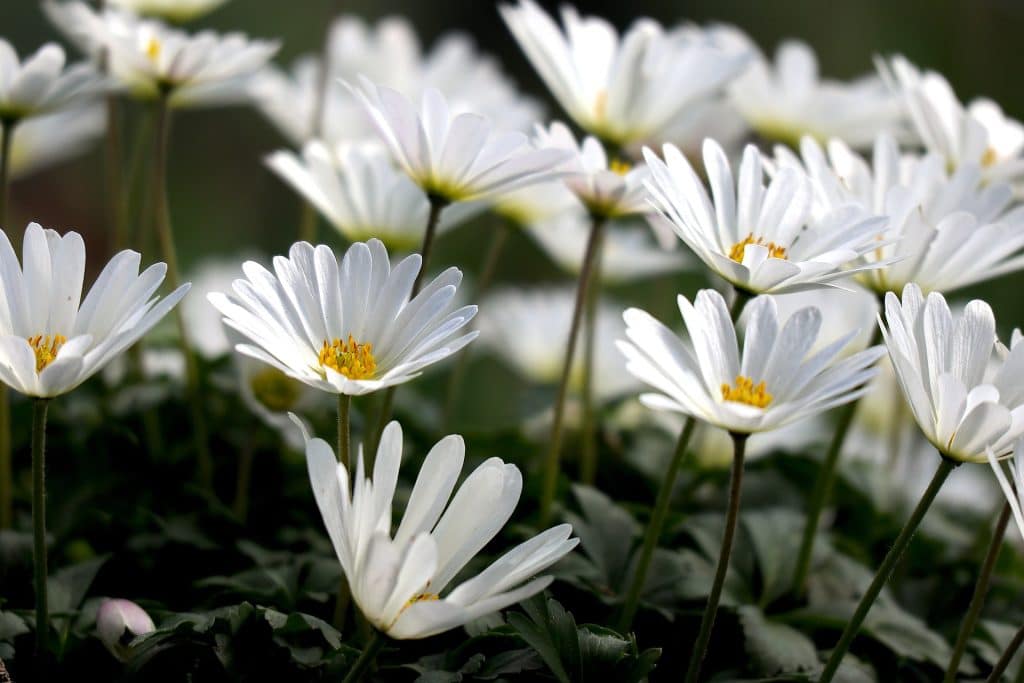
While we may think about meadow when thinking about the perfect bee habitat, it is important to note that woodland environments can be very important for bees and other pollinators too.
Wood anemones are one of the very first flowers that bloom in woodland environments in spring, with blooms emerging between March and May, and they are well suited to a position below broadleaf deciduous trees.
This is an ancient woodland indicator plant and planting them in your garden can help you to recreate the wonderful natural woodland environment and ecosystem where you live. Often, these are grown from rhizomes planted in autumn.
Primroses
Another woodland plant, primroses are another relatively early spring bloom that brightens up woodlands early in the year and is one of the best wildflowers for bees and other pollinators during the springtime.
Plant Primula vulgaris in your garden and enjoy the cheerful yellow blooms to brighten up a partially shaded spot below some deciduous trees between March and May.
You can plant primroses any time for May to September. These are definitely an easy and low maintenance plant to include in many gardens, and they can self-seed readily where the right conditions prevail.
Comfrey
One of many different flowering plants that you might plant to provide as wildflowers for bees in the spring. Common comfrey is an extremely useful plant to grow in your garden.
This large plant has flowers in white, cream, pink or purple hues, and leaves which were historically an important topically applied medicinal herb. The plant is still sometimes used medicinally today (though care is required and you should consult an expert before doing so).
Comfrey not only attracts bees and other beneficial wildlife when in bloom between , it is also useful to gardeners because it is a ‘dynamic accumulator’, and useful as a chop and drop mulch, for composting, or for liquid plant feeds.
Yarrow
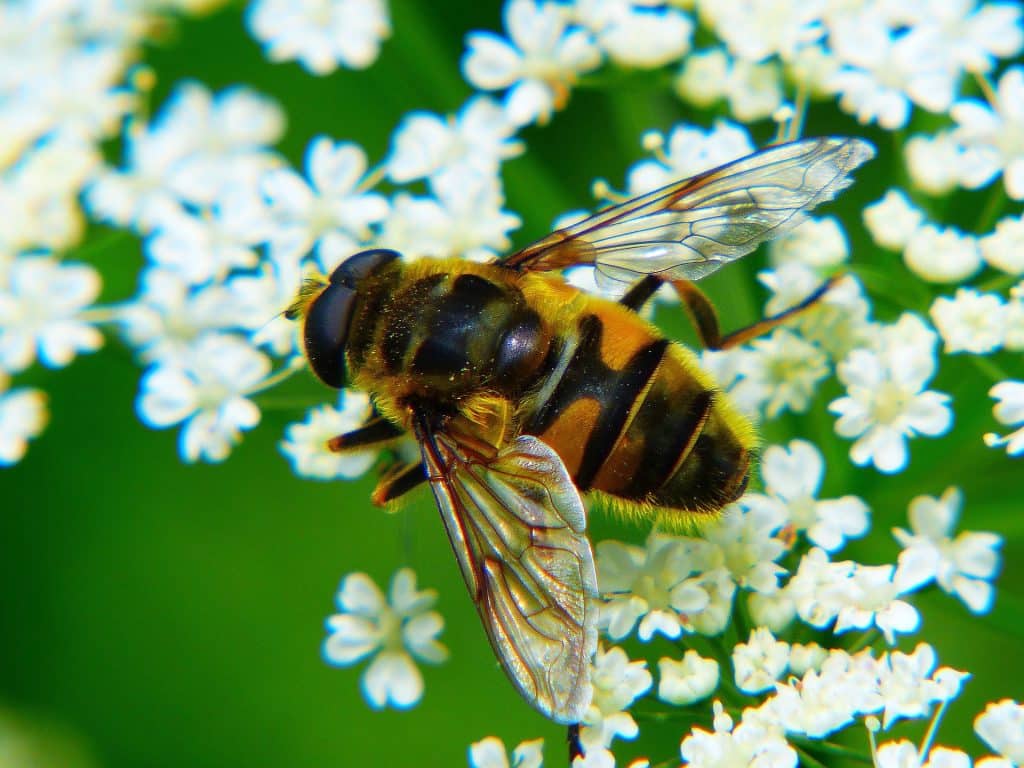
Yarrow, Achillea millefolium, is a common wildflower of lawns, meadows, pastures and hedgerow verges, sometimes viewed as a weed. However, it is one of the best wildflowers for bees! It is often abundant on chalky or gravelly soils but can cope with a range of different soil types and conditions.
The pink or white flowers of common yarrow bloom in the summer, doing best in full sun. Yarrow likes a moist but well drained or well drained soil and can cope even when the weather and conditions are very dry.
Yarrow can become part of a wild, bee-friendly lawn or meadow scheme, or be incorporated into wild and informal, wildlife-friendly beds or borders in your garden. It is also a great choice for the sunny fringes of a forest garden. Yarrow is grown from seed or division of existing plants in spring.
Rosebay Willowherb
Another beautiful wildflower often considered a ‘weed’ because it self-seeds so readily, rosebay willowherb, Chamaenerion angustifolium, is common across much of the UK. It quickly colonises disturbed areas, verges and embankments, as well as being found in wilder gardens.
Though some find it troublesome in a garden, those who want to do the right thing for bees and other pollinators will often welcome this plant in.
Though it can be overly vigorous for a small garden, the key is to keep it down by using it. In addition to being a fantastic wildflower for bees, this is also a plant with edible applications. Harvesting this plant can allow you to have it in your wildlife-friendly garden without it getting too much out of control.
Enjoy the tall flower spikes of this wildflower between June and September. They are not only a great nectar source for bees but also attract and are a food source for a number of native moth and butterfly species.
Viper’s Bugloss
Echium vulgare, viper’s bugloss, is a flowering plant in the borage family. It is another fantastic nectar source for bees and for other pollinators. They keep producing nectar through the day, refilling to help bees again and again.
Sow this wildflower in September or October, and plant out in April or May, and the blooms can be enjoyed by us and by the bees between May and July the following year. Most forms of this plant are biennial, though ‘Blue Bedder’ is a shorter and annual cultivar.
Grow this plant in a sunny spot with free-draining soil, and it will often self-seed readily where it is happy with the conditions.
Harebells
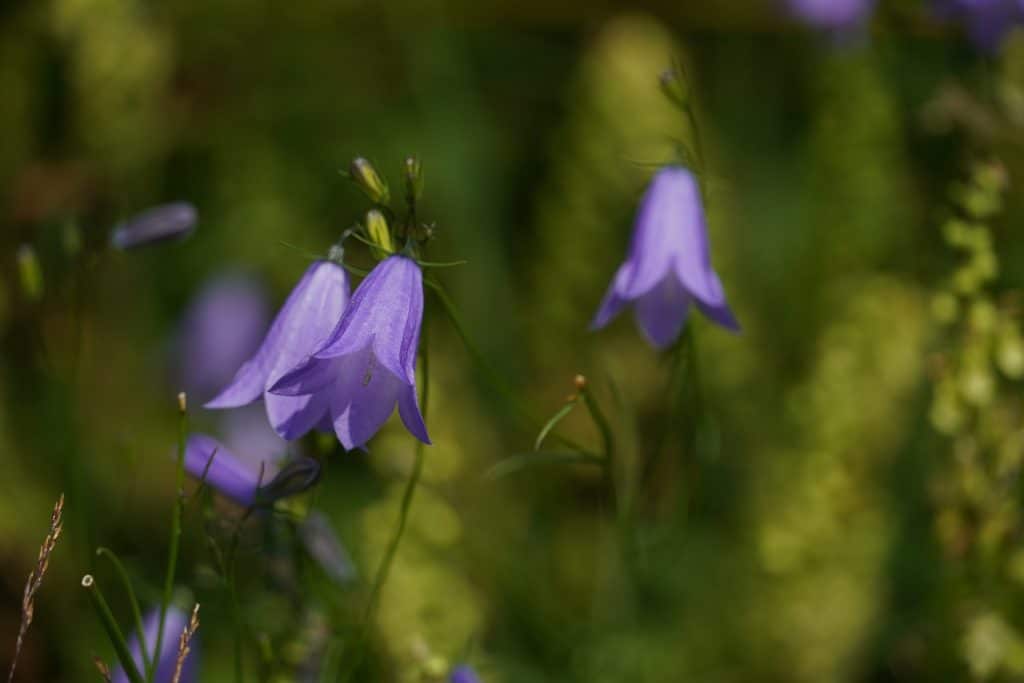
This beautiful perennial wildflower has pretty bell-shape flowers which are borne on tall, erect stems through summer and potentially into autumn too.
Harebells work very well within a meadow scheme, in herbaceous borders, cottage garden beds, or in other wildlife-friendly planting schemes. This is also known as the ‘bluebell of Scotland’.
As well as being beloved by bees, Campanula rotundifolia is also an edible plant. All parts of the plant are edible. Flowers and leaves can be added to salads and the leaves can also be steamed and eaten as cooked greens.
Grow these pretty closers in moist but well drained soil in full sun or partial shade. Sow in March-April, plant out May-June and enjoy flowers each year between June and August.
Foxgloves
A plant that definitely is not edible but which is great for bees, especially bumble bees which can access the bell-shaped tubular flowers, is the foxglove. This poisonous biennial or short-lived perennial can self-seed readily in the right setting and is a great choice for a wildlife-friendly garden.
They look particularly at home in a sunny woodland glade or in dappled shade below fruit trees, for example. Their nectar rich flowers attract bees into the space from late spring through summer.
Plant in light or dappled shade in a moist and humus rich soil that containers plenty of organic matter. You can purchase young plants to plant in spring or autumn, or sow their seeds in late spring or early summer.
Clovers
Trifolium subspecies, commonly known as red clover and white clover, are also great bee wildflowers to grow in a bee-friendly garden. Great ground covers, these clovers can work well in many different locations in many different gardens.
White clovers are wonderful to attract honey bees to your space, while red clover is particularly good at attracting longer tongued bumblebees to your garden.
Sow clovers on their own or as part of wildflower grass mixes in spring.
Greater Knapweed
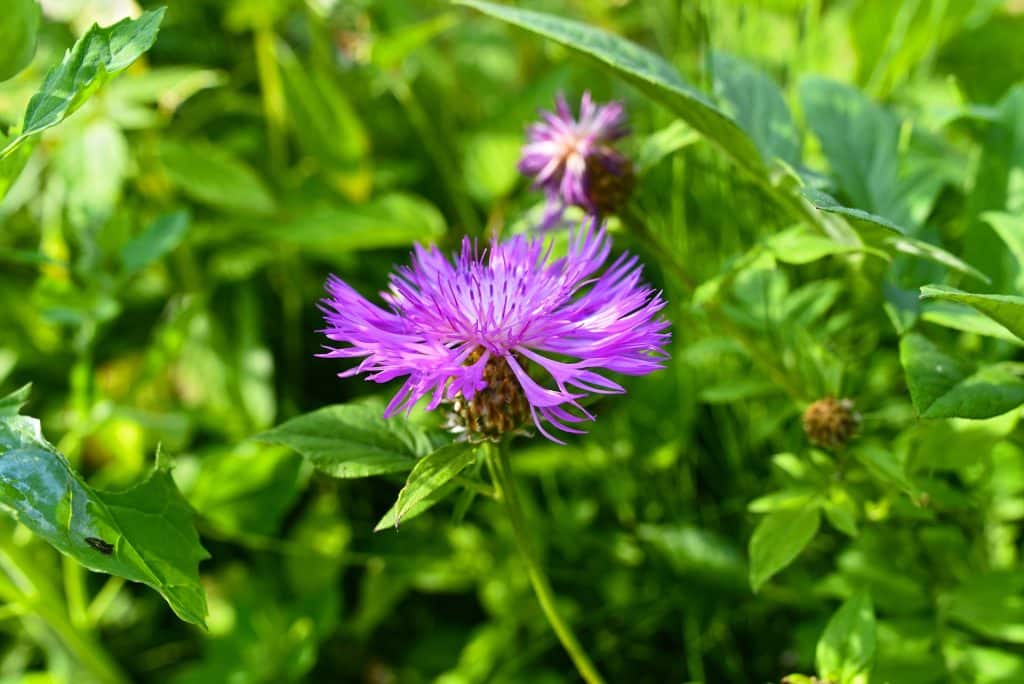
Centaurea scabiosa, greater knapweed, is a wonderful perennial flower found in dry grasslands, hedgerows etc. on lime-rich soils. This is another wildflower that is particularly beloved of bees, and can also attract many other species, including several butterflies, to a garden.
Growing around 90cm tall, with reddish-purple flowers around 5cm across, these are attractive plants to include in a meadow scheme, or in an informal wildlife-friendly bed or border.
Betony
Betonica officinalis, formerly Stachys officinalis, commonly known as betony, as another great perennial wildflower for bees, as are many other members of the dead nettle family. Commonly found in grasslands and hedgerows, it can also do rather well in gardens.
Popular with a range of pollinators, betony is particularly favoured by the solitary wool carder bee (Anthidium manicatum). You may find this bee nesting in bee hotels in gardens.
Grow in full sun to full shade, but in a moist but well-drained soil. Sow seed in late summer, where it is to flower. It should self-seed readily in the right location.
Field Scabious
Field Scabious, Knautia arvensis, is another bee-friendly perennial. It has pretty purple/blue flowerheads around 4cm across that are borne in summer and into autumn.
Grow field scabious as part of meadow schemes for bees in alkaline, well-drained, fertile soil in full sun and the garden will soon no doubt be abuzz.
References:
https://www.rhs.org.uk/science/conservation-biodiversity/wildlife/plants-for-pollinators