

Irrigation is the controlled supply of water to plants to support healthy growth. It’s particularly important in a polytunnel because the cover keeps out rainfall, meaning you need another way to water your crops.
From simple hand watering to drip lines and soaker hoses, there are several ways to supply water under cover. The best approach depends on your crops, soil, growing space and available water. Understanding the options will help you choose a practical system that suits your needs while making good use of this valuable resource.
Key Takeaways
- Polytunnels need a separate water supply because their covers prevent rainfall from reaching the soil.
- Drip irrigation, soaker hoses, overhead watering and hand watering suit different growing situations.
- Soil type and crop requirements influence how often you need to water.
- Rainwater collection, mulching and healthy soil can help conserve moisture.
- A well-planned system can make watering easier and more sustainable.
Why Do Polytunnels Need Irrigation?
A polytunnel creates a sheltered environment for growing vegetables, fruit and seedlings, but its cover also keeps rain away from the soil inside. You must therefore provide enough moisture to meet your plants’ needs.
Watering requirements vary with the weather, soil conditions, crop type and stage of growth. Warm temperatures can cause soil to dry out more quickly, so check moisture levels regularly rather than relying on a fixed schedule.
For more practical advice, explore this guide to different ways to water your plants.
How Does an Irrigation System Work?
Most systems follow the same basic route:
Water source → Pipes or tubing → Delivery point → Plant roots
- Water source: Water comes from a suitable supply, such as a tap or storage tank.
- Pipes or tubing: Water travels towards the growing area.
- Delivery point: Drippers, soaker hoses or sprinklers distribute the water.
- Root zone: Water reaches the soil, where plant roots can absorb it.
Some systems include timers to help manage watering times, while others require manual control.
What Are the Main Types of Irrigation for a Polytunnel?
The most common options are drip irrigation, soaker hoses, overhead irrigation and hand watering.
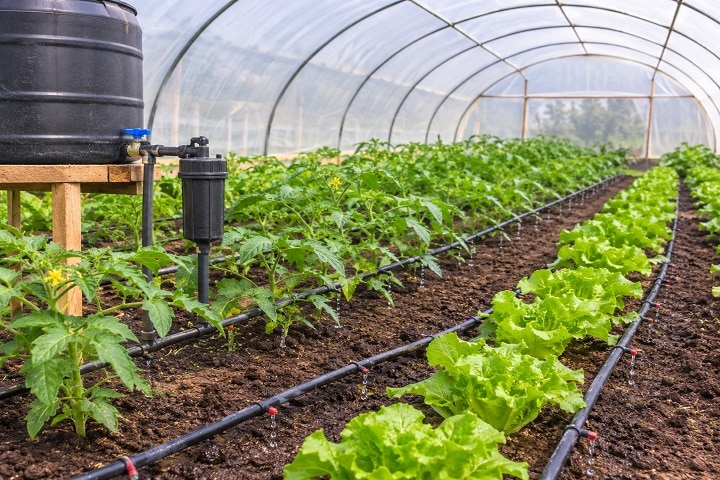
- Drip irrigation: Small outlets deliver water close to individual plants. This suits crops growing in rows or at regular intervals.
- Soaker hoses: Water seeps through the hose along its length, moistening the surrounding soil.
- Overhead irrigation: Sprinklers distribute water from above, potentially wetting both soil and foliage.
- Hand watering: A watering can or hose gives you direct control and works well for smaller growing areas.
The best choice depends on your crop layout, water supply and the time you can spend watering.
How Does Soaker Hose Irrigation Work?
A soaker hose is porous, allowing water to seep out along its length. Position it beside a row of vegetables or around a growing bed to deliver moisture close to the plants.
This can be convenient when crops are planted in organised rows. However, water distribution depends on soil type, hose placement and water pressure. Check that moisture reaches the root zone evenly.
Find out more about using a soaker hose.
Drip Irrigation vs Overhead Irrigation
These methods distribute water differently, which can affect how you manage your crops.
| Method | How it works | Main consideration |
|---|---|---|
| Drip irrigation | Delivers water near individual plants | Outlets need suitable positioning and occasional checking |
| Soaker hose | Releases water along the hose | Coverage depends on soil and layout |
| Overhead irrigation | Sprays water across the growing area | Can wet foliage as well as soil |
| Hand watering | Applies water directly by hand | Requires more time and regular attention |
Drip irrigation and soaker hoses are useful when you want to concentrate water around the root zone. Overhead watering may suit crops that benefit from broader coverage, although wet foliage can encourage some plant diseases in suitable conditions.
For a small tunnel, hand watering may be all you need. An automated system isn’t essential for every grower.
How Does Soil Affect Irrigation?
Soil influences how quickly water drains away and how long it remains available to plant roots.
| Soil type | Typical behaviour | Watering consideration |
|---|---|---|
| Clay-rich soil | Retains moisture and drains relatively slowly | Avoid overwatering and waterlogging |
| Sandy soil | Drains more quickly | Plants may need more frequent watering |
| Loamy soil | Often balances drainage and moisture retention | Adjust watering to suit conditions |
These are general patterns, and actual soil behaviour varies. Check the moisture around your plants and adjust your watering accordingly.
How Can You Make Polytunnel Irrigation More Sustainable?
Sustainable irrigation is about using water thoughtfully while keeping your plants healthy. A few simple changes can reduce waste and help make your growing space more resilient.
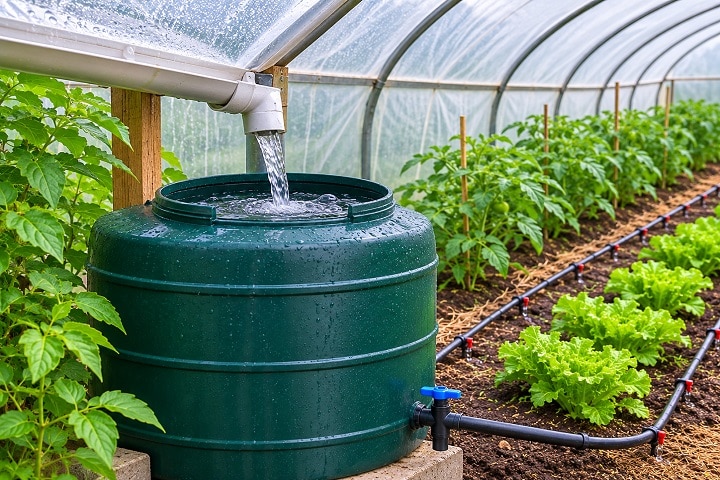
- Collect rainwater: Although the polytunnel cover keeps rain off your crops, suitable gutters can direct roof runoff into a water butt or storage tank. Check that collected water is suitable for your intended use.
- Water at the right time: Watering early in the morning can reduce evaporation and give plants access to moisture before the warmer part of the day.
- Deliver water where it’s needed: Drip irrigation and soaker hoses can direct water towards the root zone, avoiding paths and unused growing areas.
- Check soil moisture: Feel the soil before watering rather than following a rigid schedule. This helps prevent unnecessary watering.
- Use suitable mulch: Organic materials, such as clean straw or mature compost, can help soil retain moisture and reduce evaporation when applied appropriately.
- Maintain your equipment: Check hoses, connectors and drippers for leaks or blockages so water reaches your crops efficiently.
You don’t need an elaborate irrigation system to make a difference. Small changes can help conserve water while keeping your polytunnel productive.
A Regenerative Gardening Approach to Water Management
Regenerative gardening aims to improve the health of the growing environment over time. Water management is an important part of this approach because healthy soil can store moisture, support soil life and help reduce runoff.
In a polytunnel, you can put regenerative principles into practice by focusing on soil health as well as your irrigation equipment.
- Build soil organic matter: Add mature compost and other suitable organic matter to improve soil structure and support beneficial soil organisms. Well-structured soil can often hold moisture more effectively.
- Keep soil covered: Use suitable organic mulch or living ground cover where practical. Covering bare soil helps limit evaporation and protects the soil surface.
- Minimise unnecessary disturbance: Avoid digging or cultivating more than necessary. Reducing disturbance can help preserve soil structure and the organisms that contribute to soil health.
- Make the most of stored water: Collect rainwater from the polytunnel roof where feasible, and use it carefully during drier periods. Plan storage around your space, rainfall and likely crop demand.
- Match watering to plant needs: Group crops with similar watering requirements together where possible. This can make water use easier to manage.
- Avoid overwatering: Excess water can carry nutrients away from the root zone. Use compost and other soil amendments thoughtfully, according to your soil and crop needs.
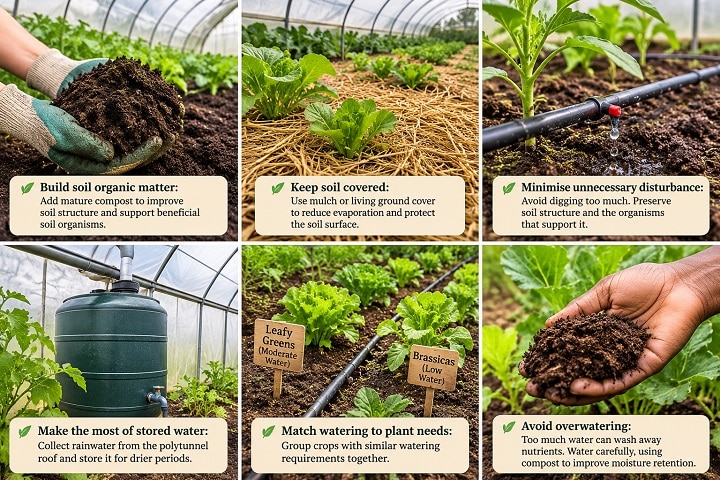 These practices work together. Soil with good structure and organic matter, protected by a suitable cover, can make better use of the water you supply. Results depend on your soil type and growing conditions, so observe how moisture behaves in your tunnel and adjust as needed.
Regenerative water management isn’t about eliminating irrigation. It’s about creating a healthier growing environment that makes every drop count.
What Should You Consider When Irrigating a Polytunnel?
Before choosing a method, think about your growing space and the needs of your crops.
- Crops: Are you growing seedlings, individual plants or vegetables in rows?
- Soil: Does it drain quickly or retain moisture?
- Tunnel size: Can you water the entire growing area easily?
- Water source: Will you use a tap, tank or another suitable supply?
- Water availability: Can your supply meet your crops’ needs?
- Time: Would a fixed system make watering more manageable?
- Layout: Can hoses or tubing reach the plants without getting in your way?
- Sustainability: Could you collect rainwater, improve soil structure or use mulch to conserve moisture?
- Control: Would a timer be useful, or would you prefer to water manually?
Your needs may change as plants grow and the weather shifts, so choose an approach that’s easy to check and adjust.
If you’re planning a new growing space, the size and layout of your domestic polytunnel will also influence how you arrange your watering system.
Conclusion
Successful polytunnel watering starts with understanding your crops and growing conditions. Whether you use a watering can, drip lines, a soaker hose or sprinklers, choose a method that fits your space and available water.
You can make your approach more sustainable by collecting rainwater, reducing evaporation and building healthy soil. Start with practical changes, monitor soil moisture and adjust as conditions change. Over time, these habits can help you grow healthy crops while making better use of water.
Frequently Asked Questions
What is an irrigation system?
It’s an arrangement of equipment used to supply water to plants, potentially including a water source, pipes, tubing and outlets such as drippers or sprinklers.
Why do polytunnels need irrigation?
The cover prevents rainfall from reaching the soil inside, so growers must supply water separately.
What are the main types of irrigation?
Common options include drip irrigation, soaker hoses, overhead sprinklers and hand watering. The right choice depends on your crops, soil and growing layout.
How does a soaker hose work?
A porous hose releases water along its length, allowing moisture to seep into the surrounding soil near plant roots.
How can I conserve water in a polytunnel?
Collect rainwater where possible, check soil moisture before watering, use suitable mulch and consider drip irrigation or soaker hoses to deliver water close to plant roots.
Sources
United States Department of Agriculture (USDA) (n.d.) Controlling High Tunnel Environment: Outfitting of High Tunnels for Irrigation. Available at: https://www.nrcs.usda.gov/sites/default/files/2022-10/Controlling-High-Tunnel-Environment.pdf (Accessed: 1 November 2026).
Utah State University Extension (n.d.) Irrigation Management in High Tunnels. Available at: https://extension.usu.edu/agriculture-and-natural-resources/irrigation-high-tunnels (Accessed: 1 November 2026).