

What is Aquaponics? – Some Basic Tips and Advice on Getting Started
If you would like to take things to another level and really maximise the amount of food your garden can produce, aquaponics is one interesting option to consider. In an aquaponics system, you can grow fish as well as fruits, vegetables and herbs – an additional protein source for your family.
If you already grow your own food, either in a polytunnel or outdoors, you will no doubt be aware of a number of strategies that allow you to make the most of your space, increase your yield and grow as much as possible. Aquaponics could be a new and interesting avenue to explore.
What Is Aquaponics?
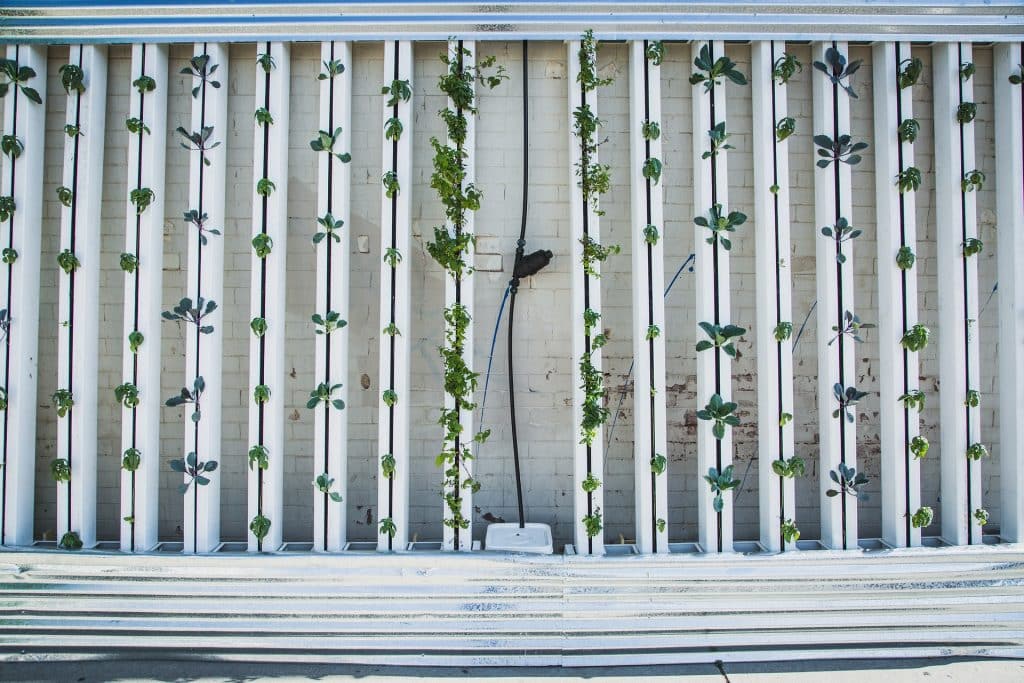
Aquaponics is a word which comes from the words aquaculture (rearing fish) and hydroponics (growing plant-based foods in water rather than in soil).
An aquaponics system is any system where we rear both fish and plants together, in ways that work synergistically for the benefit of the whole.
Aquaponics systems can be very simple – or very complex. They can be created on a range of different scales – from small barrel systems for domestic homes, to far larger commercial systems. But no matter how large or small they may be – the general concept and the symbiosis between the different elements of the system remain more or less the same.
Combining fish rearing with water-based food production means that you can create closed-loop systems, with multiple yields.
In traditional fish rearing, the water needs to be aerated and cleaned. In an aquaponics system, the water is ‘cleaned’ by plants (and micro-organisms within the system).
In aquaponics, we take advantage of natural processes to grow edible plants in water which is enriched and fertilized by fish. The fish waste in water is a valuable source of nutrients that plants need. So in aquaponics, unlike in other forms of hydroponics, we do not need to add additional ‘feed’ or fertilizer for the plants.
The excretions of fish or crustaceans kept in tanks will gradually build up over time. This waste is usually simply cycled out of the system in traditional aquaculture.
In an aquaponics system, however, the nutrient rich, excrement laden water is fed into a hydroponic system, where bacteria will break down the waste in the water into nitrates, which can provide nutrition to plants whose roots are given access to the water.
This water, cleansed by the plant roots, can then by cycled back into the tanks that it came from, keeping the water in the fish tanks fresh and the fish happy.
Why Is Aquaponics Beneficial?
As mentioned above, aquaponics systems can be beneficial both for the fish and for the plants – giving each what the need by combining the them in the right ways.
What is more, aquaponics systems can increase yields by allowing for more food sources to be grown – potentially even in the smallest of spaces. My using less land to grow food – aquaponics systems can potentially reduce pressures on land use, and also help to prevent overfishing and other issues in the world’s rivers, seas and oceans.
Aquaponics systems can also use far less water than other, conventional, food producing systems. In such a system, water circulates through the system, and none is wasted. By creating a sustainable, closed-loop aquaponics system, you can use far less water than you might otherwise do to grow food for yourself and your family, or to grow food commercially.
Aquaponics also allows you to create an entirely organic system. When fish fertilize the water used to grow your plants, there will be absolutely no need for external and potentially harmful synthetic fertilizers.
Should You Use Aquaponics In Your Polytunnel?
While aquaponics systems can certainly be an interesting option to consider for polytunnel gardeners, and other growers in the UK, it is important to think carefully before you decide to adopt this approach and set up an aquaponics system where you live.
One think to think about carefully is how much space you have available for such a system. There are many small-scale aquaponics systems that can work well, but you must think about how much space is required for the fish, and their tanks, as well as the growing areas and other elements of the system.
There are some simple aquaponics systems that won’t cost a huge amount to implement. However, setting up an aquaponics system will usually cost more than simply getting growing and sowing seeds to grow in the ground or in raised beds.
There is also more complexity involved. And a lot of research that you will have to do to keep both fish and plants healthy and happy. So if you are a novice gardener, there may well be simpler and easier approaches to take.
That said, if you have already been growing your own, or have more gardening experience, branching out into aquaponics can be a way to take on new challenges, and if you make the effort, the rewards really can be substantial.
DIY Aquaponics: How To Set It Up Yourself
Choosing Which Type of Aquaponic System To Use
If you are thinking about setting up an aquaponic system, one of the first things to consider is which type of system you will use. The most common types of aquaponic system are:
- Media Bed – Constant Flow, or Ebb and Flow systems.
- Deep water culture aquaponics.
- Nutrient film aquaponics.
- Barrelponics.
- Wicking beds.
The Basic Elements of an Aquaponic System
Though different aquaponics systems will operate somewhat differently, the following components are usually required:
- A tank in which to rear the fish or other water creatures.
- A settling basin which will catch uneaten food and larger particulates that cannot be filtered out by plants.
- A biofilter where nitrification bacteria can grow.
- The hydroponics section where plant growth and plant water-filtering occurs.
- And a sump, to and from which water is pumped en route back to the rearing tanks.
Of course then you would also have the fish. And the plants growing within the system. And a third form of life – micro-organisms which allow the processes to work as they should.
In rudimentary aquaponics systems, some of the above components may be combined and the system can also be more complex in more advanced systems.
Choosing Which Fish To Rear
Fish commonly used in aquaponics systems include:
- Tilapia: Are quick growing and good to eat, can withstand very poor water conditions and eat plant material and so are cheap to feed. They are one of the most common and best options for many aquaponics systems but require warm water and so will require more energy use in colder climates.
- Trout: Good to eat, very fast growth rate, excellent food conversion ratios, rout can be a good option for aquaponic systems but will require non-plant food and will eat smaller fish.
- Sturgeon: Good to eat, and grow quickly. Sometimes less good at adapting to a given situation.
- Carp: Edible, though perhaps not as good to eat as trout and some other freshwater fish, carp reproduce easily and can adapt well to a range of different environments.
- Catfish: Pretty good to eat, must be skinned. Fast growing and good food conversion ratios.
- Largemouth Bass: Strong tasting compared to other fish, though edible. Better taste in lower water temperatures.
Tilapia are the best choice for warmer climates while trout are usually regarded as the best choice for those living in cooler temperate zones like the UK. You could also consider converting a greenhouse or a heated polytunnel to create a suitable rearing environment for tilapia.
Other aquatic creatures that can be used in aquaponic systems include:
- Freshwater Mussels
- Crayfish
- Freshwater Prawns
All of these can be useful elements in an aquaponics system and may sometimes be used in conjunction with fish.
Choosing Which Plants to Grow
A wide range of plants can be grown in different aquaponic systems, though most types of aquaponic system are extremely well suited to growing leafy, nitrogen-hungry plants such as lettuce, brassicas and herbs.
You can experiment with growing most of your favourite fruits and vegetables using an aquaponics system and make more out of the space you have in your garden. If you use wicking beds, these can be used to grow other plants which would not usually be suited to hydroponic cultivation.
Sizing Your Aquaponics System
If you plan to set up your own aquaponics system, then another key consideration is sizing the system for the welfare of both fish and plants.
As a general rule of thumb, which can help with sizing your system, you will need a fish tank with at least 20-26 litres of water per ½ kg of fish. And you should include ½ kg fish for each 0.1 sq m of grow bed surface area within the hydroponic growing areas of the system.
Of course, there is a lot to learn about aquaponics before you can successfully implement such a system. But the information included above should give you a place to start…
References:
https://rgjaquaponics.weebly.com/media-bed-technique.html
https://gogreenaquaponics.com/blogs/news/nutrient-film-technique-in-aquaponics