

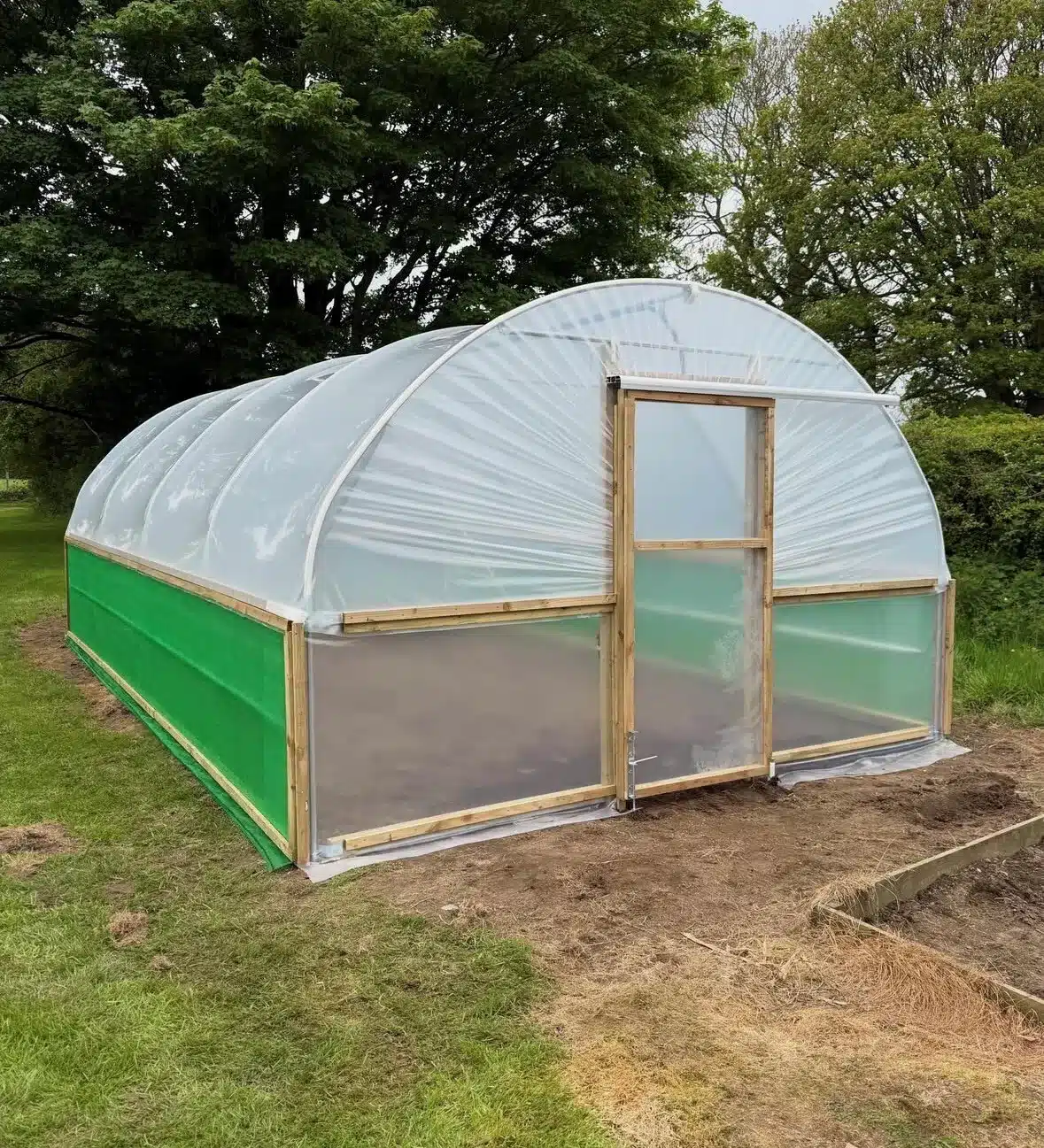
what grows best in a polytunnel?
A polytunnel can transform what is possible in a UK garden. The crops that perform best are usually those that benefit from extra warmth, protection from unpredictable weather and a longer growing season.
So, what grows best in a polytunnel? In my experience, the strongest performers tend to be heat-loving crops such as tomatoes, peppers and cucumbers, alongside productive fruit crops like strawberries and fast-growing salad leaves that benefit from a more stable environment.
A protected growing space is not just about growing more plants. It is about creating better conditions for the plants you choose. The most successful growers I know do not try to grow everything under cover — they select crops that genuinely benefit from the environment a polytunnel creates.
This is something I have found particularly important in ecologically sensitive and regenerative gardening. Good growing is about matching the right plant with the right place. A well-planned polytunnel can act as a productive microclimate, allowing you to grow crops that might otherwise struggle in the UK climate.
If you are exploring possibilities for your own growing space, you can discover what crops grow best in a polytunnel environment and see how protected growing can expand your choices.
Key Takeaways
- Tomatoes are one of the most reliable and rewarding polytunnel crops.
- Warmth-loving vegetables benefit most from protection against cooler UK weather.
- Fruit crops such as strawberries often produce cleaner and longer harvests under cover.
- Vertical crops help maximise the available growing space.
- Choosing crops based on growing conditions usually gives better results than simply planting more varieties.
Growing insight: The best polytunnel crops are not always the most unusual ones. Often, the biggest rewards come from plants that respond well to a warmer, longer and more consistent growing season.
Why Some Crops Thrive Better in a Polytunnel
A polytunnel creates a growing environment that is different from an open garden.
It does not completely control the weather, but it helps reduce some of the challenges that UK gardeners face. Cooler nights, heavy rainfall, strong winds and short growing seasons can all limit crop performance outdoors.
Inside a polytunnel, plants benefit from:
- Warmer soil earlier in the season
- Protection from wind and heavy rain
- More consistent temperatures
- Longer productive periods
- Cleaner growing conditions
However, not every crop needs this extra protection.
Many hardy vegetables, including some root crops and winter greens, can grow perfectly well outdoors. A polytunnel earns its place by helping you grow crops that would otherwise produce less reliably.
When planning a tunnel, I encourage growers to think about the crops they most enjoy eating and the plants that will genuinely benefit from protection.
Tomatoes — The Classic Polytunnel Crop
If there is one crop that demonstrates the value of a polytunnel, it is tomatoes.
Tomatoes naturally prefer warmth, sunshine and a longer season. While outdoor tomatoes can succeed in favourable UK summers, growing them under cover usually provides more reliable results.
I often find that productive growing is less about squeezing in more plants and more about using space intelligently. A few well-managed tomato plants can be far more rewarding than an overcrowded tunnel.
Why Tomatoes Perform So Well
- More consistent warmth
- Better fruit ripening
- Protection from wet weather
- Longer harvesting period
- Excellent use of vertical space
Tomatoes are also rewarding because they make good use of the height inside a polytunnel. By training plants upwards, you can produce a generous crop without using a large amount of floor space.
Cucumbers — Fast Growth in Stable Conditions
Cucumbers are another crop that benefits enormously from protected growing.
They enjoy warmth and humidity, making the polytunnel environment a natural fit.
Benefits of Growing Cucumbers Under Cover
- Faster establishment
- Longer picking period
- Protection from cooler weather
- Excellent vertical growth habit
Cucumbers are particularly useful in smaller tunnels because they can be trained upwards. This allows you to grow productive crops while keeping the ground available for other plants.
A simple support system can turn a small area into a highly productive growing zone.
Peppers and Chillies — Heat-Loving Crops That Reward Protection
Peppers and chillies are among the crops that show the clearest improvement when grown under cover.
These plants need warmth to develop well, and UK summers do not always provide the consistent heat they prefer.
Inside a polytunnel, peppers and chillies can benefit from:
- Longer periods of warmth
- Better fruit development
- Protection from cold spells
- More reliable cropping
They are also compact plants, making them suitable for gardeners who want high-value crops without using too much space.
If you are interested in growing these crops successfully, you can learn more about growing peppers and chillies successfully in a polytunnel.
Strawberries — Earlier and Longer Harvests
Strawberries are a wonderful example of how protected growing can improve both quality and convenience.
Growing strawberries in a polytunnel can help produce cleaner fruit and may allow harvesting earlier than outdoor plants.
| Benefit | Why It Helps |
|---|---|
| Cleaner fruit | Less exposure to wet soil and rain |
| Protection from weather | Reduces stress during poor conditions |
| Earlier cropping | Warmer conditions encourage growth |
| Container suitability | Flexible use of space |
Strawberries also work well in raised systems, containers and gutter growing setups, making them adaptable for different tunnel designs.
As with any crop, problems can still occur. It is useful to understand the most common issues that affect strawberry plants so small problems do not become bigger ones.
Salad Leaves and Leafy Greens — Reliable Extended Harvest Crops
Not every successful polytunnel crop needs to be exotic or heat-loving.
Leafy greens are some of the most dependable plants for making good use of protected space.
Examples include:
- Lettuce
- Rocket
- Spinach
- Mustard greens
- Oriental leaves
These crops benefit from:
- Protection from harsh weather
- Extended growing seasons
- Faster growth during cooler periods
- Repeat harvesting
For me, these are some of the most valuable crops in a productive growing system because they provide regular harvests rather than one large crop at the end of the season.
Beans and Climbing Crops — Making Use of Vertical Space
A polytunnel gives gardeners the opportunity to think vertically.
Climbing crops are especially useful because they make use of the height of the structure rather than competing for ground space.
Good choices include:
- Climbing beans
- Cucumbers
- Some squash varieties
- Tall tomato varieties
Vertical growing can make a smaller tunnel feel much larger, but it does require planning. Consider where plants will cast shade and make sure harvesting areas remain accessible.
Courgettes and Aubergines — Warm-Season Producers
Courgettes and aubergines both appreciate the warmer conditions found inside a polytunnel.
Courgettes can become extremely productive, while aubergines often perform much better when given extra warmth.
Why They Suit Protected Growing
- Faster establishment
- Better fruit development
- Protection from cooler weather
- Longer productive periods
Aubergines in particular benefit from the extra heat a polytunnel provides, making them a good choice for gardeners who enjoy growing crops that are less reliable outdoors.
Herbs and Bonus Crops Worth Trying
A polytunnel also provides a useful environment for herbs.
Many herbs appreciate shelter from harsh weather, and they can be fitted into smaller spaces around larger crops.
Useful choices include:
- Basil
- Parsley
- Coriander
- Chives
- Mint (best contained)
Herbs can also support a more diverse growing system by attracting beneficial insects and making better use of unused corners.
Which Crops Give the Biggest Return on Your Polytunnel Space?
The best crops for your tunnel depend on what you value most: quantity, reliability, variety or season extension.
High-Return Polytunnel Crops
| Crop | Main Advantage |
|---|---|
| Tomatoes | Long harvest and excellent vertical use |
| Cucumbers | Fast growth and efficient use of space |
| Peppers | Benefit greatly from warmth |
| Strawberries | Clean fruit and extended harvesting |
| Salad leaves | Reliable repeat harvesting |
| Climbing beans | Maximum use of height |
For beginners, I usually recommend starting with a few dependable crops rather than trying to grow everything at once.
A productive polytunnel is built over time. Each season teaches you more about how your space behaves, where heat collects and which plants respond best.
If you are planning your own growing system, a well-chosen crop list can help you make the most of your investment and encourage a more sustainable approach to food production.
Final Thoughts
A polytunnel is not simply a place to grow plants that cannot survive outdoors. It is a tool for creating better growing conditions and extending what is possible.
The crops that perform best are usually those that benefit from extra warmth, protection and consistency. Tomatoes, cucumbers, peppers, strawberries and leafy greens are reliable favourites because they reward the environment a polytunnel provides.
Annual crops are definitely good choices. However, I think it is important to look beyond typical annual crops and to consider other perennials that can thrive in a polytunnel besides just strawberries.
From a practical gardening perspective, the most successful approach is always to observe, experiment and adapt. Every growing space has its own microclimate, and the best results come from working with it.
Frequently Asked Questions
What should you not grow in a polytunnel?
Very hardy crops that already perform well outdoors may not need valuable protected space. It is usually better to prioritise crops that benefit from warmth or weather protection.
Can you grow in a polytunnel or greenhouse all year round?
Yes, many crops can be grown throughout the year with careful planning, although winter growth depends on crop choice, temperatures and available light.
What should you not grow in a polytunnel during the winter?
Heat-loving summer crops such as tomatoes and peppers are generally not suitable during colder months unless conditions are carefully managed.
Are tomatoes better in a polytunnel than outdoors?
Tomatoes often perform more reliably in a polytunnel because they benefit from warmer temperatures, protection from rain and a longer growing season.
Sources
Royal Horticultural Society (RHS) (2025) Vegetable growing guides. Available at: https://www.rhs.org.uk/vegetables (Accessed: 3 August 2026).
Centre for Alternative Land Use (CALU) (2002) Tunnel Vegetable Production. Bangor: University of Wales, Bangor. Available at: http://www.calu.bangor.ac.uk/Technical%20leaflets/021201tunnel%20veg.pdf (Accessed: 3 August 2026).