

Understanding your garden soil is crucial for any gardener. The properties of the soil and its characteristics play a hugely important role in how a garden should be managed, what will grow well there, and the quality and size of your yields.
Soil health is something we as gardeners can easily affect, both positively and negatively, over time. Understanding your soil properly is the first step in ensuring that you protect the soil in your garden and can make the right choices and improve it over time. Make the right choices and soil and plants can suffer – so it really is important to get it right.
Table of Contents
Understanding Garden Soil Makeup
Soil is made up of:
- Mineral particles.
- Air.
- Water.
- Organic matter.
- Living organisms.
In order to learn more about our soil, we need to delve a little deeper into a few key areas. We need to know:
- What broad type of soil we have.
- The size of the particles in the soil and what that means when it comes to air and water.
- How much organic matter is currently in our soil.
- The pH of our soil, or how alkaline or acidic it is.
- And how fertile the soil is at present.
Beyond this, we may also wish to learn more about the nutrient composition of the soil, and other very specific characteristics. But the above areas are the main ones to look at to begin with.
Garden Soil Types
There are six main broad soil types in the UK, clay soil, silty soil, loam, sandy soil, chalky soil and peat (rare in the UK, found mostly only in upland parts of Scotland). Of these, loam is the best type for growing plants and the easiest for gardeners. All the others have both advantages and disadvantages.
Clay, silty and sandy soils are defined by the size of the mineral particles they contain. Chalky and peat soils are distinctive because of their extreme pH levels and other distinctive features.
1. Loam Soil
Loam soils are the ideal for gardeners. they are made up of mineral particles of different sizes along with plenty of organic matter. There are different loams – such as sandy loam and clay loam – which have different characteristics. But all loams are fertile, well-drained yet reasonably moisture retentive, and easily worked – avoiding the extremes of other soil types.
2. Silty Soil
Silty soil is fairly high in fertility and fairly free draining. It also retains water reasonably well. However, it can also be quite easily compacted.
3. Chalky soil
Chalky soil is characterised by small or larger pieces of white chalk (calcium carbonate or lime) found within it. It is often free draining, but can also be heavy, but is always strongly alkaline, which means that only certain plants that like alkaline conditions will thrive in it.
4. Clay Soil
Clay soil has good fertility, since nutrients are held within the clay minerals. This type of soil also holds water well. However, this type of soil is heavy and easily compacted. It is slow to drain, slow to warm up in spring, and can bake hard in summer
5. Peaty Soil
Peat soil is not common across most of the UK, but where it is found, very specific planting plans and strategies need to be employed. Peat is usually very fertile, extremely high in organic matter and quite easy to work, but it drains poorly, becomes easily waterlogged and is highly acidic, meaning that acid-loving plants will thrive there, but many other plants may struggle.
6. Sandy Soil
Sandy soil is free-draining, and easy to cultivate and work. It is quick to warm up in the spring. However, it dries out quickly, is low in nutrients and quickly loses more when these are washed out by rain. It can also sometimes be very acidic.
Test by Trying to Form a Ball of Soil
Determining which of these six types of garden soil you have is a crucial first step towards understanding your soil.
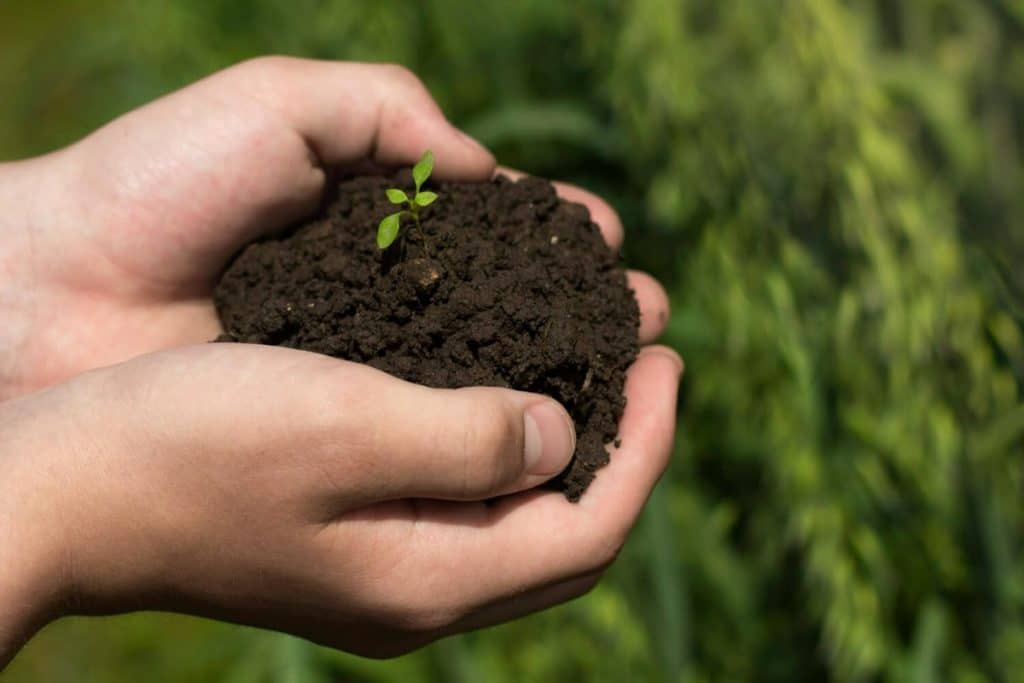
One way to test for particle soil and broad soil characteristics is to take a moist lump of soil and roll it between your palms.
A sandy soil will not form into a ball but will crumble apart easily.
Where more clay is present, you will be able to roll the damp soil into a ball.
If you can make a sausage shape, and curl that sausage into a ring without it breaking, then you have a heavy clay soil.
Pure silt soils are rare in gardens, but have a soapy, slippery quality and will not clump together easily.
If you see white lumps in your soil, it is a chalky soil.
Of course, this is just one of a number of ways that you can gain information about the type of soil where you live.
Another thing that you can consider if you have some kind of loam is placing some soil into water. Leave it overnight and the particles within it should settle into layers with different sized particles. So you can see roughly speaking how much clay, or sand, is present in the loamy soil in your garden.
You can also learn a lot simply through observation in your garden. Looking at how quickly or slowly water drains is one thing, for example, that can help you determine soil make up.
As mentioned above, clay soils tend to drain poorly, while sandy soils will tend to drain very quickly. Digging in or working the soil and getting up close also helps you to understand the broadest properties of the soil you are dealing with.
Garden Soil Texture
Soil texture is largely determined by the size of the mineral particles present within it. As mentioned above, clay, silty and sandy soils are defined by the size of their particles.
Clay soils have particles less than 0.002mm in size. Silty soils have particles 0.002 – 0.05mm in diameter. And sandy soils particles are largest, measuring 0.05 – 2mm across.
The size of the particles that create soil texture play an important role in determining the characteristics of that soil, such as how quickly water will drain away, and the air present in the soil structure.
Garden Soil Structure
While it is important to think about mineral particles in the soil, and how the size of these particles influences the texture, it is also essential to remember that the soil is not only composed of these particles, but also of organic matter, air, water, and a complex web of life.
When we talk about soil structure, we are talking about the arrangement of the solids and gaps within soil. The solids are aggregates or clumps formed from mineral particles and organic compounds. The gaps are the pores between them.
A good soil for agriculture or growing food at home is thought to be composed of around 50% solids, 25% air, and 25% water – though this will vary according to the soil type.
Good garden soil structure with plenty of aggregates encourages strong root development and moderates the water content within the soil.
The garden soil structure, unlike the soil texture and the size of the mineral particles, is something that we as gardeners can alter over time – largely through the addition of organic matter and through making sure that the soil ecosystem is disturbed as little as possible.
Living organisms such as bacteria and fungi within the soil help to bind soil particles and organic matter into aggregates with natural substances that act like glues and nets, improving soil structure. These micro-organisms also help to transport water and nutrients around. A healthy soil biome is important for good soil structure, and good soil health.
Though we will not usually be able to see the organisms in healthy soil, we can often gain clues that they are there through monitoring plant growth and the performance of the soil.
What we can sometimes do is look for larger soil life, such as earthworms. Doing simple soil surveys counting earthworms is one other fun protect that might help to indicate to us whether we have succeeded in creating a healthy soil ecosystem in our gardens.
Acid and Alkaline – Soil pH
If you are unfamiliar with the term, garden soil pH is the measurement that tells you whether your soil is acidic, neutral or alkaline. Chalky soils and peat soils are more extreme, but all soils will fall somewhere on the pH spectrum.
Acidic soils will have a pH from 1 to 6.9, alkaline ones 7.1-14. A pH of 7 is neutral.
A slightly acidic soil (with a pH of around 6.5) is said to be the best pH for gardens. This pH allows the widest variety of plants to grow. And when the pH is at this level, microbial and earthworm activity are at their best.
If garden soil has a pH below 5, it is considered to be extremely acidic. Unfortunately, this is far more of a problem. At this pH, most plant nutrients will become more soluble. They will be more easily washed away. Most phosphates will be locked up and become unavailable to plants. Since all plants need phosphorus, along with nitrogen and potassium, to grow – this is a big problem.
Below a pH of 4.7, bacteria cannot rot organic matter and fewer nutrients become available to plants. Such extreme acidity is fortunately rare here in the UK. But if the soil where you live is extremely acidic, you will need to amend it to bring it back into a more favourable pH range. Like excessively acidic soil, very alkaline soil can also cause problems with phosphorus uptake etc..
If you are not sure whether you have alkaline soil, take some and place it in vinegar. If it froths up, it is high in lime and alkaline in nature. There are also affordable pH testing kits available if you want a more accurate idea of pH level.
You can also gain clues about the pH of the soil where you live by looking at the plants already growing there, and the conditions that those plants require. The presence of some plants (or failure of certain plants to thrive) can be a give-away of more alkaline or acidic conditions.
Some ericaceous or acid-loving plants are:
- Blueberries
- Rhododendrons
- Azaleas
- Camellia
- Heathers
While plants that thrive in alkaline conditions include:
- Campanula
- Ceanothus
- Dianthus
- Geraniums
- Lavender
Even the weeds growing in your garden can give some clues about soil type, texture, structure and ph. So again, being more observant about what grows and thrives there can help you learn more about your garden.
How Soil Type Affects the Way You Water Your Plants Etc
Of course, determining soil type helps you understand the properties of that soil, and can therefore inform best practice when it comes to watering your plants, and, of course, for many other things you need to do in your garden.
For example, sandy soils will generally need to be watered more frequently. With clay, you will need to be careful not to overwater and create saturated conditions. You will also need to give the water time to permeate into the soil so that it does not simply run off before filtering down into the soil. How and when you water should change depending on the precise characteristics of your soil.
Of course, learning more about your soil will also help you to choose the right plants, elements and gardening strategies for your space – going far beyond just your watering or irrigation regime.
How to Improve Your Soil
Once you understand your soil a little better, you can begin to improve it – addressing any shortcomings and making the most of the advantages. You can protect the soil and make sure that it is as healthy and fertile as possible.
Adopting a no dig gardening approach, reducing disturbance, covering the soil with mulches, and keeping living roots in the soil over as much of the year as possible are all key strategies. Making your own compost is a great place to begin.
FAQs
What are the 3 most important things in soil?
Soil texture, soil structure and soil fertility (including soil pH and organic matter content) are three of the most important areas to look at when it comes to the soil in your garden.
How do I work out what soil I have?
You should learn basic facts through observation and the simple tests mentioned in this guide. However, if you are ready to delve deeper, you can learn more about the soil where you live through interactive soil maps for England and Wales, and for Scotland, available online.
What should I look for in good soil?
A balanced (loamy) texture, good structure, plenty of organic matter, that provides the moisture levels and pH for the plants you wish to grow, and which has a healthy, biodiverse population of micro-organisms and other life for soil health.
Sources
Fallon, K., (2023) Grassland guide: Understanding soil health. Farmer’s Guardian. [online] Available at: https://www.farmersguardian.com/advice/4116267/grassland-guide-understanding-soil-health [accessed 15/12/23]