

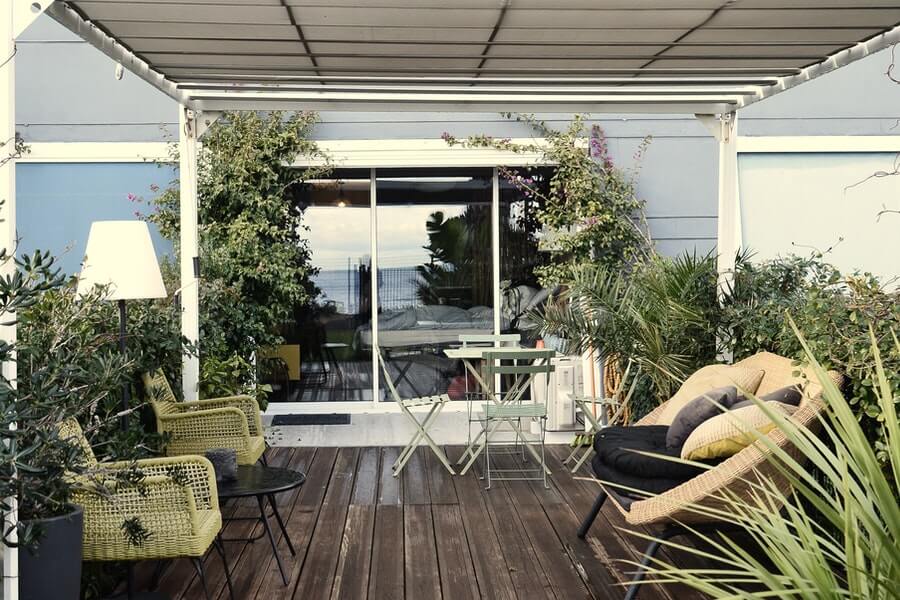
Creating a garden patio can blend the boundary between your home and garden and allow you to enhance your home by having a better connection between your inside and outside spaces. A garden patio is a practical space, typically adjacent to the rear of your home, where you can sit, dine and relax outside.
Today, I thought I would share some of my ideas and suggestions as a garden designer for creating a garden patio that works well for you and within the garden environment.
Materials and Functionality in Garden Patio Design
If you do not already have a patio in place, one of the first and most important things to think about when it comes to garden patio design is, of course, the material or materials from which your patio is made.
One key consideration is whether it is a permeable or impermeable surface. Choosing a permeable patio is usually a more sustainable and eco-friendly choice, since rainwater can pass through into the soil below.
However, even impermeable options can be managed sustainably, as long as runoff is directed away from your home and into suitable water management systems or ‘rain gardens’.
When thinking about which material or materials to choose for a new patio, be sure to think about practical issues such as longevity and durability, and ease of use and cleaning. But keep in mind too the costs (environmental as well as financial) that are associated with the different options.
Create an Extension of Your Living Space
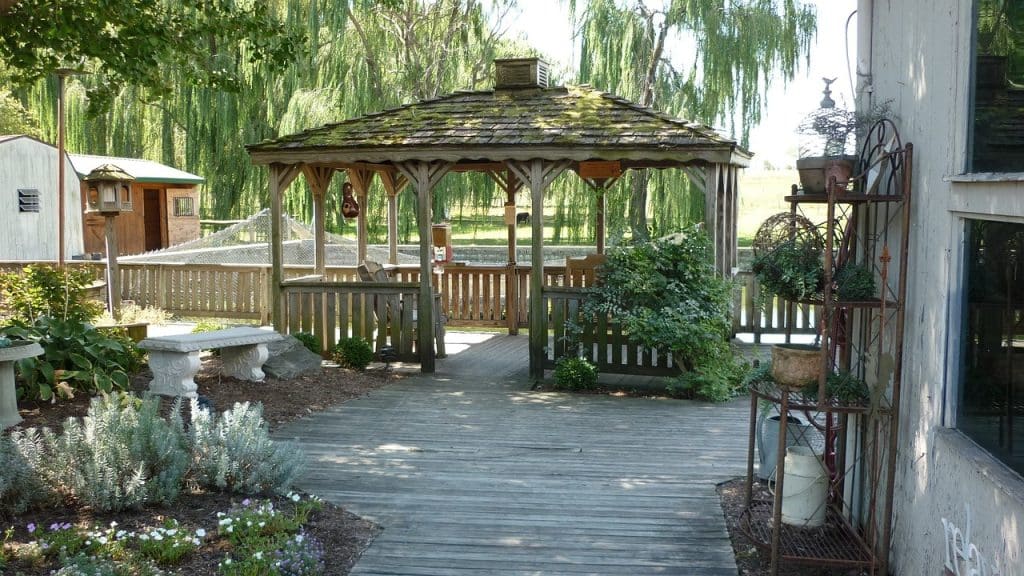
Another key thing to think about when creating a patio is how effectively it can serve as an extension of your home. A patio can be as easy way to extend your living space into the outside areas of your property.
But being able to enjoy your new outside areas does mean getting the size and the balance right. Too small a patio can feel cramped and ungenerous.
But make a patio too large and it can detract from the garden that you want to be outside to enjoy, and limit your ability to plant and make the most of your outside space.
Create an extension to your living space – but make sure that you do not extend too far or you may end up with a paved over paradise, which is something we should all wish to avoid.
Key Features to Include
When you are planning a patio and trying to decide how large it should be, it is a good idea to consider the elements and key features that you and your household might wish to include.
Think carefully about how you and any other members of your family wish to and are likely to use the space throughout the year and longer term, and what features the garden patio should have for them to be able to use the space as they wish.
Zone Your Patio
Once you have spent some time thinking about how a patio would be used, it can be useful to consider zoning the space – or dividing it, literally or in your mind, into separate areas that are used in different ways.
Commonly, for example, patios might be divided into spaces for:
- Food prep and cooking outside.
- Dining al fresco.
- Chilling out and relaxing.
Of course, there are other things that you might do on a patio, but these are three common zones to consider.
Outdoors Kitchen
An outdoors kitchen area can come in many shapes and sizes. But the general idea is that this is a space where you can prepare food and cook in the fresh air. You might include a barbecue within this area, or another outdoors cooking solution like a wood fired pizza oven, or even a solar cooker, for example.
Safety is of course a key concern when dealing with any open flames or hot surfaces. But as long as you have some common sense, you should be able to create an outdoors kitchen that works well for you and keeps everyone safe.
In addition to the means to cook, outdoors kitchen areas might also need to have an outdoors sink, and a countertop prep area. These things can make it a lot easier and more practical when you decide to prepare food and cook outdoors.
Dining Space
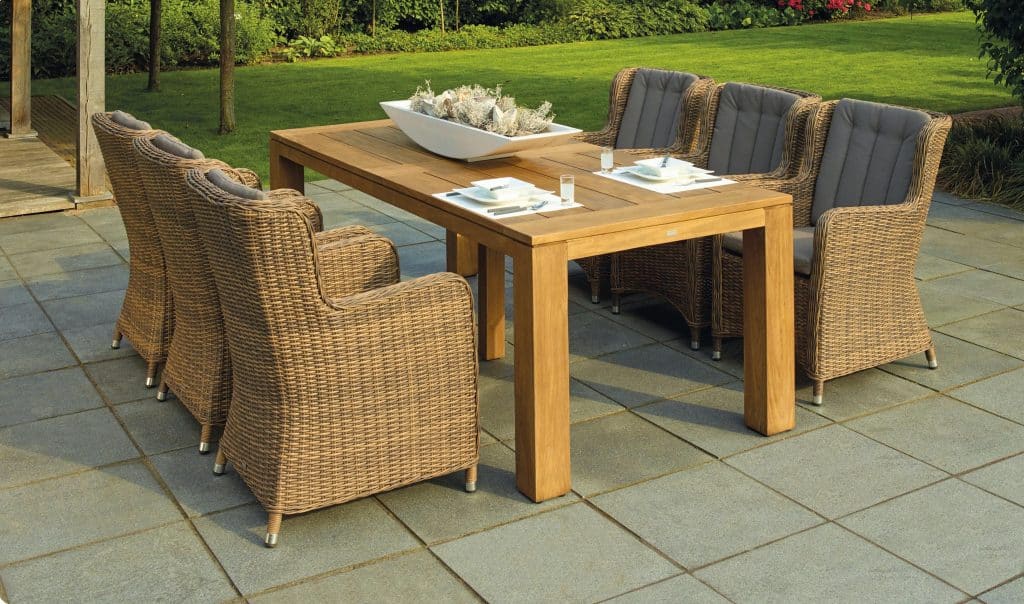
Of course, many people will also want to have a space where they and their family and friends can eat the food that they have prepared, either in an outdoors kitchen or inside their homes.
When deciding where to place an outdoor dining space on a patio, it is a good idea to think about sunshine and shade. Sometimes, sun will be desired but often, in summer, it will be beneficial to have some shade while eating.
A sheltered area is most practical, and sometimes having the dining area covered can be the best idea because this will likely allow you to use the area more frequently.
Relaxed Seating Area
The third key area often included on a patio is an area with relaxed seating, or a chill-out zone. Comfy seating might be built in to a corner of a patio, or freestanding furniture might be added to the space.
Again, when planning where to place such areas, it is important to think about sunlight and shade. If you and your loved ones want to feel truly relaxed, snuggled up together or enjoying some quality time, privacy is something else that can be important.
Most often, you won’t want a relaxed seating area to feel spied on or overlooked. So thinking about sight-lines can be important.
Planting On and Around a Patio
Without a doubt, the planting on a patio and around a patio are absolutely crucial within and integral to any garden patio design.
Always remember that to avoid a patio feeling like a soulless carpark or public municipal area, using plants to blend this part of your garden in with the rest of the space is absolutely vital. When it comes to garden planting, more is more. Boost biodiversity and do the right thing for people, wildlife, and our planet by introducing as many different plants as possible for a lush, green space.
Growing Your Own
Of course, the first thing to think about when planning planting on a patio is how you might grow your own food. Raised patio ideas will definitely come into play here!
Placing raised beds, planters or containers on a patio can be the perfect introduction to home food production. With the added benefit that you’ll have the food you grow as close to your kitchen and home as possible. And when you have a mini polytunnel over a raised bed, you might grow there year-round.
And the plants that you grow for their edible yields, from annual veg to fruit bushes and fruit trees, could also greatly enhance the look and feel of the space. Remember that you do not have to choose between edible plants and ornamental ones, since there are many options that are both.
Border Planting
Of course, you should also think about planting around a patio, that brings the garden right up close and blends the paved or decked area with the rest of the space.
Perennial herbs can often make great choices for the planting areas around a patio, so starting a herb garden can be a wonderful idea, though of course you should always take a look at the environmental conditions before you choose any plants for your space, so you choose the right plants for the right places.
Enhancing Amenity for a Garden Patio
Certain things will make a big difference to the usability and practicality of a garden patio.
Sunlight and Shade
For example, as we have touched upon above, thinking about sunlight and shade is crucial to getting the right layout and design for us.
Think about whether the space gets sun in the morning or evening, is well lit through much of the day, or largely in shade. These things are important not only when placing a patio in the first place but also when determining the zones and where these should be.
Where there is morning sun, for example, this would be the perfect spot, perhaps, for a table where you can enjoy a cup of tea or coffee early in the day. Where evening sun shines, this would be a good spot to lounge in, perhaps, late into the evening…
Privacy for a Patio
As mentioned briefly above, creating some privacy for outside living spaces can also be very important. By looking at sight-lines and planning our planting carefully, we can often use plants to block a seating area from view.
Additional Features for A Patio Garden
Privacy might also be enhanced by creating a covered area on a patio. A pergola or even just a parasol could be used for screening and also to allow a space to be used more often.
Another additional feature that might enhance a patio area is good lighting. Though too much lighting or indiscriminate lighting is not a good idea, some lighting carefully placed can allow you to enjoy the space even after dark.
Finally, add a water feature close by. This really can enhance the appeal and atmosphere of your patio garden. Though there are many patio ideas that you might consider, thinking about the above can be a good place to start.
References:
https://www.idealhome.co.uk/garden/garden-ideas/patio-ideas-58772