

While neatly mowed lawns are not the most environmentally friendly of garden features, a wilder lawn like a meadow with wildflowers within it can be a wonderful feature for an eco-friendly garden. But how to do you prevent lawn grasses from encroaching into your beds and borders? How do you divide the lawn space from the rest of your growing areas?
In this guide, we will talk about some lawn edging ideas that can help you divide different areas of your garden in sustainable and eco-friendly ways.
The Importance of Lawn Edging
First things first, all eco-friendly gardeners should question whether or not they really need lawn edging at all.
We, as humans, often like to impose order on the seeming chaos of natural systems. We often like things to be more neat and orderly than they would naturally be.
Rewilding is an eco-friendly activity that involves letting nature take back at least some of the control in a garden.
You might decide, as an eco-friendly gardener, to forgo edging and instead let things meld together in your garden in a more natural way.
This might involve simply allowing surrounding plants to encroach onto the lawned area, mowing or strimming back the edges as necessary to maintain a meadow-like open area in part of the space.
For many, however, this type of rewilding will be a step too far, and they will want to retain some sense of order within the space, creating some division between a lawn, however wild, and the adjacent growing areas.
Which tools do I need to define an edge into my lawn?
While you can purchase all sorts of tools to keep a neat edge on a lawn, there really is no need to spend money on additional tools. A simple garden spade should be sufficient to cut turf edges if absolutely necessary, and with the right planting and plan, even this may not be required.
Lawn Edging Ideas
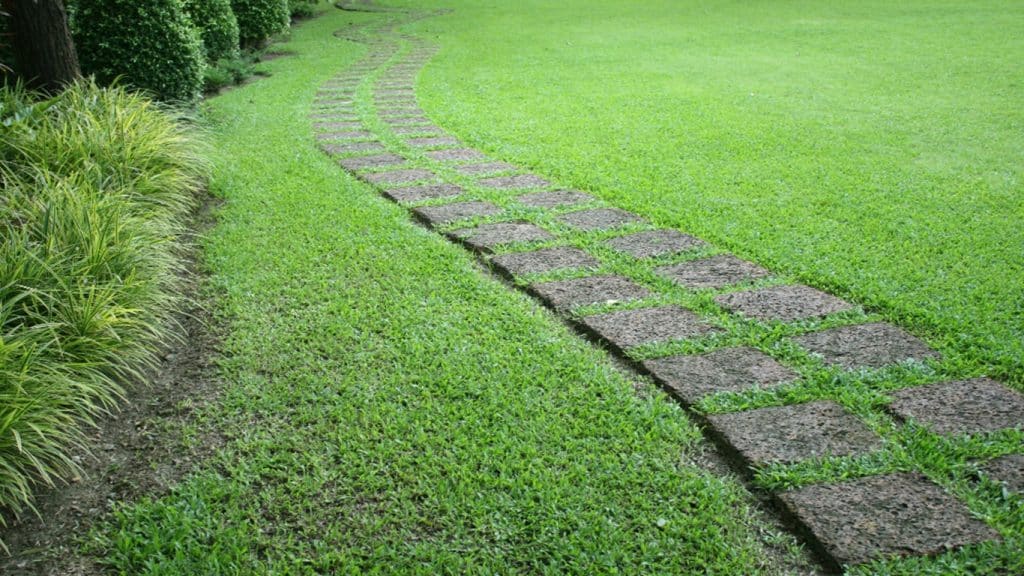
There are numerous lawn edging idea talked about online, and many unfortunately involve expense, and are not the most eco-friendly options.
If you are a gardener on a budget, and you like to do the right thing for people and our planet, including the wildlife that shares your space, you may like to think a little differently. Below are some more eco-friendly options.
1. Soft Edging
First of all, it is worthwhile considering that there are two main different types of lawn edging that you might employ, which involve two very different strategies.
The first option is what we might call soft edging – edging our lawn with living plants. The second option, which we will discuss below, is hard edging, that creates a more rigid boundary between different spaces.
Both options have both pros and cons. Soft edging can be beneficial in that it will help to maximise photosynthesis and make the most of all the space in your garden for carbon sequestration.
Placing as many plants as possible is good for fighting climate change and biodiversity losses, of course, and it can also help make your garden feel lush, private, enclosed and relaxing.
The right plants in the right places can prevent grasses and other lawn plants from growing into you beds and borders, creating groundcover to prevent weeds and creating an unbroken layer of vegetation to protect the soil in your garden.
However, it is worth noting that using living plants as lawn edging can sometimes, though not always, involve more maintenance over time. And this type of soft edging will not typically be as effective in creating a clean, modern look if that is the style you are going for.
2. Wildflowers and ‘Weeds’
One of the easiest and lowest maintenance ways to edge your lawn is with a muddle of wildflowers and lawn ‘weeds’ that can create good groundcover and blur the boundaries between different garden spaces.
You can think of this type of naturalistic lawn edging as a buffer zone between a mowed lawn and perennial planting around the edges of the space. You can mow anywhere within this area to create an arbitrary line of division between a shorter lawn and planting that remains in place.
In my own garden, I have areas where mown grassy areas blend into perennial borders with wildflowers like clover, speedwell, daisies and dandelions, red campion, cow parsley and other hedgerow wildflowers found in my area, and where I do not care to create a strict boundary between the lawn and informal border planting.
3. Living Hedge
In some areas, of course, people will want more defined and clear boundaries between a lawn and border planting. Planting low hedges between the two zones is one option to consider.
Like larger hedgerows, these can be relaxed and informal, or much more neat, clipped and defined, depending on the style you are going for in your garden.
There are a wide range of shrubs and sub-shrubs that might be used to make low hedging as lawn edging. One common and well known example that works well for full sun, in well drained conditions involves planting lavender along lawn edges to define the front of a border.
There are also plenty of other sub-shrubs that you might use, including other Mediterranean herbs, for similar conditions. And a wide range of low-growing, woody plants that can work well for a wide range of different environmental conditions, including deeper shade, and moister or even waterlogged soils.
The hedge planting should suppress grass growth and define the edges of a lawn without creating a hard boundary between the two spaces.
4. Border Flowers
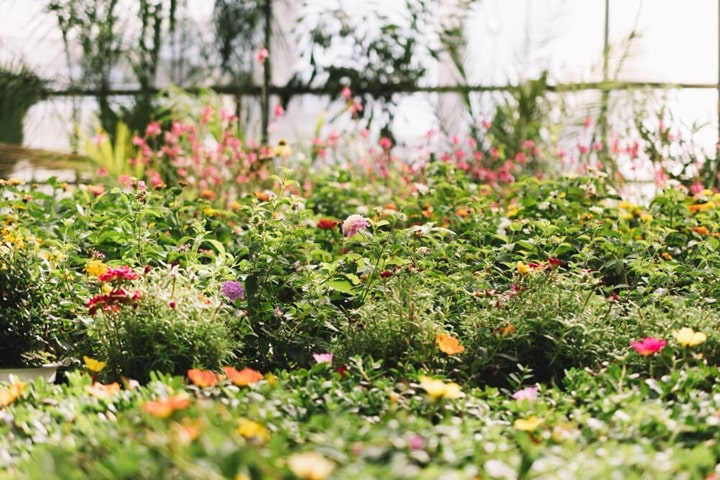
Certain groundcover plants commonly grown in borders can also be used to create soft lawn edging, and again, this can be either formal or informal in style.
The key is to choose plants that create good groundcover and prevent lawn grasses or weeds from growing into the borders beyond them – ideally those that are reasonably strong and vigorous – able to outcompete other species. But ideally not those that will spread too aggressively into the area that you wish to keep as lawn or meadow.
There are a range of clump-forming and mat-forming perennials that can work well as bed edging in different environmental conditions. Just make sure that you choose plants suited to the specific growing conditions, and make sure you get it right when it comes to plant spacing.
Interestingly, bulbs like daffodils can also help suppress grasses and prevent grass from growing into beds or borders when placed along an edge. So consider using spring flowering bulbs as lawn edging, especially where it can be beneficial to bring in pollinators early in the year.
5. Other Lawn Edging Plants
As well as considering flowering border plants to serve as groundcover along the edges of a lawn, you might also consider using other groundcover plants – such as strawberries for example, to form an edible boundary between the lawn and other growing areas.
You might also edge a lawn with ornamental grasses that will not be mown, perhaps alongside a range of herbaceous perennial flowers in a prairie planting scheme.
These are just some options to consider if you do not feel the need for a hard edge between your lawn and other areas.
6. Hard Edging
There will be times, of course, when soft, planted lawn edging is not considered sufficient, or does not look right within a particular garden design.
In these instances, it is worthwhile considering the following solutions – which are more eco-friendly options than many of the lawn edging options for sale these days.
7. Miniature Fences
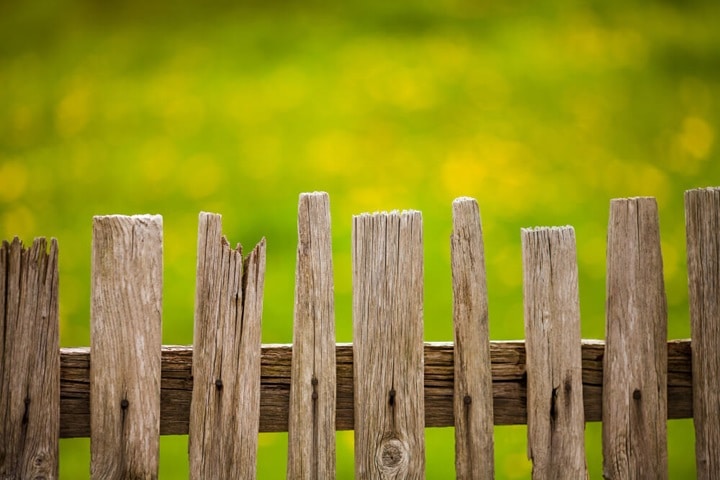
Miniature fences can be used to edge a lawn and these can take on a range of different styles to meld in with other features in your garden.
One attractive and sustainable option is to use natural branches and twigs, perhaps even from your own garden, to create low wattle fencing around the edge of a lawn. This is a rustic and natural-looking option that can look great in a wildlife-friendly organic garden.
Miniature fences might also be made using reclaimed wood such as the wood from pallets, or other reclaimed materials.
8. Wood Edging
You might also use logs, either on their sides or placed upright with their ends in the soil, to create a more sturdy division between the lawn and adjacent growing areas.
Reclaimed wood like, for example, telegraph poles, scaffolding planks or railway sleepers, might also be used to create clear, clean divisions between your lawn and adjoining beds or borders.
Logs or other chunky reclaimed wood pieces can be cut to different lengths or heights to create different effects and can also potentially serve as seating, or as a kind of obstacle course play area for kids.
Thinking about how lawn edging can serve other purposes too can help you build sustainable multi-functionality into your garden.
9. Stone Edging
If you can source stones from your own garden, or find some cheaply in the surrounding area, these are another natural material that can help you to create a natural garden with an organic feel.
Stones dug from beds and borders or sourced elsewhere might simply be placed along the sides of a lawn. They might be dry stacked to make short dry stone walls to edge your lawn. They might also, where taller edging is required, be piled into reclaimed metal cages to make gabions.
You might also collect small stones from other areas of your garden and use these to fill a shallow trench between your lawn and other growing areas. If you have had to remove a lot of stones from other growing areas then this could be a budget-friendly as well as eco-friendly solution.
If you do source quarried stone, it is always most eco-friendly to find sources of reclaimed rock or stone rather than buying new.
10. Reclaimed Block or Brick Edging
Other reclaimed materials can also potentially make good lawn edging. For a more linear and formal garden design, concrete blocks or brick edging might look more in keeping with the design.
Buying blocks or bricks new is not a sustainable or eco-friendly option, but using reclaimed materials to reduce waste is a great idea.
Blocks and bricks of various shapes and sizes can be used to create edging between your lawn and other growing areas in your garden. How precisely these materials are used can help you to define not only the edges of your lawn but also the overall style of your garden.
11. Reclaimed Metal Edging
Metal edging is also quite popular these days for lawn edging. Metal can of course be long-lasting and durable. It must be used with care, however, due to edges that may be sharp, and also because metal can easily heat up in sun and cause problems for nearby plants.
That said, there are ways to use metal edging to create neat, clean and well-defined boundaries between a lawn or meadow and other garden areas. Use reclaimed materials rather than buying anything new to make this an eco-friendly and sustainable solution.
12. Quirky Reclaimed Bed Edging
The above solutions are more common options for an eco-friendly garden. But remember that the options for lawn edging are really limited only by your imagination.
Thinking about other materials and items that might be reclaimed and reused can yield a range of other quirky options for bed edging with more individuality and quirky personal style.
FAQs
How can I edge my lawn cheaply?
Remember, you might not need to edge a lawn at all, and might simply blend planting into mowed grassy areas. If hard edging is needed, use materials you already have, or make use of items that would otherwise be thrown away.
What is the best kind of lawn edging?
Living plants are best for edging lawns in eco-friendly gardens, so consider these options first. If you prefer hard edging, natural materials are best where possible and reclaimed materials should always be considered before buying anything new.
What is the easiest lawn edging to install?
Creating a wildflower buffer zone between lawn and borders is most easy and straightforward, and will generally require least maintenance over time.
What is the best long-lasting garden edging?
Living plants are the best long-lasting options for garden edging – they will grow and evolve over time but perennial plants will not need replacement frequently, if at all.
Sources
B&Q. (n.d.) Lawn Edging. [online] Available at: https://www.diy.com/outdoor-garden/lawn-plant-care/lawn-care/lawn-edging.cat [accessed 22/07/24]