

Sustainable Small-Scale Farming Tips & Ideas
Sustainable small-scale farming means thinking about how you can create an enterprise that truly can stand the test of time – providing what we need today without compromising the ability of future generations to meet their own needs.
Thinking about what sustainability really means is crucial for any small-scale farmer. Financial sustainability is important – but we also need to think about the environment, and social systems, when defining the term.
We need to think about how our choices and our work influence the world around us, and how we can create systems that work with nature, and provide for humanity at the same time. Farmers, tending any size of land, however small, are on the front line when it comes to creating the sustainable, safe and ethical future that we all want to see.
Plan With a Holistic, Permaculture Approach
Planning is crucial in small-scale farming of any kind. It is very important for any enterprise of this kind to begin with a holistic view of the site, requirements and goals, and to design and build from there.
Permaculture offers a design system that gives us a blueprint for sustainable food production, and sustainable design in general. It all comes down to three core ethics: care for our planet, care for humanity, and fair share.
With this approach, certain key principles are always followed in design. And we constantly harken back to the core ethics and question whether we are designing and acting in accordance with those ethics.
Adopting a design methodology and defining key goals and ethics by which to operate can help make sure that any farm can be truly sustainable, in every sense of the word.
Delving deeper into this topic and learning more about permaculture principles and practices will certainly be helpful to any small-scale farmer looking to boost sustainability on their farms.
Bring Soil Health Front and Centre
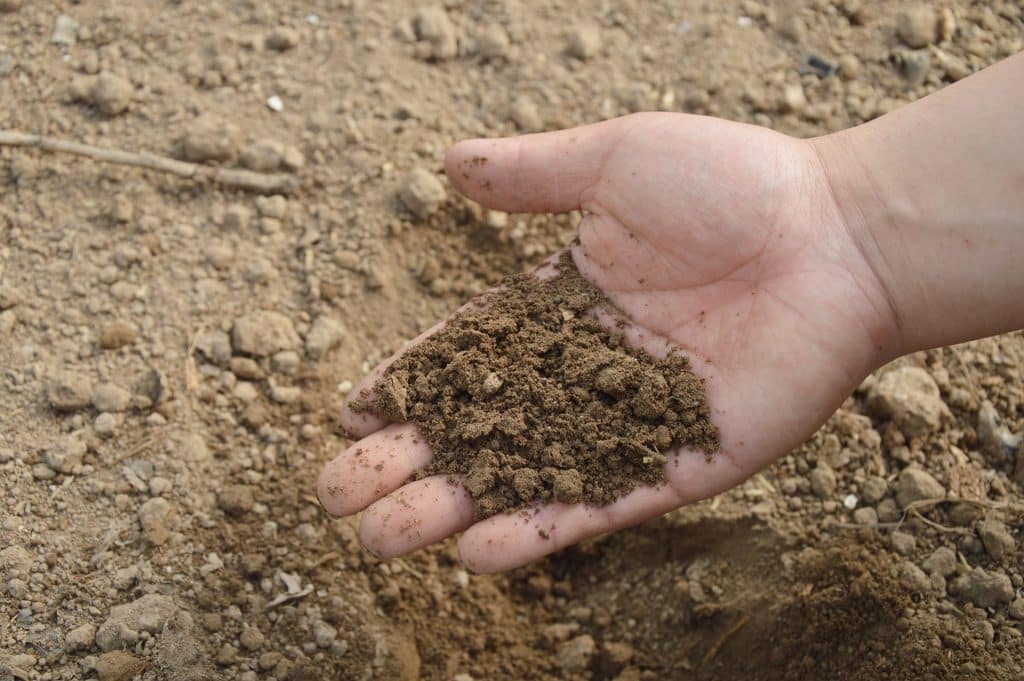
There are of course certain key things that any farmer needs, no matter which crops they try to grow or animals they decide to rear. Sunshine is, of course, one of those things. And rain another. But the one thing over which farmers have the most control is the soil.
In farming, everything comes back to a healthy soil, teeming with life. And so soil health should always be front and centre – at the forefront of a farmer’s mind.
Building and maintaining healthy soil involves care and thought for a farmer. The key is to minimise soil disturbance – reducing or eliminating tilling, avoiding compaction, keeping bare soil covered and keeping a living root in the soil for as much of the time as possible are all key things to think about.
Building a healthy soil means protecting and feeding the micro-organisms it contains and retaining a healthy soil structure. That involves making the right plant choices, adding organic matter to the soil, rotating crops and utilising cover crops/ green manures during gaps in rotation. Of course, it also involves avoiding harm, and farming entirely organically whenever possible.
Integrate Effective Water Management From the Beginning
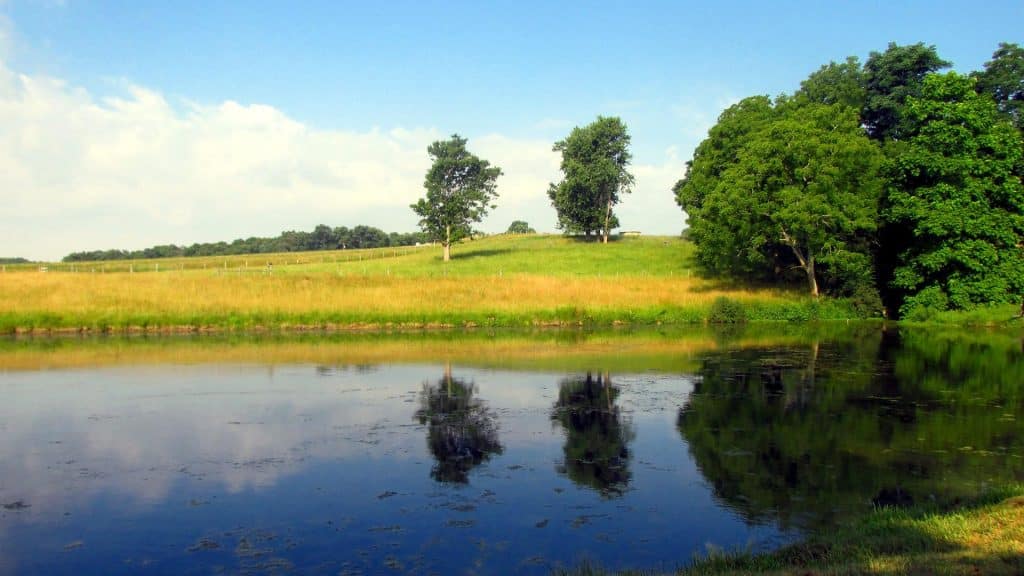
How water is managed is another of the most important factors in the success and sustainability of any farm. Increasingly, farming in the UK means battling against too much water, or too little.
But with the right approach, small-scale farmers can ensure the viability of their growing systems long term if they think about effective water management from the very beginning. And take steps to address flooding or drought issues through sustainable earthworks, planting and other aspects of design.
Designing for place is absolutely key. And all farmers should of course be thinking about growing the right plants in the right places. But you also need to consider how things are likely to alter over time, and be willing and able to adapt to our changing climate – especially when it comes to water, how it is directed, managed and used.
With the right design, small-scale farmers can effectively manage the flow of water on their property. And take steps to catch and store water in ponds or reservoirs, in plants, and in the soil.
Take a Regenerative Farming, Rather Than an Extractive Mindset Approach
Regenerative farming is all about creating cyclical systems that can continue to cycle over time.
Unfortunately, many farms today are not at all regenerative, and are instead mining the soil and other resources – depleting the environment over time to the point that one day, often in the relatively soon-to-arrive future, that environment will no longer be capable of sustaining food production.
Everything you do and all the decisions you make on a small-scale farm should be with the goal of a regenerative, cyclical approach. It is essential to avoid taking without giving back.
You always need to think about how you can return nutrients to the soil, and cycle nutrients and other resources within the system.
Ideally, a small-scale farm should aim to be entirely self-sustaining – able to support and sustain itself over time without recourse to any external inputs.
Build Biodiversity – Protect and Embrace Wildlife

In a regenerative farming approach, and in all permaculture operations, biodiversity is also a key factor in success and rewilding is embraced.
In small-scale farming, it is always vital to remember that we do not grow alone. In our farming efforts, we are supported by a wide range of natural helpers – seen and unseen – above and below the surface of the soil.
So farms need to welcome in and embrace wildlife in all its forms, to create healthy and balanced ecosystems with as much biodiversity as possible, and as many beneficial interactions within systems as can be.
Building biodiversity means thinking carefully about what we grow, and choosing plenty of native species. It means creating vibrant hedgerows, shelter belts, wildflower borders, farm ponds and other habitats, and combining the crops we grow to create polycultures rather than growing mono-crop fields.
Plant More Trees – Give Agroforestry a Go
One key way to integrate more diversity into a small-scale farm is to think about embracing the concept of agroforestry – growing arable crops or pasturing livestock while also growing plenty of trees.
Of course, most are well aware that planting more trees is key to tackling our climate crisis. But how and where precisely we grow those trees, and the trees that we choose, are important factors.
Silvo-arable systems are a type of agroforestry where arable crops are grown between rows of productive or useful trees. While silvo-pasture involves integrating livestock into areas where trees are grown.
Agroforestry can allow farmers to create thriving and biodiverse farms, where land use is maximised and many further benefits are derived.
Maximise Yield – Diversify & Make the Most of Space and Time
In small-scale farming, it is important to think about how you can maximise the yield an area of land can provide. Diversifying the crops that you grow is one key way to make sure that the farm makes the most of the natural resources available and can truly stand the test of time.
Maximising yield is also about taking steps to make the most of the space available – looking into layered planting and inter-cropping, for example, can be beneficial.
And you should also think about how, by adding commercial polytunnels for example, you might be able to extend the growing season and obtain a yield not only in the summer months, but all year-round. And how through successional sowing and the optimisation of your farming calendar, you might be able to make the most of all the time available through the year.
Collect and Learn From Farm Data
No farm can truly be sustainable unless it and the farmers that tend it are able to adapt, evolve and change over time. Nature does not stay still and a farm cannot either.
You need to learn how to alter approaches and practices in response to changes beyond your control – be those changes in supply/demand or climatic changes…
In order to be able to change and adapt creatively and correctly, it is very important as a farmer to arm yourself with the information you need.
Collecting data is crucial, not only to measure outputs, successes and failures, but also to keep track of changes over time. The more effective you are in collecting data on your small-scale farming enterprise, the better armed you will be with information you need to succeed.
Make Sure You Grow Healthy People, and Community, As Well As Plants
While a lot of what we do in sustainable farming relates to the farm itself, it is also vital to remember that farms need farmers. So we need to think about and take care of those people doing the growing if the farm is truly to ensure and continue to be successful long-term.
Financial sustainability means ensuring a living wage for all workers. But more than this, sustainability means ensuring safe, healthy and balanced lives for those who live and work on and around farms.
Small-scale farming can never be truly sustainable unless it takes individual people, and community, into account.
Pass On Your Knowledge and Skills
On a small-scale farm in particular, but on many farms, the operation depends on the knowledge and skill of few, or perhaps even just one, individual.
This reliance on one, or a small number of individuals can make an enterprise vulnerable. If someone is ill, or can no longer work on the farm, everything can very easily fall apart.
This is why it is so important to make sure that farmers and growers pass on their knowledge and skills, especially to those in younger generations.
References:
https://www.permaculture.org.uk
https://www.agroforestry.co.uk/about-agroforestry/