

If you would like to grow your own food at home, then you should always aim to do so in a sustainable and eco-friendly way. But designing a garden is not always as straightforward as you may imagine.
Growing Your Own Fruit and Veg For Sustainable Gardening
Growing even a small proportion of the food you and your family eat at home can make a big difference – helping you to live in a greener, more eco-conscious and sustainable way.
As an experienced garden designer, here are my tips to help beginners to create a truly sustainable edible garden space:
1. Understand What a Sustainable Food-Producing Garden Actually Is
Before you start to create a design for any food-producing garden, you should first spend a little time thinking about what ‘sustainable’ really means.
What is Sustainable Gardening?
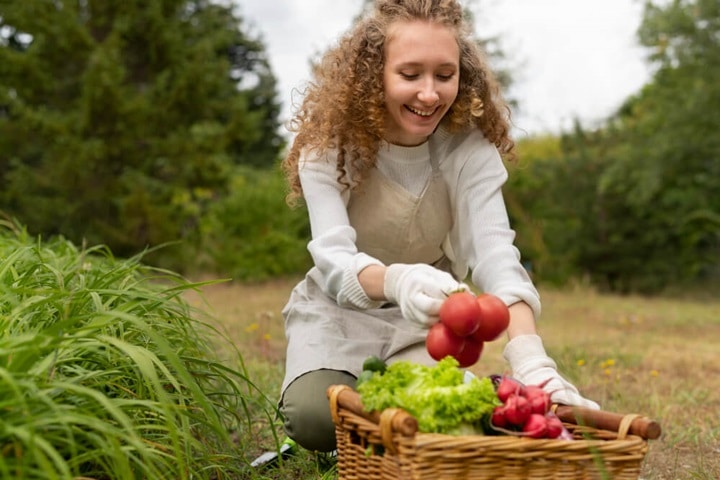
When we talk about gardening sustainably, we are typically talking about gardening in a way that allows us to meet our own needs without compromising the ability of future generations to do the same. This means working with nature and adopting a regenerative rather than acquisitive or extractive mindset. In other words – there should be give as well as take.
In order to take food, we need to give in the form of our labour, and in terms of the organic matter and nutrients that we enable or allow to return to the soil, for example. Keeping this necessary reciprocity in mind can help us to envision a sustainable garden in a clearer way.
Permaculture
Permaculture is a blueprint and methodology for sustainable design. It is all about creating agricultural and horticultural systems (and other societal systems) that are enduring, and which care for planet and people while ensuring fair share.
If you wish to develop a firm foundation for the design and creation of any sustainable food producing garden then learning more about permaculture is a good place to begin.
What is Sustainable Food?
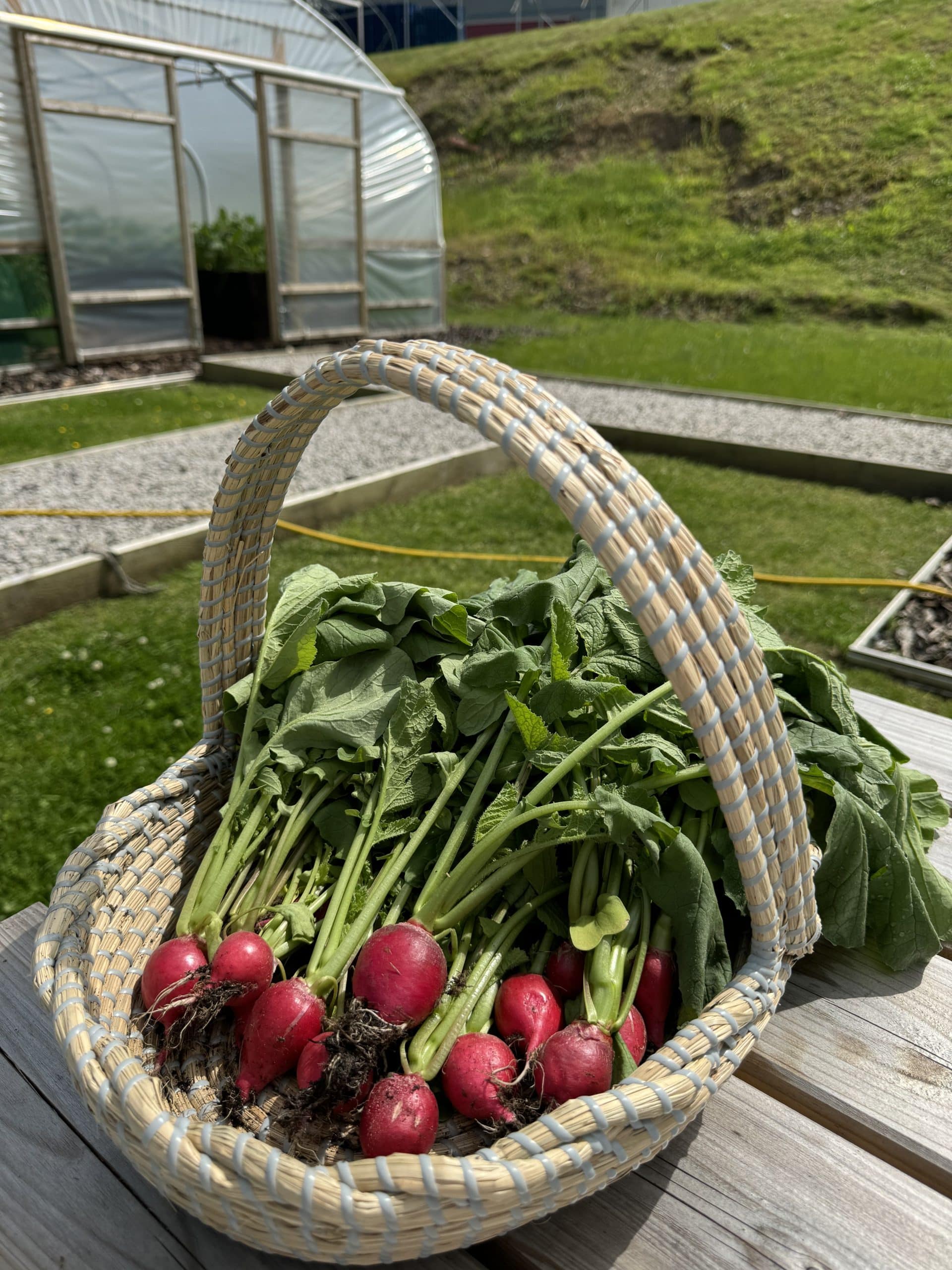
Of course, one of the elements that makes food sustainable or less so is how it is grown, and another is how far it has to travel to reach you. When you grow any food at home, this automatically makes your efforts less carbon intensive by cutting food miles. Growing organically ensures that in your food production, you do not harm the environment, or the wildlife that shares your space.
Before you begin to design your food-producing garden, it can also be helpful to really think about what food is, and which foods we might be able to grow where we live.
Home growers, of course, will often focus on annual vegetable crops – but it is important to remember that there are also plenty of perennial food sources to consider. And there are also many plants not commonly considered as crops that can provide edible yields – even common garden weeds.
Expanding our concept of what plants can be food is often useful as we consider different design options. It can potentially expand our horizons and improve our diets too.
So make sure you have researched a wide range of options and do not narrow down design choices too early.
2. Design for Where You Live – Begin with Observation
Be wary of design solutions that claim to suit any garden. All garden designs should be bespoke – tailored to a specific site. No matter what type of food you would like to grow, and how, you need to start with an understanding of where you live.
Observation is absolutely key. Make sure you spend some time simply getting to know your garden. Look at natural patterns of sun, wind and water. Look at the soil, and the plants already growing in the space and in the surrounding area.
Only through careful observation and site analysis can you gain enough understanding to design for your specific garden.
Design with plants that suit your space
Of course, it is only once you understand a particular garden that you can move in from broader patterns to finer details and select the right plants for the right places.
3. Take Your Own Time, Abilities and Experience Level into Account
Another important aspect of designing a garden that beginners will often overlook is the human element. A garden that perfectly suits one family or gardener could be entirely unsatisfactory for another. When designing a garden, it is always important to think about who will be using and tending it.
It may seem obvious that a garden should be designed to meet the needs and desires of those who will use it.
But many overlook the need to take the gardener or gardeners ability and experience level into account, and to think about how much time any design will take to maintain, and whether that time is available.
4. Decide on a Type of Sustainable Food-Producing Garden
When you want to grow your own food at home, you will of course need to decide early on what type or types of garden you will be creating.
Vegetable Garden Design
Many home growers will begin by creating some kind of typical annual vegetable garden, growing annual crops. You might create in-ground growing areas, but it is frequently a good idea to leave the soil as undisturbed as possible and layer materials on the ground or create raised beds to operate a no-dig garden.
Success and failure in an organic garden often come down to one factor – the soil. The soil is vitally important and taking care of it should be a top priority in most sustainable, food-producing gardens. By implementing a no-dig system we can protect the soil ecosystem and build healthy soil over time.
Perennial Edibles Garden Design
Remember, however, that you do not necessarily need to focus solely on growing annual fruits and vegetables in a traditional vegetable garden. In designing a sustainable food-producing garden it is often important to embrace perennials.
From fruit trees and fruiting shrubs and canes, to perennial leaf vegetables and herbs, there are plenty of edibles that will not need to be planted anew each year, and which can allow you to grow your own food in a far more low-maintenance way.
Forest gardening, fruit trees and guilds, and perennial vegetable beds can all also be well-worth considering when you are in the early stages of design. They can often become the most important elements within a garden design.
Garden Vertically in Small Spaces
Another thing to think about, especially if you do not have much space available, is gardening vertically to make the most of all the space you have available. Using trellis, other support structures, vertical gardens and hanging containers are all interesting options to explore.
5. Integrate Ornamentals and Edible Plants – Don’t Think in Rigid Categories
Sustainable gardening is all about integrating rather than segregating. That is true in a range of areas, including when it comes to plants. Rather than thinking about individual plants in isolation, you need to think about ecosystems and entire planting schemes for particular areas.
As a sustainable gardener it is important to make sure that you do not compartmentalise where it is not a good idea to do so. To boost biodiversity is key, and to do so you need to to integrate ornamentals and edible plants. There should be flowers in a vegetable garden as companion plants. And many edibles are highly ornamental and look great in traditional borders.
6. Plan for Year-Round Production and Year-Round Yields
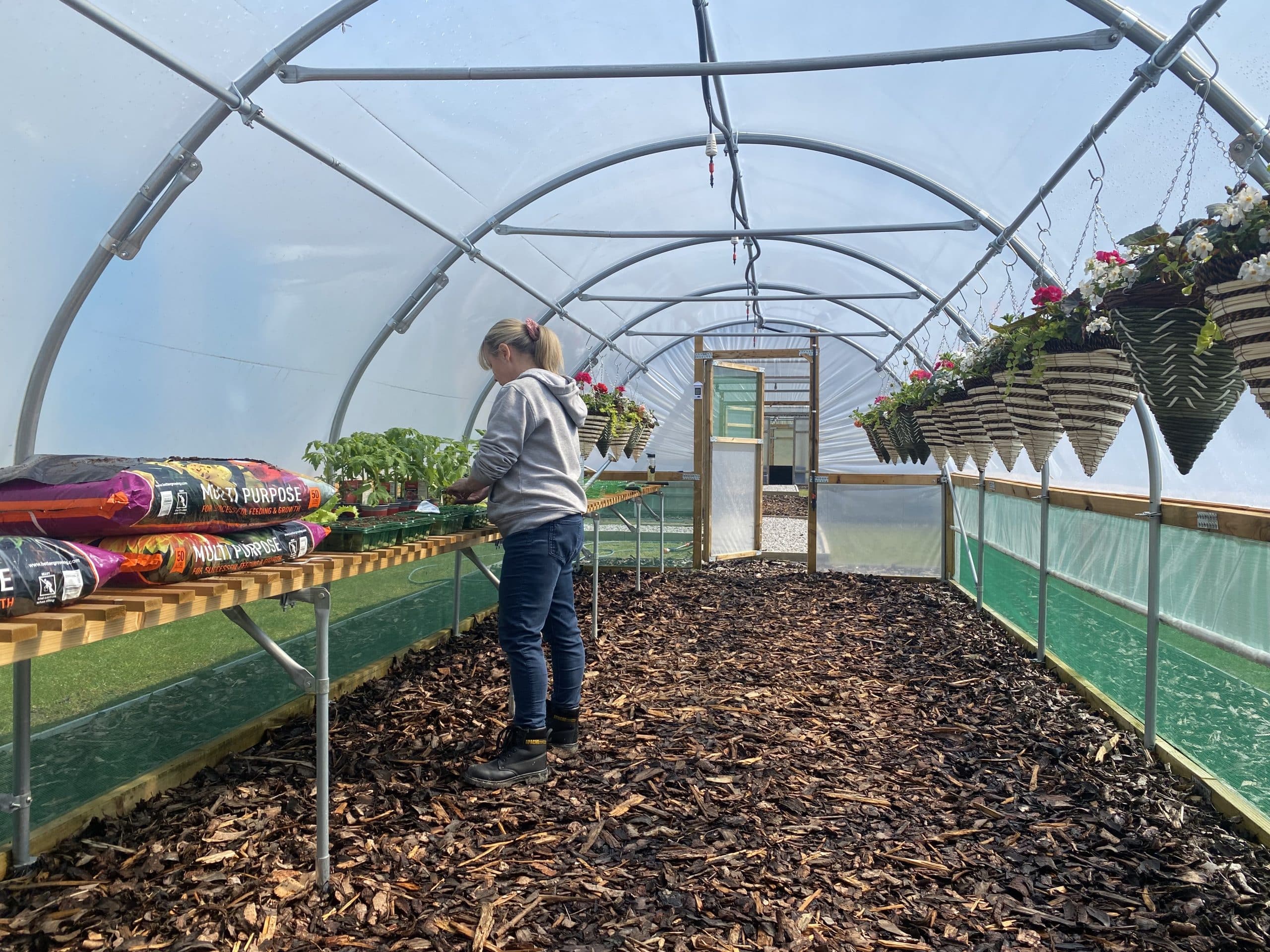
In a sustainable garden, we should aim to increase our yields as much as possible without compromising our core ethics and principles, and that means thinking carefully about what precisely we grow, where we grow it, and when.
With the right strategies you can grow year-round in the UK, especially with the aid of a polytunnel. As a conscientious gardener, it is important to make plans. With a good design in hand and with a sowing and planting schedule, you will find it easier to keep on top of any issues and achieve good results in your eco-friendly garden.
Remember to incorporate companion planting, successional sowing and crop rotation into your plans to make sure that your garden will stand the test of time.
7. Build in Resilience, Self-Sufficiency and Closed-Loop Systems From the Beginning
From the very beginning in a sustainable garden you should have longevity in mind. How can you keep your garden growing long-term without compromising the ability of future generations to meet their own needs?
A sustainable garden must be a resilient one and that means making it as biodiverse as we can, with as many beneficial interactions between plants and between different elements as possible.
We also need to make sure we build systems and habits that allow us to be more self-sufficient over time, and aim to require no external inputs for the ongoing maintenance of our outside space.
Two very important elements to think about are feeding the soil and plants, and water.
Start a compost bin
If you do not already have a composting system, as a sustainable gardener you should be sure to set one up right away. Compost in place, create a compost heap or bin… explore vermicomposting or other methods to improve composting and speed things up.
Of course, having a compost bin isn’t without its problems, and can attract certain pests. Be sure to follow our new guide about rats in compost bins for more detail.
Collect rain water
If you do not already harvest rainwater, setting up a rainwater harvesting system should also be a top priority, before you do any further planning for your garden.
Remember also that water cannot only be collected in butts or barrels, but also in garden ponds, and in the soil and plants in your garden. Water management and water conservation is central to sustainable gardening.
8. Consider Change and Think Longer-Term
Understand that a sustainable garden will have to alter over time as the seasons turn and over the longer term as the climate continues to change. The resilience and flexibility to adapt to the changes that come should be built into any sustainable garden, and again, a large part of that comes down to biodiversity – the more biodiversity is built in, the more resilient and flexible your garden will be.
Be prepared to learn and grow (yourself)
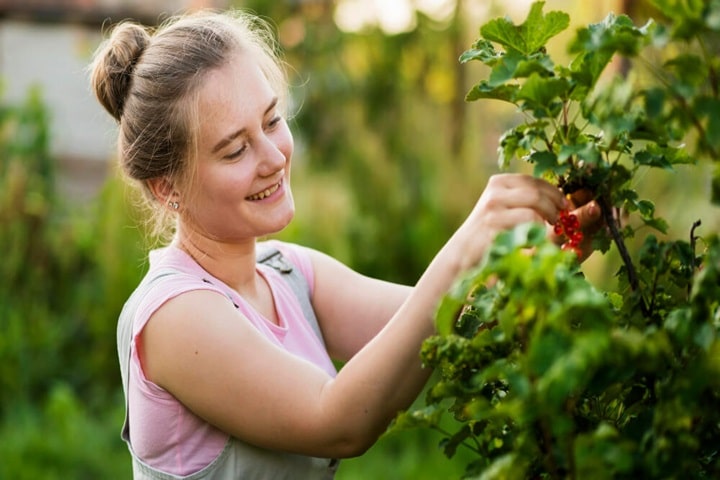
You should also remember that you too will change as you tend your garden. You must be open to learning the lessons nature around you and the act of gardening can teach. As you garden, it will not just be plants that grow in a sustainable garden.
9. Understand How to Maintain the Food-Producing Garden Over Time
Maintaining your garden over time means understanding how to respect and protect the soil, use water wisely, manage and use organic materials to maintain fertility, and tend your plants. These key issues of maintenance in a food-producing garden are crucial to understand.
10. Make Sure You Understand How to Make the Most of the Food You Grow
One final thing to think about is how to make the most of the food you grow and prevent any of it from going to waste. Make sure you gain the skills you need to prepare, cook and/or preserve all of the produce that comes out of your sustainable garden. Preventing food waste is also important for a sustainable way of life.
FAQs
How can I make my garden eco-friendly?
Work with nature, garden organically, value wildlife and make it welcome, protect the soil, use water wisely, and make sure that you give back so your garden keeps growing over time.
What plants are best for a sustainable garden?
You should choose a high proportion of native plants, including plenty of perennials, for any sustainable garden. The best plants for any situation are those that like the specific growing conditions that area can provide. Always choose the right plants for the right places.
How to plan an eco garden?
To plan an eco garden, think about sun, wind, water and soil. Look at the environment and find plants to suit, and set up basic systems to help you sustain the garden over time in an eco-conscious way.
What are the basic factors to be considered when planning to create a beautiful garden?
You always need to design and plan specific for site, when it comes to methods, layout and plant choices. A beautiful garden can be created wherever the climate, micro-climate and other conditions have been carefully been taken into account.
Sources
Smart Water Online. (2024) Rainwater vs Tap Water: What’s The Difference? [online] Available at: https://smartwateronline.com/news/rainwater-vs-tap-water-whats-the-difference