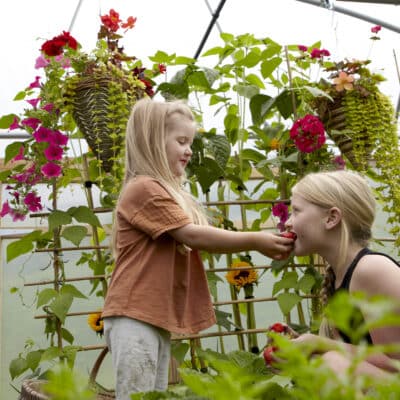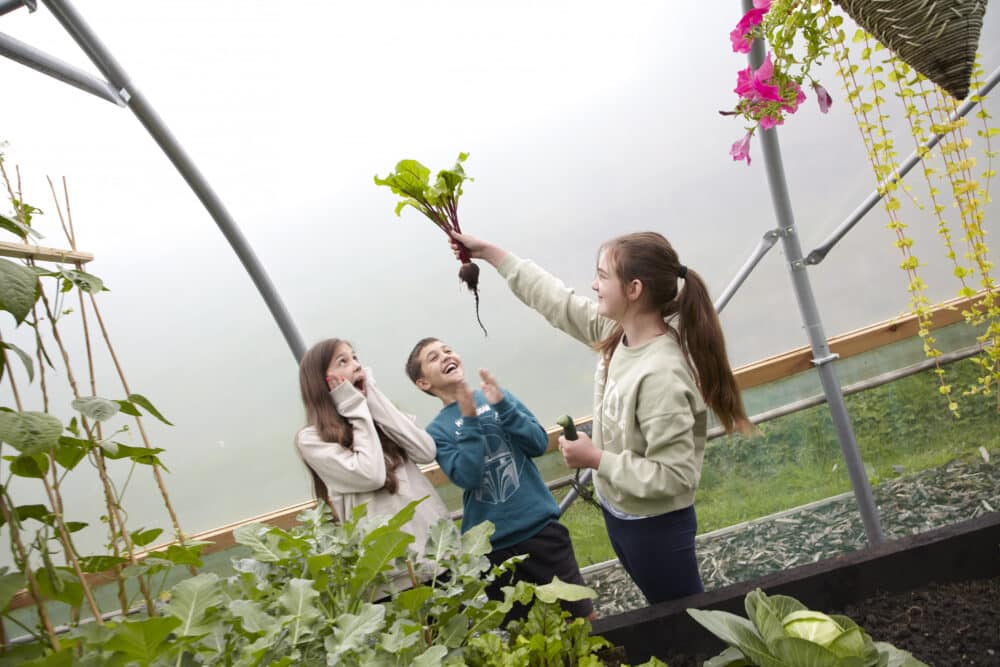
Every school should have a garden. But not every school garden quite fulfils the schools’ goals. So to help you to design a school garden that really works, and really thrives, here are our school garden ideas
Determine Your Goals
Before you even begin to design and shape your school garden ideas, it is important to determine your goals. It can be helpful to think about why you are creating a school garden in the first place. And to think very carefully about what you actually want to achieve.
A School Garden Should Foster Nature Connection
Schools are places of learning, and nature certainly has a lot to teach. To support children in becoming engaged, conscientious, eco-friendly citizens of the future, it is vital that we instil in them a deep connection with nature, and a love of the natural world.
A school garden can be, of course, a key place where that deep connection to and love of nature can be forged. Successful school garden ideas result in a place where children can engage with the natural world around them, cope to understand it better and appreciate it more.
School Garden Ideas Should Facilitate All Types of Learning

A school garden should make it easier for teachers to create lesson plans in a wide range of subjects. From STEM learning, to creative subjects, a garden can provide the tools and environment necessary for different learners or all ages to advance their knowledge in a huge variety of arenas.
Even when the lesson plan does not revolve around the garden, the garden could still be a green and restful space where minds can more easily expand and brains will be more receptive. A good school garden enables all sorts of teaching outside the traditional classroom.
School Gardens Should Bring Children Closer to Healthy, Sustainable Food
A school garden can also show children the abundance that nature can bestow. So of course areas of food production are another important facet of school gardens.
In school gardens, children should gain an understanding of where food comes from. As well as the practical gardening skills required to meet one of our most basic human needs.
School gardens can improve children’s diet – making sure that during the school day at least, they have access to fresh produce grown right there on the grounds.
A School Garden Should Give Children A Space for Healthy Nature Play
Children also learn and develop crucial skills through play. And children whose days are too micro-managed and structures may not have the time they need for independent play in a natural setting.
At break times and lunch time, trying some school garden ideas can and should also give children a place where they can connect with nature on their own terms, and play how they would like to play.
Tips for Meeting Key Goals When Considering School Garden Ideas

- Design for the specific site, taking climate, microclimate, sunlight and shade, wind and water into account.
- Make sure that the garden has features to be self-sustaining, or be managed sustainably over time. Be sure to put composting and rainwater harvesting schemes in place.
- See challenges as opportunities. Remember, even the smallest and most unpromising of spaces can potentially become a useful school garden. A school garden might be a corner of a former car park, given over to raised beds and wildlife friendly features. It might be the margins of a sports field. Value marginal spaces and think how they might help you meet key goals.
- Where there is not outside space to use on site – consider collaboration and other potential sites for a school garden close by.
Designing for Nature Connection
- Get kids involved by asking them which natural features they would like to see in their new school garden. When kids feel some sense of agency, and that the space is ‘theirs’ – respect for it and connection to it can come more easily.
- Think about design from a child’s eye view, and how those of all ages will experience the spaces.
- Aim for as much biodiversity in plants and wildlife as possible.
Designing School Gardens for Learning
- Zone learning areas in the design, thinking carefully about patterns of access and use.
- Make sure that you build multi-functionality into the design.
- Creating a series of different outdoors classroom zones can help make sure the space is utilised to the fullest.
- Use natural markers, signs and plant labels throughout the space, to foster familiarity with nature when kids don’t even know they are learning.
Designing for Food Production
- When introducing food production – remember that this does not just mean annual vegetable beds. It might also include fruit trees, forest garden schemes, and other edible perennial landscaping.
- Consider a polytunnel or other undercover growing area so that food production and learning can continue year-round.
Designing for Nature Play
- Leave wilder corners and less managed areas in your design – not just for wildlife, but also for natural play.
- Children should have areas where they can relax, run around, or explore without feeling that they will damage something. Create den areas for quiet time, as well as more communal spaces.
- Create play zones with wood chip or living pathways, or wildflower meadows, to run around on. Remember, lawns are not essential for children to have great places to play.[i]
Choosing The Right School Garden Ideas
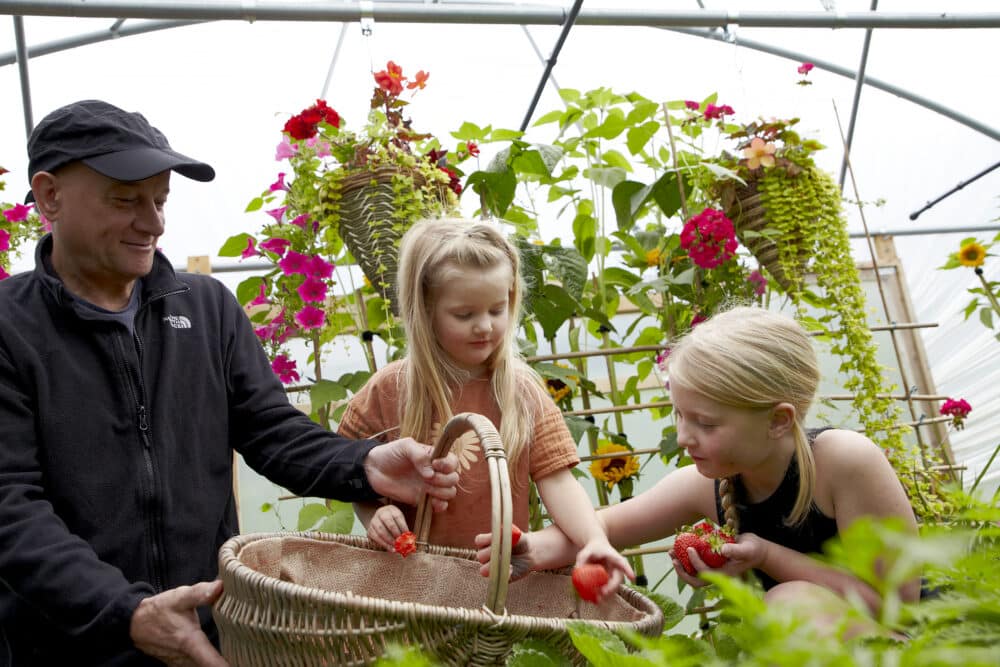
Gardens should be a key feature of all educational institutions. And the more time kids can spend in them the better. Designing a great school garden is one of the very best ways to build a better future for all those in your care. And the tips above should give you some pointers and help you make a school garden that truly delivers for years to come.
Do you have any great school garden ideas? Do you run an efficient school garden already? We’d love to hear from you about your goals and how you have met or intend to meet them.
Sources
[i] https://schoolgardening.rhs.org.uk/resources/info-sheet/simple-gardening-club-ideas