

How to Grow Grapes in the UK
Whether or not you can grow grapes successfully outdoors in the UK depends on where precisely you live and the conditions to be found there.
But with the right strategies, when you choose the right variety or varieties and they are grown in the right location and cared for correctly, grapes can be grown successfully across the British Isles.
Best Varieties of Grapes for the UK

If you would like to grow grapes in the UK, the first thing to think about is which type of grapes you would like to grow.
Broadly speaking, grapes are commonly divided into two main categories: wine varieties, and sweet, dessert grapes for fresh eating. Some cultivars can also bridge both of these categories and deliver fruits that can be eaten fresh or used for wine making.
Some great varieties for those who wish to grow grapes in the UK include:
- Vitis ‘Boskoop Glory’ (AGM) (Wine & dessert grape)
- Vitis ‘Brant’/ ‘Brandt’ (AGM) (small dessert grape)
- Vitis ‘Himrod’ (seedless, white dessert grape)
- Vitis ‘Muscat Bleu’ (very dark wine and dessert grape)
- Vitis ‘New York Muscat’ (AGM) (Dessert grape)
- Vitis ‘Phoenix’ (wine/ dessert white grape)
- Vitis ‘Theresa’ (white green dessert grape)
When choosing a variety however, there are plenty more to choose from. Before you choose one, however, you will definitely need to consider where you will grow your grapes.
Some can be grown outdoors in the UK, while others are only really suited to production indoors or under cover. And whether or not you can grow outdoors successfully will depend on where precisely you live and the conditions to be found there.
Where to Grow Grapes in the UK
Grapes typically require a warm and sunny, sheltered location with free-draining soil. In many parts of the UK, outdoors cultivation is certainly possible if you choose the right varieties.
However, growers in more northern or exposed locations, or those who wish to grow more tender types, will do best if they grow grapes with some form of protection, in a polytunnel or greenhouse, for example.
Growing Grapes Outdoors
If you plan to grow grapes outdoors, then choosing an appropriate spot will be crucial. Grapes can be grown on trellises or other support structures, along walls or fences, or on other garden structures like pergolas, for example.
Remember, grapes will only fruit well outdoors in warmer, milder and most sheltered places in the UK. Wine grapes are more likely to grow well outdoors than dessert varieties. And while crops are possible outdoors in some areas, generally speaking, better yields of both types can be achieved in the UK when growing undercover.
How To Grow Grapes In A Polytunnel or Greenhouse

Grapes can be grown far more easily in most parts of the UK when they are afforded some protection. So it can be a great idea to grow them in an unheated greenhouse or polytunnel. You can grow them in the ground, or in large containers.
Typically, when grapes are grown in an undercover growing area, they are trained and pruned using the rod-and-spur or cordon method, which allows you to obtain the best yield possible from a relatively small amount of space.
Before you plant your grapes, either outdoors or under cover, you will need to spend a little time considering the support structure for your vine or vines.
For outdoors cultivation, you may develop a wine using the cordon method, or another pruning method known as the Guyot system.
To grow grapes using the the cordon or rod-and-spur method, you will require horizontal support wires around 30cm apart.
To grow grapes using the Guyot method, you need support wires too. The first should be 40cm above ground level, the next is placed at 55cm above ground level, then subsequent wires are placed at 30cm intervals. These are stretched between posts placed between four and four and a half metres apart.
How To Plant Grapes
Grapes are best planted while they are in their dormant phase, between October and March. In areas where winter is cold and wet, and when you plan to grow grapes outdoors, it is best to plant in March. In all areas, avoid planting when the ground is waterlogged or frozen. Under cover, November or December planting is generally recommended.
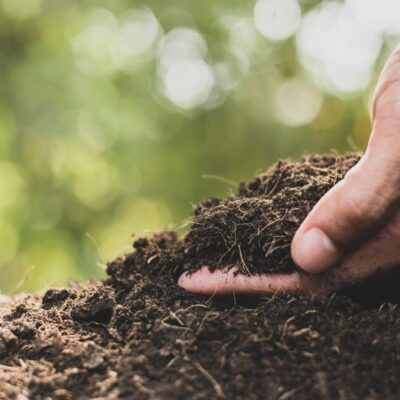
First, prepare your growing area, enriching the soil with a good surface dressing of home-made compost or well-rotted manure.
If you are growing grapes against a wall or fence, place your plant at least 12cm away from the base of the structure. And if growing more than one vine, space these around 1.2m apart.
Along a support system out in the open, space plants 1.2-1.5m apart, in rows no less than 1.5m apart from one another.
If planting a grape vine in a container, choose a container at least 30-40cm wide and deep, filled with a peat-free, soil-based compost such as John Innes no. 3.
Typically, when growing in a greenhouse or polytunnel, a single vine will be enough. In a larger space, where you are growing multiple vines, be sure to leave at least 1m between the plants.
You can consider planting a grape vine just outside a greenhouse or polytunnel, so that it can receive natural rainfall while growing into the structure. But this will not always be possible, so you can also grow your vine inside the structure. Just remember that it will need to be watered more frequently and carefully.
Make sure that you plant your grapes at the same depth that they were at in their previous container. Dig your planting hole, and spread out the roots within it, then gently firm back the soil around your new plant and water it in well. Mulch around your new vine or vines.
Growing Grapes: Tips & Guidelines
Growing grapes successfully means taking good care of your plants over time. Here are some of the key considerations when you grow grapes in the UK:
Watering
Watering well is especially crucial during the first growing period after planting. But consistent watering can be important throughout the life of a vine, because though grapes are relatively drought tolerant, dry roots can increase the chances of certain problems – such as powdery mildew, for example.
Water every week or so during the growing season, especially during dry spells in spring and summer. And remember that when vines are grown under cover, you will often need to water more regularly and will need to meet not just some but all of the water needs of your plants. Grapes in containers will typically need to be watered more frequently than those growing in the ground.
Mulching
Organic mulches help to retain soil moisture, maintain fertility and suppress weed growth. But when growing grapes outdoors, in addition to adding organic mulches that will break down over time, it can also be beneficial to add a gravel or stone soil covering in spring.
A gravel or stone mulch can aid in drainage, to catch and store heat from the sun, and to reflect light to get grapes to ripen. Lighter coloured gravel will reflect light, while darker stones will absorb the sun’s energy, warming the soil.
Feeding
An organic mulch will provide fertility over time. It is also, however, beneficial to consider feeding vines additionally through the growing season. From early spring, an organic potassium-rich feed can be beneficial. An organic feed suited to tomatoes, or a homemade feed like a comfrey tea can be ideal. Feeding may be particularly beneficial for plants growing in containers, but can be useful for all greenhouse or polytunnel grown vines.
Pruning
Pruning is perhaps the most complex thing when it comes to caring for grape vines indoors or out. As mentioned above, there are two main methods commonly used in the UK – the cordon or rod-and-spur method, and the Guyot method.
While pruning grapes is a little too complex to cover in depth in this guide, you can find a more detailed explanation here.
Common Problems When Growing Grapes
A number of common problems can arise when growing grapes. For example:
- Fungal diseases such as powdery mildew, grey mould or downy mildew.
- Pests such as birds, wasps, scale insects, fruit flies… and under cover, mealybugs, spider mites etc..
- Nutrient deficiencies such as magnesium deficiencies and physiological disorders like ‘shanking’.
While a number of problems can arise, however, positioning grapes correctly and caring for them appropriately can significantly reduce the likelihood or disease, pest or environment-related problems from occurring.
How To Harvest Grapes
References: