

A potager garden is one of the classics of garden design. But what exactly is a potager garden? And how exactly can you go about designing and creating one where you live?
In this guide, we’ll take a good look at this type of garden and talk about where you might place one, key features you might include, layout tips and plant choices. Read on to learn how to bring your dreams of a potager garden to life.
What is a Potager Garden?
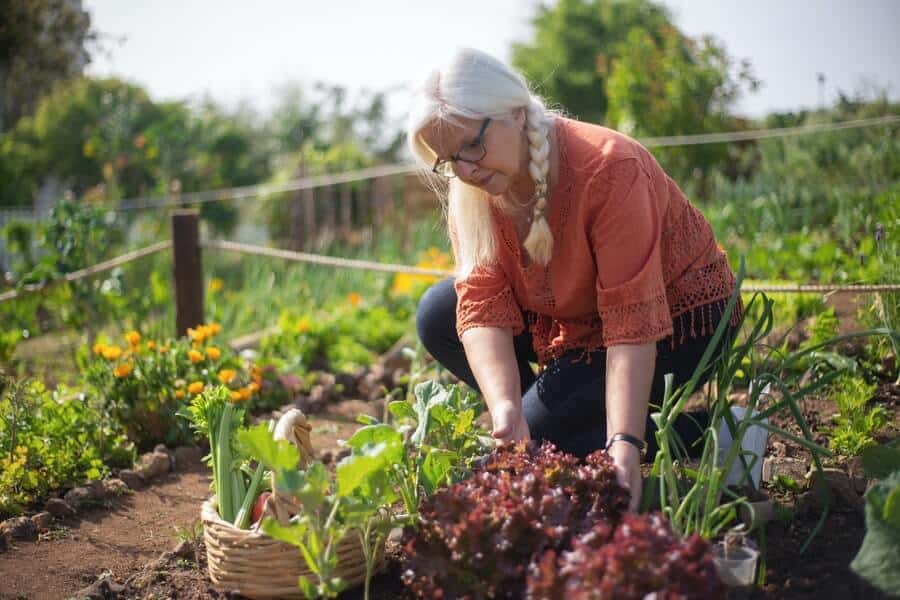
A ‘jardin potager’ is the French term for a kitchen garden. Kitchen gardens come in many shapes and sizes, of course. But when we talk about a potager today, we are usually talking about kitchen gardens which take inspiration from the traditional kitchen gardens of French castles and stately homes, or from the traditional English cottage garden.
The French style of kitchen garden or potager is rather formal – with straight lines, order and symmetry. While the English cottage garden has a more informal style. Today, potagers can be inspired by one or both of these traditional forms, and can vary considerably in their look and feel. What all styles of potager garden share in common, however, is the concept of providing functionally and aesthetically for a household.
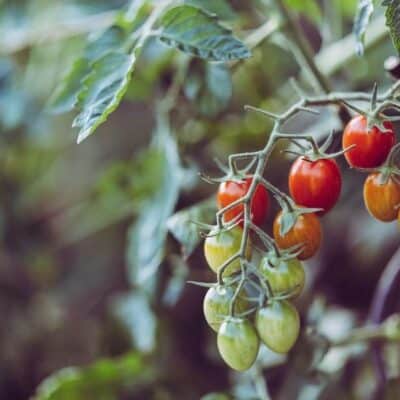
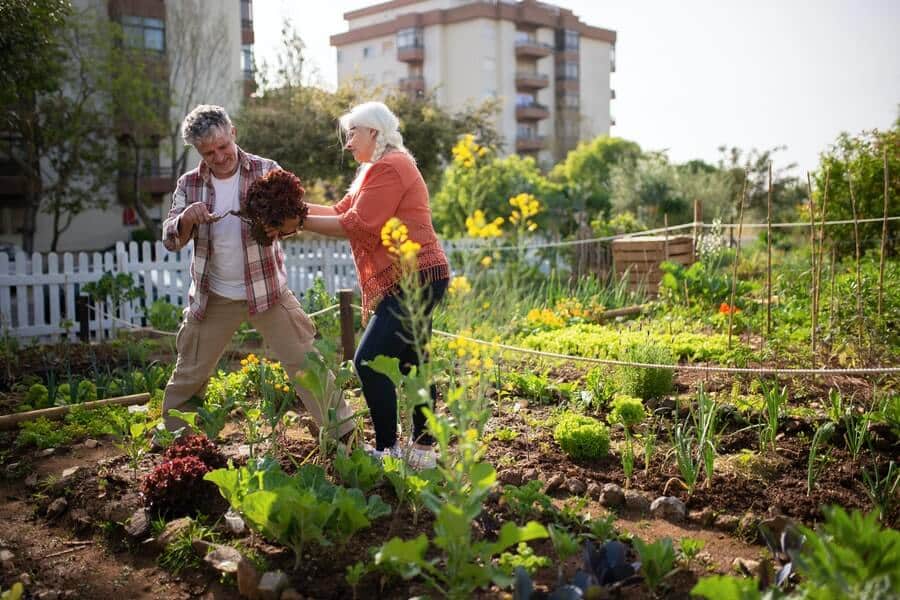
Potager gardens tend to include a high proportion of edible produce – vegetables, fruits, herbs, edible flowers to feed the household. But they also include other flowering plants appealing to the eye, intermingled with the useful crops, and also often include plants for medicinal use, and for other household needs.
Positioning a Potager Garden
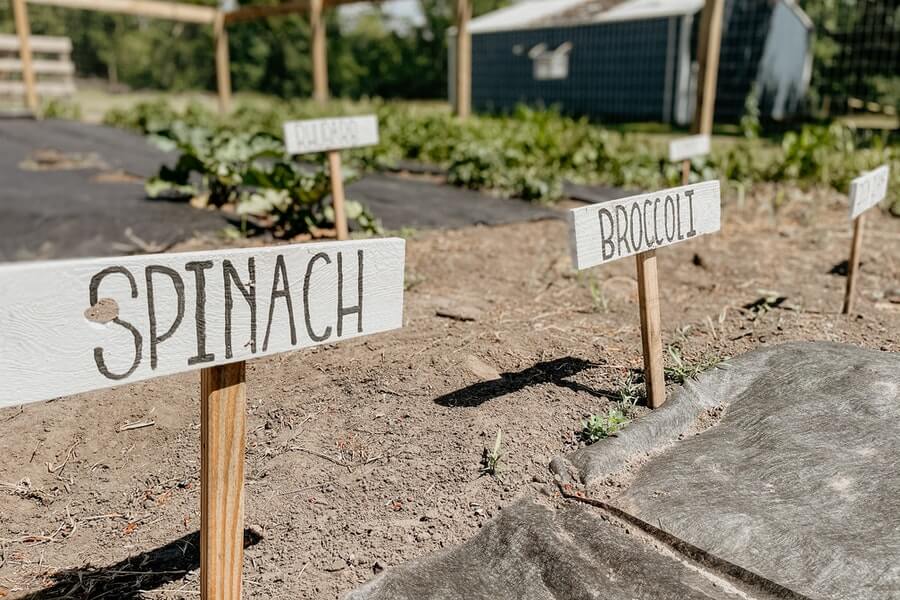
If you would like to create a potager or kitchen garden where you live, then one of the very first things to consider is where exactly it will be located. Whenever we design any type of garden, we have to look first and foremost at the site, and make the right choices for our particular location.
We need to look at the basics of sunlight and shade, wind and water. We need to look at the soil and the terrain, and think carefully about all the different forces acting on the site, and the environmental conditions it can provide for the plants growing within it.
Typically, a potager garden should be located with sufficient sunlight to grow a wide range of common crops.
Another key thing to consider when planning a potager garden is that these kitchen gardens were traditionally always placed very close to the kitchen itself, for ease of access and practicality. Kitchen gardens should not be hidden away at the back of a garden – they should be front and centre – as close as possible to your home and within sight, where they can easily be tended and checked up on regularly.
Key Features for a Potager Garden

As you begin to work on a design for your potager garden, it is also important to think about the key features that it will include.
Of course, all food producing gardens should incorporate the basic features required for ongoing practicalities. There should be a convenient water source (ideally rainwater harvesting), and a composting area where you can create compost to maintain fertility within the system.
Beyond these things, it can be helpful to think about some features which commonly characterised the potagers of the past, including:
Some Kind of Enclosure
Whether it was the low stone wall, hedgerow, picket or wattle fence around a traditional cottage garden, or the formal clipped hedges, topiary or walling around a French potager, these kitchen gardens often had some kind of enclosure.
When creating your own kitchen garden or potager, it is important to think not only about the growing areas within the garden itself, but also what surrounds it. Remember that planting or structures around the beds will play a role in determining the environmental conditions.
Think about how enclosure structures or planting might create shade, provide wind-breaking, or even retain heat and create a more sheltered and warmer micro-climate for your crops.
Raised Beds and Growing Areas
Within the potager or kitchen garden itself, the beds or growing areas will of course be the primary feature of the space. Raised beds are very common in a potager garden – especially one in the French inspired style.
These are often regular and rectangular in shape, laid out in a formal way. It is usually best to place these with their longest sides facing east and west, with a north-south orientation – to make the most of the sun throughout the day.
However, where the soil is reasonably fertile, or is improved, in ground growing can also work in a kitchen garden. English cottage gardens often have more informal and irregularly shaped growing areas.
There are few hard and fast rules about how many beds you should have, what shape they should be, and how they should be laid out. But you should always think about practicalities like access, and make sure that you can reach all parts of your growing areas without standing on and compacting the soil in those areas.
Pathways
Aside from the beds themselves, the next most important feature within a potager garden are the pathways between those beds or growing areas. It is important to make sure that the pathways are practical – allowing easy access throughout the space. It is a good idea to make them wide enough to allow a wheelbarrow to pass between them.
Pathways between raised beds in a French potager were often gravel, sometimes lined with herbs and flowers like lavender. They may also simply be grass (or other ground cover planting).
In an English cottage garden, they might traditionally have been stone or brick, sometimes with planting between paving, or compacted clay/gravel type surfaces. Another good idea is to make pathways of wood chip. The material will break down and need to be replenished over time, but the broken down material can be a useful mulch material on the beds.
Focal Points
French potager in particular, but sometimes also English cottage gardens, also had focal points to draw the eye. The focal point might be something as simple as a central bed, but might also be something like a fruit tree, or a fountain and pond, for example. Often, there would be a sense of symmetry around a central feature, or along a centre line drawn towards a focal point at one end of the space.
Ornamental Structures
Potagers, both French and English style inspired, also often include ornamental features which help to provide beauty and interest not just in the summer when the main crops are in full swing, but throughout the year. In keeping with the general concepts behind these types of gardens, these were and are usually both practically functional and aesthetically pleasing.
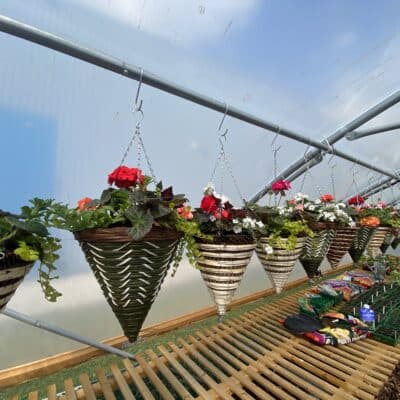
For example, many spaces today might have a greenhouse or polytunnel positioned carefully to provide visual appeal within the space, which also prolongs the growing season and allows for year-round growing. Trellises, obelisks and other plant supports for vertical gardening are also very popular features to include.
Plant Choices for a Potager Garden
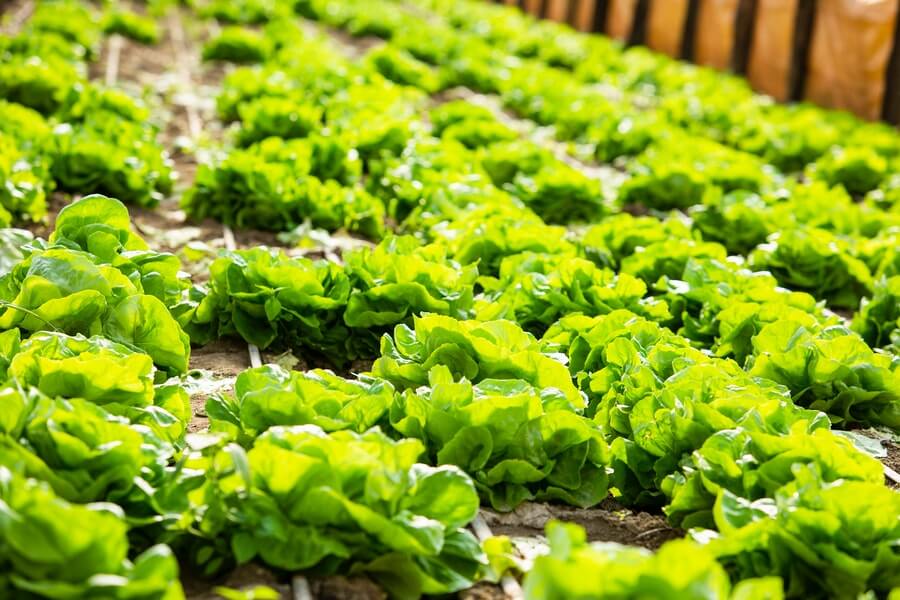
In a potager garden, all the plants are carefully chosen to provide for the household’s needs, and to complement one another in aesthetically pleasing ways. There are a huge range of common crops and flowering companion plants which can be combined in this type of garden. Integration, not segregation of ornamentals and edibles is the order of the day.
Common crops are typically laid out in rows or formal, geometric patterns within the beds in a French inspired potager. While in an English garden, more informal planting layouts might be used. But the types of plants utilised were often very similar, incorporating native and easy to grow perennials and annuals among and around edible plantings.
Remember, potager gardens can look very different from one another. But they all share the goal of providing useful yields while also delighting the eye. It is just that there are numerous ways in which this goal can be achieved.