

Pruning Gooseberries – Complete How-To
Pruning gooseberries is not a complicated job. But understanding how and when to do so in different situations can make things better for the plant and better for you.
Gooseberries are a great choice for UK gardens and can provide an abundant yield, even in partial shade. The berries are more useful than you might think, because not only can you use the ripe fruits in a range of desserts, you can also use the under-ripe berries for preserves, or juice them to use as a lemon-juice substitute.
Gooseberries won’t require a lot of work, or take up a lot of your time. But there are a few things you should do to make sure your gooseberry plants keep producing well year after year. One of the most important jobs when growing gooseberries is pruning. (Especially if you don’t want to get pricked on thorns all the time when harvesting.) So read on to find out more.
In this guide we will talk about why pruning gooseberry bushes is a good idea, both for the sake of the plant, and for your own sake, as a gardener.
We’ll talk about when gooseberries should be pruned, and the various types of pruning that you might undertake in different situations and with different goals in mind.
Finally, we will walk you step by step through each stage of the process of undertaking each of these different types of pruning.
Why Should You Prune Gooseberry Bushes?
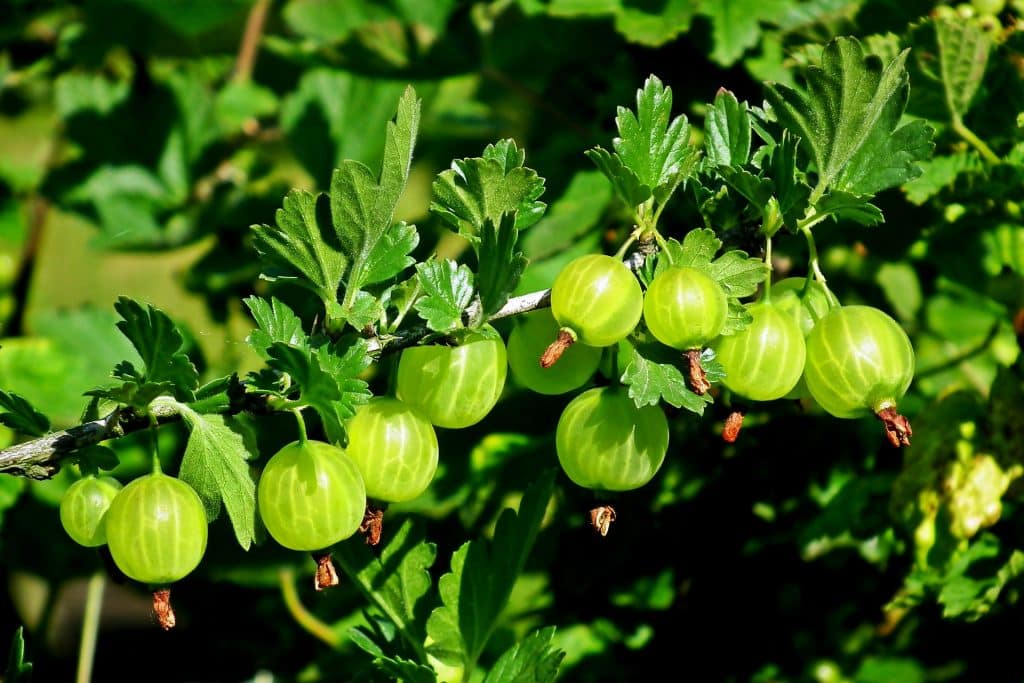
Strictly speaking, pruning a gooseberry bush is not absolutely essential. And even if you don’t get round to this job, you should still get plenty of berries.
However, if you really want to get as much as possible from your gooseberries and wish to keep them in peak health then pruning is a good idea.
Pruning allows plenty of light to get into the heart of the shrub, so that the fruits within can ripen properly. And can also reduce overcrowding at the centre of the bush and make sure that branches don’t become damaged by rubbing against one another.
But the main reasons to prune are for the sake of the gardener rather than the plant. Gooseberries can be trained into different shapes, which can keep them smaller and more compact for a smaller space and/or make things much easier when it comes to the harvest.
Here are the main reasons to prune gooseberries:
- To form a framework or train them to grow in a specific way (formative pruning).
- To remove dead, damaged or diseased material and keep the size and shape in check (maintenance pruning).
- To train and maintain a gooseberry in a specific form, such as a standard form, fan or cordon.
As you will find out below, when you prune and how you prune will depend on which of these types of pruning you are carrying out and precisely what form you want your gooseberry plant to take.
When To Prune Gooseberries
Formative pruning in the first year after planting a new gooseberry bush is typically carried out early in the spring. This formative pruning is all about creating the base framework of branches that you want for your shrub.
Some maintenance pruning on bush form gooseberries and shape specific pruning on gooseberries in different forms is typically best carried out in June or July.
Further maintenance pruning is also sometimes carried out during dormancy in the winter months. And you may also undertake further shape specific pruning at this time.
How To Prune Gooseberry Bushes
Pruning gooseberries is not a complicated process. But you do need to undertake a slightly different process (and time things correctly) depending on which type of pruning you are undertaking.
In this section, we will cover the three main types of pruning:
- Formative pruning
- Maintenance pruning
- & Pruning to maintain a specific form.
You Will Need:
Gloves
A Long-sleeved top
Secateurs
Step-By-Step Guide To Formative Pruning of Gooseberry Bushes:
When you purchase a gooseberry plant, you can purchase a typical bush form, or you can purchase a plant that has already had some formative pruning and training to give it a specific shape, such as a fan, or a cordon.
If you are happy to let the plant grow relatively naturally in bush form, then you should undertake some formative pruning not to alter its basic form, but rather to create a good, healthy framework for the shrub.
Step One: Early in the spring in the year after planting your new gooseberry bush, choose five main branches to keep as the main framework. You are looking for five healthy branches that lean out from one another to create a goblet-like shape.
Step Two: Though it may seem drastic, it is a good idea to retain only these five main branches, and to cut off all other growth as close to the ground as possible.
Step Three: Next, prune the five remaining main branches back to leave around 15-20cm of growth on each one.
Step-By-Step Guide To Maintenance Pruning of Gooseberry Bushes
When the plant reaches its second year, and in subsequent years after that, a gooseberry bush should ideally undergo pruning to keep its size in check, but mostly to ensure that a healthy and open habit is maintained, making the fruits ripen more easily and making the berries easier to harvest.
Step One: Between mid June and the end of July, identify your main framework branches and providing you are happy for the shrub to grow in size, leave these alone.
Step Two: All other fresh long growth except for that at the ends of the main framework branches should be cut back to leave around 5 leaves on each one. Note that this pruning won’t remove fruits, as these mostly form on older wood.
Step Three: Then, in winter, check over the plant carefully. Remove any branches that are dead, damaged or diseased.
Step Four: Though not essential, in winter you can also shorten the tips of the branches by around a quarter, cutting to an outward-facing bud. And can prune all the side shoots leaving just 1-3 buds on each to give short spurs.
Step-By-Step Guide To Pruning Fan Trained Gooseberries
Fan trained gooseberries are trained and pruned to encourage the plants to grow outwards and upwards against a wall or fence. This type of training and pruning is a good idea if you are short on space and allow you to grow gooseberries even in a very small garden.
Step One: In late winter or early in the spring, before the buds open, place the young gooseberry plant against a wall or fence and train the stems by tying them into a support framework. Two main branches are typically selected to form the main arms and tied to canes at a 45 degree angle. Unwanted branches are removed.
Step Two: Prune each of these two main branches back by around two thirds, cutting back to an upwards facing bud.
Step Three: As side shoots grow from the main arms, tie the ones you wish to keep into your support structure and remove any that grow outwards or towards the wall or fence.
Step Four: The following spring, cut back these side shoots by around one third, cutting back to an upward facing bud if possible.
Step Five: Once a fan trained form is established, prune in mid-summer, cutting back new shoots to leave 5 or so leaves.
Step Six: In winter, cut back these shoots to leave short fruit bearing spurs with around 2-3 buds.
Step-By-Step Guide To Pruning Cordon Gooseberries
Growing cordon gooseberries is another excellent choice where space is limited. When growing as a cordon, the aim is to maintain one main growing shoot, with a number of short spurs or side shoots growing off it.
Step One: In the first year after planting a cordon type gooseberry, in early spring, take around a quarter off the height of the main stem, cutting immediately above a bud.
Step Two: At the same time, cut off any side shoots on the lowest portion of the stem, that are less than 15cm above the ground.
Step Three: And, again in early spring, prune every side shoot back to leave just 1-2 buds.
Step Four: From year two, June or July, cut back all side shoots to leave around 5 leaves, and tie the main stem into its support as it grows.
Step Five: In winter, after leaf fall, prune back each side shoot to leave around 1-2 buds on each. And reduce the height of the main stem by around a third.
Step Six: Once the cordon grows to the top of its support, or to a height that you can no longer comfortably reach, prune the growing tip in summer to leave around 5 leaves from the previous year’s growth.
Step Seven: Then, in winter, cut back more to leave just three buds from the previous year’s growth.
As you can see, pruning fan or cordon gooseberries takes a little more work. But once you understand the process, it is still a relatively easy gardening job.