If you’ve ever grown patty pan squashes, you may know just how productive the plants can be. Fortunately, these cute little summer squashes, shaped like scalloped edge flying saucers, can be used in a wonderful range of recipes.
Beneath the novelty is a mild, nutty flavour and a texture that works in everything from quick summer stir-fries to hearty baked mains.
In this article, you’ll learn:
- How to grow patty pan squash successfully in a polytunnel
- When to harvest and how to store your crop
- Nutritional benefits that make it worth the space in your garden
- Twelve creative ways to cook, stuff, and preserve your patty pans
Whether you’re just starting out or already a seasoned grower, you’ll find plenty here to inspire.
KEY TAKEAWAYS
- Patty pan squash has a rich history and many names — cymlings, pâtisson, scallop, flying-saucer squash — dating back to early North American cultivation.
- In a polytunnel, sow in late spring and harvest within ~60 days. Pick fruits when 2–4 inches wide for the best flavour and texture.
- You can roast, grill or sauté patty pans without peeling — the skin is tender and edible.
- They’re packed with manganese, vitamin C, magnesium and more, supporting heart health and lowering blood pressure.
- Recipes range from quick sides to stuffed mains, pickles, and frozen stores for winter.
- A well-built domestic polytunnel from First Tunnels can boost yields, protect plants from pests and give you a longer harvest window.
HISTORY & VARIETIES OF PATTY PAN SQUASH
Patty pan squash is one of the original summer squashes, native to eastern North America and grown for centuries by Indigenous peoples before European settlers arrived. The colonists called them “cymlings” — a name thought to come from the English Simnel cake, whose scalloped edge the squash resembles. In France, they’re known as “pâtisson.” You might also hear “button squash,” “scallopini” or “flying-saucer squash.”
These little discs aren’t just a novelty. Each plant can produce two to three dozen fruits in a season, and the range of colours and flavours is surprisingly wide.
Popular varieties include:
- Early White Bush – Classic pale ivory skin, tender flesh.
- Benning’s Green Tint – Soft green colour, delicate flavour; a UK grower favourite.
- Patisson Panache Verte et Blanc – Green and white stripes; a real eye-catcher.
- Sunburst – Bright golden yellow with a sweet, nutty taste.
- Total Eclipse – Deep green, almost black skin for dramatic plating.
All of these thrive under cover, where warmth and protection help them grow fast and avoid pest damage.
GROWING PATTY PAN SQUASH IN A POLYTUNNEL
Growing patty pan squash in a polytunnel is a rewarding project for any home gardener. These bush-type plants don’t sprawl as wildly as some squashes, but they still appreciate the warm, sheltered conditions a polytunnel provides.
By protecting them from cool nights, heavy rain, and hungry pests, you’ll enjoy faster growth and bigger harvests.
With the right care, each plant can produce dozens of fruits over the summer, keeping your kitchen well supplied. Whether you’re after tender baby squashes for salads or full-sized beauties for stuffing, a polytunnel gives you the control and consistency to grow them to perfection.
Sowing
Direct sow seeds in late spring when soil is around 18 °C. No need to start indoors — they germinate happily in the warmth of your polytunnel. Sow 2–3 seeds per hill, thinning to the strongest plant. Space plants 10 inches apart, with rows 3 feet apart to allow air circulation.
Care
Just like other summer squash, patty pans like:
- Rich, well-drained, slightly acidic soil (pH 6.1–6.5)
- Regular, consistent watering.
- Mulch to conserve moisture and keep weeds down
- Full sun and warmth — a steady 18–24 °C in your polytunnel is perfect.
Patty pans mature in 45–70 days. Harvest when around 5-10cm across — check daily, as they can double in size in just a few days. Smaller fruits are more tender and flavourful.
Store unwashed in a paper bag in the fridge for 3–4 days, or blanch and freeze for up to 10 months. For a steady supply, sow a second crop in mid-summer.
NUTRITIONAL BENEFITS OF PATTY PAN SQUASH
Patty pans are low in calories but rich in:
- Manganese
- Vitamin C
- Magnesium
- Vitamin A (via carotenoids)
- Potassium
- Fibre
Health benefits include:
- Supporting heart health by reducing the risk of atherosclerosis and stroke
- Helping lower blood pressure
- Providing antioxidants to protect cells from oxidative stress
The skin contains extra fibre, so there’s no need to peel young fruits. They fit seamlessly into vegan, vegetarian, and gluten-free diets.
QUICK COOKING METHODS
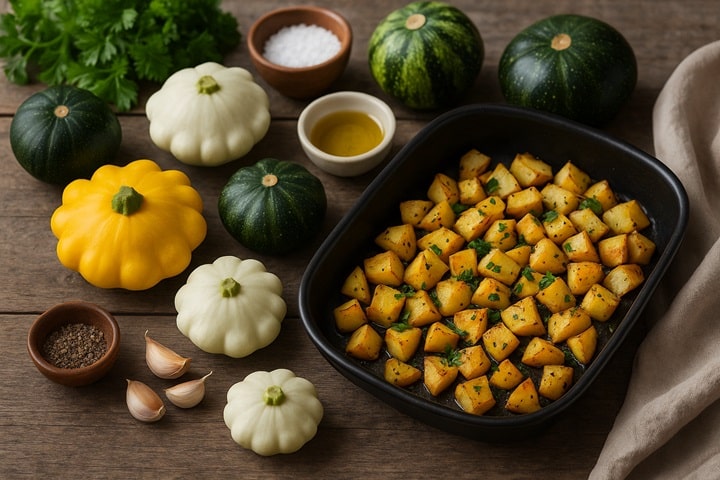
Patty pans are wonderfully low-maintenance in the kitchen. The skin is thin, the seeds are soft, and they cook quickly.
Roast
- Cube squash
- Toss with olive oil, salt, pepper, herbs
- Roast at 220 °C for ~20 minutes, flipping once
Grill
- Slice into ½-inch rounds
- Brush with oil
- Grill 3–4 minutes per side until char-marked
Sauté
- Cube squash
- Add garlic, onions, or herbs
- Sauté in olive oil 4–5 minutes until golden
Try them as a side with grilled fish, stirred into pasta, or as part of a mezze platter.
STUFFED & BAKED RECIPES
1. Quinoa & Kale Stuffed Patty Pans

Ingredients:
- 6 medium patty pans
- 1 cup cooked quinoa
- 1 cup shredded kale
- ½ cup peas
- 100 g feta (optional)
- 1 tsp caraway seeds
- Olive oil, salt, pepper
Steps:
- Cut around stem to make a lid; scoop out flesh.
- Sauté chopped squash flesh with kale and peas.
- Mix with quinoa, caraway, feta.
- Rub squash shells with oil; stuff with filling.
- Bake at 175 °C for 15–20 mins
2. Hearty Protein-Packed Patty Pans
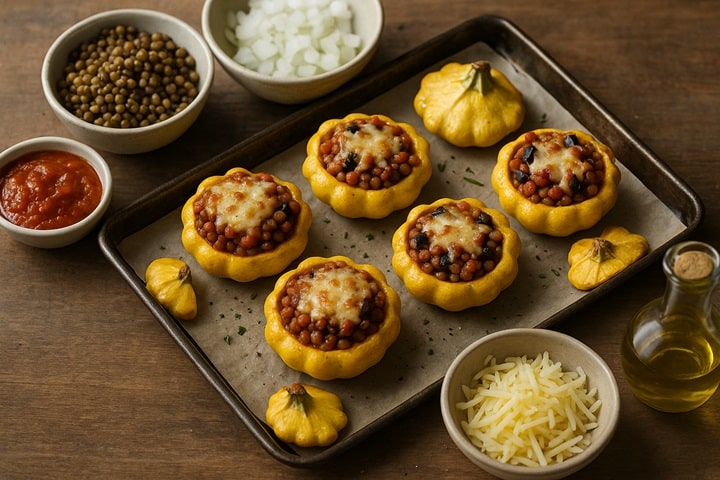
Ingredients:
- 6 patty pans
- 300 g lentils
- 1 cup tomato sauce
- 1 small onion, diced
- 50 g grated cheese/ vegan cheese
Steps:
- Prepare shells as above.
- Cook lentils with onion; stir in tomato sauce.
- Fill shells, top with cheese or vegan alternative.
- Bake at 175 °C for 15–20 mins until tender.
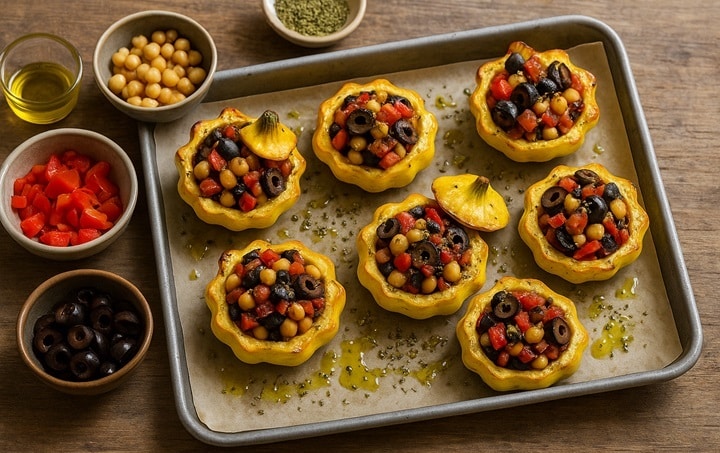
3. Mediterranean Chickpea & Olive Stuffed Patty Pans
Ingredients:
- 6 medium patty pans
- 1 cup cooked chickpeas
- ½ cup diced red peppers
- ½ cup chopped black olives
- ¼ cup sun-dried tomatoes, chopped
- 1 tsp dried oregano
- Olive oil, salt, pepper
Steps:
- Prepare patty pan shells as for other stuffed recipes.
- Sauté diced peppers with chopped squash flesh for 3–4 minutes.
- Stir in chickpeas, olives, sun-dried tomatoes, oregano, salt and pepper.
- Rub shells with oil, fill generously, and drizzle with a little more oil.
- Bake at 175 °C for 15–18 minutes until tender.
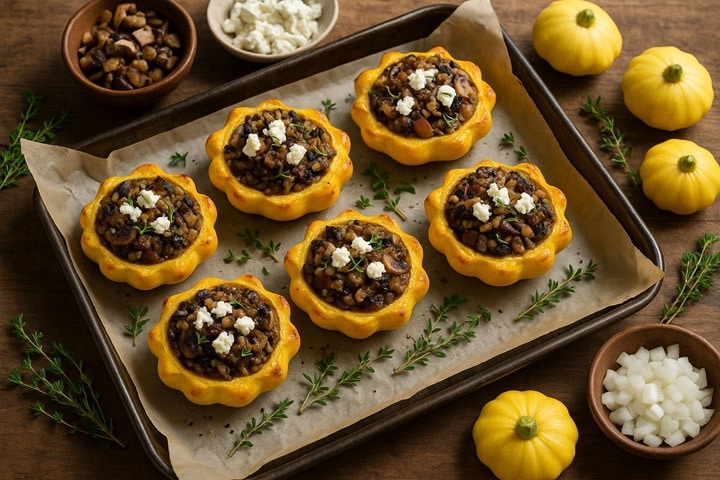
4. Mushroom, Goat Cheese & Thyme Patty Pans
Ingredients:
- 6 patty pans
- 1 cup mushrooms, chopped
- ½ cup goat cheese
- 1 tsp fresh thyme leaves
- 1 small onion, diced
- Olive oil, salt, pepper
Steps:
- Hollow out patty pans.
- Sauté onion, mushrooms, and reserved squash flesh until soft.
- Mix with goat cheese and thyme, season, fill patty pans.
- Bake at 180 °C (350 °F) for 20 minutes.
5. Black Bean & Corn Patty Pans

Ingredients:
- 6 patty pans
- 1 cup black beans, drained and rinsed
- ½ cup corn kernels
- ½ tsp smoked paprika
- 1 small red pepper, diced
- Olive oil, salt, pepper
Steps:
- Hollow out patty pans.
- Sauté red pepper and reserved squash flesh.
- Mix in black beans, corn, and paprika.
- Fill patty pans, drizzle with olive oil.
- Bake at 180 °C (350 °F) for 20–25 minutes.
OTHER CREATIVE USES & PRESERVATION
Patty pans shine in:
- Coconut milk curries with warming spices
- Fritters or latkes made from grated squash
- Thick “steak” slices, grilled or pan-fried
- Pickles and relishes for winter sandwiches
- Decorative serving bowls for soups or dips
- Roasted vegetable trays with rosemary and garlic
- Ratatouille alongside aubergine and tomatoes
- Pasta primavera tossed with olive oil and lemon
- Summer stir-fries with soy, ginger and chilli
- Savoury tarts or quiches with goat cheese
- Vegetable kebabs on the barbecue
- Creamy blended soups with potato and onion
- Tempura-style batter-fried bites with dipping sauce
- Spiralised into ribbons for raw salads
Quick pickles:
- Slice squash, pack into sterilised jars with vinegar, sugar, and dill.
- Refrigerate 48 hours before eating.
Freezing:
- Blanch whole or sliced squash for 3 mins.
- Plunge into cold water, drain, and freeze in bags for up to 10 months.
(See more Recipe Ideas.)
Growing patty pan squash in a polytunnel lets you control warmth, extend the season, and protect crops from pests like cucumber beetles and powdery mildew. With steady conditions, plants produce more fruit — and for longer.
First Tunnels offers a full range of domestic polytunnels and polytunnel accessories to help you create the perfect growing environment. From covers to irrigation kits, every detail is designed to keep your squash — and your whole garden — thriving. Explore the website for more tips, guides, and products to transform your harvests.
FAQs
How many patty pan squash will one plant produce?
Up to around two to three dozen fruits per season.
When is patty pan squash ready to harvest?
When fruits are 5-10 cm across — between ping-pong and softball size.
Do I need to peel patty pan squash?
No — the skin is edible. Just trim the ends.
Can I grow patty pan squash in containers?
Yes — use a large pot, water weekly, and fertilise regularly.
What is the best patty pan variety to grow?
Benning’s Green Tint for flavour, or Sunburst and Total Eclipse for colour.
How do I store surplus patty pan squash?
In the fridge for 3–4 days, or blanch and freeze for up to 10 months.
Sources
GrowVeg. (2023) Growing and Cooking Out-of-this-World Patty Pan Squash. Available at: https://www.growveg.co.uk/guides/growing-and-cooking-out-of-this-world-patty-pan-squash/ (Accessed 11 Aug 2025)
Farley, J. (n.d.) How to Cook Pattypan Squash. eHow. Available at: https://www.ehow.com/how_5124196_cook-patty-pan-squash.html (Accessed 11 Aug 2025)
Britton, S. (2012) Summer Stuffed Patty Pans. My New Roots. Available at: https://www.mynewroots.org/2012/08/summer-stuffed-patty-pans/ (Accessed 11 Aug 2025)