

A livestock shelter is about far more than keeping animals dry. Ventilation, drainage, welfare standards, access, and layout all play a vital role in animal health and day-to-day farm management.
When choosing a livestock shelter or barn, it is easy to focus on size, cost, or construction materials. In reality, the most successful livestock housing is designed around the needs of both the animals and the people caring for them.
Poor ventilation can contribute to respiratory issues. Inadequate drainage can create hygiene problems and increase bedding costs. A poorly planned layout can make feeding, cleaning, and livestock handling more difficult every day.
Whether you are investing in a new barn, upgrading existing housing, or considering a livestock polytunnel, taking a practical approach to shelter design can help you avoid costly mistakes while supporting animal welfare and long-term operational efficiency.

key takeaways
- Ventilation is one of the most important livestock shelter design considerations.
- Poor drainage can increase disease risks and create bedding management problems.
- Shelter layout affects cleaning efficiency, livestock movement, and welfare.
- UK welfare expectations require suitable airflow, lighting, and protection from weather.
- Durable materials can reduce maintenance and repair costs over time.
Why Livestock Shelter Design Matters Beyond Weather Protection
Modern livestock housing needs to do much more than provide shelter from rain, wind, and cold temperatures.
A well-designed shelter supports animal welfare, improves hygiene standards, reduces disease risks, and makes routine management tasks easier. Good design can also reduce labour requirements and lower ongoing maintenance costs.
From experience, many housing problems begin at the planning stage. A shelter that looks suitable on paper can quickly become difficult to manage if ventilation is poor, drainage is inadequate, or access routes have been overlooked.
Why Good Design Matters
- Supports animal health and welfare.
- Improves air quality.
- Reduces moisture build-up.
- Simplifies cleaning and maintenance.
- Makes feeding and handling more efficient.
- Helps meet welfare expectations.
Basic Weather Cover vs Well-Designed Livestock Housing
| Basic Shelter | Well-Designed Livestock Environment |
|---|---|
| Protects from rain | Protects from weather while maintaining airflow |
| Limited drainage planning | Effective drainage and dry lying areas |
| Minimal access consideration | Easy access for livestock and machinery |
| Higher maintenance demands | More efficient daily management |
| Greater risk of damp conditions | Better hygiene and animal comfort |
A practical shelter design often delivers benefits every day, not just during periods of poor weather.
UK Welfare and Compliance Considerations Farmers Should Know
UK livestock welfare expectations place significant emphasis on the housing environment provided for animals. Regardless of whether livestock are housed in traditional barns, modern agricultural buildings, or livestock polytunnels, the same core principles apply.
Across the different UK countries, livestock welfare guidance consistently emphasises the importance of suitable ventilation, effective drainage, adequate lighting, and protection from adverse weather conditions when housing livestock. Whether in England and Wales, Scotland, or Northern Ireland, good shelter design is recognised as a key component of animal welfare and day-to-day livestock management.
Compliance Checklist
- Suitable ventilation to maintain good air quality
- Protection from adverse weather
- Dry, comfortable lying areas
- Adequate drainage and hygiene management
- Appropriate lighting levels
- Safe access for inspection and animal care
- Facilities that support welfare monitoring

Key Welfare Design Requirements
| Design Feature | Why It Matters |
|---|---|
| Ventilation | Helps remove moisture, ammonia, and stale air |
| Drainage | Reduces standing water and hygiene risks |
| Lighting | Supports inspection and animal monitoring |
| Shelter | Protects livestock from weather extremes |
| Layout | Enables safe movement and management |
For further practical guidance, explore key considerations when running a livestock shelter or polytunnel for sheep: https://www.firsttunnels.co.uk/blog/running-livestock-polytunnel/
Ventilation: One of the Most Important Shelter Design Features
Ventilation is often the single most important feature in any livestock housing system.
Good airflow helps remove excess moisture, airborne pathogens, dust, and gases such as ammonia. Without adequate ventilation, damp conditions can develop quickly, increasing the risk of respiratory problems and creating an unhealthy environment for livestock.
According to DAERA guidance, poor ventilation can contribute to increased moisture levels, airborne pathogens, and ammonia build-up within livestock housing.
Natural vs Mechanical Ventilation
| Natural Ventilation | Mechanical Ventilation |
|---|---|
| Uses prevailing airflow | Uses fans and powered systems |
| Lower running costs | Greater control over airflow |
| Simpler maintenance | Requires ongoing monitoring |
| Suitable for many livestock shelters | Often used in intensive systems |
In many agricultural buildings, natural ventilation remains the preferred solution because it is reliable and cost effective when incorporated into the design from the outset.
Ventilation Features Worth Considering
Ridge Ventilation
A ridge opening allows warm, moisture-laden air to escape naturally from the highest point of the structure.
Open-Sided Designs
Strategically positioned openings encourage fresh air movement while reducing condensation risks.
Seasonal Airflow Management
Ventilation requirements change throughout the year. Summer conditions may require maximum airflow, while winter management often focuses on balancing fresh air with weather protection.

Benefits of Effective Ventilation
Pros
- Better air quality
- Reduced moisture levels
- Improved animal comfort
- Lower risk of respiratory issues
- Reduced condensation
Potential Challenges
- Poorly designed openings may create draughts
- Seasonal adjustments may be required
- Airflow must be balanced with weather protection
For more information on important ventilation and welfare considerations when housing poultry in a polytunnel, visit: https://www.firsttunnels.co.uk/page/KeepingChickensinaPolytunnel
Drainage, Flooring and Bedding Design Considerations
A dry shelter is usually a healthier shelter.
Water accumulation can quickly lead to muddy conditions, wet bedding, increased labour requirements, and higher disease risks.
Good drainage begins with site selection but should also be incorporated into the structure itself.
Common Problems and Solutions
| Problem | Practical Solution |
|---|---|
| Standing water | Install effective drainage channels |
| Wet bedding | Improve drainage and bedding management |
| Slippery surfaces | Use appropriate non-slip flooring |
| Mud around drinkers | Improve runoff and hardstanding areas |
| Difficult cleaning | Design drainage for wash-down efficiency |
Drainage Checklist
- Select a well-drained site
- Incorporate gentle floor gradients
- Manage runoff around entrances
- Pay particular attention to feeding and watering points
- Prevent water pooling around livestock areas
- Maintain drainage systems regularly
During prolonged wet weather, effective drainage becomes even more important for maintaining animal comfort and reducing bedding costs.
Learn more about using a livestock polytunnel to protect animals during winter weather: https://www.firsttunnels.co.uk/blog/usingapolytunnelforlivestockinwinter/
Shelter Size, Layout and Stocking Considerations
Choosing the right shelter size is about more than accommodating current livestock numbers.
Future expansion, management requirements, machinery access, and livestock movement all need to be considered.
Overcrowding can increase stress, reduce hygiene standards, and make routine management more difficult.
Planning Checklist
✔ Allow sufficient space per animal
✔ Maintain clear feeding routes
✔ Include access for machinery
✔ Plan separate areas where required
✔ Consider future growth
✔ Allow room for inspections and handling
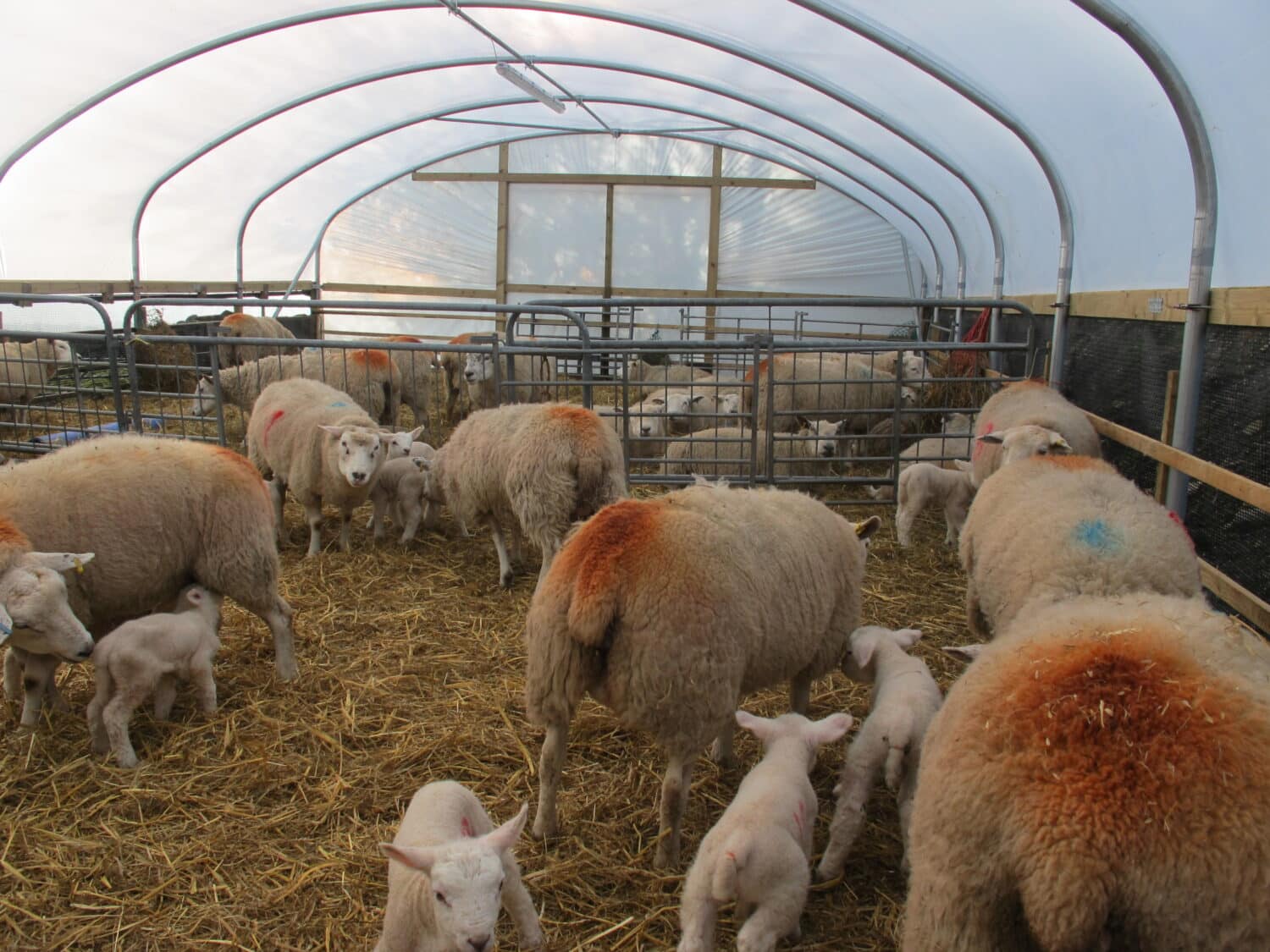
Layout Priorities
Livestock Movement
Animals should move safely and calmly through the shelter without unnecessary bottlenecks.
Feeding and Watering Areas
Ensure livestock can access resources easily without creating excessive congestion.
Machinery Access
Cleaning, bedding replacement, and feeding become much easier when machinery access is incorporated into the initial design.
Shelter Planning Table
| Consideration | Why It Matters |
|---|---|
| Stocking density | Supports welfare and comfort |
| Feed access | Reduces competition |
| Machinery access | Improves efficiency |
| Handling routes | Supports safe management |
| Future expansion | Avoids costly alterations later |
Structural Materials and Durability Features to Look For
Livestock shelters operate in demanding environments. Moisture, animal contact, cleaning processes, and weather exposure can all contribute to wear and tear.
For this reason, structural durability should be a major consideration.
Material Comparison
| Feature | Durable Option | Potential Concern |
|---|---|---|
| Frame structure | Galvanised steel | Untreated metal corrosion |
| Roofing | Quality agricultural coverings | Reduced lifespan materials |
| Fixings | Corrosion-resistant components | Premature deterioration |
| Structural design | Engineered agricultural systems | Lightweight alternatives |
Galvanised steel remains popular because it offers excellent resistance to corrosion and can withstand challenging agricultural environments.
Designing for Easy Cleaning and Day-to-Day Management
Practical management should influence every aspect of shelter design.
A building that is difficult to clean or access can increase labour requirements significantly over its lifespan.
Maintenance Checklist
- Wide access points
- Suitable machinery clearance
- Logical feed and water positioning
- Easy waste removal routes
- Good visibility throughout the shelter
- Efficient wash-down capability
From experience, one of the most common design oversights is failing to think through routine daily tasks. Feeding, cleaning, bedding replacement, inspections, and livestock handling should all feel straightforward.
A practical layout can save considerable time and effort throughout the year.
Durability Checklist
- Corrosion-resistant materials
- Strong structural design
- Weather-resistant coverings
- Quality fixings and joints
- Long-term maintenance support
While lower-cost options may appear attractive initially, they can often result in higher maintenance costs over time.
Common Mistakes to Avoid When Buying a Livestock Shelter
Many expensive problems stem from decisions made before construction even begins.
Mistakes to Avoid
- Buying based solely on upfront cost
- Choosing an undersized shelter
- Ignoring ventilation requirements
- Underestimating drainage needs
- Forgetting future expansion plans
- Overlooking machinery access
- Prioritising appearance over practicality
Red Flags to Watch For
| Red Flag | Potential Consequence |
|---|---|
| Limited ventilation options | Poor air quality |
| No drainage strategy | Damp conditions |
| Restricted access points | Difficult maintenance |
| Low-quality materials | Higher repair costs |
| No allowance for expansion | Future limitations |
The most successful livestock housing projects tend to focus on long-term practicality rather than short-term savings.
First Tunnels: Practical Experience That Shapes Better Livestock Housing
At First Tunnels, livestock shelters are approached from a practical farming perspective. Experience has shown that successful livestock housing depends on far more than simply creating a covered space.
Ventilation, drainage, durability, access, and layout all influence how well a shelter performs in everyday use. Livestock polytunnels can provide adaptable, cost-effective housing solutions when these principles are incorporated from the outset.
Whether housing sheep, poultry, or other livestock, flexible shelter systems can be tailored to suit changing management requirements while supporting welfare and operational efficiency.
Explore the First Tunnels livestock resources to discover practical guidance based on real-world agricultural experience.

Conclusion
Choosing the right livestock shelter involves much more than selecting a structure that protects animals from the weather.
Ventilation, drainage, layout, durability, and management efficiency all play important roles in animal welfare and long-term operational success. By taking time to assess how a shelter will function in daily use, farmers can make better investment decisions and create housing that supports both livestock health and practical farm management for years to come.
Frequently Asked Questions
What makes a livestock shelter compliant in the UK?
A compliant livestock shelter should provide suitable ventilation, protection from adverse weather, adequate drainage, appropriate lighting, and conditions that support animal welfare and effective management.
How much ventilation does a livestock shelter need?
Ventilation requirements vary depending on livestock type, stocking density, and shelter design. The goal is to maintain fresh air movement while preventing excessive moisture and ammonia build-up.
What flooring is best for livestock shelters?
The best flooring depends on the livestock being housed, but surfaces should provide good drainage, minimise slipping risks, and support effective cleaning and bedding management.
Can polytunnels be used for livestock housing?
Yes. Livestock polytunnels can provide practical, adaptable housing when designed with appropriate ventilation, drainage, access, and welfare considerations in mind.
How do you reduce moisture build-up inside livestock shelters?
Good ventilation, effective drainage, dry bedding management, and avoiding overcrowding are all key strategies for reducing moisture levels and maintaining a healthy livestock environment.
Sources
Department of Agriculture, Environment and Rural Affairs (DAERA) (2021) Polytunnels provide a cost-effective winter housing option. Available at: https://www.daera-ni.gov.uk/news/polytunnels-provide-cost-effective-winter-housing-option (Accessed: 19 June 2026).