

Looking for inside polytunnel ideas? We may have the answers for you…
A polytunnel is often viewed purely as a practical space—somewhere to sow, grow, and harvest. But as any seasoned gardener will tell you, it’s also a place of rhythm, reflection, and rest.
Creating a seating area within your polytunnel might seem a touch indulgent at first, especially if you’re aiming to maximise yield. Yet this simple act of making space for yourself amid the plants can be transformative—not only for your wellbeing but for the success of your garden too.
After all, the more time you spend amongst your crops, the more attuned you become to their needs. You notice a pest before it becomes an infestation, catch signs of disease in its earliest stage, or simply remember to water a tray of seedlings at just the right moment.
Let’s take a closer look at why adding seating to a polytunnel is such a good idea—and how to do it beautifully and sustainably.
Why Add Seating Inside Polytunnel Ideas?
At its heart, gardening is about connection. It’s about aligning ourselves with natural cycles, embracing the seasons, and taking joy in the small miracles of growth. A seat in the polytunnel gives you the chance to pause and witness all of that up close.
But there are practical reasons too. Seating allows you to work more comfortably on tasks like potting, seed sowing, or pruning—especially during colder months when outside conditions are less forgiving. It provides a space for rest during labour-intensive gardening sessions and makes the tunnel a usable space year-round, not just during active gardening hours.
Moreover, integrating a place to sit transforms your polytunnel from a purely functional space into a sanctuary—a retreat from the rush of everyday life. Imagine sitting with a warm mug in hand, rain tapping softly on the plastic above, surrounded by the scent of tomatoes and basil. What could be more restorative?
Best Types of Seating for a Polytunnel
The key to choosing seating for your polytunnel lies in balance: comfort, durability, and suitability for the polytunnel environment. Here are a few tried-and-tested options:
1. Garden Benches
A simple wooden or metal bench offers a rustic charm and accommodates multiple people. Ideal if you share your garden with family or friends. Opt for a backless bench if space is tight—it can double as a low potting station or be tucked under shelves when not in use.
2. Foldable Chairs

These are perfect for those with limited space or who want flexibility. Lightweight options in natural wood or sustainable bamboo are ideal. They can be easily stowed when you need to reclaim floor space for larger seasonal tasks.
3. Built-In Seating
If you’re in the mood for a DIY project, consider creating built-in seating from reclaimed materials—such as a bench with storage underneath for tools or compost. This maximises utility while keeping the aesthetic in tune with a working garden.
4. Hammocks or Hanging Chairs
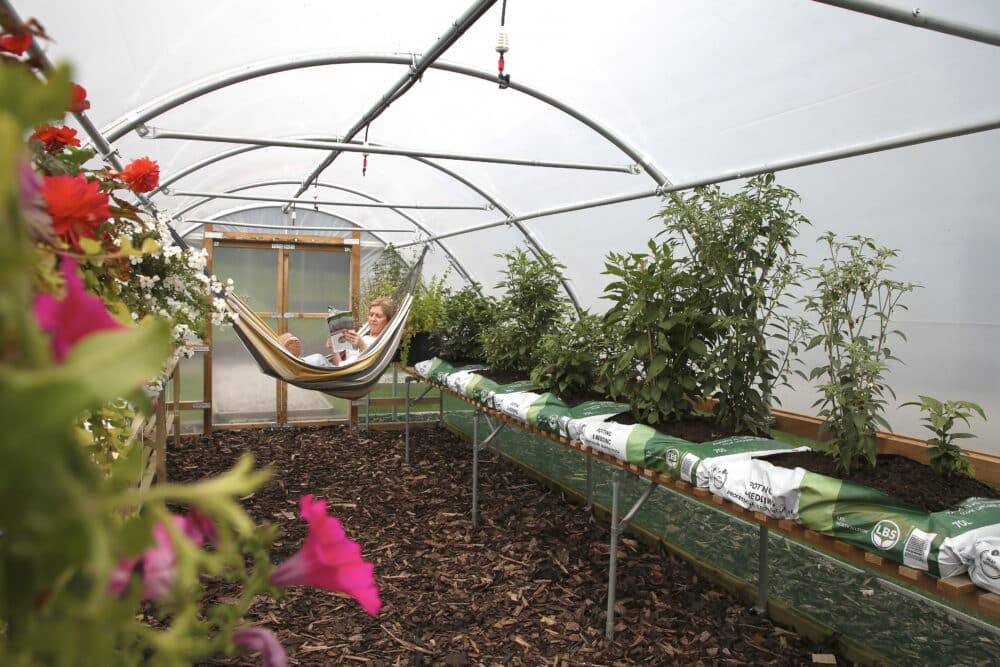
For those who truly want their polytunnel to double as a retreat, a hammock-style seat suspended from the tunnel frame (with proper reinforcement) can offer a moment of bliss. Bear in mind, though, the need for airflow and accessibility—this option is best suited to larger polytunnels.
5. Living Seating
Perhaps the most enchanting and sustainable option of all, living seating involves the creative integration of plants into the very structure of your seat. Whether you craft a bench that doubles as a planter, weave living willow into a sculptural seat, or allow low-growing herbs to creep and cushion a stone seat, this approach truly blurs the line between form and function.
Living willow benches, in particular, are a favourite among permaculturists. Constructed by weaving fresh willow rods into a frame that roots into the soil, these benches green over time, growing leaf and form with the seasons. With regular pruning and training, they become not just furniture but a living art piece—shifting, breathing, and evolving as part of your polytunnel ecosystem.
Alternatively, consider a planted seating edge—for example, a raised bed with a wide timber cap that can serve as a seat. The soil below supports herbs like creeping thyme, lemon balm, or even strawberries, offering scent, softness, and the occasional edible surprise as you rest.
This approach does require a little more initial thought and ongoing care, but the result is deeply rewarding. Few things compare to sitting on something you’ve literally grown yourself.
Materials That Work Best in a Polytunnel Environment
Polytunnels can experience fluctuating temperatures and high humidity levels, which can wreak havoc on unsuitable materials. Choosing wisely will prevent frustration and prolong the life of your seating.
- Wood (Treated or Naturally Durable): Woods like cedar, larch, or oak are naturally resistant to rot and can withstand damp conditions. If using softwood, ensure it’s treated with eco-friendly preservatives. Avoid varnishes or finishes that off-gas—remember, you’ll be sitting and growing in the same space.
- Metal (Galvanised or Powder-Coated): Aluminium and powder-coated steel resist rust and are low-maintenance. However, do remember the cost of mined materials to the environment, and upcycle or reclaim materials where possible.
- Textiles (Only for Removable Cushions): If you want cushions, use removable, washable covers in natural fabrics like organic cotton or linen. Keep them in a sealed container or take them in and out as needed to avoid mildew.
Where to Position Seating Inside a Polytunnel
Placement is everything. Done right, your seating area won’t compromise productivity—it’ll enhance it.
North-Facing Edge
Placing seating on the northern side of the tunnel means you’re not stealing prime growing space from sun-loving crops. This is ideal for enjoying your polytunnel without blocking light or interrupting airflow.
Beside Companion Planting Areas
Positioning your seat near particularly aromatic plants or ones that are particularly pleasing to the senses, or close to beneficial plant combinations (like basil and tomatoes or calendula and brassicas) turns your break into a multisensory experience.
Shaded Nooks
In summer, a shaded corner—created with tall crops like corn or beans, or with temporary shading cloth—can offer a cool spot to sit and cool off. In winter, you may prefer a sun-trap area to maximise warmth.
Multi-Use Zones and Multifunctionality
Space in a polytunnel is precious, especially for those working with a modest footprint. But multifunctionality is a gardener’s best friend.
A seating area might double, for example, as:
- A potting bench (simply add a removable tray or potting mat).
- Storage space (benches with hidden compartments).
- A propagation station (add grow lights or heating mats nearby).
- A teaching area (great if you garden with children or run workshops).
The key is modularity—choose pieces that adapt to changing needs across the year.
In any garden space—especially one as valuable and often compact as a polytunnel—multifunctionality is not just a convenience, it’s a guiding principle.
By designing areas and elements to serve more than one purpose, you make the most of every square inch, reduce waste, and simplify your daily tasks.
A bench that stores tools, a table that doubles as a potting station, or a raised bed edge that also serves as seating all help streamline your workflow and reduce clutter.
But beyond practicality, multifunctional features encourage a more thoughtful relationship with your space. They prompt us to ask not just what does this do? but how else could this serve?—an attitude that naturally aligns with permaculture ethics and sustainable living.
When everything in the tunnel has more than one use, your garden becomes more adaptive, resilient, and harmonious.
Seasonal Use & Weatherproofing Tips
A polytunnel environment is semi-sheltered, but it’s still subject to moisture, temperature swings, and the occasional pest. Here’s how to keep your seating area comfortable and resilient year-round:
- Spring
- Deep clean furniture and treat wood as needed.
- Rotate cushions and soft furnishings to prevent damp buildup.
- Summer
- Use light-coloured fabrics to reflect heat.
- Ensure good ventilation around seating to avoid overheating.
- Autumn
- Move delicate items out or cover them with breathable fabric.
- Mulch around seating zones to suppress weeds and retain warmth.
- Winter
- Store soft furnishings indoors.
- If you use the tunnel during cold months, consider eco-friendly space heating options.
Decorative Touches
Never underestimate the joy of beauty in a working space. Thoughtful decoration doesn’t just lift your mood—it brings intention and personality into your gardening.
Planting with Aesthetics in Mind
Use colourful edibles—like rainbow chard, purple basil, or nasturtiums—to liven up the view from your seat. Consider climbers like sweet peas or cucamelons on trellises nearby for added scent and shade.
Recycled or Handmade Art
Driftwood signs, mosaic plant labels, or even a reclaimed mirror can all add charm. Polytunnels tend to be utilitarian by design—why not soften the lines with a touch of artistry?
Lighting
Solar-powered fairy lights or LED lanterns can add a magical glow for evening use. Just ensure wiring and batteries are kept dry and well-ventilated.
Natural Accents
A small fountain, wind chime, or even a bee hotel near your seating area can enhance the sensory experience and help connect you further with the surrounding ecology.
FAQs
Can I use indoor furniture inside a polytunnel?
Technically, yes—but it’s not usually recommended. Indoor furniture isn’t designed to cope with the unique conditions inside a polytunnel, where humidity can fluctuate greatly and condensation often forms on cooler days.
Soft furnishings like upholstered chairs or untreated wood may absorb moisture, leading to mould, mildew, or rot. If you do wish to repurpose indoor pieces, opt for those made from solid hardwoods or metals, and make sure they’re treated or sealed appropriately.
Adding removable, washable covers and storing cushions when not in use will help preserve their condition.
Will adding furniture reduce my growing space?
It can, but it doesn’t have to. With thoughtful planning, a seating area can actually enhance your growing efforts rather than hinder them.
Consider multi-functional solutions such as benches that double as storage, foldable chairs that tuck away neatly, or seating built into the edge of a raised bed. A compact stool, a corner bench, or even a small table for potting tasks can serve dual purposes.
In smaller tunnels, placing seating along the northern edge ensures you’re not shading out sun-loving crops. Remember, the more time you spend inside your tunnel, the more attentive you’ll be to your plants—so a small trade-off in space may lead to bigger gains in productivity.
Can I leave my seating in the polytunnel over winter?
That depends on the materials. Seating made from metal (especially galvanised or powder-coated), pressure-treated timber, or recycled plastic is typically robust enough to withstand winter conditions inside a polytunnel.
However, soft furnishings or untreated wood should either be removed or well-protected during the colder months.
Covering seats with breathable, waterproof cloths can help prolong their lifespan. Some gardeners even rotate or stack their seating in winter to make room for overwintering crops or seed trays, making the space as efficient as possible while still protecting their furniture from damp and cold.
Sources
Harbour Lifestyle. (2023) Best Garden Furniture to Leave Outside: A Comprehensive UK Guide. [online] Available at: https://www.harbourlifestyle.co.uk/blogs/news/best-garden-furniture-to-leave-outside