
HOW TO VENTILATE A POLYTUNNEL
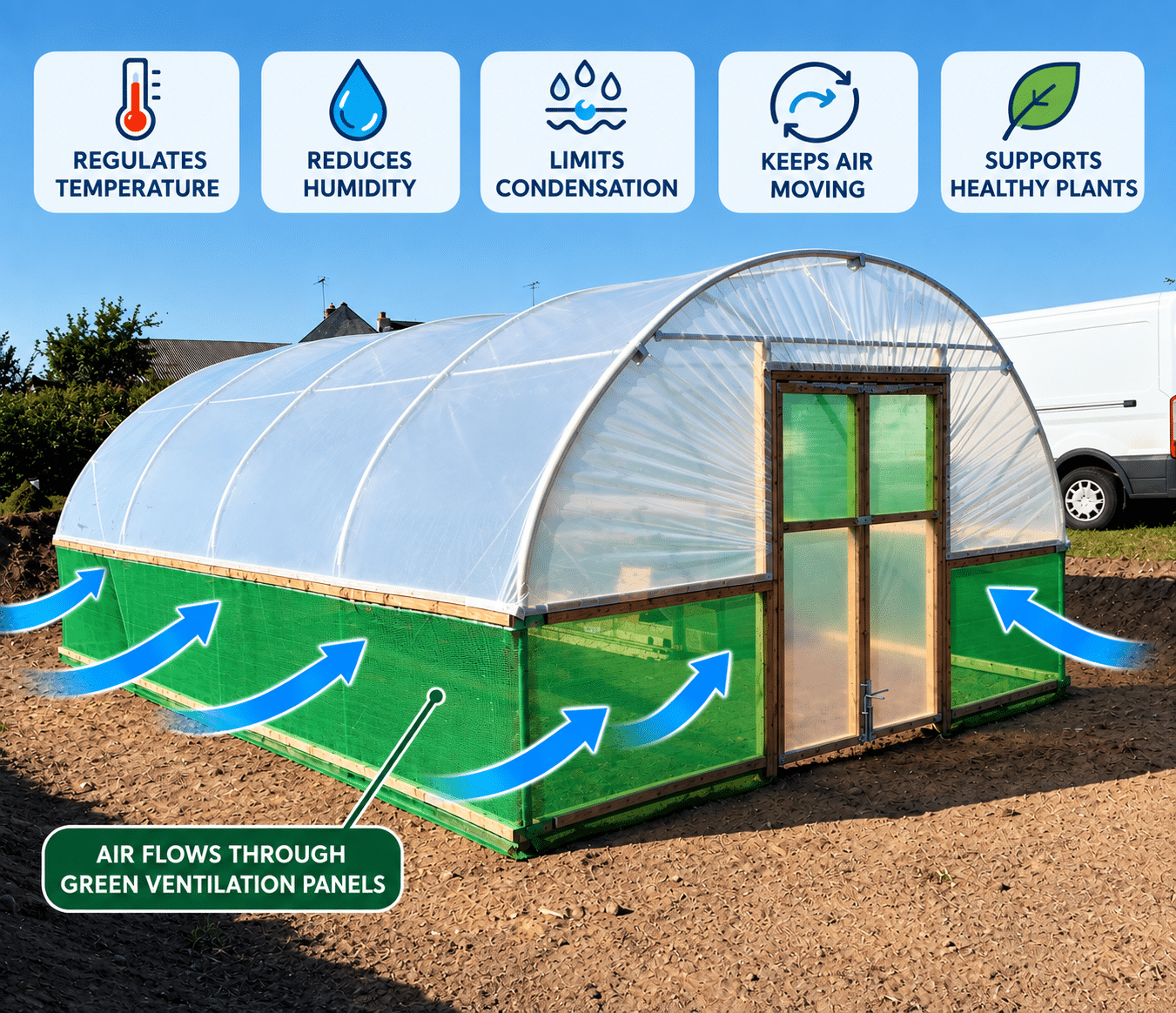
Learning how to ventilate a polytunnel is one of the most important parts of growing successfully in one. It is not simply about stopping the tunnel from becoming too hot. Good ventilation helps regulate temperature, reduce humidity, limit condensation and keep air moving around your plants.
The good news is that effective ventilation does not have to be complicated. In most cases, natural airflow does the work. The trick is knowing when to open doors and vents, how much airflow your crops need, and when the basic approach is no longer enough.
Key Takeaways
- Ventilation regulates temperature, humidity and airflow, not just heat.
- Warm air rises, so high-level ventilation can help release heat and moisture.
- Opening both ends of a tunnel can create useful cross-flow, while side ventilation provides greater control.
- Ventilation needs to change with the weather, season, crop and time of day.
- Persistent condensation, overheating and stagnant air are signs that your tunnel needs better airflow.
Why Ventilation Is Essential in a Polytunnel
A polytunnel is designed to create a more sheltered growing environment. But the same covering that protects plants from wind and rain also reduces natural air movement.
On a sunny day, temperatures inside can rise surprisingly quickly. Plants and soil release moisture into the air, while watering and evaporation add more. If that warm, humid air has nowhere to go, condensation can develop on the inside of the polythene and around the plants.
This creates conditions that are less comfortable for plants and can encourage fungal problems.
Good ventilation helps to:
- Remove excess heat.
- Reduce humidity and condensation.
- Replace stale, humid air with fresher air.
- Encourage stronger, healthier plant growth.
- Reduce conditions favourable to some fungal diseases.
- Create a more even growing environment.
Ventilation matters outside summer too. A cool winter day may not require much opening, but if the tunnel is warm and humid inside, some airflow is still useful.
Good ventilation is about balance. The aim is not to make the polytunnel as cool as possible. It is to create a healthy growing environment without unnecessary heat or humidity.
How Ventilation Works Inside a Polytunnel
Natural ventilation relies largely on a simple principle: warm air rises.
As sunlight warms the tunnel, the air inside becomes warmer and rises towards the highest point. If there is an opening there, warm and humid air can escape.
At the same time, cooler air enters through lower openings.
This creates a continuous exchange of air:
- Sun warms the soil, plants and air inside the tunnel.
- Warm air rises.
- Warm, humid air escapes through higher openings.
- Cooler outside air enters through lower openings.
- The incoming air moves through the growing space.
- The process continues while there is a temperature difference and suitable airflow.
The Main Ways to Ventilate a Polytunnel
Different ventilation methods suit different tunnels and growing situations.
| Ventilation Method | Best Suited To | Advantages | Limitations |
|---|---|---|---|
| Doors | Small tunnels and mild weather | Simple and easy to use | Limited control |
| Both end doors | Creating cross-flow | Encourages air to move through tunnel | Can be too much in strong winds |
| Side ventilation | Larger tunnels and summer growing | Provides substantial airflow | Needs appropriate tunnel design |
| Roof vents | Releasing rising warm air | Useful high-level ventilation | Not available on all tunnels |
| Louvres | Controlled ventilation | Can provide more gradual airflow | Additional equipment |
| Mechanical ventilation | Specialist or large growing spaces | Can provide controlled airflow | Uses energy and requires equipment |
For many smaller tunnels, opening the doors may be sufficient during mild weather. But as tunnels become larger, crops become denser and temperatures rise, additional ventilation becomes increasingly useful.
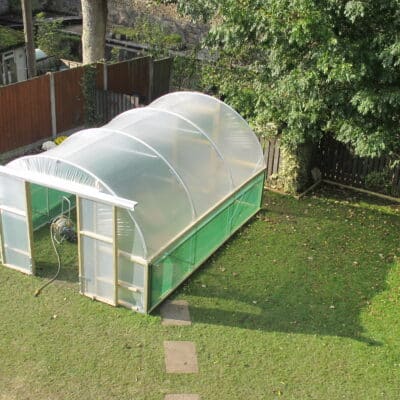
If your tunnel needs more airflow than its doors can provide, you can improve airflow with polytunnel side ventilation.
Choosing the Right Ventilation Method
There is no single ventilation arrangement that works perfectly for every polytunnel.
Think about the following:
| Growing Situation | Ventilation to Consider |
|---|---|
| Small tunnel with few plants | Doors may be sufficient |
| Small tunnel on hot, sunny site | Doors open early and additional ventilation if available |
| Larger tunnel | Side ventilation and multiple openings |
| Dense crops | Greater airflow required |
| Humid or sheltered location | Pay particular attention to air exchange |
| Exposed site | Ventilation needs balancing with wind |
| Commercial or intensive growing | More controlled ventilation may be worthwhile |
The size of the tunnel is only part of the picture. A densely planted tunnel can need more ventilation than a sparsely planted tunnel of the same size.
Local climate matters too. A tunnel in a warm, sheltered garden may need to be opened earlier than one in an exposed, cooler location.
When Should You Ventilate Your Polytunnel?
There is no universal timetable. I find it is better to respond to the conditions inside the tunnel than follow a rigid rule.
MORNING
Check the tunnel early in the day.
If condensation has formed overnight, opening doors or vents when conditions allow can help moisture escape. As the sun rises, temperatures can increase rapidly, so do not wait until the tunnel is already hot before thinking about ventilation.
SPRING
Spring weather can change quickly. A cold morning can be followed by bright sunshine, making it easy to underestimate how quickly temperatures can rise inside.
Start opening the tunnel earlier on sunny days and adjust according to the weather.
SUMMER
This is when ventilation becomes most important.
On warm days, open available ventilation before the tunnel becomes excessively hot. Use side ventilation and opposite openings where possible to encourage airflow through the growing space.
For more practical advice, see how to keep your polytunnel cool during the warmer months.
AUTUMN
As temperatures fall, you can gradually reduce ventilation, but do not shut everything as soon as the first cool days arrive.
Bright autumn sunshine can still create considerable heat inside a tunnel. Continue checking conditions rather than relying on the calendar.
WINTER
Winter ventilation is easily overlooked.
You may not need large openings on cold days, but completely sealing the tunnel can allow humidity and condensation to build up. On mild, dry days, some ventilation can help keep the growing environment healthier.
EVENING
Evening
As temperatures fall, close openings appropriately, particularly when frost or strong winds are forecast.
The exact point at which you close the tunnel will depend on the weather, the crops you are growing and the protection they need.
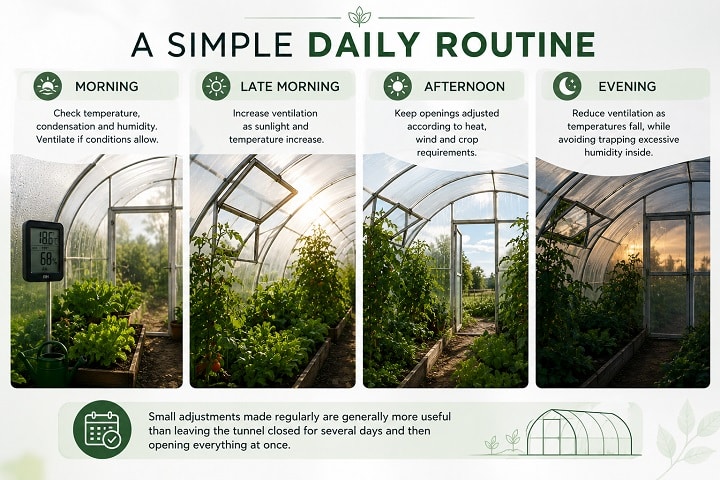
A simple daily routine
Morning: Check temperature, condensation and humidity. Ventilate if conditions allow.
Late morning: Increase ventilation as sunlight and temperature increase.
Afternoon: Keep openings adjusted according to heat, wind and crop requirements.
Evening: Reduce ventilation as temperatures fall, while avoiding trapping excessive humidity inside.
Small adjustments made regularly are generally more useful than leaving the tunnel closed for several days and then opening everything at once.
Signs Your Polytunnel Needs Better Ventilation
Plants often tell you when the growing environment is not quite right.
Look out for:
- Persistent condensation on the inside of the polythene.
- Very humid, stagnant air.
- Excessive heat on sunny days.
- Water remaining on leaves for long periods.
- Increasing problems with fungal diseases.
- Plants looking stressed despite adequate water.
- Air that feels noticeably still inside the tunnel.
Condensation deserves particular attention. Some condensation is normal, especially overnight, but persistent moisture suggests that the tunnel is not exchanging air effectively.
Humidity check: If the tunnel repeatedly feels damp and stagnant, don’t simply water less and hope for the best. Look at the whole growing environment, including ventilation, plant spacing and airflow.
For broader guidance, you can manage humidity by ventilating your polytunnel throughout the year.
Tips for Improving Airflow Naturally
Good ventilation begins with how you organise the growing space.
Keep pathways clear
Avoid filling every available space with pots, trays and plants. Clear paths allow air to move through the tunnel.
Avoid overcrowding
Plants need room for air to circulate around their leaves. Overcrowding can create pockets of humid, stagnant air.
Use both ends of the tunnel
Where weather conditions permit, opening both doors can create useful cross-flow.
Combine low and high openings
If your tunnel has different ventilation points, use them together. Cooler air entering lower down can replace warmer air leaving higher up.
Watch the weather
A still, sunny day and a cool, windy day require very different approaches. Ventilation should respond to conditions rather than being treated as an on-off switch.
Common Polytunnel Ventilation Mistakes to Avoid
| Don’t | Do Instead |
|---|---|
| Wait until the tunnel is already very hot | Ventilate before temperatures climb too far |
| Rely entirely on one open door | Create airflow between different openings where possible |
| Keep the tunnel sealed all winter | Ventilate on suitable mild days |
| Pack plants tightly together | Leave room for air circulation |
| Ignore condensation | Treat persistent moisture as a warning sign |
| Leave vents permanently open regardless of weather | Adjust ventilation according to conditions |
| Follow a fixed schedule without checking the tunnel | Look at the plants and growing environment each day |
One common mistake is assuming that more ventilation is always better. It is not.
Strong winds can damage plants, dry out the growing space and make conditions unnecessarily cold. The aim is controlled natural airflow, not maximum airflow at all times.
Conclusion
Good polytunnel ventilation is largely about observation. Once you understand how warm air rises, how moisture builds up and how air moves through your particular tunnel, it becomes much easier to make the right adjustments.
Open ventilation early enough to prevent excessive heat, create cross-flow where possible, avoid overcrowding and pay attention to condensation throughout the year. During winter, remember that ventilation still matters, even when temperatures are low.
There is no one-size-fits-all approach. The best solution depends on the size and design of your tunnel, the crops you grow and the conditions around it.
If you find that opening the doors is no longer enough, improve airflow with polytunnel side ventilation and explore the wider growing advice from First Tunnels.
Frequently Asked Questions
Why is ventilation important in a polytunnel?
Ventilation regulates temperature and humidity while encouraging fresh air to circulate. It helps prevent excessive heat and condensation and creates healthier conditions for plants.
Is opening doors enough to ventilate a polytunnel?
Sometimes. For a small tunnel, opening the doors may provide sufficient airflow in mild weather. Larger tunnels, densely planted spaces and hot conditions often benefit from additional ventilation, particularly along the sides.
Should a polytunnel stay open overnight?
Not necessarily. This depends on the weather, season, location and plants inside. On a mild night, some ventilation may be useful, particularly if humidity is high. In cold, windy or frosty conditions, openings may need to be reduced or closed.
What is the best ventilation system for a polytunnel?
There is no single best system. Doors can work well for small tunnels, while side ventilation and other openings provide greater airflow and control in larger structures. The right approach depends on tunnel size, crop density and local conditions.
How can I reduce humidity inside a polytunnel?
Improve air exchange, ventilate when conditions allow, avoid overcrowding and water carefully. Persistent condensation is a useful warning that the tunnel needs better airflow.
Can poor ventilation cause plant diseases?
Poor ventilation can create warm, humid and stagnant conditions that favour some fungal diseases. Improving airflow, reducing excessive humidity and keeping foliage from remaining wet for prolonged periods can help create healthier growing conditions.
Sources:
University of Vermont Extension (2019) Ventilation in greenhouses and high tunnels. Available at: https://blog.uvm.edu/cwcallah/2019/08/14/ventilation-in-greenhouses-and-high-tunnels/ (Accessed: 29 August 2026).
Royal Horticultural Society (RHS) (n.d.) Greenhouse: ventilation and shading. Available at: https://www.rhs.org.uk/garden-features/ventilation-and-shading-greenhouses (Accessed: 29 August 2026).