

In this article, we will explore how to bring community together with a polytunnel. Polytunnels are not just useful in domestic or commercial settings. As well as being widely used in domestic gardens and on smallholdings and farms, polytunnels can also be used by communities in a range of different ways.
Table of Contents
What is a Community Polytunnel?
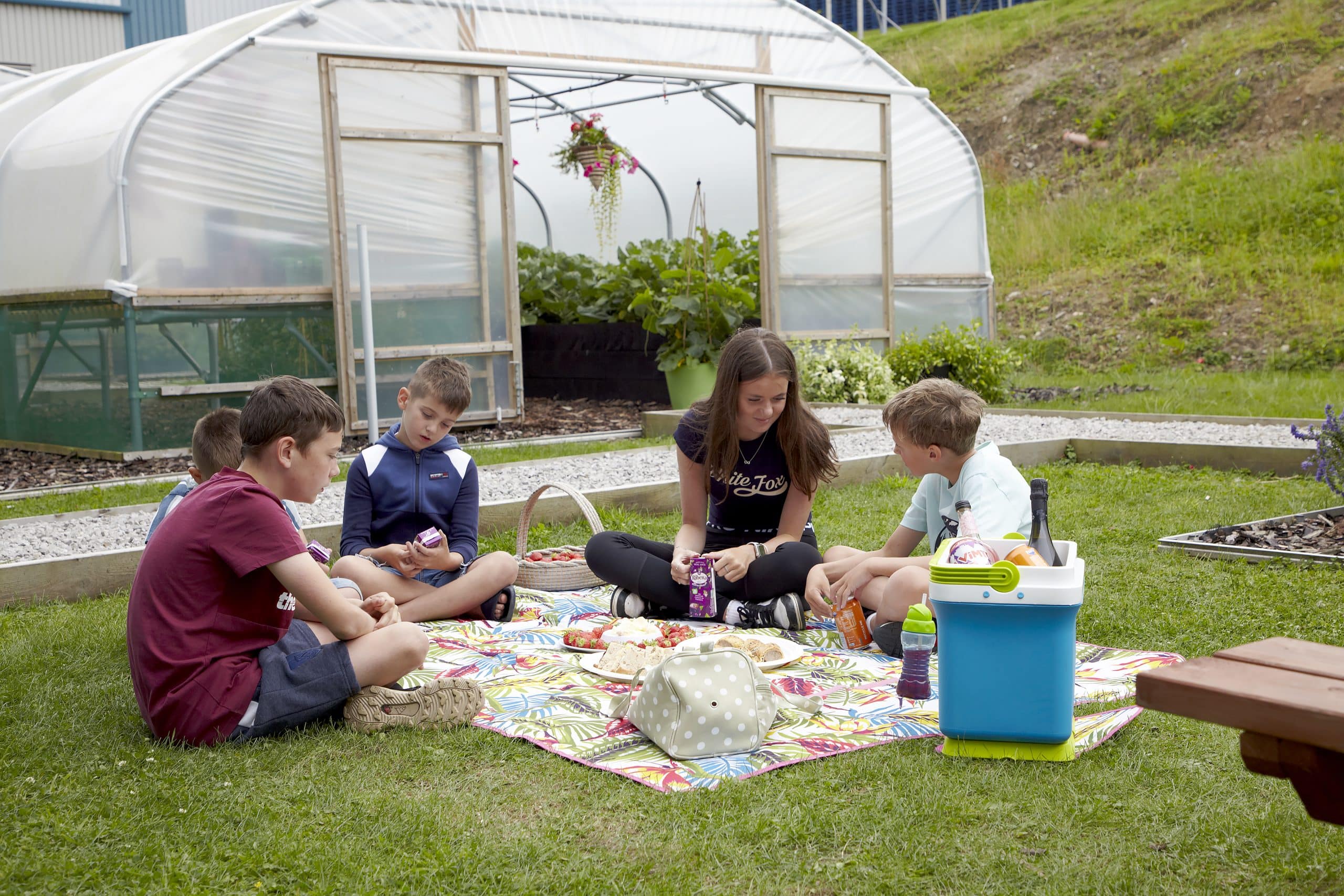
When we talk about a community polytunnel we are simply talking about any polytunnel that is used within a community. Most commonly, a community polytunnel will be used as an includes, shared space that brings community members together.
Often, a community polytunnel will be used to grow plants, but it can also be used in a number of other ways to promote collaboration, encourage learning, and foster a proliferation of beneficial social connections. We encourage using a community polytunnel in order to bring community together.
What are the Benefits of a Community Polytunnel?
All too often, a sense of community has been lost. But we should all realise that we can’t all just wait for someone else to do something about it. If our communities are lacking – we can take things into our own hands, and strive to enrich and enable our communities in a range of different ways.
Establishing a community polytunnel is one important way that we can take steps to strengthen out communities, and boost resilience by bringing people together and forging stronger community connections between different groups that live within a certain area.
A polytunnel is a cheap and relatively affordable structure that can help your community grow and thrive in a huge range of different ways. Therefore, you should follow these tips on how to bring community together with polytunnel gardening in order to improve socialisation and even improve polytunnel gardening skills.
Establishing a Community Polytunnel

Bring community together with a polytunnel involves, first of all, finding a place to position a polytunnel. This might be with agreement on private land within a community area, or on public land within the locality. There are many potential sites for community polytunnels that might be explored.
The first thing to think about if you would like to place a polytunnel for your community is where one might be located. Here are a few suggested places that you might like to look into:
- An existing community garden or community allotments. (Allotment holders could perhaps share one larger polytunnel if there is not space for one on individual plots).
- A public park or communal ornamental garden area. (It might be worth while approaching the council/ authorities about establishing a community garden area on a public site that is being underused.)
- School play grounds, or the grounds of other council properties like libraries, offices etc..
- Close to a clinic, doctors surgery or other healthcare facility.
- On a brown-field site in your neighbourhood that needs something to be done with it.
- In the grounds of a charity space/ youth group/ scout hut etc..
- On private property in your community. (If you see a space you’d love to make better use of, it is always worth finding out who owns it, and seeing whether an agreement can be reached.)
It is always worthwhile looking into potential sites. Even when you do not own the space, it is often possible to reach an accord that suits everyone involved. A community polytunnel really can benefit a whole community.
Of course, creating a small steering committee to direct proceedings can also be beneficial, to make sure that everything goes according to plan. It will be important for members of this community group to plan together, and to be on the same page when it comes to their goals and intentions.
Individuals who come together to make things happen is where all such projects start. Later, they can become important to a much larger number of people within a community, and bring disparate groups together in common cause.
We also offer a polytunnel construction service to ensure your polytunnel is erected correctly.
Encouraging Active Participation
By bringing community together with a polytunnel, this should be a resource for everyone in your community. (No matter how large or small the community you’ve identified may be). Once the polytunnel is on site, why not hold an event (or an online event) to show everyone the structure erected and discuss your plans. Provide regular updates to everyone, even if they are not directly helping with sowing and planting. This can help avoid any resentments and allow everyone to feel some sense of pride and ownership about the project.
If more than one group will be using the polytunnel, make sure you have clear rules in place. Make sure you create schedules so everyone know’s what is happening when. Be organised. Getting rules and structure in place early on may not seem like a lot of fun. But it can save a little of hassle down the road if things are simple and clear from the get go.
Who can use the polytunnel? How are chores to be managed and shared? Who has a share in the harvest (if there is one), and who can take what, and when? Making sure everyone has the answers to these questions is crucial as you begin to use your new community polytunnel.
Ideas for Community Polytunnel Use
There are numerous ways in which you can bring community together using a polytunnel. You can find these ideas for community polytunnel gardening below.
1. Using a Polytunnel for Community Food Production
The first and most obvious way that communities could make use of a polytunnel is of course for food production. In community gardens and on allotments, polytunnels can be useful for:
- Seed starting and propagation.
- Protection of more tender or exotic plants.
- Providing some level of protection against pests and problems.
- Winter cultivation and year-round growing – expanding growing efforts outside of the spring and summer months.
- Giving a structure in a space from which rainwater can be harvested.
- Providing space to store pots, tools and other equipment.
Polytunnels can be versatile growing spaces, and can be used in community gardens and on allotments in a range of different ways, as shared resources which can help increase yields, grow more, and grow in more eco-friendly and sustainable ways.
2. Using a Polytunnel as a Plant Propagation Space for Community Projects
It is not only through gardening and food production that we can enhance our communities. Conservation and ecosystem restoration are vitally important for our future, and communities can come together to protect and enhance the natural world around them.
By preserving or reinstating wetlands, woodlands, forests, or meadows, for example, communities can help mitigate and adapt to climate change, and help tackle biodiversity losses. The scale of the challenges we face can sometimes feel overwhelming. But working together, there is almost no limit to the things we can achieve.
And communities can come together to turn towns and cities into green and pleasant places too. Nature should not be something distant and other – it must be integral to our lives and to the communities in which we live. Creating rain gardens, improving public parks, and sowing wild flowers, for example, can dramatically enrich urban environments and urban lives.
Often, a large number of plants need to be propagated to enable ecosystem restoration or community greening schemes. And a polytunnel can come in very handy for such protects. They can serve as a place to propagate many plants through seeds and cuttings, and to create tree nurseries for vulnerable young trees and shrubs before they are ready to be planted out into their final growing positions.
3. Using a Polytunnel for Community Education and Skill-Sharing
To bring community together is done by learning together – not just gardening but also a wide range of other skills. Polytunnels could potentially be used as venues for workshops and skill-building events in a range of different arenas.
For example, a polytunnel might become a multi-functional space where people can learn skills in upcycling and repair, bicycle maintenance, natural crafting, and so much more.
Polytunnels are also versatile structures which could be used as places for community swap shops, tool libraries, and other spaces which allow for greater community collaboration.
4. Using a Polytunnel for Community Business Enterprise
One key way to bring community together involves gardening, of course. But food can also bring people closer together in other ways. Many communities struggle with access to good, fresh, local, sustainable food. And erecting a polytunnel could be one interesting way to create a space that can serve as a food hub – to bring food producers and consumers together.
A food hub might be a local store, where farmers, market gardeners and even small-scale domestic growers can come to sell their produce and products, and where local people can access the things they grow and produce at fair prices.
A food hub might also be a restaurant or cafe, offering good, sustainable food to people living close by. When a community is given the opportunity to eat together, this can build bridges and bring people together. A polytunnel could be an affordable way to create a space for people to dine.
Such a food hub could also become a viable business, to generate income for a community. And a community might also come up with other innovative ways to make money from the polytunnel space and the projects in and around the community polytunnel.
Reaching out, polytunnel projects of this kind can potentially forge excellent links with other local businesses.
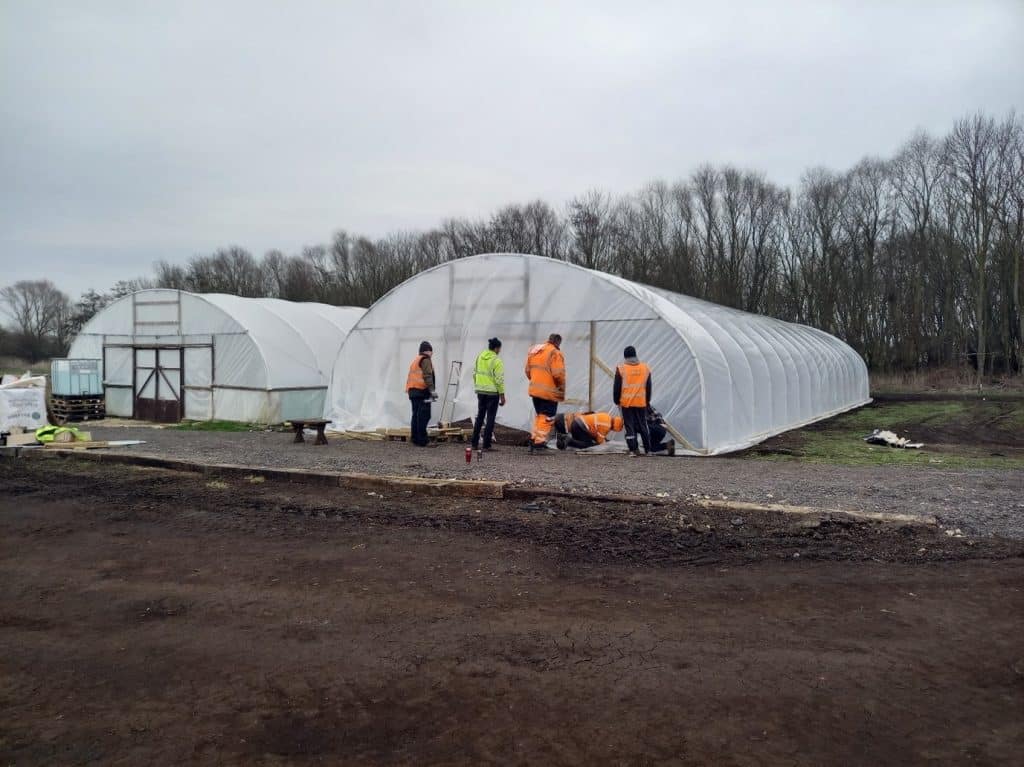
Learn to bring community together using polytunnels
Whether for gardening groups, restoration groups, schools, churches, youth groups, or other community groups, polytunnels can provide spaces to meet and hold events out of the elements.
Polytunnels are affordable structures that can be erected not only to nurture plants, but to nurture people too. Having a place to meet out of the rain can make a polytunnel an extremely useful addition to many community sites.
A polytunnel might also be a cultural space, to enhance the creative lives of a community – a space to put on art shows, musical events, and more…
When people have spaces where they can easily come together, in a variety of ways, it is easier for communities to coalesce around shared goals, and find common ideals.
It makes it easier to find innovative solutions to many problems, and to determine the best pathway forwards to real action and lasting change.
Check out these community events that can also aid you in knowing how to bring community together with polytunnels.
Sources
Social Tables (n.d.). Community Event Ideas: How to Plan Memorable Gatherings. Social Tables Blog. [online] Available at: https://www.socialtables.com/blog/event-planning/community-event-ideas/ [accessed 27/07/23]