

How to Take Cuttings From Fruit Bushes to Get New Plants for Your Garden
Taking cutting from fruit bushes can be a great idea. Filling your garden with plenty of fruiting plants can provide a wonderful abundance for the home grower. But buying in new fruit bushes is not always cheap. So it is a wonderful idea to propagate your own fruit bushes to obtain more plants from existing ones for free.
You might take cuttings from fruit bushes you already have in your garden, or ask a friend or neighbour whether you can take a few cuttings from the fruit bushes in their gardens. Propagating several different fruit bushes by means of hardwood cuttings is an easy way to get new plants for your garden.
Why Should You Take Fruit Bush Cuttings?
Propagating your own fruit bushes won’t just save you money. It can also allow you to obtain more plants for your garden in a more eco-friendly and sustainable way.
Rather than purchasing plants, which may have been grown in peat compost or which may come in plastic pots, you can cut delivery carbon costs and shortcut the process – obtaining new plants from as close to home as possible.
Which Fruit Bushes Can You Propagate Through Hardwood Cuttings?
Taking cuttings is a method that can be used to propagate a range of shrubs and trees and other plants. Hardwood cuttingsare the type of cutting often used to propagate fruit bushes commonly grown in UK gardens.
Red currants & White currants – Ribes rubrum cultivars
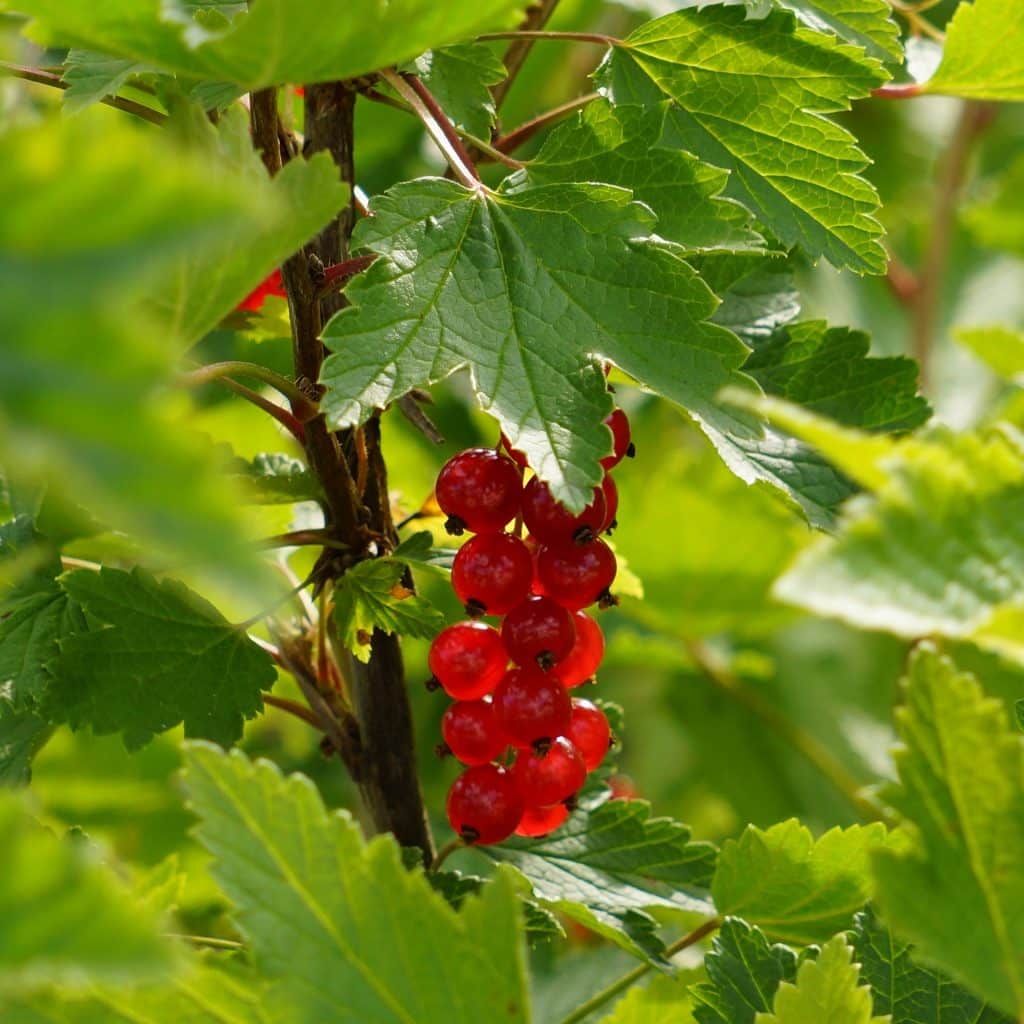
Red currants and white currants are different cultivars of Ribes rubrum, and are common fruit bushes to grow in the UK. They do best in a reasonably sunny spot, with moist and yet well-drained soil, and can also be grown in containers at least 45cm wide.
Blackcurrants – Ribes nigrum
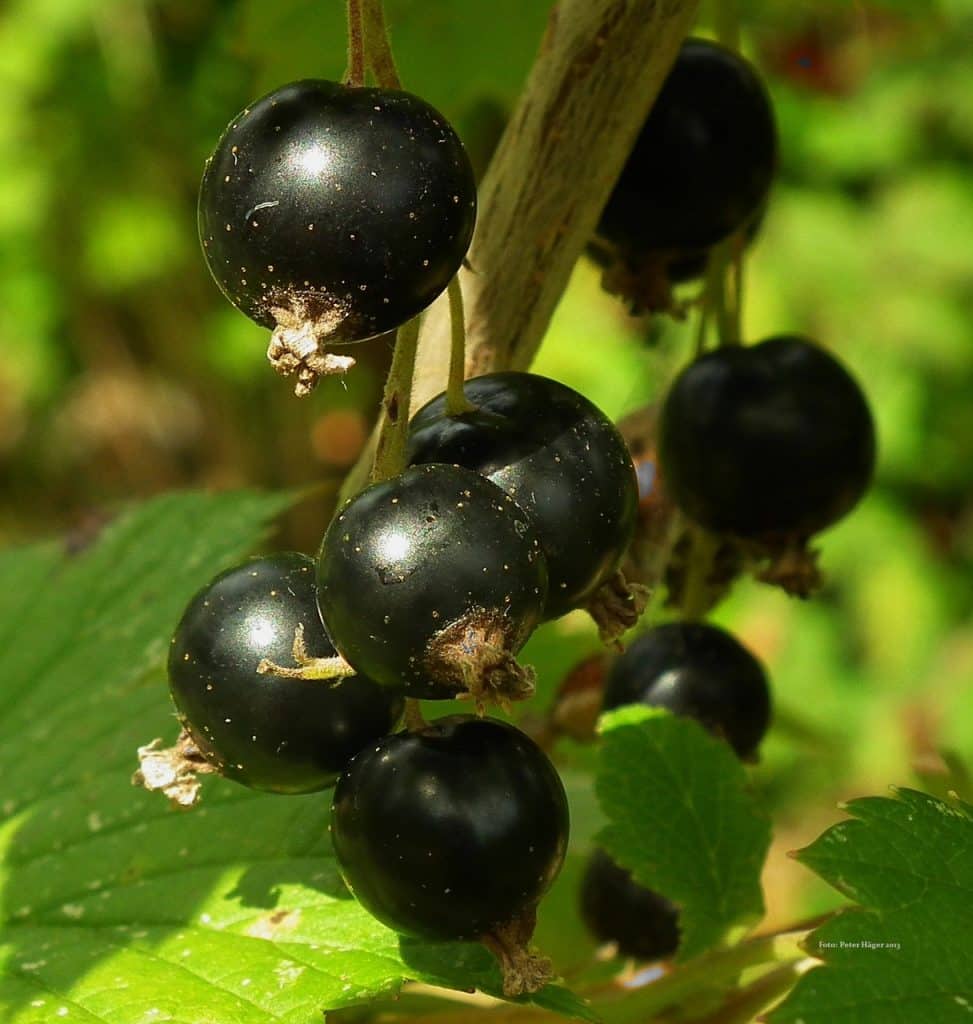
Blackcurrants are another common Ribes species commonly grown in the UK. They are easy to grow and, again, can do well in any moist yet free-draining soil or in containers. Like the above, they often do best in full sun but can also come with partial or dappled shade a little more readily than the above.
Gooseberries – Ribes ulva-crispa
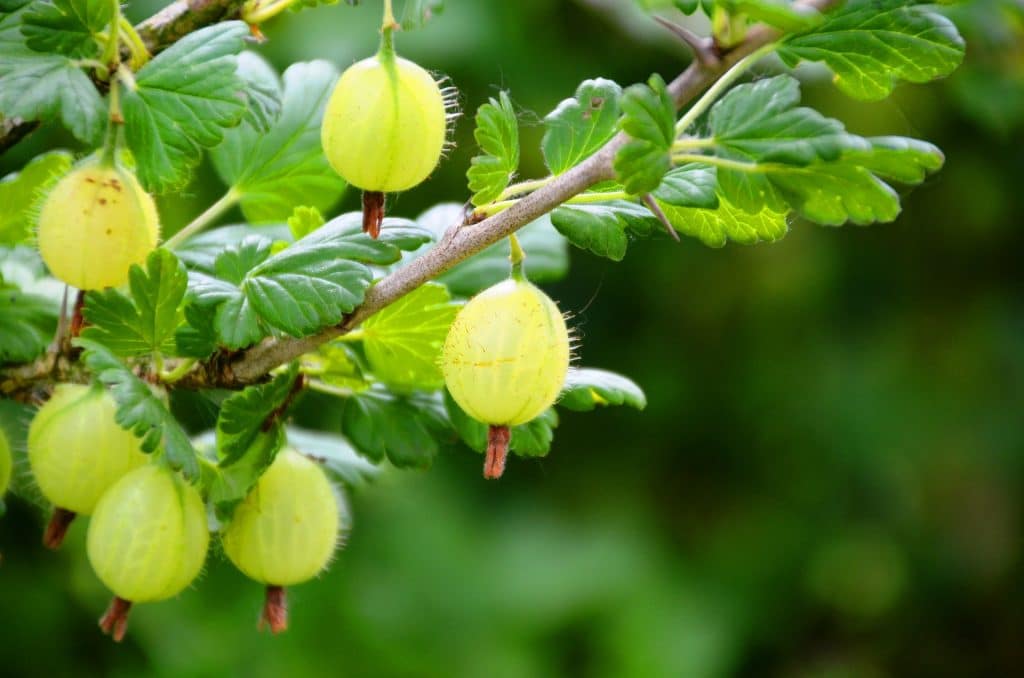
Another popular fruit bush to grow in the UK is the gooseberry bush. Gooseberries are another fruit that can be grown easily in many UK gardens. Gooseberries also fruit and ripen best in a sunny spot, but they can also be tolerant of partial or dappled shade – more so than either of the above. They also like a moist yet well drained soil.
Roses – Rosa ssp.
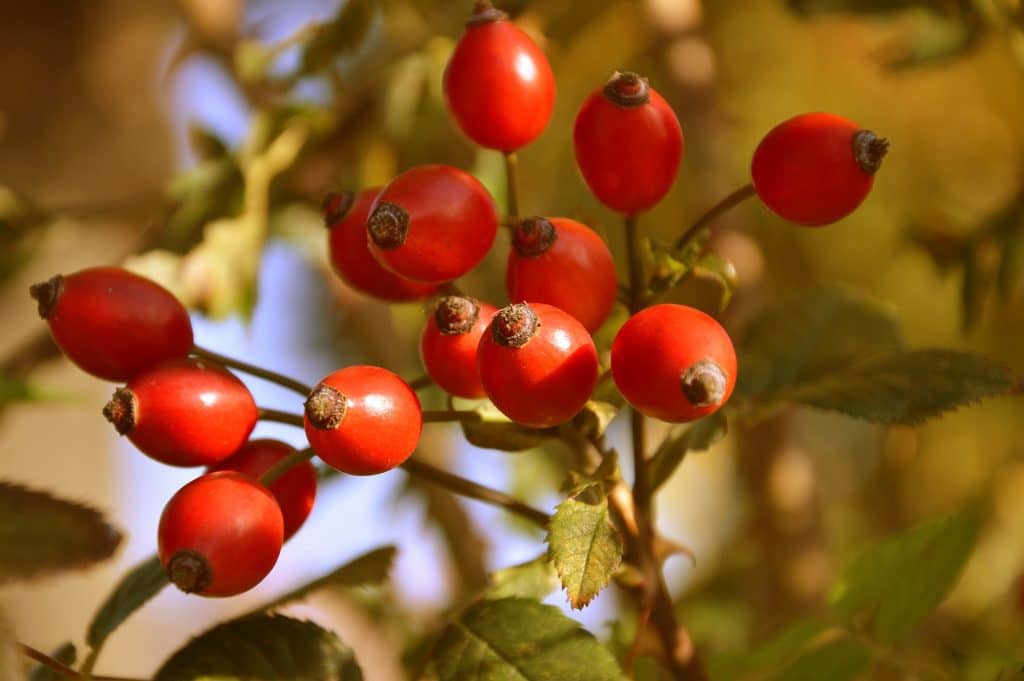
You might not think of roses as fruit bushes, but roses do produce edible fruits, known as ‘hips’. Roses can also be propagated fairly easily by means of hardwood cuttings, though they are also often propagated by means of softwood cuttings taken earlier in the year. (Just remember that some roses are grafted and so plants grown from cuttings won’t necessarily perform the same as the parent plant.)
Elder – Sambucus nigra
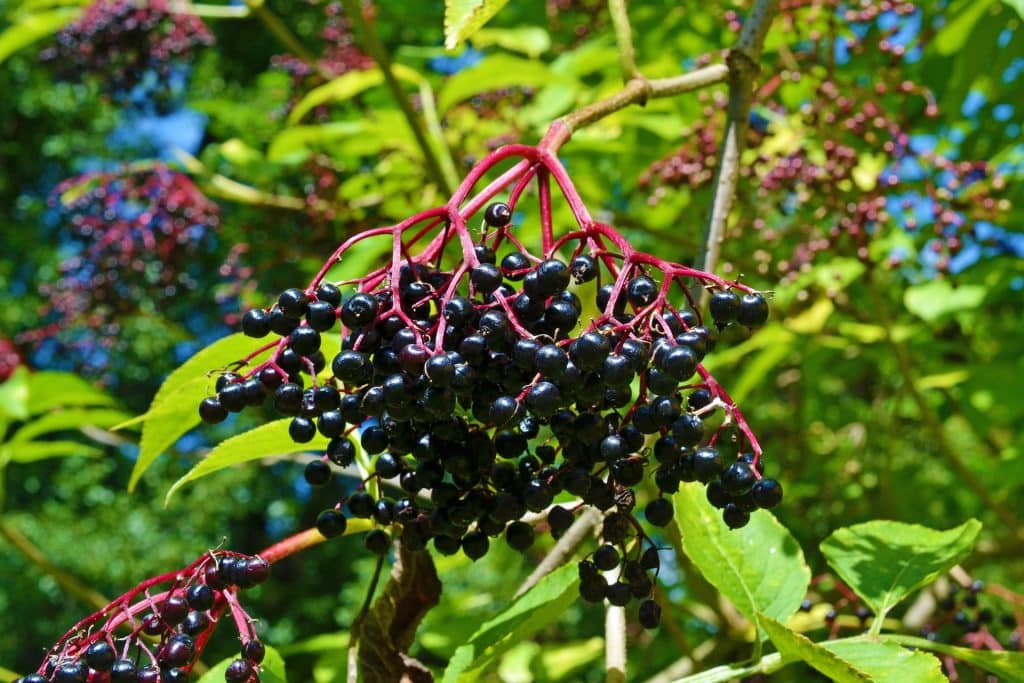
Another fruiting shrub or small tree is the elder, which produces elderberries. These resilient plants grown in a range of different soils, but prefer a sunny or partially shaded spot with moist yet free draining soil. Elder too can be propagated either by means of softwood or hardwood cuttings.
These are of course plenty of other options for this method of propagation. For example, you can also use this method with figs, mulberries and a range of other shrubs and trees. But these fruit bushes can be good options to consider if you are new to creating your own new plants from existing ones at home.
How To Take Fruit Bush Cuttings
You Will Need:
A spade
Secateurs
Optional though usually not required: rooting hormone
When to Take Hardwood Cuttings
Hardwood cuttings can be taken any time during the dormant period. But the best times are usually just after the plants have dropped their leaves in autumn, or just before leaf burst in the spring. I generally prefer to take my hardwood cuttings in autumn, just after leaf fall.
Step-By-Step Guide:
Step One: Look over the fruit bushes that you wish to propagate and select healthy shoots which have grown during the current year to use to take your cuttings. These will be harder or woodier at the base, and soft towards the tip.
Step Two: Using a sharp, clean pair of secateurs, cut off the stems you have selected to the required length, cutting straight across the stem at the base and cutting just above a bud in most cases. In the case of elder (and other shrubs with pithy stems), you should cut through the heel where the shoot joins the branch.
Step Three: Remove the soft tip growth from the cutting, and cut the stem you selected into sections of the right length (see below). Cut just below a bud at the base, straight across, and just above a bud, with a sloping cut to shed water and mark which was is up, at the top.
Length of cutting required:
- Recurrants/ whitecurrants & gooseberries – c. 30cm long.
- Blackcurrants – c. 20cm long.
- Roses and elder – 25-30cm long.
The stem sections cuttings should be around pencil thickness, and have a bud at the top, a bud at the base, and around 5-6 buds in total. On redcurrants,whitecurrants and gooseberries, you should remove all but the top 3-4 buds to leave a clear stem. On blackcurrants you should leave all the buds intact.
With roses, remove all but a couple of leaves at the top, and remove any thorns from the lower part of the cutting.
Step Four: Prepare a trench in a suitable location in the soil (or prepare containers filled with a suitable compost if you are just creating a few cuttings). Where drainage may not be ideal, a layer of sharp sand or grit can be placed in the base of the trench or mixed into the growing medium in a container. (a half and half mix of peat-free multipurpose compost and coarse grit is ideal for hardwood cuttings in containers).
In colder areas, creating an area where cuttings can root in a polytunnel can be beneficial, since this gives them some protection from winter cold, and from pests like deer or rabbits.
Step Five: If you wish, you can dip the ends of the cuttings into a rooting hormone. But when propagating fruit bushes like those mentioned above, this is not usually required.
Step Six: Insert the cuttings into the soil or growing medium, making sure that they are covered to around half of their length. When placing these in a trench in the ground, they should be spaced around 20cm apart from one another.
Step Seven: Firm back the soil or growing medium around your cuttings, and water them in well.
Step Eight: Leave the cuttings in place over winter and through the following summer. Make sure that you water your cuttings if they are under cover, or during dry spells during the warmest part of the year. Then they should be well rooted and ready to move to their final growing positions in autumn the next year – around a year after the cuttings were made and planted.
Your cuttings should typically begin to bear fruit the following year after planting.
References:
https://www.gardenersworld.com/how-to/grow-plants/how-to-take-fruit-bush-cuttings/
https://www.rhs.org.uk/propagation/hardwood-cuttings