

Creating the perfect garden seating area can help you make the most of your outside space. Gardens can be productive and practical spaces, while also providing space for recreation, relaxation and enjoyment. Getting that balance right can be important to make the most of your garden.
Positioning the Perfect Garden Seating Area
Tips:
- Think about aspect. A south facing area will receive the most light, north facing positions the least. East facing areas get sunlight early in the day, and west facing areas in the afternoon and evening.
- Consider buildings, large trees etc. and their shade when thinking about the perfect spot for a seating area. In summer, some shade may be beneficial. But you might also want as much sun as possible so that you can enjoy the space over more of the year. Considering sunshine and shade is crucial to find the perfect spot.
- Another thing to think about is whether the spot is sheltered or exposed. A more sheltered area will often be better suited to a relaxing seating area.
- Make sure that the area you choose does not get boggy or waterlogged in wet conditions.
- And think carefully about how its position will impact other parts of your garden, and your growing areas. No new garden element should be positioned without reference to the whole.
Considering Practical Requirements for a Garden Seating Area
Tips:
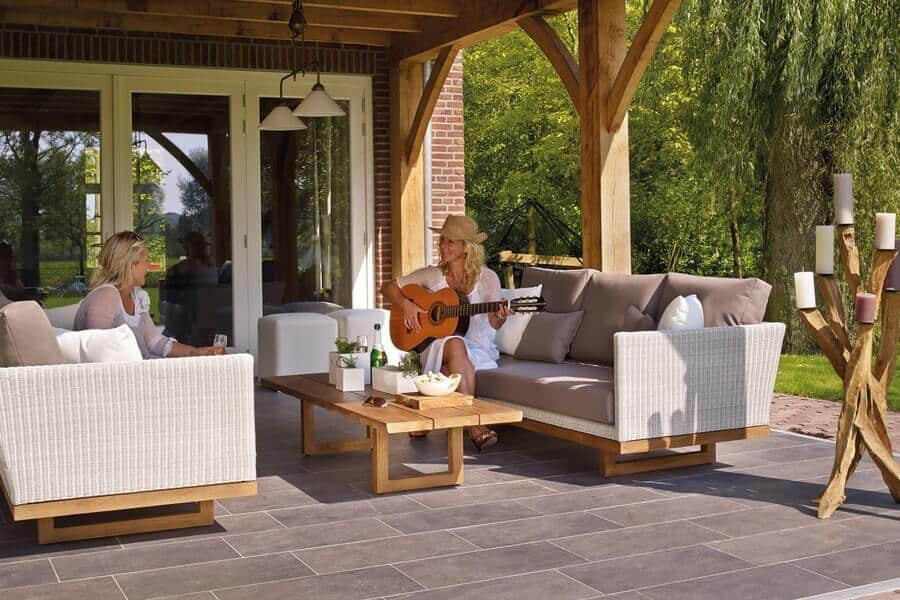
- Consider whether the seating area needs cover, so it can be used in different conditions not only when it is sunny and dry. Sometimes, leafy cover may be sufficient but sometimes you may wish to create some form of canopy that will keep you shaded and/or dry or create a seating area inside a polytunnel, for example.
- Think about how easy it is to get from and to your seating area. The easier it is to access from your home, the more likely you are to actually use it regularly. Think about the flow from your home into your garden rooms. Well planned seating areas can be an extension to your home.
- Another key consideration is privacy. In town and city gardens, it is especially important to think about sight lines. And to take steps to make sure that your seating area feels secluded and not too overlooked.
- You should also think about noise pollution. In urban locations, noise from neighbours or nearby roads can be intrusive. Both when positioning your seating area, and when planting around it, it is important to think about how such issues can be minimised.
- The features you include and your materials choices will be key in determining how easy your seating area will be to maintain, and how well it will meet the needs of you and your household not only in the short term but also long term. Design for longevity to get the best value for your budget.
Features for the Perfect Garden Seating Area
Tips:
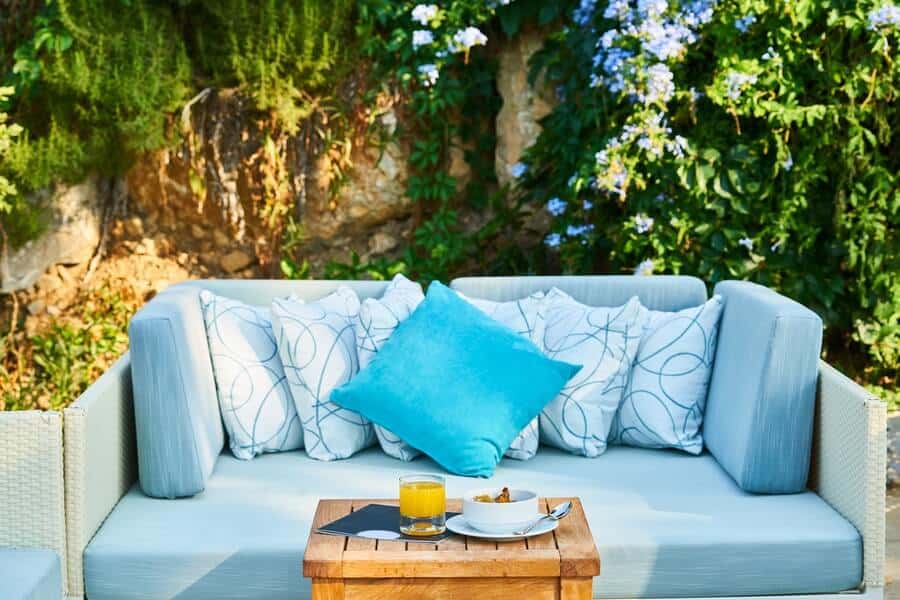
- The most important feature for a garden seating area is of course the seating itself. Make sure that the seating you choose suits you and your family. You might create more comfortable spaces to lounge, or simple benches. But comfort is something you should always bear in mind.
- Cover can be useful in increasing the amount of time you spend in your seating area. But remember that you can also have more natural areas, which help you to feel more connected to the nature around you. Plant cover as well as man-made cover can be very important.
- Lighting can help make sure that you can use a seating area after dark. Just make sure that lighting is not too intrusive, and that it is only on when the area is in use. Otherwise, light pollution may cause issues for people and wildlife. You might also consider a firepit, outdoors fireplace or chiminea to light as well as heat an area after dark.
- Consider adding a water feature close by. Water can be beautiful, sound great, and help you feel relaxed as you use your seating area.
- Remember, the plants you place around a seating area are just as important as the area itself. With the right design, you can have a space which is not only functional and practical, but also a delight for all the senses.
Choosing Materials for a Garden Seating Area
Tips:
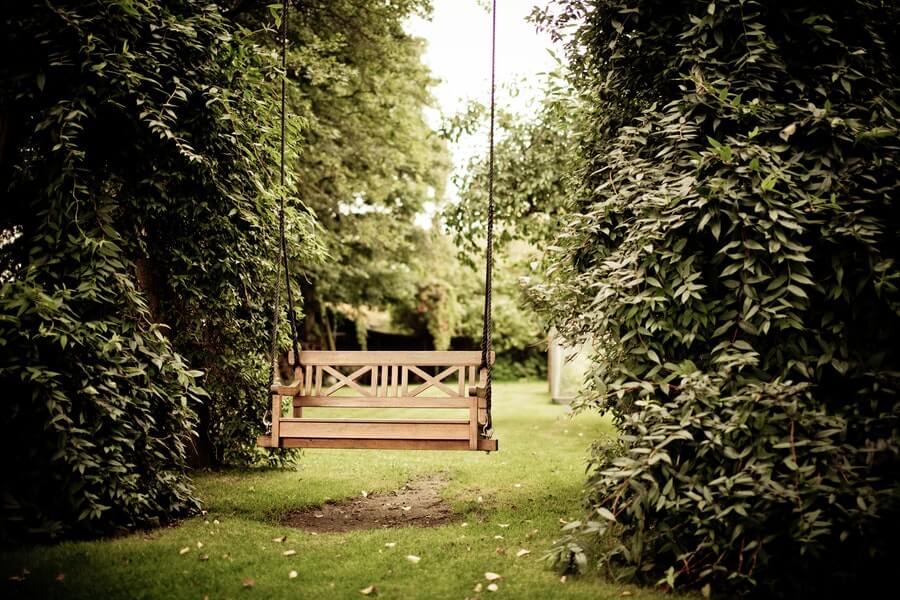
- Think about the surface below your seating area. You could simply sit in a wildflower meadow or amid shady planting in a woodland garden, for example. Often, however, a practical seating area will have decking or paving below, to provide a solid surface for the seating furniture. Consider natural or reclaimed options where possible before you buy in anything new.
- If you do need cover, think about sustainable options. Use reclaimed wood to create pergolas, arbours or gazebos, for example. And consider upcycling to create your canopy. This won’t only save you money, it will also reduce your negative impact on our planet.
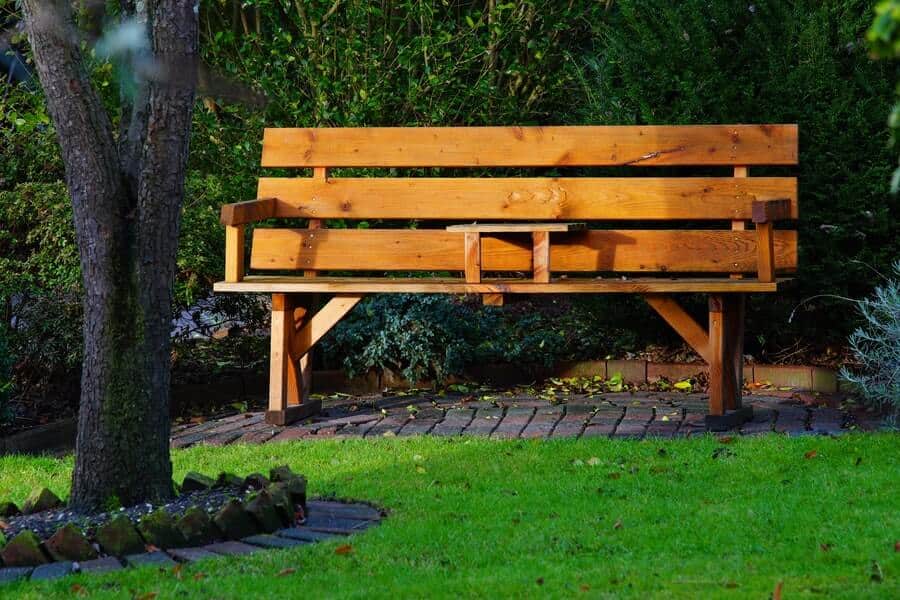
- When it comes to the seating itself, you can also consider DIY options. Making simple benches or sofas from natural or reclaimed materials can be a great and low-cost option. Pallets, for example, are often used to make furniture which can be used outdoors.
- Paths leading to and from a seating area, and other things like bed edging, can also be made using natural or reclaimed materials. There are a great many interesting options to consider if you are prepared to do a little DIY work.
- You can also customise your space with eco-friendly DIY lighting, and other decorative features which personalise the area and give it a sense of style.
Planting Around a Garden Seating Area
Tips:
- Integrate edibles for easy ‘grazing’ or foraging around a seating area.
- Add plants for sensory appeal – fragrant plants, tactile ones and ones which rustle in a breeze as well as visually appealing ones can all be great around a seating area.
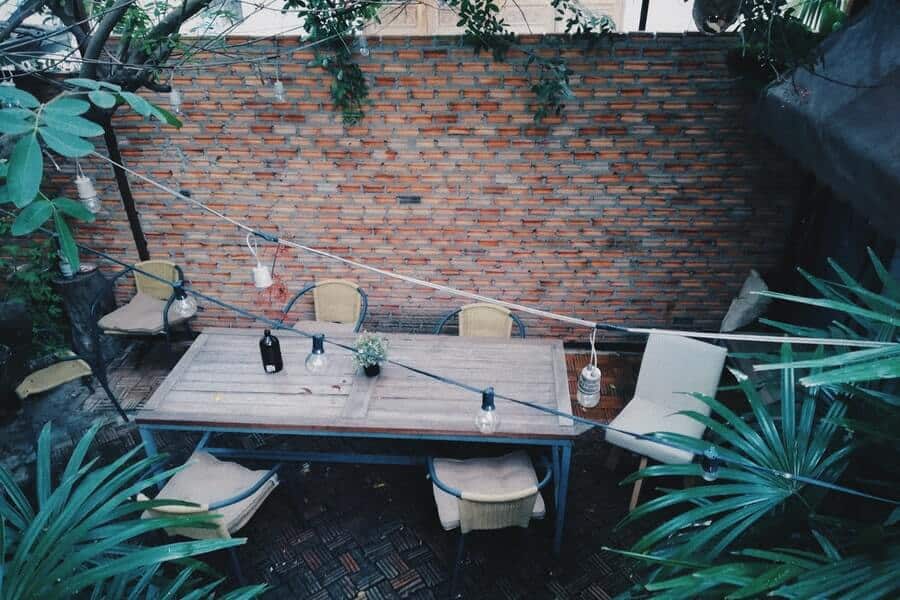
- Layer planting around a seating area for a sense of privacy and enclosure. Consider trees, shrubs, climbers and herbaceous plants.
- Create garden rooms by creating partial screening or partitions with plants.
- Draw in wildlife to admire from your seating area by planting plenty of nectary and insect-attracting plants. Aim for a high proportion of native species and as much diversity as possible.

About the Author: Elizabeth Waddington
Elizabeth Waddington is a writer and green living consultant living in Scotland. Permaculture and sustainability are at the heart of everything she does, from designing gardens and farms around the world, to inspiring and facilitating positive change for small companies and individuals.
She also works on her own property, where she grows fruit and vegetables, keeps chickens and is working on the eco-renovation of an old stone barn.