How to Grow Rhubarb
Rhubarb is a popular perennial stem vegetable that is often considered as and used like a fruit. It is of course extremely useful as a culinary crop, and can also be useful in other ways in your garden.
This is a perennial plant that is remarkably easy to grow. And when it is placed in the right position and cared for correctly during the early stages, will reward you with abundant harvests over a number of years.
If you would like to be able to grow in and eat from your garden year-round, rhubarb is an excellent choice. It provides a yield at the time of year formerly often referred to as the ‘hungry gap’ – as it is really to harvest after stored winter foods begin to run out, but before the first annual crops of the year are ready to harvest.
Selecting a Rhubarb to Grow
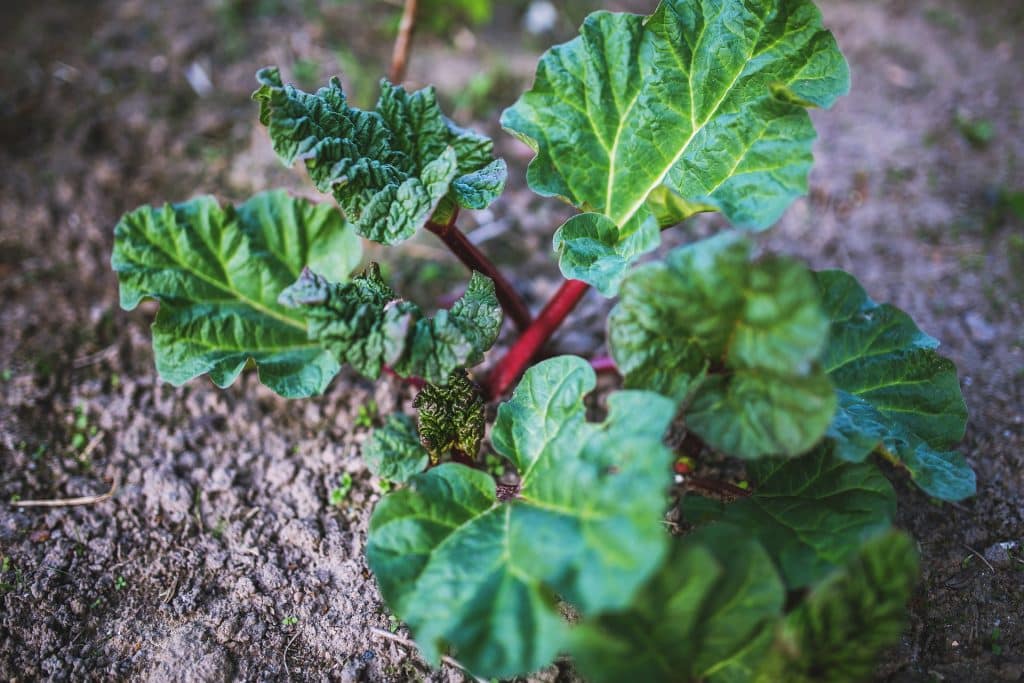
One of the first things to think about if you would like to grow rhubarb in your garden is which variety you will grow.
There are a range of interesting cultivars of rhubarb for UK growers to consider. Some good options to consider include:
- ‘Grandad’s Favourite’,
- ‘Raspberry Red’,
- ‘Stockbridge’,
- ‘Timperly Early’,
- & ‘Victoria.
You won’t need many rhubarb plants to obtain a high yield from your garden. So while rhubarb plants take up quite a lot of space, even a single plant can provide worthwhile yields in a small garden.
Where To Grow Rhubarb
Rhubarb should be grown in full sun, where it will perform at its best. Take care to avoid placing your plant or plants in areas that are frost pockets, or which become waterlogged in winter.
The soil for these relatively hungry plants should be fertile, with plenty of organic matter. The soil should remain moist, but also be reasonably free-draining.
Remember, rhubarb plants grow rather large, and when planting out multiple plants, it is typically best to plant these with a spacing of around 75-85cm between plants. So make sure when choosing a location for a rhubarb plant, that you give it space to grow.
However, just because rhubarb plants are large, and require a lot of space, that does not mean that they must be grown on their own in a dedicated bed.
You can companion plant rhubarb alongside other perennial plants, like horseradish, perennial brassicas, perennial onion family plants (alliums) and strawberries as ground cover, for example.
And also alongside some other plants, like perennial herbs to create a thriving perennial polyculture that can be very low maintenance once established.
In small spaces, container cultivation, though more challenging, is possible. But you must choose a container that is at least 50 cm across, and take care to keep the medium moist through the growing season.
Planting Out Rhubarb Crowns
Rhubarb can be grown from seed, sown in March or April. However, it is usually grown from crowns, or purchased as pot grown plants.
Dormant rhubarb crowns are usually planted some time between the autumn and the early spring. These crowns are planted so that the very top sits just above the soil surface.
You can also buy rhubarb plants in pots through the year and plant these at any time. But for the best chance of the plant establishing well, it is best to avoid planting during hot, dry summer days.
When you plant your rhubarb, it can help get it off to a good start if you mulch around it with homemade compost or other organic material. This helps provide fertile conditions, conserves water, protects the soil and suppresses weeds around the young plants.
However, take care not to mound the mulch around or over the crown, as this may cause it to rot.
Caring For Your Rhubarb
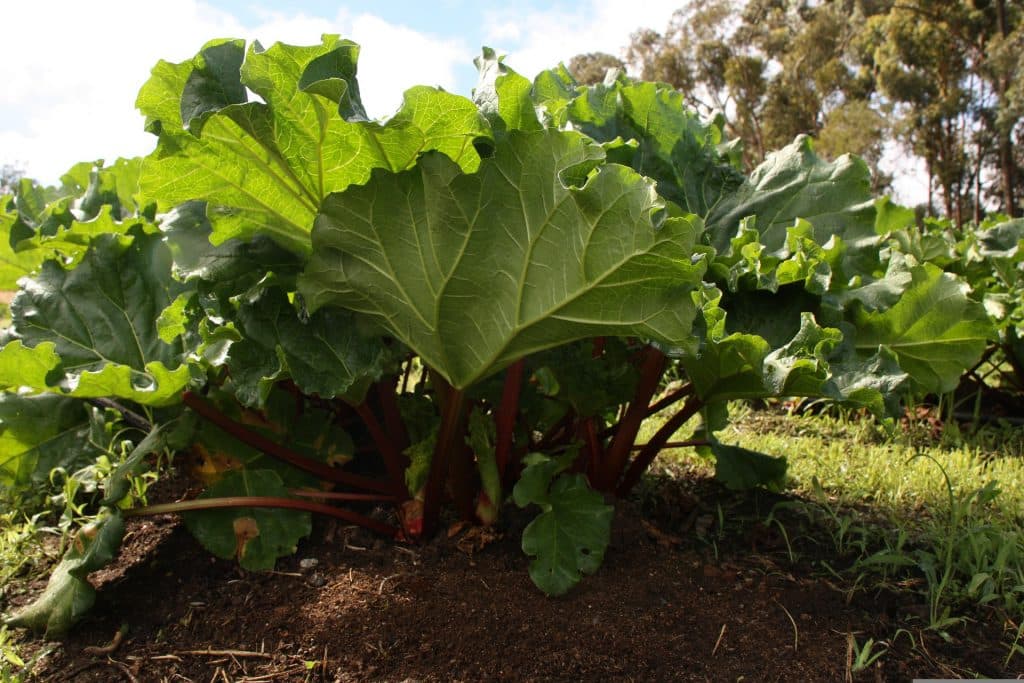
The most important thing in caring for a rhubarb plant, especially a newly planted one, is making sure that moisture levels remain reasonably high. Make sure that you water well and deeply, especially during any prolonged dry spells. Remember that if you are growing in a container, you will most likely need to water more frequently.
When growing in a fertile soil or growing medium, with an organic mulch, rhubarb won’t always need additional feeding. However, especially while the plant ‘finds its feet’, it can be beneficial to add a general purpose organic feed in March each year.
Other that watering and ensuring fertile growing conditions, rhubarb requires very little care and is a relatively low-maintenance plant. As we will discuss below, you have the option of ‘forcing’ your rhubarb. But this is by no means essential.
The one other thing that it can be beneficial to do is removing dead leaves in autumn when the plant dies back naturally, and clear away debris so that the crown is exposed to frost. This helps to break dormancy in spring and helps to ensure a good harvest of stems the following year.
The leaves you cut off can be useful when added to your compost heap, to complete nature’s cycles in your garden and become more self-sufficient in your organic garden.
Rhubarb plants can provide a harvest for ten years or more. But for optimal results, a mature plant is best divided every five years or so. This keeps the plant productive, and also allows you to propagate new rhubarb plants for your garden.
To Force or Not to Force
When we talk about ‘forcing’ rhubarb, we refer to the method used by gardeners to encourage earlier growth on the plants and obtain an earlier harvest.
This involves excluding sunlight from the growing plant in winter by placing something over it so that, after 8 weeks or so, an earlier harvest can be obtained in spring. You can use a special rhubarb forcing jar, a large plant pot with the holes covered, or any other large vessel to cover the plant and keep out the light.
This is not a trick to try with young plants, only mature ones that are well established. Younger plants won’t necessarily yet have the stored energy to create this early growth.
Even on mature plants, this should not be done too often. Since forcing early stems robs from future growth to a degree and this can weaken plants too much if done too frequently. So do not force the same rhubarb plant for more than one year in a row.
How to Harvest Rhubarb
Rhubarb is usually harvested from March, and then up until June. After this, though there will be nothing wrong with the edibility or taste of the stems, most gardeners will cease harvesting.
This allows the plant to conserve energy and build stores to see it through winter and ensure a good harvest in the subsequent year.
While it may be tempting to obtain a yield as soon as possible, hold off harvesting altogether the first year after planting. This gives the plant the opportunity to become well established and keeps it growing strong.
In the second year after planting, you can harvest, but should do so lightly. Take only a few stems from the plant and leave the rest to mature and continue in active growth.
In subsequent years, you can take a third, or even up to half of the stems from a mature and vigorous plant. Just remember that it is best practice to stop harvesting after June, and to leave some growth each year.
It is important to remember, when harvesting, that while the stems are edible, the leaves of the plant are poisonous. It makes things easier if you remove these when harvesting, rather than bringing them indoors, since then you can add them directly to your composting system.
To harvest rhubarb, hold each stalk at the base and try to ease it out of the ground. Try not to cut or snap it off, just give it a tug.
How to Use the Rhubarb You Grow
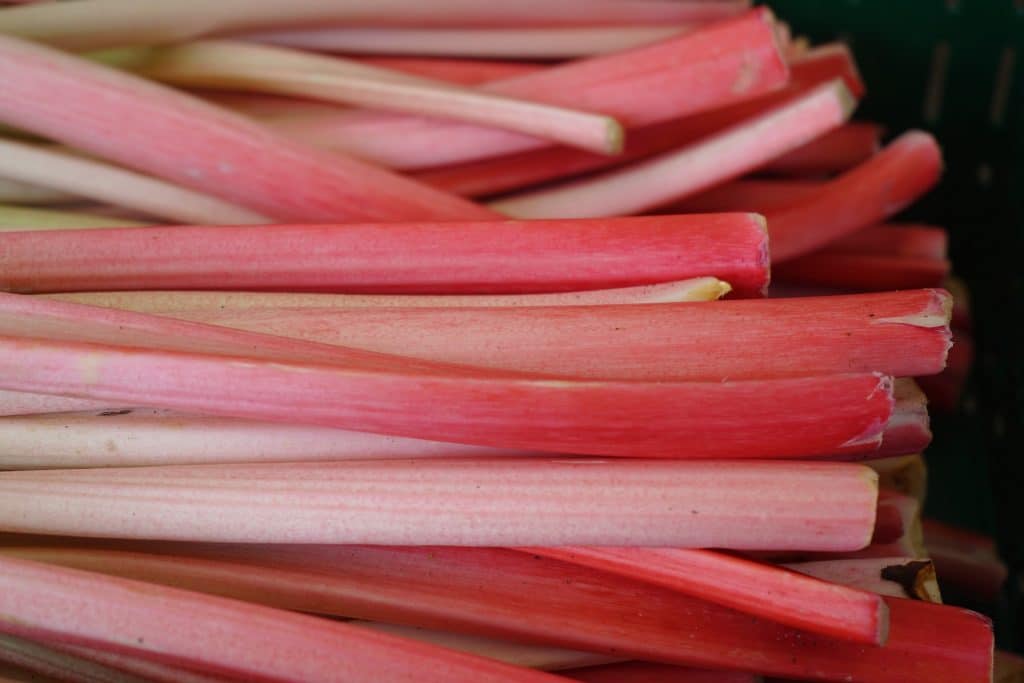
There are many things that you can do with the rhubarb you grow – we previously shared some suggestions here. There is no need for you to let any of the rhubarb that you grow in your garden go to waste.
And of course, whatever you cannot use yourself, you can always share with family and friends, or others in your community. You can also preserve your rhubarb by freezing, or making and canning preserves made with this versatile crop.
References:
https://www.rhs.org.uk/vegetables/rhubarb/grow-your-own
https://www.gardenersworld.com/how-to/grow-plants/how-to-force-rhubarb/