

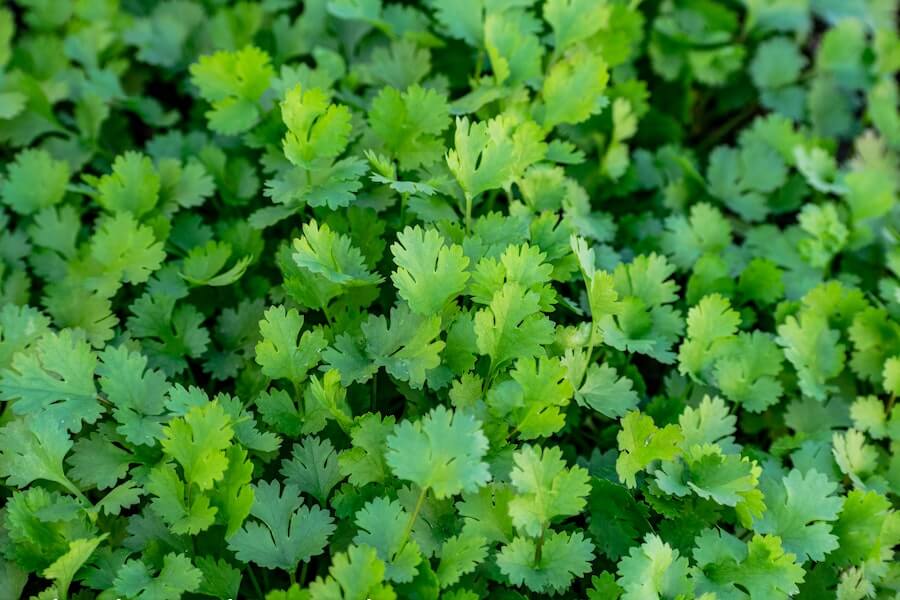
Coriander is one of these love it or loath it herbs. There are chemicals in coriander that have a fresh citrussy zing to some people but to others, give this plant a nasty astringency and soapy taste that is anything but appealing. Personally, like around a quarter of people, I cannot stand the taste of coriander leaves. (It turns out that this is a genetics thing.) However, I have grown coriander for its seeds, which can be used in a number of ways that are more appealing to me, such as in the spice mix garam masala. If you want to do the same, you may be wondering how to grow coriander!
Coriander is a plant that can provide us with the leaves and stems, but also with seeds that are used to add aromatics to curries and other recipes.
Whether you want to know how to grow coriander for its leaves to use as a fresh or pot herb, or for the seeds to use as a spice, there are a number of important things to learn. If you would like to learn how to grow coriander – read on.
What Is Coriander?
Coriander, which has the Latin name Coriandrum sativum, is an annual herb. In other parts of the world, it is also known as cilantro.
This plant grows wild over a large portion of Southern Europe and Western Asia and has certainly been used since ancient times. It is mentioned in texts of ancient Egypt and ancient Greece.
All parts of the plants are edible, and though we are most used to seeing the fresh leaves or seeds used in a culinary context, the roots are also used widely in Thai cooking and some other international cuisines.
What Are The Best Varieties of Coriander To Grow?
There are different named cultivars of Coriandrum sativum that you might consider growing in your garden here in the UK. Among the best are of course those that have received an RHS Award of Garden Merit.
- Coriandrum sativum ‘Calypso’
- Coriandrum sativum ‘Confetti.
- Coriandrum sativum ‘Cruiser’
- Coriandrum sativum ‘Filtro’
The above are all prized in particular for leaf production, performing well in summer and being slower to bolt than some other varieties.
However, if growing coriander for seed rather than for leaves, you would be best to opt for a variety that is quick to bolt, such as, for example, ‘Moroccan’.
Sowing Coriander

Sowing coriander from seed is relatively easy, whether you are growing a variety suited to cultivation for its leaves, or for its seeds.
The first decision that you will have to make after you have chosen which coriander to grow is whether you will sow your seeds indoors, or sow them a little later, directly where they are to grow.
Coriander seeds can be sown indoors in February or March in order to produce an earlier crop. You can sow the seeds into seed trays, pots or soil blocks in a polytunnel that is frost free, or on a sunny windowsill.
Once the seeds are around 15cm in height, they can be hardened off and then moved to their outdoors growing positions as soon as there is no longer risk of frost.
Alternatively, an easy alternative is simply to sow coriander seeds outside in your garden where they are to grow. This is something that you can do any time between spring and autumn.
If you are growing coriander for leaves than you should successional sow every month or so during this time for constant harvests from the middle of summer onwards. If you want coriander seeds then you should sow in spring or early summer so that the seeds have time to mature.
To direct sow, simply scatter the seeds along drills in the soil, or on the surface of the growing medium in containers. Cover the seeds lightly and water them in. they should germinate successfully within 1-3 weeks.
Planting Coriander
If the weather is still rather cold, when planting out coriander you have grown yourself from seed or purchased from a plant nursery or garden centre, it is best to cover the plants with a cloche or some other form of protection to help get them through the transplantation stage unscathed.
Of course, you might also plant out coriander inside a polytunnel. Though note that if you wish to grow coriander for leaves then this might not be the best idea because the heat inside the structure could cause the plants to bolt more quickly in summer.
It is always best to plant coriander out into a position in a garden or in a bright covered structure however, as plants rarely get enough sunlight indoors on a windowsill to grow successfully for very long.
Indoors cultivation, therefore, should typically only be a short-term thing before you move the plants to their final growing positions in your garden.
Alternatively, if you are continuing to grow indoors, use grow lights in order to provide the bright light these plants require. You might also simply harvest indoors sown coriander leaves early – within a few short weeks of sowing the seeds. Coriander can be a good choice if you want to grow micro-greens.
Coriander requires a location in full sun or in light shade. A lightly shaded spot can be beneficial to prevent plant grown for leaves from bolting in warmer weather over the summer months but full sun can give best growth during the shoulder seasons. The soil or growing medium should be free-draining.
Coriander plants should be spaced at 10cm or so apart if growing coriander for seeds, to give the plants space to fully mature. But those grown for leaves can be spaced closely.
How To Grow Coriander
Fortunately, when it comes to how to grow coriander in your garden, you will find that these annual herbs do not take up a lot of your time.
Just make sure that you keep the soil moist but take care not to overwater and always make sure that excess water can drain away freely. Waterlogging is one of the biggest problems for these plants.
But drought can also be problematic and too little water may encourage leaf coriander plants to bolt prematurely. So be sure to water well if there are long dry spells without precipitation. If you are growing in containers, remember that you will typically need to water more frequently than when growing in the ground.
Coriander does not typically need to be fed, though if growth is poor you might water with an balanced organic liquid plant feed on occasion through the summer months.
Adding an organic mulch around the plants can be beneficial for slow-release fertility, moisture retention and to suppress weed growth to a degree.
If you are wondering how to grow coriander for its leaves, then as soon as flowers appear you should remove these so the plant can focus its attention on foliage growth rather than on producing seeds. These flowers are actually edible so you might add them to salads too.
If, however, you want the seeds then of course you should let the flowers form and seeds develop. Even if you do not want the seeds for culinary use, you might want to collect the seeds to sow in your garden next year.
Remember, coriander is an annual so you will need to sow seeds or purchase new plants each year to continue to grow it in your garden.
When To Harvest Coriander
Coriander leaves are cut-and-come-again and you can harvest from your plants a number of times after mid-summer.
Simply allow the plants a few weeks to regrow between harvests and you can take several harvests of leaves before they begin to flower. Picking the leaves regularly will encourage more to grow.
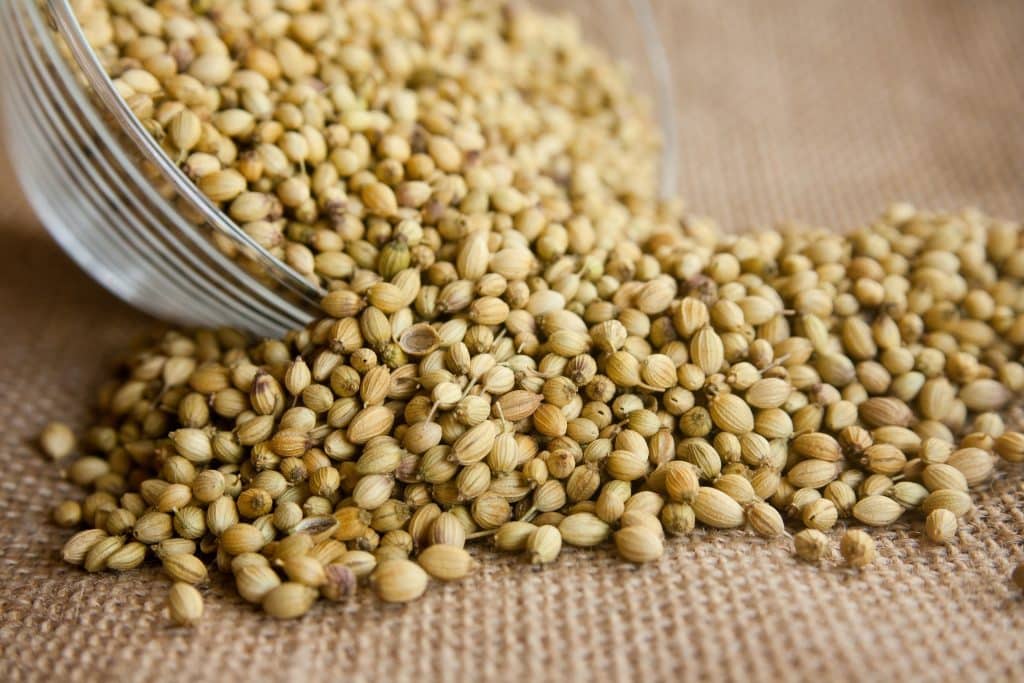
The seeds are harvested when they are fully ripened and have turned a brown hue – just before they start to fall from the plants. To make sure you catch as many as possible, take the whole stems when they are nearly ready and place them in a bag so the seeds are caught when they drop off.
Dry the seeds on paper on a tray in a warm room. Once they are fully dry, the seeds can then be stored in an airtight container. They can be used whole, or ground into a powder with a mortar and pestle if you plan on using them for culinary use.
How To Use Coriander
There are of course many recipes that teach you how to use coriander in your kitchen. The fresh leaves and the dried seeds are both versatile ingredients that can be used in a huge range of savoury recipes.
So, now you know how to grow coriander, why not give it a shot and begin your own experimentation to see whether you like coriander of these different kinds and, if you do, how you most like to use them?
References:
https://www.rhs.org.uk/herbs/coriander/grow-your-own