

Learning how to mound layer herbs gives you one more plant propagation option, and allows you to obtain new plants from a woody herb that might be past its best.
Over time, some garden herbs like rosemary, lavender, thyme and oregano can turn woody and become less productive. But mound layering offers the chance for these old plants to become several new ones.
In this article, we will discuss the following about how to mound layer herbs:
Table of Contents
What is Mound Layering?
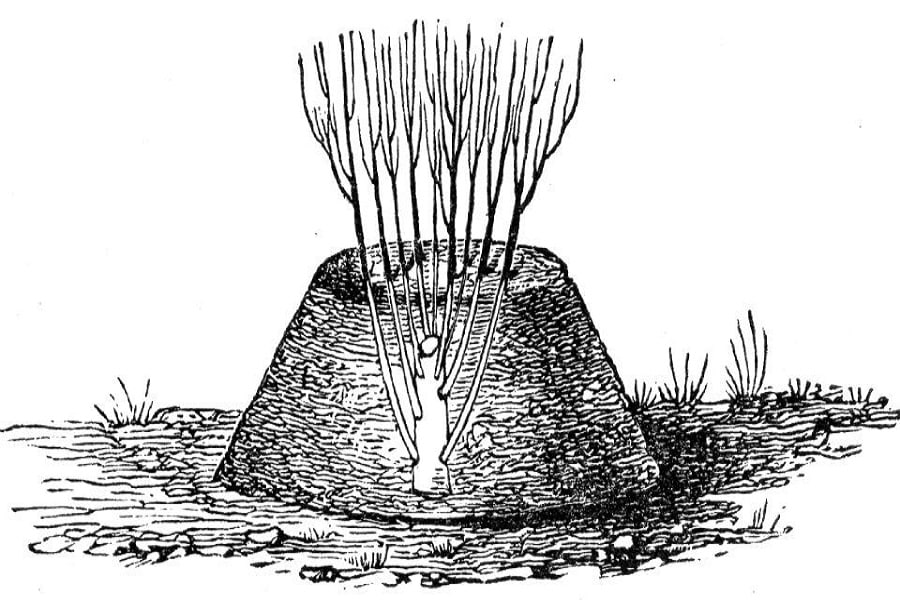
Mound layering is a propagation technique, one of a number of different forms of layering. It involves cutting back hard and mounding soil/mulch over the plant in the spring, as soon as the first new growth begins to emerge.
New growth will emerge from the mound and grow over the summer months, being allowed to bloom before it is cut back to half its length.
The idea is that as these new areas of growth grow and thrive, new roots form at their base at the points where new growth emerges from the original stems.
Therefore, it is possible, sometimes by the summer of the same year, sometimes the following spring, to take apart the mound of soil and mulch and to carefully cut new plants, complete with new roots, away from the old parent plant.
These new plants can then be transplanted to new locations within your garden or given away to other keen gardeners.
Why Mound Layering is Beneficial
Mound layering is a good idea for those who feel that a particular herb is getting a bit long in the tooth and perhaps no longer looking its best.
Before getting rid of it entirely it is certainly a great idea to propagate new plants from it. And mound layering can often be one of the best ways to do so.
Mound layering can prevent the need to shell out on new replacement plants, allowing you to derive them entirely free of change, and with remarkably little effort on your part.
Why Should You Mound Layer Herbs?
If you see that a particular herb has become a little woody, and is not producing as many fresh green shoots and flowers as before, it could be a good idea to mound layer that plant. The plant can live again as a number of new plants for your garden.
Rather than just discarding your old herbs, make them work for you one final time. Simply give nature a helping hand and you can obtain clones of your original plant that are fresh, healthy and young – perfect for breathing new life into your herb garden.
How to Mound Layer Herbs
To mound layer herbs is a very simple process.
- First of all, you simply need to identify a suitable plant for this process.
- Next, you need to bury the plant.
- After some time has elapsed, you can dig into the mound to find newly formed roots,
- And you can separate the newly rooted portions of plant and transplant them to new areas of your garden.
Choose The Right Herbs
First of all, it is important to identify which plants are good candidates for this treatment and which are not.
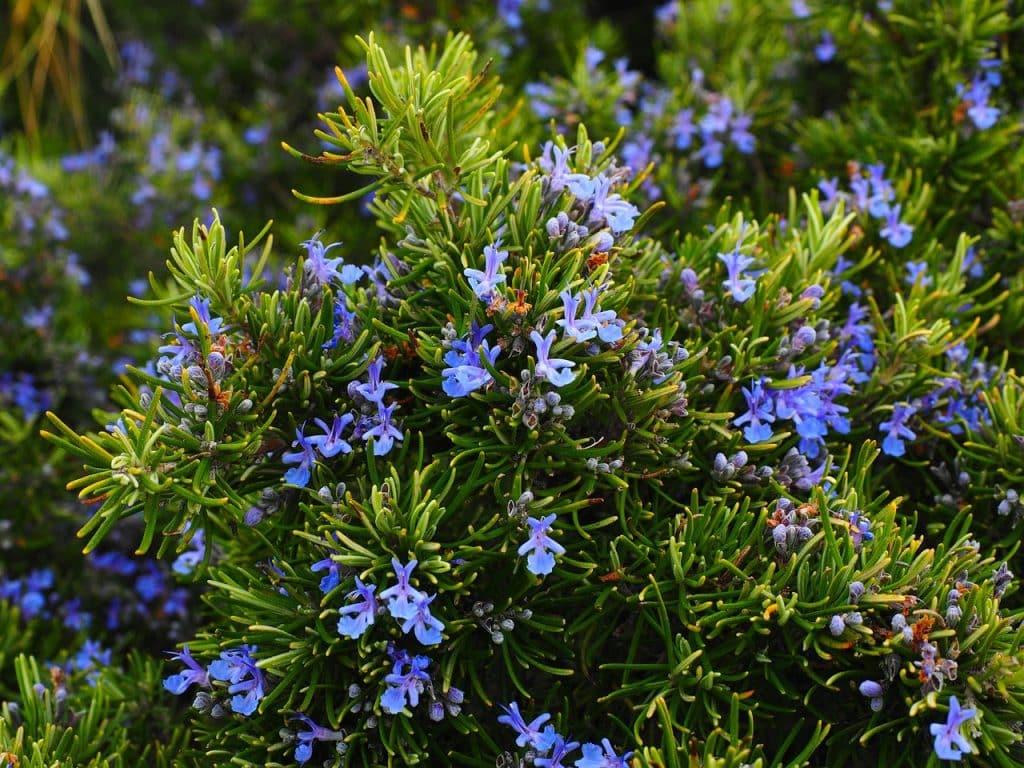
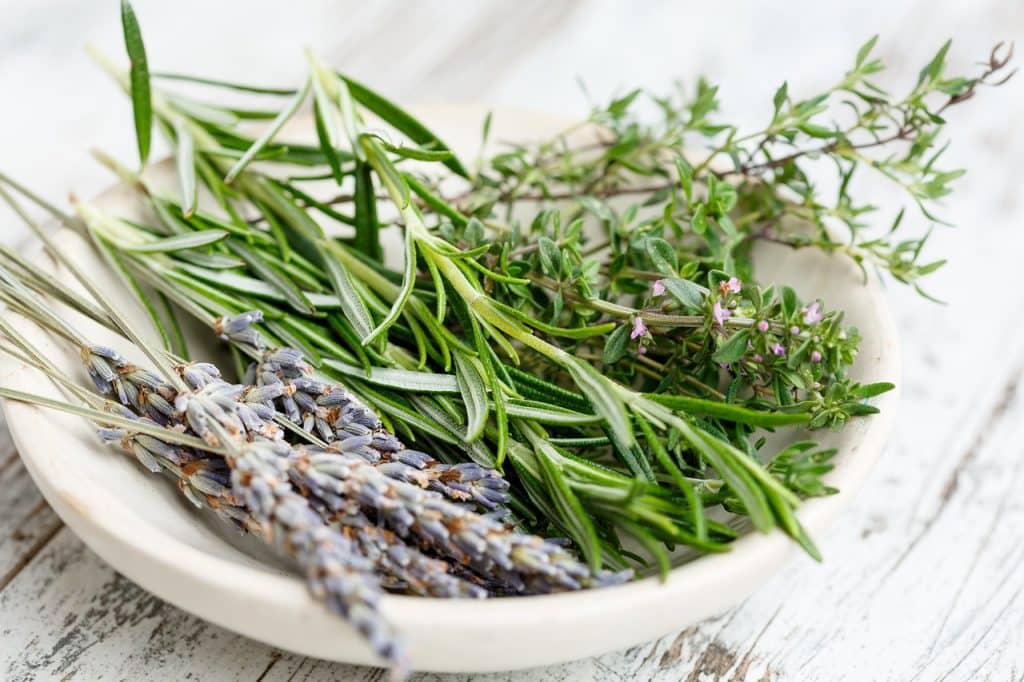
The herbs for which mound layering are a good idea are those bushy plants with a tendency to become woody from the base, such as lavender, rosemary, oregano, marjoram, hyssop and thyme…
These mediterranean herbs like similar conditions in which to grow, and all can also be mound layered to propagate new plants.
Remember, however, that mound layering is only a good solution for herbs that are past their best, as undertaking this process means you lose the parent plant, sacrificing it for several new plants just the same – though smaller of course.
If you do not wish to sacrifice the parent then there are other methods of propagation to consider, including other forms of layering. (We’ll take a look at these below.)
Bury The Plant
Once you have a candidate that is suited to this process, the next step is usually to prune it back hard – leaving just a few centimetres of each stem or branch above existing ground level.
Once you have done this, in the period of new growth in the spring, as you see new shoots just beginning to emerge, you should mound soil and mulch over the entirely of the plant, covering it with at least 5cm or so of soil.
Over time, the new shoots should make their way up above the soil of the mound. Meanwhile, below, new roots should be forming where these shoots emerged from the parent plant, and the submerged stems of the old plant should be rooting nicely.
Dig Out Formed Roots
Once enough time has elapsed, which can be just a few months, with some plants (like rosemary, for example), or can be a year or so for others, you should be able to dig up the area of the mound and see that there are plenty of new roots.
You can then carefully separate sections with both shoots emerging above ground and with strong roots, which can become your new plant stock. What is left of the parent plant will then typically be discarded, or rather, added to a composting system.
Transplant The New Plants
Once you have separated off the different sections of the old plant with their new roots attached, it is time to transplant those to a new area in your garden. Of course, it is important to choose a suitable location, where the right growing conditions for the herb in question can be provided.
Simply dig your planting holes or prepare the containers in which you will place your new herbs, and place the plants in the holes so that they are buried to the same depth that they were in their previous location.
Water them in well but remember that with mediterranean herbs, free draining conditions are essential. So make sure that excess water can drain away freely or waterlogging and a number of problems could set in.
Other Types of Layering
It is important to understand that while mound layering can be the right solution in certain cases, it is not necessarily always the best method for propagation. There are other options – like growing from seed or cuttings – to consider. And there are also several other types of layering that you might do.
Simple Layering
One option that may be a better solution for Mediterranean herbs where the parent is still healthy and you wish to keep it is simple layering. Undertaken in the autumn or early spring, this involves bringing a branch or stem down to meet the ground and pinning it in place so that roots can form.
With some plants, it is best to peg down and root a mid section of the stem, sometimes it is best to root the growing tip.
After a number of months, typically the following autumn or spring, these stems should have rooted and can be separated from the parent plant and transplanted to new locations in your garden.
Compound Layering
Compound or serpentine layering is very similar to the above. But rather than pegging and rooting just one section of the stem, the idea is to get multiple points along a stem or branch to root.
This is better, however, for plants like clematis climbers with longer stems, and other plants with vine-like growth, rather than for the Mediterranean herbs we have discussed above.
French Layering
French layering is a complex method of layering that involves a combination of simple layering and mound layering.
With this method, plants are hard pruned in the early spring. The shoots are then allowed to grow for a year, before, the following spring, the year-old shoots are pegged to the soil so that they lie horizontally, and encouraged to shoot along their length.
As these shoots develop new roots, numerous side shoots – new vertical stems – emerge. These side shoots are mounded over throughout the summer until the soil reaches around 15cm deep then, in autumn, dug up, separated from one another, and planted out individually elsewhere.
Air Layering
One other final method of layering is used where branches or stems cannot easily be bent down to ground level, such as with camellia, rhododendron, and citrus trees. It is typically carried out using growth of at least pencil-width in spring or late summer.
First of all, leaves are removed from the section of a branch or stem that is to be rooted. The area for rooting is then coated with a moist layer of sphagnum moss which is wrapped in a rooter pot or plastic wrap. Once roots have formed, the pot or plastic, but not the moss, is removed.
The branch can then be pruned away from the parent plant and transplanted to a new location, where the new roots should allow it to survive on its own as a new, independent plant.
References:
Grow Organic. (n.d.). How to Propagate Plants by Layering. [Accessed 02/06/23] Retrieved from https://www.groworganic.com/blogs/articles/how-to-propagate-plants-by-layering