

How Can You Save Water in Your Garden?
Learning how you can save water in your garden should be a key concern for any gardener. No water how much water is available where you live, being careful and considerate about water use is always the best policy.
Why Should We Conserve Water?
Fresh water is one of the most important natural resources on our planet. Though in some areas it can seem like it is abundant – sometimes overly so – it is important to remember that fresh water accounts for only 3% of all water on earth.
Most of the fresh water on our planet is not available for use since it is locked away in various forms of storage, such as ice and glaciers, or as groundwater. Fresh water is already a scarce resource in many parts of the world, and is becoming an increasing concern on more parts of the globe.
Understanding the world’s water cycle is crucial to understanding how water should be managed both locally, in our own individual gardens, and on a global scale. Thinking about how you can save water in your garden is just one key thing you can do to help keep nature’s cycles turning.
Thinking about water use does not only mean that you will be doing the right thing environmentally. It can also help you to become a more successful gardener. What is more, it will boost resilience and make your garden more sustainable long term. Of course, if you are on metered water supply, learning how you can save water in your garden will save you money too.
Why Is Saving Water Important In A Polytunnel?
In a polytunnel, of course, water is not directly available to the plants when it falls as rain. Since a polytunnel creates an environment that is out of the elements, thinking about the water we use and how we use it is even more important.
Since you will need to meet all, and not just some, of your plants’ water needs, polytunnel gardening involves determining how you will irrigate your crops, but also how you can reduce the amount of water you use, and where that water comes from.
How Can You Save Water In Your Garden?
Here are some tips on how to save water in your garden, whether you are gardening outdoors or under cover:
1. Think About Where Your Water Comes From
First things first, if you want to save water in your garden, you need to think about where your water comes from. While many people use tap water from the mains supply to water their gardens, this is not the most eco-friendly or sustainable approach.
Collect Rainwater
Harvesting rainwater is something all good gardeners should be doing. You should always use rainwater where possible.
If you do not already do so, you should of course think about harvesting rainwater from the roof of your home. Usually all you need to do to harvest the rainwater from your roof is install a diverter to channel water from the downspout into a collection vessel such as a barrel or butt.
You should also think about installing guttering and water collection points for all sheds, garages, summer houses and other structures on your property.
You might imagine that it would be impossible to harvest rainwater from the polytunnel structure itself. But in fact, it is possible, and relatively easily achievable, to do so, as we explain here.
Of course, once you start collecting rainwater, you also need to think carefully about where it will be directed, stored or used.
Put Grey Water to Good Use
Another thing to think about is using grey water from your home to water your garden. Using water that is not contaminated to water your garden can prevent this water from making its way into municipal systems, and keep it around for your use.
Of course, reusing water in this way will also reduce the amount of fresh water required to maintain your growing efforts and save water in your garden.
2. Choose the Right Planting Schemes
As children, we all learn that water from the oceans evaporates in sunlight, condenses as clouds and falls as rain, then the cycle repeats itself. What few people truly understand is the important role that trees have to play in the water cycle.
Forests are crucial to maintaining the water cycle and ensuring natural precipitation, as well as for storage of water after it falls as rain. Only in recent years have scientists truly begun to understand the complex interactions of vegetation in water cycles.
Though, at a garden level, our planting schemes are unlikely to influence the weather, there are still plenty of choices we make that influence water availability. Your gardening choices can help you save water in your garden and make a big difference when it comes to water cycles, and water use.
Replacing a Lawn
One key thing to think about is that certain planting schemes will require more water than others. If you live in a sunny and relatively dry area, you may well have noticed areas of a lawn turning brown or dying in hot weather. And may have struggled to keep certain plants alive.
Choosing planting schemes which require less water is a great way to save water in your garden. Reducing the size of a lawn, or getting rid of it altogether, can be a great place to start. And getting rid of some lawn and replacing it with a more biodiverse planting scheme will bring a range of other benefits too.
Creating New Growing Areas
In-ground growing typically requires less additional watering than container growing, or most raised beds, so this is something else to consider when deciding how to grow and which methods to use to save water in your garden.
Wicking Beds
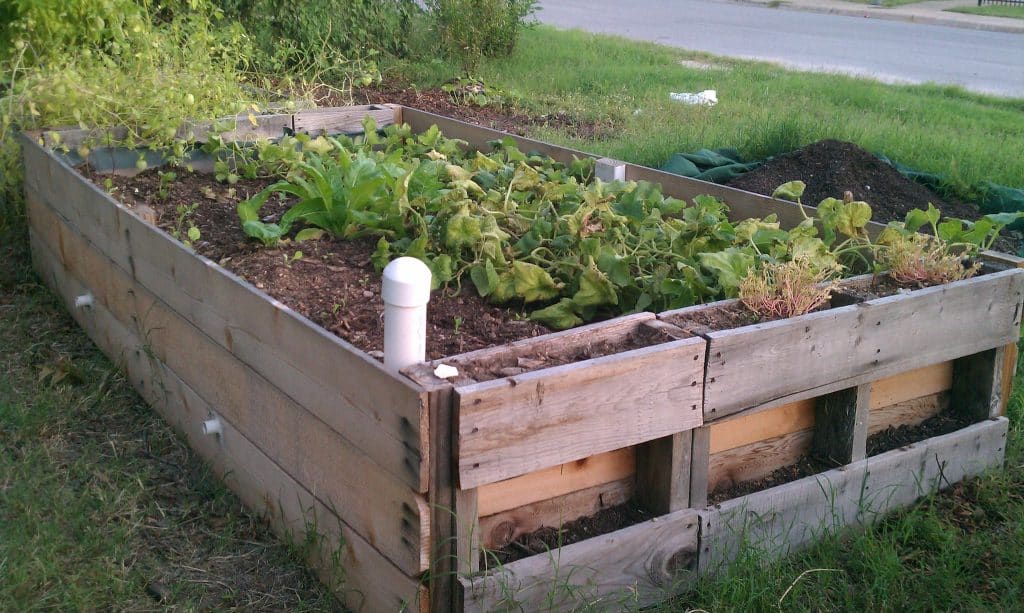
One interesting option to consider is creating a wicking bed, with a reservoir of water at the base. These self-watering beds can be an excellent water-wise solution to save water in your garden.
Hugelkultur Beds
When creating new beds, you can also think about incorporating materials which are great at retaining water. Hugelkultur mounds are raised beds with wood and organic materials which can hold water like a sponge, and which will dry out far less quickly than many other types of growing areas.
Growing Food in Water Rather Than Soil
Another interesting option to consider is growing food at home not in soil or other growing media but in water. Hydroponics and aquaponics systems can be extremely water wise solutions.
By growing in water that is circulated within a closed loop system, you can use a lot less water than you would use in other types of garden.
3. Understand Plant Needs – How Much Water Does A Plant Need Per Day?
Of course, as well as thinking about which methods you will choose and how you will lay out your schemes to save water in your garden, you also need to think carefully about which plants you will grow.
Remember, some plants need much more water than others. But you also need to consider the environment in which they are growing. When trying to save water in your garden, it is important to recognise the factors that alter how much water specific plants will use each day. Sunlight levels, wind, soil and a range of other environmental factors determine how ‘thirsty’ specific plants will be.
4. Choose Low-Water Plants
If you live in an area where water availability is particularly low, then it makes sense to consider plants which are reasonably drought tolerant.
You might even consider plants used in xeriscaping, or desert schemes – like cacti and succulents – as long as you can provide the other environmental conditions that plants like these need. This is not usually relevant for the UK, where you should save water in your garden but plant native species for best results, but the lessons it contains are interesting for all.
But even if you do not choose plants which can get by with very little water, you can encourage your plants to make do with less by watering well and deeply, but less often, rather than shallowly and frequently. This can encourage deeper roots and increase the resilience of your plants.
5. Be Smart When Watering Plants
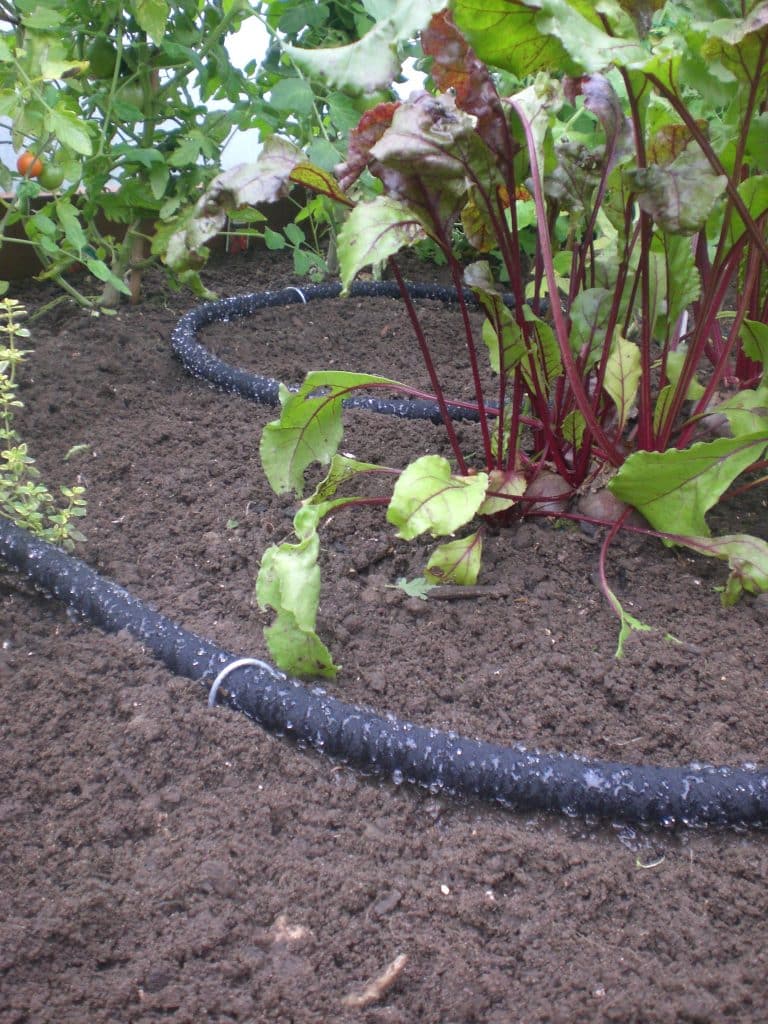
In a polytunnel, of course, we will need to water by hand or install some kind of irrigation system. The right irrigation system can help you save water in your garden under cover.
Sustainable and eco-friendly, water-wise options for polytunnel water irrigation systems include:
- Overhead Irrigation Systems
- Soaker Hose Irrigation Systems
- Drip Irrigation Systems
- Clay Pot Irrigation
- Watering Globe Type Irrigation
All of these methods are about using as little water and possible, and making sure as much of that water as possible makes it to precisely where it is required – in the soil where it can be taken up by plant roots.
6. Reduce Moisture Loss From Plants
Whichever methods, plants and irrigation methods you might choose, remember that environmental factors are important when trying to save water in your garden.
To reduce moisture loss from plants, it can often be helpful to introduce some shade – especially during the hottest part of the day during the summer.
It can also be useful to add shelter from drying winds, but also to increase ventilation in a polytunnel or other more enclosed environment.
7. Reduce Moisture Loss From the Soil
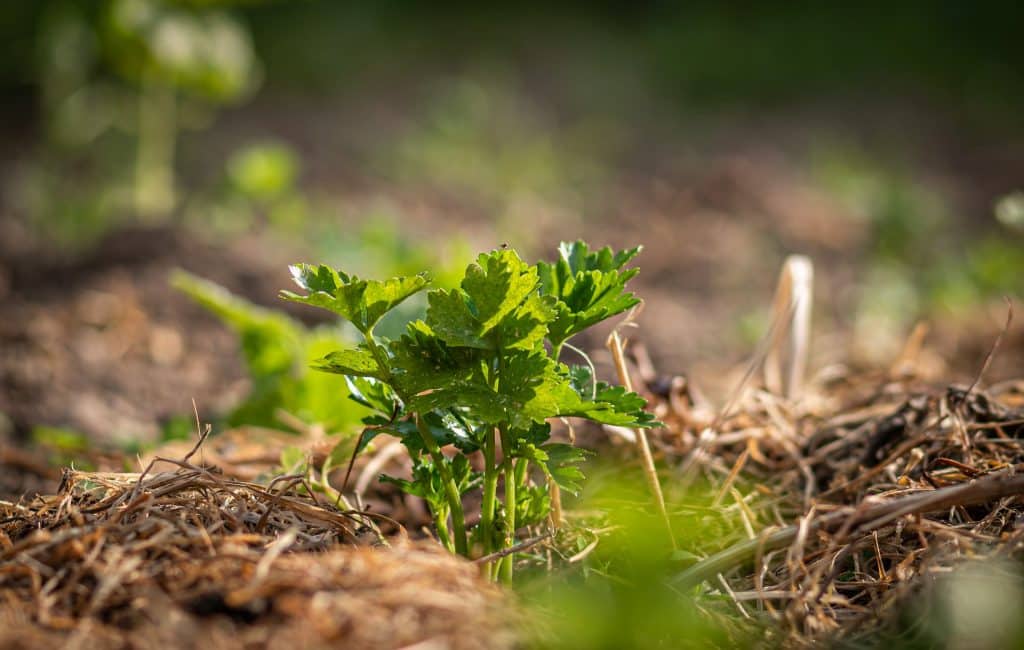
Finally, when it comes to water, the soil in your garden certainly cannot be overlooked. Remember, plants cannot grow without a healthy soil environment, and a healthy soil needs moisture.
Making sure, especially if we have particularly free-draining soil, that it is rich in organic matter, can help improve water retention.
We also need to keep bare soil covered, and ideally a living root in the soil through as much of the year as possible. To reduce evaporation from the soil surface around our plants, we can use organic mulches or living ground cover plants.
These are just a few pointers to help you save water in your garden, and make your garden as sustainable, eco-friendly and productive as possible.
References:
https://education.nationalgeographic.org/resource/freshwater-resources
https://education.nationalgeographic.org/resource/xeriscaping
https://www.ruralsprout.com/hugelkultur-raised-bed/