


 There are many benefits to choosing to collect rainwater, something that homeowners and businesses are finding out. With changes in our climate expected to make our weather hotter and for longer periods, it could be that we face more summer droughts and water shortages.
For those of us enjoying part of full-self-sufficiency with our garden or allotment, being short of water is bad news for our crops. It makes sense, therefore, that many gardeners are investing in rainwater collection and polytunnel water irrigation systems. But rainwater is not just for plants…
Types of Rainwater Harvesting
There are two rainwater harvesting solutions broadly categorised as potable and non-potable.
- Potable solutions: using a variety of filtering systems, rainwater is turned into water that is safe to drink and shower.
- Non-potable: is probably the solution we are all most familiar with. Rainwater is collected and used as garden irrigation systems but is also clean enough for flushing toilets and washing down cars, buildings, windows and so on.
What you want to use the recycled rainwater for will inform which harvesting system is right for you. Clearly, water that you want to drink and cook with needs to be safe to do so. If this is your aim, consider working with a professional rainwater harvesting specialist.
Why Should You Collect Rainwater?
From water butts to reed bed filtration systems, collecting rainwater is simple but brings many benefits. We can collect rainwater to:
1) Conserve water.
As an alternative water source for watering the garden or for use with polytunnel irrigation systems, collecting rainwater makes perfect sense. During the hot dry months of summer, you will have plenty of water to keep your cropping and fruiting plants in great shape.
2) Conserve energy.
When you turn the tap on, you use water that is chemically processed at a waterworks. This takes energy and so, by consuming less tap water you are consuming less energy too.
3) Prevent flooding and erosion.
When it rains, the majority of the water if funnelled away in sewers and storm drains. This hard landscaping prevents rainwater from seeping naturally into the water table below. Slow runoff or blocked drains lead to localised flooding and erosion.
4) Decrease water contamination.
Farmers and commercial food growers in an attempt to satisfy demand will often turn to chemical insecticides and pesticides. When it rains, this runs off into watercourses and can cause contamination. Limiting runoff means reducing contamination in lakes, stream and rivers.
5) Reduce your water bill.
For those on a water metre, washing the car with harvested rainwater and watering the garden with rainwater means you pay less for water.
6) Supply plants with ready nutrients.
Rain contains nitrates, an important nutrient for plants. It becomes available to plants as nitrogen, one of the three key macro-nutrients that your plants and crops need to thrive. Nitrogen is the nutrient that gives the plants it lush green, abundant leaves. Many forms of nitrogen are not absorbable by plants and so sometimes, those expensive fertilisers don’t provide everything your plants need.
7) Provide ‘soft’ water.
Depending on the rock or watercourse that rainwater filters through gives soft or hard water and varies across the country. Hard water contains dissolved calcium ions and magnesium ions, making it hard for detergent and soap to frith and clean items. Soft water is the opposite and so using potable rainwater to wash clothes etc. gives a better clean. And neither is there a lot of soap scum to deal with.
Harvesting Potable Water
Potable water is achievable by creating a system that filters it. There are many ways of doing this, some of which are in action in countries where sourcing water from wells and other natural sources is the main source of drinking and washing water. You can create your own potable water system.
Harvesting Non-Potable Water
The simplest way is to invest in a water butt, connect it to a drain pipe and collect water each time it rains. Using a watering can, you simply water your plants and flowers with it.
It is possible to refine the process, creating ‘pressure’ in the system to use it as part of an irrigation system, perfect for no-fuss water of flower border, allotments and polytunnels too.
Where Can I Collect Rainwater From?
When setting up rainwater harvesting systems, remember that there are several different options regarding where you can collect your rainwater from. Most people will set up a rainwater harvesting system on the side of their home – to collect the rainwater that falls on the roof of their house. This is definitely a good place to start. But when deciding how and where to collect rainwater, you should also consider collecting the water that falls on other areas on your land. You can harvest rainwater from garages, sheds and other outbuildings, as well as, of course, from your polytunnel itself.
It might also be worthwhile considering creating a pond at the lowest part of your land or garden, especially if you live in a drier area. This is another way to store rainwater for later use.
How To Collect Rainwater From a Polytunnel
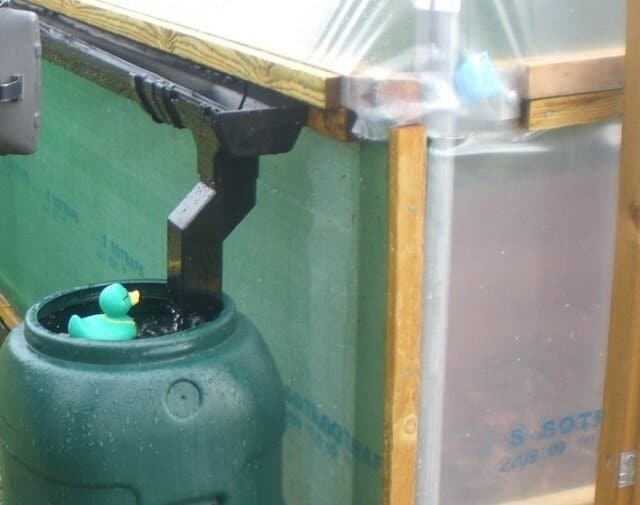
Very basic structural work on your polytunnel will allow you to collect the rainwater that falls onto it. Here is a step by step guide to creating a rainwater harvesting system for your polytunnel:
- Secure a timber rail to the sides of your polytunnel, around 1m off the ground.
- Affix regular home guttering brackets to this timber rail. (Make sure there is a slight drop on the gutter, so water will flow down towards the butt or water container at one end.)
- Secure the guttering in place using screws, as you would do on the side of a house.
- Use a timber batten if necessary to close off any gap between the guttering and the side rail, so all the rainwater flows into the gutter.
- Place your water butt or other container and fit a down-pipe from the guttering to the butt.
Now you can simply wait for it to rain and watch your butt fill. One or two small water butts may not be enough to cater for all your watering needs all summer, but they will definitely be a good start, and could make it easier to water your polytunnel since you will have water so close at hand.
How To Conserve the Water You Collect
Being water wise in your polytunnel is not just about using renewable resources. Starting to collect rainwater is the first and most important step, but how do you make sure that you conserve the water you collect as you maintain your polytunnel? Here are five practices which will help you to use water wisely in your polytunnel garden:
Direct Water To Where It Is Really Needed
Whether you have installed an irrigation system, are considering installing one, or simply water by hand, it is important to think about where the water is going. Watering from above can lead to water simply running off the soil surface, or failing to penetrate top soil to a deep enough level to allow it to be successfully taken up by plant roots. Consider perforated pipes run in growing areas to take water directly to where it is needed, and/or water into pots sunken into the soil next to plants, so the water will reach roots where it is required.
Improve The Humus Content of the Soil
Making sure that the quality of your top soil in your growing areas is good is essential to the creation of a water-wise garden. The number one way to improve and maintain good soil health is to make sure that you add plenty of humus/ organic matter to the soil surface. In a ‘no dig’ system, humus is added to the surface, and taken through the top soil for the benefit of plants by the natural soil organisms. A healthy, complex soil web is essential to transporting water and nutrients below the soil surface, and can make it easier to use less water in your polytunnel. Humus will also help to trap and store water and nutrients, reducing leaching and run off.
Mulch Around Plants To Reduce Moisture Loss
Organic mulches are sometimes used to enhance the soil, and keep the soil ecosystem safe, but mulches will also have the added benefit of reducing water loss from the soil. Adding a thick, organic mulch around polytunnel plants in the summer months can significantly reduce the amount of watering you will have to do.
Shade Plants With Companion Plants or Other Solutions
Providing shade for thirsty plants in the hottest months can help to reduce their water needs. Shade can be provided by means of taller companion plants, but you could also consider using other solutions such as shade netting.
Use Ground Cover Plants To Keep Moisture in the Soil
Ground covering companion plants will also help to reduce water needs by keeping moisture in the soil. Bare soil will lose water a lot faster than an area covered in green vegetation. So try to avoid having too many areas of bare soil for too long in your polytunnel.
Do you use rainwater in your garden? How do you conserve the water you collect? Have you noticed a difference in your plants when using rainwater as opposed to water from your tap? How have you managed to use water wisely? Let us know in the comments below.