

Growing food in a container garden can allow you to make the most of every inch available to you. Growing your own food does not require endless amounts of land. You might be surprised by how much of your own food you can potentially grow even in the smallest of spaces.
Here are some tips to help you maximise yields, avoid common pitfalls, and meet with success when growing food in a container garden:
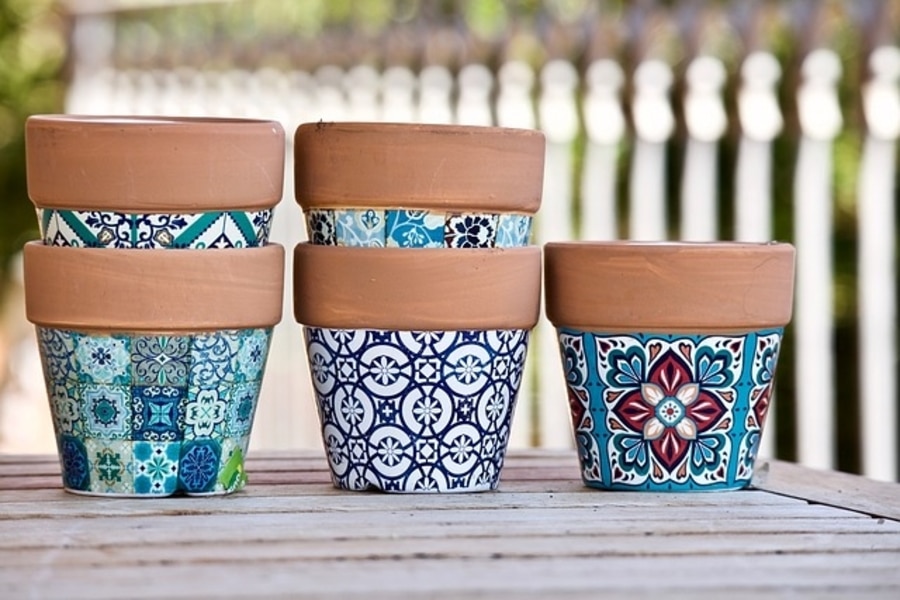
Choose the Right Containers for Growing Food in a Container Garden
First and foremost, choosing containers involves thinking about which plants specifically you want to grow in them. It is important to understand that there are plants that will thrive in a particular container, and others that will suffer.
You need to think about: The growing requirements of the plants in terms of sunlight and temperatures. Whether the plants like wet or very free draining conditions, or something in between. The growth habits of the plants in question. (Whether they are tall, short, compact or sprawling, for example.) The root systems of the plants in question. (Whether they deep or shallow rooted, for example.)
Always start by developing a better understanding of the needs of the plants you wish to grow before you even begin to think about which containers to choose for them.
You should also be sure to ask yourself how long will the plants be in the containers? Temporarily, before planting elsewhere, or long term?
The characteristics of a container will help you decide whether it is the right choice for a given situation. You need to consider:
- What the container is made from.
- The colour of the container.
- Container size and dimensions.
Materials
When thinking about the material from which a container is made. You should think about:
- How well a material stores/ retains or releases water/ moisture.
- The speed at which a material will heat up and cool down, how well it retains or dissipates heat. How heavy or lightweight it will be. (Consider whether you need to be able to move the containers. And whether it will tip/ blow over easily.)
- Whether it is a durable and long-lasting material.
- The environment: the true cost of manufacturing a container and what will happen to it when it reaches the end of its useful life.
Colour
In addition to thinking about the material from which a container is made, you should also consider its colour. The colour of a container can make a big difference when it comes to its characteristics. It can make a difference to how suited a container will be to growing different plants.
Light coloured or white containers will reflect light, while darker or black ones will absorb light and heat up more quickly.
Size
Of course, another important consideration is how large a container should be. This will depend on the plants you are growing (and their stage of growth). When it comes to container growing there is definitely not ‘one size fits all’. Some plants will prefer to be placed in a pot that keeps it snugly fitted, while others definitely need more space to spread out.
It is important to recognise that plants will require containers of a minimum size – but bigger is not always better. A container can be too big as well as too small. To large a container may increase the chances of a plant that likes free-draining conditions becoming waterlogged, for example.
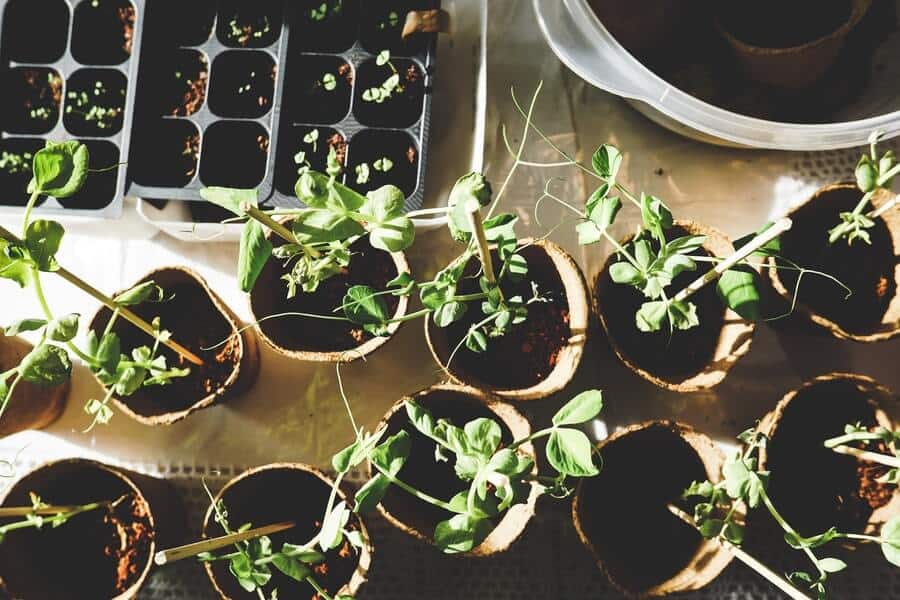
Choose the Right Growing Medium for Your Containers
If you are growing in containers, filling those containers with the right potting mix or growing medium is also very important. Make sure that you choose the mix with reference to the growing needs of the plants you wish to grow, and their stage of growth.
You can purchase specific potting mixes for specific plants and purposes. Just remember that for environmental and ethical reasons, you should always choose a peat-free option. But you can also build up layers of organic materials to compost in place and create your own medium in larger containers, and mix your own growing medium for smaller ones.
Remember, when container growing, you might consider a soil or loam based or soil-free growing medium. You might also consider other growing solutions – such as growing in water in a small-scale hydroponic or aquaponic system, for example.
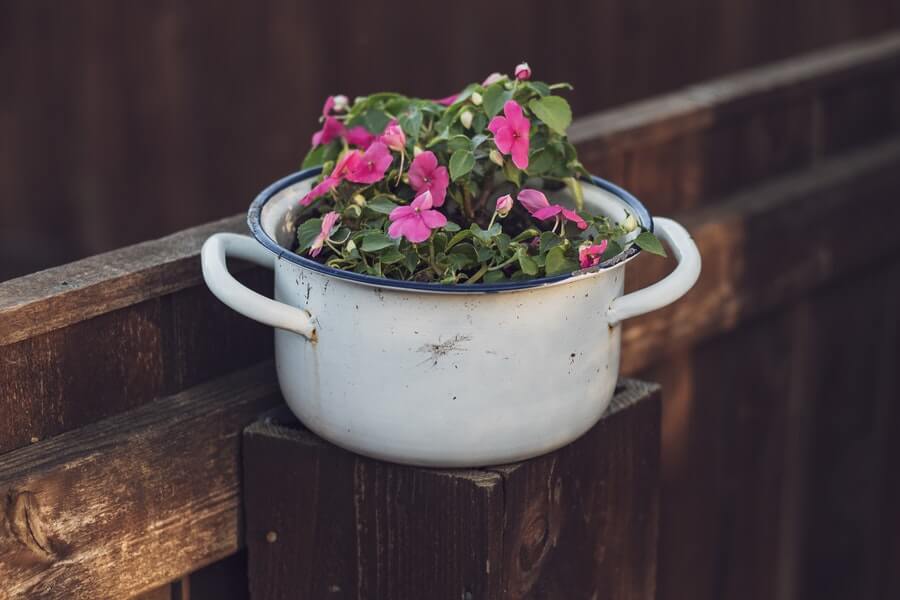
Select the Right Spot to Place your Containers
Once you have decided which plants you would like to grow, chosen your containers and decided how to fill them, you also need to consider placement and layout.
Remember that the positioning of containers is key to give plants the levels of sunlight, and perhaps the shelter that they require.
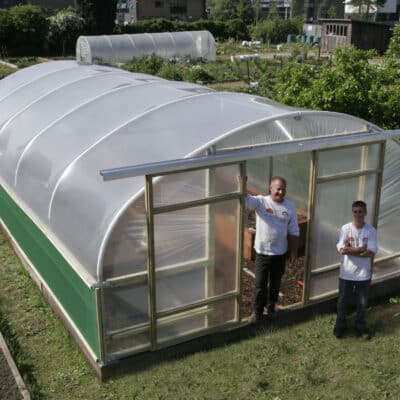
Of course you can create a container garden outdoors. But you might also consider adding containers indoors, or in an undercover growing area such as a greenhouse or polytunnel. Growing under cover can make it easier for you to manage a container garden, and can increase the number of plants that you can successfully grow in your area.
Of course, when growing under cover, taking care of your plants’ water needs will be especially important, as natural rainfall will not be a factor.
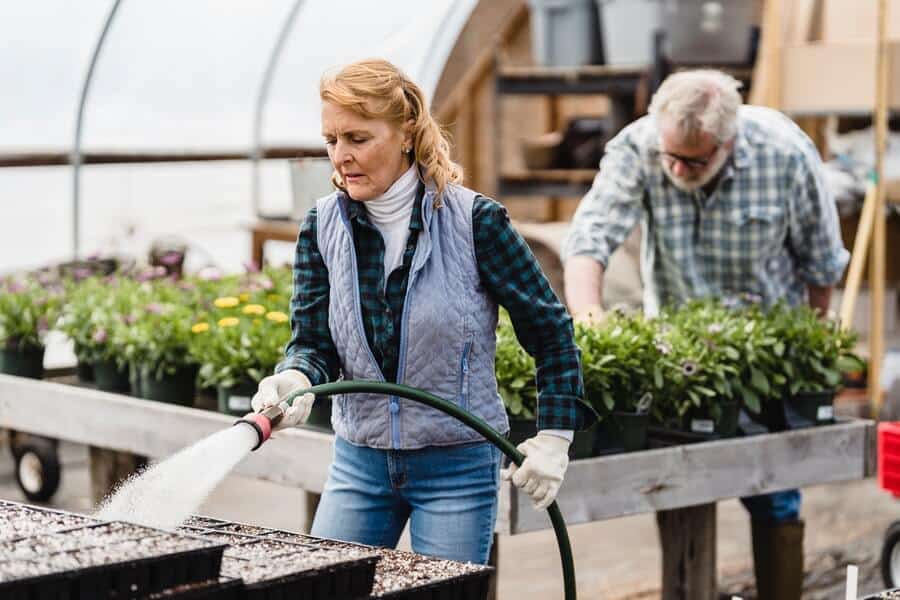
Water Wisely When Growing Food in a Container Garden
Plants growing in containers will typically require more watering than plants growing in the ground or in larger raised beds. So it is important to think about water management and water delivery in a container garden from the outset.
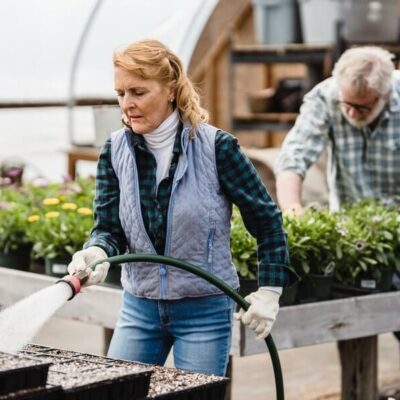
Of course, you could simply water by hand. But to reduce effort and time required to maintain your garden, and to conserve water, you might like to consider setting up some form of irrigation. This can potentially be automated to make your life easier.
Remember to make sure that water is delivered to where it is required – to the roots of the plants. And usually, it is best to make sure you avoid wetting the foliage, flowers and fruits wherever possible.
Consider Long-Term Fertility from the Outset
As well as requiring more frequent watering than plants growing in the ground, container grown plants will often also require more care when it comes to maintaining fertility. With only the growing medium in the container to rely on, plants may require an additional boost.
Organic growing strategies like mulching the top of containers with organic matter, and using organic liquid plant feeds, can help keep plants healthy and maintain long-term fertility in your container garden.
Share your own tips for container gardening with us below.