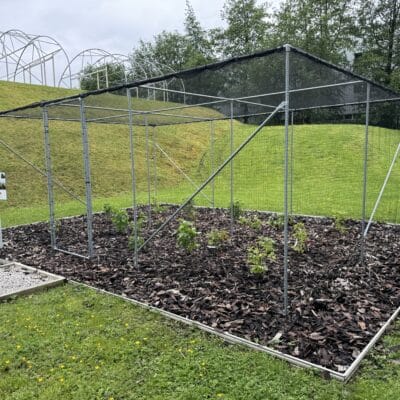


When weighing up a greenhouse vs polytunnel, the best choice comes down to what you want to grow, how much space you have and your budget. Both offer shelter for plants, but their construction affects how you manage light, heat, ventilation and maintenance.
A greenhouse can be a good fit for a smaller garden or growing in pots. A polytunnel is often a practical option if you want more room to grow vegetables directly in the ground. There’s no single right answer, so let’s look at what matters when making your choice.
Key Takeaways
- Both structures provide protected growing space, but their coverings affect light, heat and maintenance differently.
- Polytunnels are often well suited to growing larger quantities of crops.
- Greenhouses can work well in smaller gardens and for container growing and propagation.
- UK weather, site exposure and installation all matter.
- Think about what and how you grow before deciding which structure suits you best.
Greenhouse vs Polytunnel: What’s the Difference?
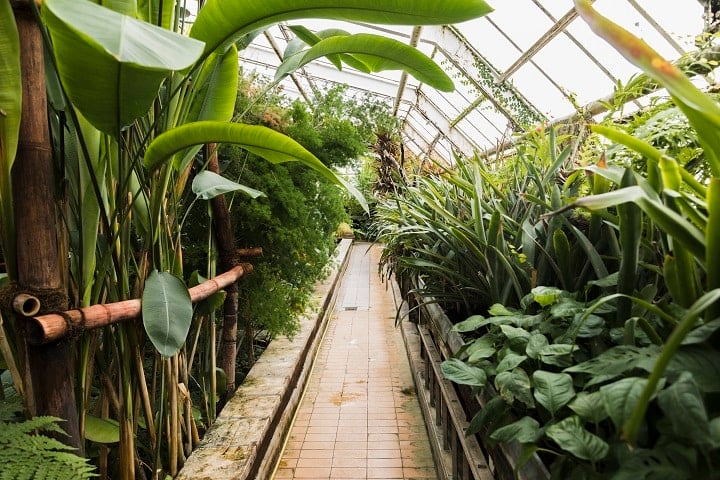
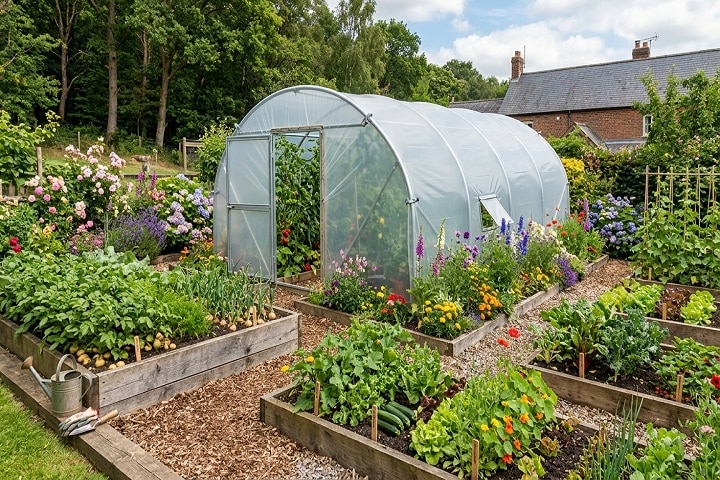
A greenhouse usually has a rigid frame with transparent panels, commonly glass or polycarbonate. A polytunnel has a frame, often made from metal, covered with flexible polythene designed for outdoor growing.
Both let sunlight reach your plants while providing shelter from some wind and rain. The main difference is how they’re built, which affects how you use and maintain them.
A greenhouse can be handy for pots, shelves and raising seedlings. A polytunnel often gives you more room for long rows of vegetables planted directly in the soil.
Want to learn more? Read First Tunnels’ guide to how polytunnels compare with greenhouses.
Greenhouse vs Polytunnel at a Glance
Here’s a quick overview. Remember that size, materials, design and installation can all affect performance.
| Factor | Greenhouse | Polytunnel |
|---|---|---|
| Initial cost | Depends on size, glazing and frame | Can offer substantial covered space for the investment |
| Growing space | Often suits compact layouts, pots and staging | Often suits larger growing areas and soil-based crops |
| Installation | Needs a suitable base and careful assembly | Needs ground preparation, anchoring and careful cover fitting |
| Heat | Can warm quickly in sunshine | Can also warm quickly, depending on the cover and ventilation |
| Light | Glazing type affects light transmission | Cover type affects light transmission and diffusion |
| Ventilation | Often uses windows, roof vents and doors | Often uses doors and side ventilation, depending on design |
| Durability | Rigid glazing can break | Covers can tear or wear |
| Maintenance | Cleaning glazing and checking panels, seals and vents | Checking cover tension, frame contact points and tears |
| Flexibility | Usually a more permanent garden feature | Some designs can be moved or adapted |
| Typical use | Propagation, containers and smaller growing spaces | Larger quantities of vegetables and extended growing areas |
Cost and Growing Space
It’s worth thinking about what you get for your money, rather than looking at the initial price alone.
A small greenhouse may be just right if you want somewhere to raise seedlings, grow tomatoes in pots or protect tender plants. Larger models with more substantial frames or glazing will cost more.
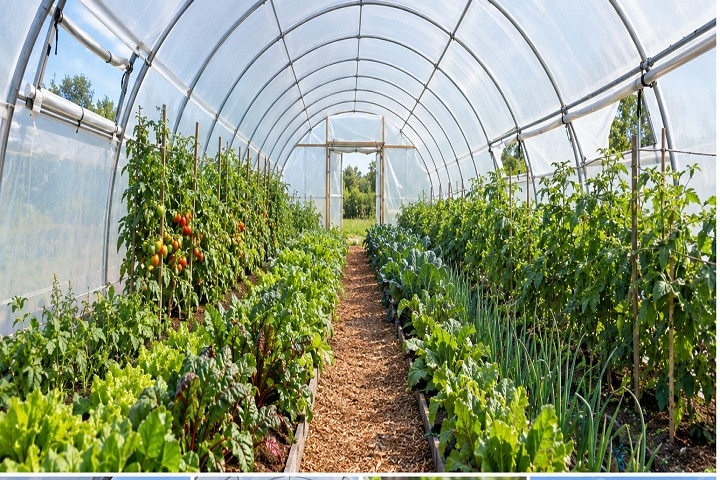
If you want to grow plenty of vegetables, a polytunnel can provide a generous covered area. You can make room for beds, paths and different crops without needing a separate small structure for each job.
Remember to budget for ground preparation, installation and future maintenance too. Greenhouse glazing may need replacing if damaged, while a polytunnel cover can eventually need replacing because of wear or exposure.
If you’re considering a polytunnel for your garden, explore our domestic polytunnels.
Growing Conditions: Heat, Light and Ventilation
Both structures warm up when sunlight enters. On a sunny day, either can become surprisingly hot, even when the outside temperature feels cool.
More heat isn’t always better. Plants need suitable temperatures, light and air movement, so ventilation is essential.
Which keeps heat better?
There’s no universal winner. Heat retention depends on the covering, structure, ventilation, weather and whether additional insulation or heating is used.
A greenhouse with particular glazing may behave differently from a polytunnel with a thermal cover. It’s worth comparing the actual specifications rather than assuming one type always stays warmer.
Which provides more light?
That depends largely on the covering.
- Greenhouses: Glazing type, frame size and cleanliness affect how much light reaches plants.
- Polytunnels: Covers vary in light transmission. Some let light through more directly, while diffused covers scatter it more evenly.
Think about the sunlight your site receives and the needs of your crops, rather than assuming one structure always provides better light.
Can either structure get too hot?
Yes. Open doors and vents as needed, and consider suitable shading during hot weather. Greenhouses may have roof vents and windows, while polytunnels often use doors and side ventilation, depending on the design.
Which Is More Durable in UK Weather?
Wind, heavy rain, frost and snow can all affect protected growing structures. The important thing is to choose a design suited to your site and install it properly.
A greenhouse’s rigid panels can break if struck or put under stress, so the frame, base and glazing need to be secure.
A polytunnel cover needs suitable tension and anchoring. If it flaps excessively or rubs against the frame, it may wear or tear more quickly.
Before choosing, consider:
- Exposure: An open, windy plot may need a different approach from a sheltered garden.
- Ground conditions: Make sure the base or anchoring system suits the site.
- Severe weather: Choose a design intended for the conditions it will face and follow the manufacturer’s guidance.
- Maintenance access: You’ll need to inspect the structure and deal with damage safely.
Neither type is automatically more durable. Good installation and a structure suited to local conditions make a real difference.
Maintenance, Lifespan and Installation
Both structures need a little regular attention, though the jobs differ.
Greenhouse maintenance
- Clean the glazing to let in plenty of light.
- Check panels, seals and fixings for damage.
- Keep doors and vents working properly.
- Repair or replace damaged glazing according to the manufacturer’s guidance.
Polytunnel maintenance
- Check that the cover remains properly tensioned.
- Look for rubbing against the frame and fixings.
- Repair small tears promptly with a suitable method.
- Clean the cover when needed and inspect the frame after challenging weather.
The frame and covering won’t necessarily have the same lifespan. A greenhouse frame may remain usable after a panel breaks, just as a polytunnel frame may outlast its cover.
There’s no single lifespan that applies to every structure. Materials, weather, installation and care all affect how long it remains suitable for use.
Which Is Better for the Way You Grow?
The easiest way to choose is to start with your growing plans.
| Your situation | What to consider |
|---|---|
| Small garden | Available space, access and the look you prefer |
| Allotment | Plot rules, budget and how much you want to grow |
| Larger vegetable patch | Covered area, access between rows and practical growing space |
| Growing in soil | Room for beds, crop rotation and paths |
| Growing in containers | Shelving, watering and easy access |
| Propagation | Benches, ventilation and temperature management |
| Tender or heat-loving crops | Light, warmth and summer ventilation |
| Community or school garden | Safe access, shared maintenance and flexible space |
| Commercial growing | Productive area, workflow, installation and running costs |
Small gardens and allotments
For a small garden, a greenhouse may be a lovely fit if you want a compact space for seedlings and pots. But if you have enough room and want to grow more food, a small polytunnel could work just as well.
On an allotment, check the plot rules before buying. If your main aim is to grow lots of vegetables directly in the ground, a polytunnel may give you the practical space you’re looking for.
Larger growing areas and commercial use
If you’re growing vegetables in quantity, a polytunnel can provide space for long rows of crops. Think about how you’ll move through the tunnel, ventilate it and manage the growing area throughout the season.
For a more detailed comparison, you can compare greenhouses and polytunnels.
If you’re planning a larger commercial growing area, explore our commercial polytunnels.
Greenhouse or Polytunnel: Which Should You Choose?
Here’s a simple way to narrow it down.
A greenhouse may suit you if:
- You have limited space and want a compact structure.
- You prefer a permanent, traditional garden feature.
- You mainly grow in pots, use staging or raise seedlings.
- Your growing plans fit comfortably within its footprint.
A polytunnel may suit you if:
- You want a larger covered growing area.
- You grow plenty of vegetables.
- You prefer planting directly in the ground.
- Practical growing space is a priority.
- You have room on an allotment, smallholding or larger plot.
These are guidelines, not hard rules. A large greenhouse can support extensive growing, and a small polytunnel can fit a modest garden. Compare the actual dimensions, materials and growing conditions before deciding.
Conclusion
There’s no universal winner in the greenhouse vs polytunnel debate. Both can help you grow more successfully, but the right choice depends on your space, budget, crops and growing goals.
A greenhouse may suit you if you want a compact, permanent structure for pots and propagation. A polytunnel may be the better fit if you want more room to grow vegetables directly in the ground.
My advice is to start with what you want to grow, then work out which structure will make that easiest. You’ll make a better choice by thinking about how you’ll use the space than by comparing appearance or upfront price alone.
Frequently Asked Questions
Is a greenhouse better than a polytunnel?
Neither is always better. A greenhouse can suit smaller gardens and container growing, while a polytunnel often suits larger areas of soil-based growing.
Which is cheaper, a greenhouse or polytunnel?
It depends on size, materials and installation. Compare the total cost with the amount of usable growing space you get.
Which gives more growing space?
Polytunnels are often chosen for larger productive growing areas, particularly where crops are planted directly in the ground.
Which is better for growing vegetables?
Both grow vegetables well. A polytunnel may suit larger quantities and long rows of crops, while a greenhouse can be ideal for smaller crops, pots and propagation.
Which is easier to maintain?
Both need regular checks. Greenhouses need glazing and vents maintained, while polytunnels need their covers, tension, anchoring and frames inspected.
Is a polytunnel suitable for winter growing?
Yes, a polytunnel can shelter hardy winter crops and extend the growing season. However, it won’t automatically keep tender plants frost-free. Conditions depend on the weather, covering, ventilation and any additional heating.
Sources
Royal Horticultural Society (RHS) (n.d.) Greenhouses: choosing. Available at: https://www.rhs.org.uk/garden-features/choosing-greenhouses (Accessed: 26 October 2026).
Royal Horticultural Society (RHS) (n.d.) Greenhouse: ventilation and shading. Available at: https://www.rhs.org.uk/garden-features/ventilation-and-shading-greenhouses (Accessed: 26 October 2026).
University of Nebraska–Lincoln Extension (2014) Cold Frames, High Tunnels, and Greenhouses: Choose a Growing Structure Best for You. Available at: https://extensionpubs.unl.edu/publication/g2246/cold-frames-high-tunnels-and-greenhouses (Accessed: 26 October 2026).