

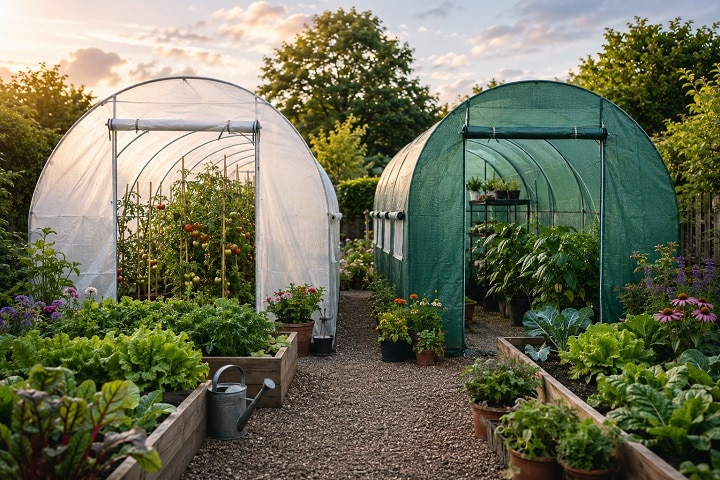
If you are choosing between a green or white polytunnel, the best option depends on what you want to grow and the conditions in your garden. For most productive growing, white covers are the more versatile choice because they maximise available light, while green covers can be useful where shading, privacy or appearance are priorities.
Colour is worth considering, but it should not be the only thing you look at. The quality and type of polytunnel cover, the position of the tunnel, ventilation and the crops you plan to grow will all affect how well it performs.
I have found that the simplest way to make the decision is to start with how you intend to use the tunnel. A tunnel for growing tomatoes and other light-hungry crops throughout the year has different requirements from one tucked into a small garden where appearance and privacy matter more.
Key Takeaways
- Green and white covers suit different growing situations.
- Light transmission is often more important than colour alone.
- White covers are generally the better choice when maximum light is the priority.
- Green covers can suit gardeners who value shading, reduced visibility or a more discreet appearance.
- The crop, location, ventilation and quality of the cover should all influence your decision.
Does Polytunnel Colour Really Matter?
Yes, but perhaps not in the way you might expect.
A polytunnel cover determines how much light reaches your plants and how that light is distributed. Colour can therefore influence the growing environment inside the tunnel, alongside the characteristics of the plastic itself.
For a gardener deciding between green and white, the most useful questions are:
- How much light do my crops need?
- Is the tunnel in a sunny or shaded position?
- Am I likely to struggle with excessive heat?
- Do I want the tunnel to blend into the garden?
- Is privacy important?
- What will I be growing through the year?
The important point: Don’t choose a cover colour based on appearance alone. Think about the growing conditions you want to create and the crops you plan to grow.
A good-quality cover is also important. Different types of polythene can have different properties, so it is worth understanding the different types of polytunnel plastic and their uses before making a final decision.
Green vs White Polytunnels at a Glance
| Feature | White Polytunnel | Green Polytunnel |
|---|---|---|
| Light | Maximises available light | Reduces some available light |
| Light distribution | Bright, open growing environment | More shaded environment |
| Heat | Can become warm in strong sun | Shading may help reduce intense sunlight |
| Visibility | More transparent | More discreet |
| Privacy | Lower | Greater |
| Best suited to | Productive growing and light-demanding crops | Shadier conditions, privacy and garden settings |
| Appearance | Practical and highly visible | Blends more easily into some gardens |
| Main consideration | May need careful ventilation in hot weather | Reduced light may not suit all crops |
There is no universal winner. If your main aim is to grow as much produce as possible, particularly crops that need plenty of light, I would generally favour white. If your tunnel is in a highly visible part of the garden or you want a little more shade, green may be the better fit.
How Light, Heat and Growing Conditions Differ
Light transmission
Light is one of the biggest considerations when choosing a polytunnel cover.
Plants need light for photosynthesis, so if you are planning a productive tunnel, you generally want to make the most of the light available. This is particularly relevant in the UK, where natural light levels can be limited during the darker months.
A white cover is therefore a good all-round choice when your priority is productive growing.
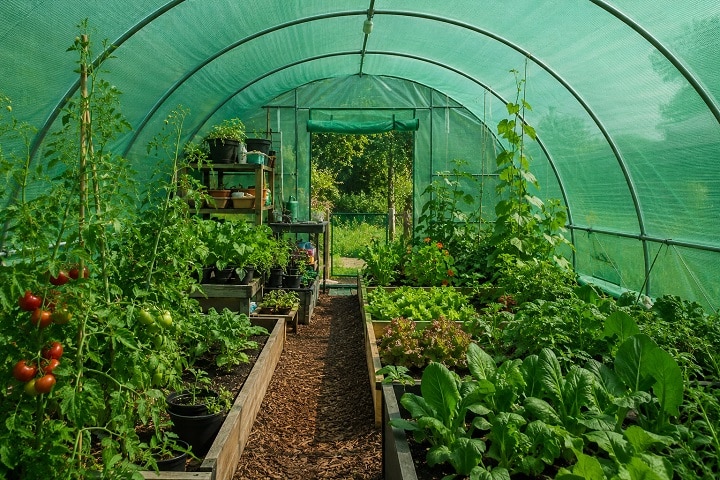
Green covers can reduce the amount of light reaching crops and create a more shaded environment. That is not necessarily a problem, but it does mean you should consider whether your chosen crops will perform well under those conditions.
Diffused versus direct light
It is also worth thinking about how light reaches the plants, rather than simply how much enters the tunnel.
Diffused light is spread more evenly around the growing space rather than arriving as strong, direct beams. This can help illuminate different parts of plants and reduce the contrast between very bright and shaded areas.
The exact behaviour will depend on the particular cover material, so colour should not be treated as a substitute for looking at the specifications of the polythene you are considering.
Heat and ventilation
A polytunnel can become considerably warmer than the surrounding garden, particularly in sunny weather. This is useful for extending the growing season, but excessive heat can become a problem.
Green covers may provide more shading, which can be useful in some situations. However, cover colour does not remove the need for good ventilation.
Doors, vents and other ventilation arrangements are important whatever colour you choose. If you are concerned about summer temperatures, it is worth learning how to maintain the ideal temperature inside your polytunnel.
The aim is to create a stable growing environment rather than simply making the tunnel as warm as possible.
Which Plants Suit Each Cover?
The crops you want to grow should be one of the main factors in your decision.
Light-demanding crops generally benefit from a bright growing environment, while plants that tolerate some shade give you more flexibility.
Before choosing a cover, I would make a simple list of your main crops and consider when you plan to grow them.
A useful crop checklist
Choose white if you are planning to grow:
- Tomatoes and other crops where maximum light is important.
- A wide range of vegetables throughout the year.
- Plants early and late in the season when natural light is lower.
- Crops for maximum productivity.
Consider green if you are:
- Growing crops that tolerate some shade.
- Using the tunnel primarily during brighter months.
- Gardening in a particularly sunny location where additional shading is useful.
- More concerned with privacy and appearance than maximum light transmission.
The best cover also depends on the overall growing system. Raised beds, irrigation, ventilation and crop choice all contribute to what happens inside a tunnel.
If you are still deciding what you want to grow, discover what crops grow best in a polytunnel before choosing your cover.
Which Is Better for UK Gardens?
There is no single answer for every UK garden. Your location and the position of the tunnel matter.
| Your situation | Better starting point | Why |
|---|---|---|
| Sunny garden | White or green depending on crops | Consider light levels and summer heat |
| Shaded garden | White | Makes the most of available light |
| Small garden | Green may be preferable | More discreet and potentially better suited to a visible setting |
| Allotment | White | Prioritises productive growing |
| Year-round growing | White | Maximises light when natural levels are lower |
| Light-demanding crops | White | Gives crops access to more available light |
| Privacy is important | Green | More discreet than a transparent cover |
| Appearance is a priority | Green | Can blend more naturally into some garden settings |
For an allotment or productive garden, I would usually put growing performance ahead of appearance. In a small domestic garden, however, the balance can be different.
Think about where the tunnel will sit for most of the year. A cover that is perfect for an open allotment may not be the best choice beside a patio or in a garden where the tunnel is constantly visible.
When to Choose a White Polytunnel
White is the straightforward choice when your priority is growing.
Choose white if:
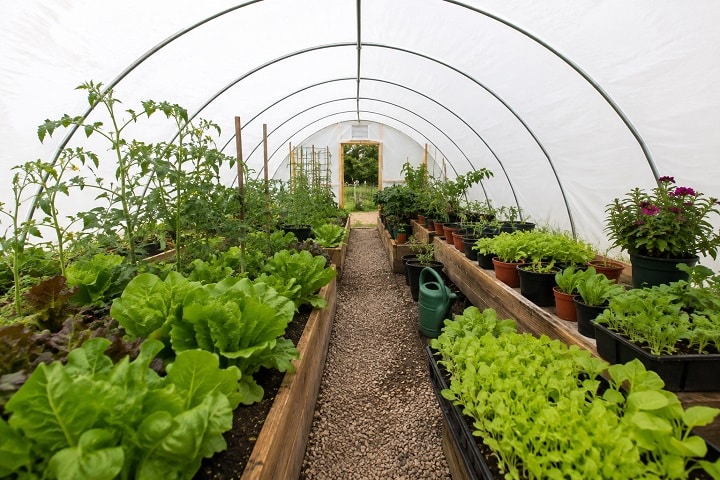
- You want to maximise available light.
- You plan to grow a broad range of vegetables.
- You want to extend the growing season.
- Your site is relatively shaded.
- You plan to grow crops that benefit from high light levels.
- You want one versatile cover rather than a specialised growing environment.
Advantages
Maximum light: White is generally the better option where making the most of available natural light is important.
Versatility: It suits a wide range of productive growing situations.
Good for year-round use: The extra light can be particularly useful when days are short.
Straightforward choice: If you are buying your first polytunnel and do not have a specific reason to choose green, white is a sensible starting point.
Possible drawbacks
The main consideration is heat and glare during sunny weather. A white tunnel can still become very warm, so good ventilation and sensible temperature management remain essential.
When to Choose a Green Polytunnel
Green can make sense when the tunnel needs to work as part of the garden as well as a growing space.
Choose green if:
- You want a more discreet structure.
- Privacy is important.
- The tunnel is in a prominent position.
- You prefer the appearance of green plastic.
- You are growing plants that can tolerate some shade.
- You want some additional shading in a sunny setting.
Advantages
More discreet: Green can be less visually prominent in some garden settings.
Additional shading: It can be useful where reducing intense sunlight is desirable.
Garden appearance: Some gardeners simply prefer green because it sits more comfortably within a landscaped garden.
Limitations
The principal trade-off is light. If your priority is maximum productivity, particularly through the darker parts of the year, reduced light may be a disadvantage.
That is why I would not choose green simply because it looks more attractive. If your tunnel is primarily a growing machine, light should remain a major consideration.
Our Recommendation
If you are still asking yourself, green or white polytunnel?, work through this short checklist.
Choose white if:
- Maximum light is your priority.
- You want to grow vegetables throughout the year.
- You have a relatively shaded site.
- You are growing light-demanding crops.
- Productivity matters more than appearance.
Choose green if:
- Privacy is important.
- Your tunnel is in a prominent garden position.
- You want additional shading.
- You prefer a less visually obvious structure.
- You are happy to accept lower light transmission.
For most gardeners buying a polytunnel primarily for growing food, I would lean towards white. It is the more versatile option when light is a priority and gives you greater flexibility across different crops and seasons.
For a garden where appearance, privacy or shading is more important, green can be a perfectly sensible alternative.
Most importantly, do not let colour distract you from the bigger buying decision. The quality of the cover, the construction of the tunnel, ventilation, positioning and the crops you plan to grow will all affect your results.
If you are ready to compare your options, exploring First Tunnels’ range alongside the practical growing information can help you choose a structure and cover suited to how you actually garden.
Conclusion
So, green or white polytunnel? For productive growing, I would generally choose white because making the most of available light is such an important consideration, particularly in the UK.
Green has its place. It can provide a more discreet appearance, offer additional shading and work well where the tunnel forms part of a domestic garden rather than an open growing plot.
There is no need to make the decision more complicated than it is. Start with your crops, consider the position of the tunnel, think about how you will use it through the year and then choose the cover that supports those needs.
The right polytunnel is ultimately the one that fits the way you garden. Colour is part of that decision, but it is only one part of the growing environment.
Frequently Asked Questions
Does the colour of a polytunnel affect plant growth?
Yes. Colour affects the amount and quality of light reaching plants, which can influence the growing environment. However, the cover material, ventilation, position and crop choice also play important roles.
Is a white polytunnel better for vegetables?
Generally, white is the better choice if your priority is maximum available light and productive growing. This can be particularly useful for a broad range of vegetables and for growing when natural light levels are lower.
Do green polytunnels get hotter?
A green cover can provide more shading, which may reduce the intensity of sunlight entering the tunnel. However, any polytunnel can become hot in strong sunshine, so ventilation and temperature management are still essential.
Which polytunnel colour lets in the most light?
White covers are generally the better choice when maximising available light is the priority. The exact performance will depend on the particular polythene and its specifications, so it is worth comparing cover materials as well as colour.
Can you grow tomatoes in both green and white polytunnels?
Tomatoes can be grown in a polytunnel, but they are a light-demanding crop. If tomatoes are a major part of your growing plans, a white cover is generally the more suitable option where maximum light is the priority.
Sources
Pennsylvania State University (2024) Type of plastic film on high tunnels can filter sunlight, influence plant growth. Available at: https://www.psu.edu/news/research/story/type-plastic-film-high-tunnels-can-filter-sunlight-influence-plant-growth (Accessed: 2 September 2026).