

One of the best ways to save money in your garden is to grow your own polytunnel crops from seed. But sowing seeds is not always problem free. Sometimes, you may find that your germination rates leave something to be desired. Troubleshooting germination for common polytunnel crops can help you make sure you get as many seedlings as possible.
What is Germination?
If you are new to polytunnel gardening, you may be unfamiliar with the term germination. Germination is simply the name given to the process by which a seed turns into a seedling and begins to grow into a plant. A seed contains all of the building blocks of a plant. The seed needs certain conditions to be met in order to begin to grow. When these conditions are all met, viable seed will sprout and new, green growth will emerge.
What is Needed for Germination?
Environmental conditions will play a major role in determining the germination rates you can achieve. When it comes to common polytunnel crops, the three most important factors are generally water, oxygen and the right temperatures.
Water
Seed germination requires the presence of water. Mature seeds are usually very dry, and need to absorb and take on significant amounts of water before cellular metabolism and growth can resume.Water imbibation activates hydrolytic enzymes, that begin to break down stored food resources into chemicals that can be used metabolically. The seed coating will break down and the seedling will emerge.
Generally speaking, the goal will be to provide enough water to moisten the seeds, but not to soak them. Of course, the amount of water required will depend on the particular type of seeds you are trying to germinate. Troubleshooting germination often involves determining the correct amount of water required. Gardeners need to determine whether they have watered seeds too much or too little.
Oxygen
Until a seedling grows leaves, aerobic respiration provides its main source of energy. Oxygen is needed by a germinating seed for metabolism. Oxygen needs are very much tied in with water requirements. Some seeds have coatings that need to be broken down before water and oxygen can be absorbed from the environment.
But whichever seeds are germinating, it is vital to bury them to the correct depth, and in a suitable growing medium. If a seed is buried too deep, or if the growing medium is waterlogged or too compacted, seeds may be starved of oxygen and germination rates may suffer.
The Right Temperatures
Understanding the temperature ranges in which different seeds will germinate is also crucial to troubleshooting germination. Temperature will have a bearing on cellular metabolism and growth rates. Seeds will generally germinate within a certain temperature range. They will not germinate at all outside this temperature range. At the extremities of the temperature range, reduced germination rates can be expected.
Most common annual vegetables germinate at temperatures between 24 and 32 degrees C. But many species (such as radishes and spinach, for example) can germinate at significantly lower temperatures. This is why they can be grown from seed in cool climates like our own. If the temperatures are too low, however (such as if we sow seeds outdoors too early) we can have much lower success rates and much longer germination periods.
Many common polytunnel crops germinate effectively at 16-24 degrees (room temperature in heated homes). Others germinate just above freezing, some when soil is cool, and some only when soil warms significantly. Some seeds need a period of cold (vernalization) to break dormancy, and others germinate in response to alteration in temperature between warm and cool. Understanding the role that temperature plays on the seeds we wish to grow is essential for troubleshooting germination.
Troubleshooting Germination Temperatures
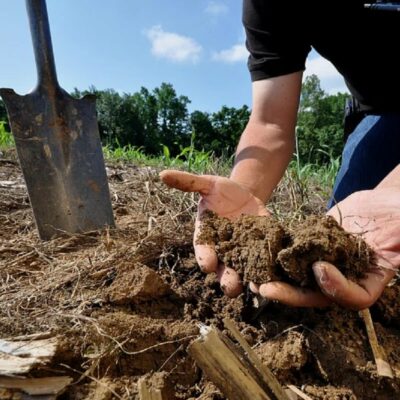
There are a range of factors that will determine how well seeds germinate in your polytunnel. But soil temperature is one of the most important. One of the most important things is to ensure that the soil is at the right temperature for the seeds you are trying to grow.
Here are the germination temperatures for a range of common polytunnel crops:
Aubergine – Minimum 16 degrees, optimal 24-32 degrees.
Beans – Minimum 8-10 degrees C., optimal 16-30 degrees C.
Beetroot – Minimum 4 degrees, optimal 10-30 degrees.
Cabbage, Kale etc. – Minimum 4 degrees, optimal 7-35 degrees.
Carrots – Minimum 4 degrees, optimal 7-30 degrees.
Cauliflower – Minimum 4 degrees, optimal 7-30 degrees.
Celery – Minimum 4 degrees, optimal 15-21 degrees.
Corn – Minimum 10 degrees, optimal 7-35 degrees.
Cucumber – Minimum 16 degrees, optimal 16-35 degrees.
Lettuce – Minimum 2 degrees, optimal 4-27 degrees.
Leeks – Minimum 2 degrees, optimal 18-30 degrees.
Onion – Minimum 2 degrees, optimal 10-35 degrees.
Parsnips – Minimum 2 degrees, optimal 10-21 degrees.
Pea – Minimum 4 degrees, optimal 4-24 degrees.
Pepper – Minimum 16 degrees, optimal 18-35 degrees.
Pumpkin – Minimum 16 degrees, optimal 21-32 degrees.
Radish – Minimum 4 degrees, optimal 7-32 degrees.
Swede – Minimum 4 degrees, optimal 16-30 degrees.
Spinach – Minimum 2 degrees, optimal 7-24 degrees.
Squash – Minimum 16 degrees, optimal 21-35 degrees.
Tomatoes – Minimum 4 degrees, optimal 16-30 degrees.
Swiss Chard – Minimum 4 degrees, optimal 20-23 degrees.
If you get the temperatures right, and sow in the right place and at the right time then you are likely to have far better germination rates. Seeds will also tend to germinate more quickly.
Troubleshooting Germination When Environmental Conditions are Right
You have provided enough water, but not too much. Seeds were sown at the right depth, and in a suitable, aerated medium. You have met the temperature conditions for the seeds in question. But still something is not right. The germination is still patchy, or worse yet, seeds do not germinate at all. What is wrong?
First of all, it is important to understand that some seeds have a higher germination rate than others. With certain seeds, you may expect a certain proportion to fail. And for some species this failure rate can naturally be rather high. Check the germination rate for the plants you are trying to grow, so as to check to see whether you are getting the results that should be expected.
Seeds Stored Incorrectly?
It might also be that the seeds were stored incorrectly and are no longer viable. If seeds are stored in unsuitable conditions – where the temperatures are too high, for example, they may have been damaged and may no longer be able to grow into plants.
Seeds Too Old?
It is also possible that the seeds were simply too old. Seeds will only be viable for a certain length of time, and some will be viable for less time than others. Carrots and parsnips, for example, are amongst those seeds that lose their viability rapidly. It is best, therefore, to plant seeds you collect within a year, or to buy these seeds new each year. Seeds that you buy will often have a ‘sow by’ date on the packet. Those sown after this date may still germinate, but the rate of germination is likely to be lower.
Seeds Have Been Eaten?
If you are mystified by the fact that none of the seeds you sowed have emerged as seedlings, it could be that the seeds were eaten before they could germinate. If you sow your seeds directly in the ground, either in a polytunnel or outdoors, this could be the problem. Birds, mice and other pests may have gobbled up the seeds before they started growing.
If you believe pests may have been the culprits, you can improve your success rates by providing protection. Use cloches, covers, mesh or netting to keep seeds safe. Alternatively, consider sowing seeds indoors or on a high hanging shelf inside a polytunnel before transplanting larger seedlings to their final growing positions.
Some seeds are far easier to sow and grow than others. But no matter which crops you choose to grow in your polytunnel, troubleshooting germination can definitely improve success rates. It can help you improve your yield, and find out where you went wrong when things don’t go according to plan. Remember, gardening is always a process of trial and error. Always stay informed and try to do your best. But do not get too disheartened when things go awry. Plant plenty of different seeds. Adopt good, organic gardening practices. Anyone can learn how to grow at least some of their own food from seed.
Do you have any tips on troubleshooting germination to share? How have you fared when growing your own food from seed? Share your trials and tribulations and your success stories in the comments below.