

Do you have a dog-friendly garden? If you have a dog or dogs, you’ll know just how important it is for them so spend time outdoors in your garden. But not all gardens are just as dog-friendly as others.
Here are some tips to help you keep your canine friends safe with a dog-friendly garden to make sure they can enjoy the space as much as you do. Use the space to provide for their needs as well as your own.
Avoid Plants That are Toxic To Dogs

It is important to avoid toxic plants to create an environment for dogs that they can enjoy safely and securely. Many common plants are toxic to dogs to some degree.
Most dogs will not eat random plants in your garden, so toxicity should not be a major issue. However, some dogs will of course chew on things that they shouldn’t.
So for their safety and your peace of mind, it is best to avoid plants that are toxic to dogs, at least in parts of the garden where they are allowed free-reign.
Some plants that are toxic to dogs are:
- aconites
- azalias and rhododendron
- bergenia
- buttercups
- clematis
- daffodils
- daphne
- delphinium
- eucalyptus
- foxgloves
- hydrangea
- oak
- oleander
- peonies
- ragwort
- tulips
- wild cherry (twigs and leaves)
- wisteria
- yew
But remember, this list is by no means exhaustive. There are also plenty of other plants that can potentially cause harm to your pets if they ingest them.
But don’t panic if you already have these or other plants that are toxic to dogs in your garden. If your dog shows absolutely no inclination to eat the plants in your garden, and if your dog only spends time outside when you are there to keep an eye on them, then this is not likely to be a problem.
Dogs that are left alone, or are bored or stressed are far more likely to engage in destructive behaviours, eat plants, or try to escape. So remember that choosing the right plants is only part of the picture. You also have to make sure your dog is happy and that you have thought holistically about their wellbeing and mental health.
Garden Organically and Eliminate Other Risks
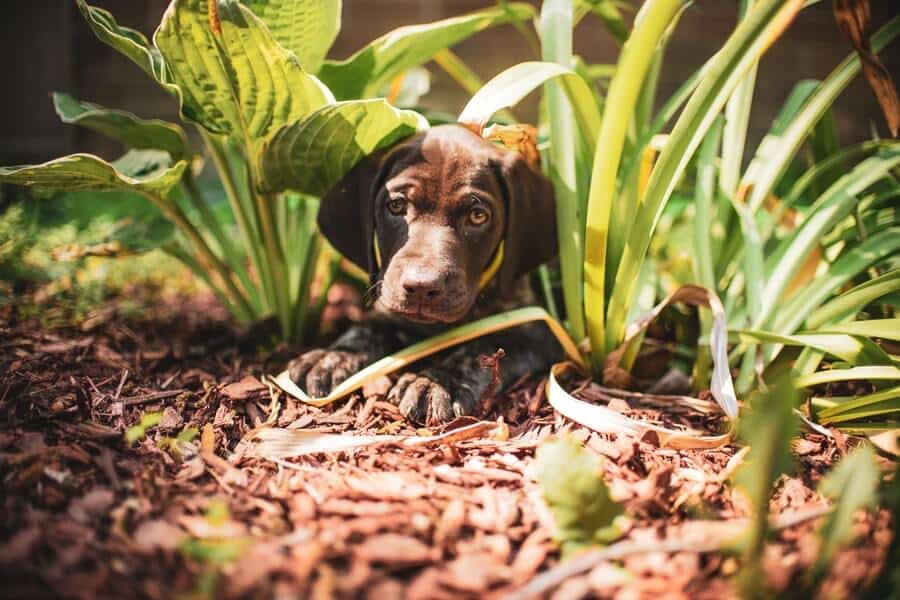
As well as avoiding toxic plants, you should also think about other threats that might occur in a garden.
One major no-no in a dog-friendly garden is using harmful pesticides, herbicides or synthetic fertilizers – all non-organic gardening products could potentially pose a risk to pets, as well as to the wildlife that shares your space.
Of course, you should also make sure that there are not sharp edges or breakable items that could pose a risk to dogs running around.
And you should think carefully about your particular pets before introducing a pond or other water feature to areas they use – especially if they use them unattended.
Choose Dog-Friendly Planting Options

Fortunately, for a risk free garden, there are plenty of dog-safe plants to consider. You definitely do not have to have a boring grass lawn if you have dogs as pets.
You might also choose non-toxic shrubs for beds and borders, like:
- Camellias
- Forsythia
- Fuchsias
- Lilac
- Magnolia
- Roses
And other attractive flowering plants like:
- Alyssum
- Asters
- Calendula (Pot marigold)
- Coral Bells
- Echinops
- Gypsophila (Baby’s breath)
- Hardy geraniums (cranesbills)
- Hollyhocks
- Nasturtiums
- Phlox subulata
- Petunias
- Salvias
- Snapdragons
- Sunflowers
To name just some examples.
Make Sure Garden Borders Are Secure
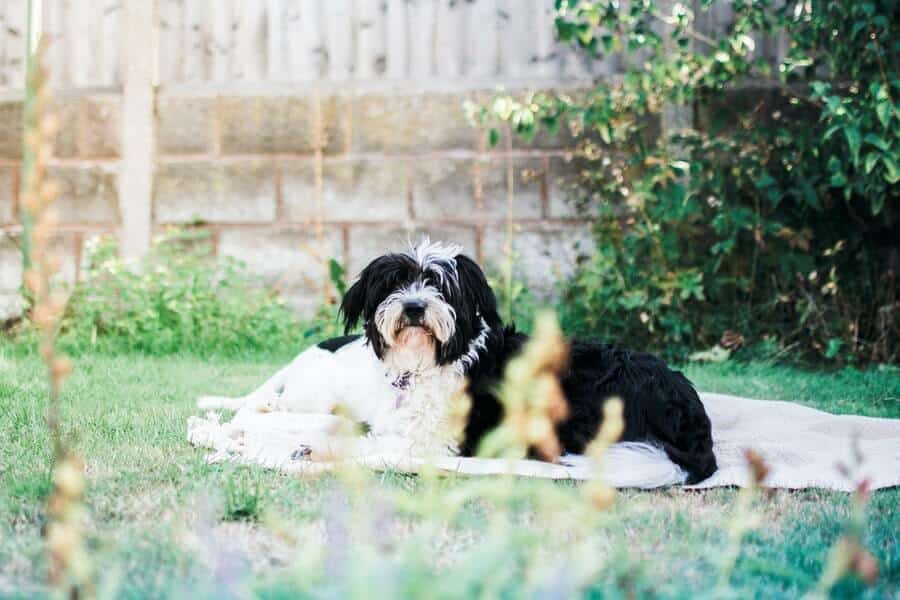
Of course, for dogs to spend time in your garden, you will usually have to make sure that the borders are secure.
Some dogs can be real escape-artists, so it is important to have good fences or boundary walls to make sure they cannot get out. Make sure these are tall enough, and don’t have gaps or space beneath them where your dog might squeeze through.
Dense hedgerows can also help to keep dogs contained, and further reduce the risk of escape.
Some dog-safe options for hedgerows include:
- Beech
- Blackthorn
- Elaeagnus
- Hawthorn
- Hazel
- Mahonia
- Viburnums
Make Sure Dogs Have Space to Run Around
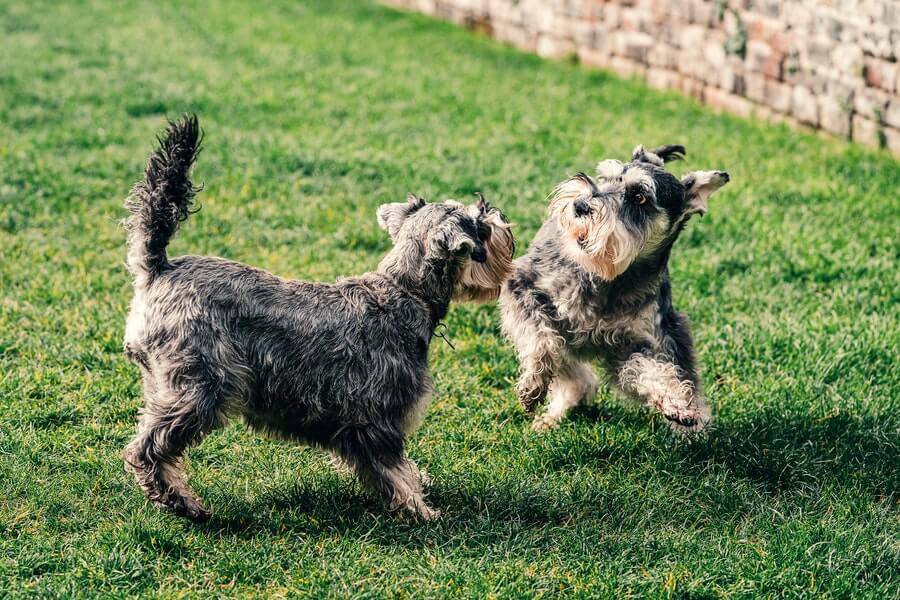
Dogs do need space to run around. But a wide open lawned area certainly is not your only option. Even more important than having space to play and run is diversity, plenty of interesting smells, and plenty of stimulation.
A rich and biodiverse environment, with many different plants and habitats, will be just as beneficial for your pets as it is for you, and local wildlife.
A wilder lawn or wildflower meadow can also be a great space for them to play in and run around. Dandelions, daisies and other lawn weeds and wild flowers can be non-toxic to your pets.
Plant Edibles for a Dogs As Well as For You
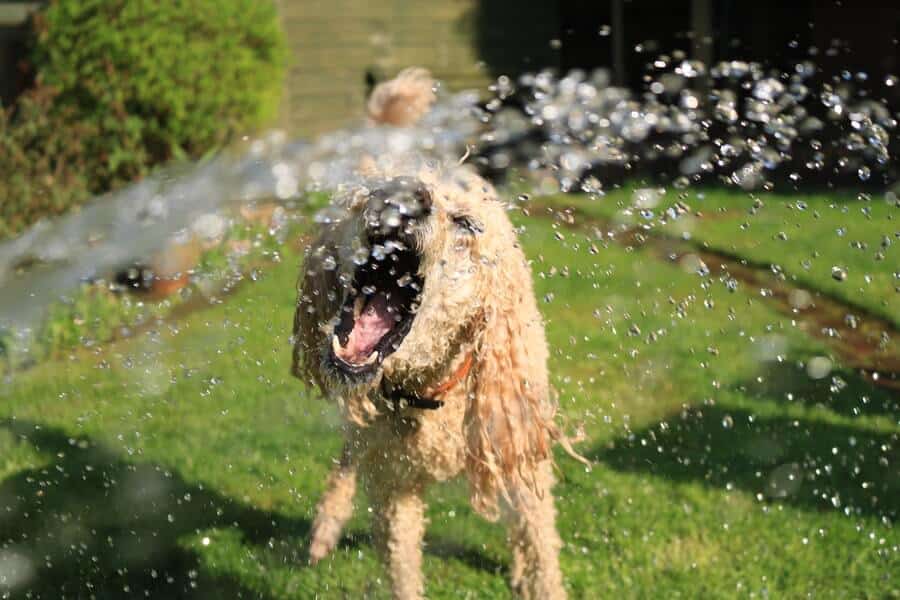
You dog friendly garden could also provide more for dogs than simply a space for them to spend their time. Just as a garden can be used to provide edible produce for you, so too it can be used to provide dietary supplements for your dog. Feeding your dog some healthy vegetables every now and then can be a great idea.
My dog has a condition that means he developed a rarer type of bladder stone not related to diet. He has to have a very low protein diet, so actually eats mostly vegetables, vegetable oils, honey and supplements. (With just a little bit of meat/ bones). We always shared the produce from our garden with him – now even more so than before.
Dogs can eat a lot of the produce you might grow in your vegetable plot. Just remember that some crops, onions and grapes for example, can cause immense harm to dogs.
Think, too, about growing herbs and other plants that might be beneficial to your dogs in other ways. For example, rosemary can be used to make a natural rinse which may help get rid of fleas. And apple cider vinegar made from home grown apples might be a good addition to their diet, and help keep their coat glossy.
A dog-friendly garden is one that not only accommodates your dog, but helps you to care for them too.