

Did you know that those sprouts on your potatoes might be more than just an eyesore? They could indicate something potentially harmful.
Potatoes are iconic across many UK household dishes, and are often revered for their versatility and nutritional benefits. However, when potatoes sprout, they may develop elements and toxins that can impact your health. In this article, we will look at whether gardeners should play it safe with sprouting potatoes, and whether can you eat potatoes that have sprouted; we will focus on the risks associated with sprouting potatoes, and how to handle, store, and even use these sprouted spuds in your garden effectively.
Key Points:
- Understand the risks that eating sprouted potatoes could potentially have on your health.
- Learn about the toxins present in sprouted potatoes and their symptoms.
- Tips on how to safely prepare and consume sprouted potatoes.
- Best practices for storing potatoes to minimise sprouting.
- Guidance on planting sprouted potatoes in your polytunnel garden.
Why Do Potatoes Sprout?
Potatoes naturally sprout as part of their growth cycle. Stored in dark, moist environments, they may mistakenly perceive they’re still underground, triggering sprout growth. This fascinating survival mechanism ensures they continue their lifecycle, whether in soil or your pantry.
Can You Eat Potatoes That Have Sprouted?
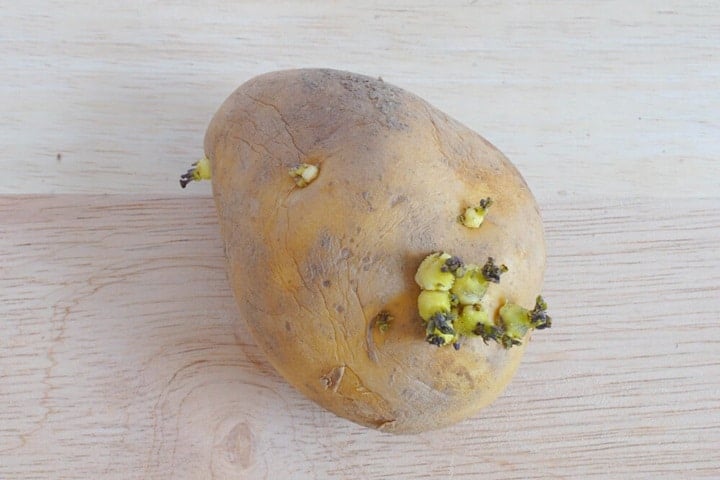
Sprouted potatoes often raise an important question: is it safe to eat them? The answer, however, isn’t so straightforward. While potatoes are a highly nutritious choice, when they sprout, they begin to produce solanine and chaconine, natural toxins that can be harmful if ingested in large amounts.
To Eat or Not to Eat Sprouted Potatoes
When you spot sprouting potatoes in your pantry, allotment, or polytunnel, your first step should be to thoroughly inspect them, and decide whether is it safe to eat sprouted potatoes. Potatoes with sprouts that are still firm and show little signs of shriveling might still be edible.
Simply cut away the sprouted eyes and any soft areas before cooking. This process can help reduce the concentration of toxins, making them safer to consume.
However, if the potato is soft, wrinkled, displaying greenish hues, or heavily sprouted, it’s better to discard it to avoid any health risks.
Symptoms of Glycoalkaloid Poisoning
Ingesting sprouted potatoes can lead to glycoalkaloid poisoning. Symptoms often include gastrointestinal distress such as nausea, vomiting, and diarrhea. In severe cases, it may cause neurological issues like headaches, confusion, or even fever.
These symptoms can begin within a few hours or may take up to a day to appear, making it more important to monitor your health if you accidentally consume sprouted potatoes.
How to Reduce the Risk of Toxin Exposure
There are a number of ways in which you can take better care of potatoes that have potentially sprouted or displaying the symptoms aforementioned.
Safe Preparation Methods
If you choose to eat potatoes that have begun to sprout, you will need to carefully prepare these to maintain your health.
Removing the sprouts and any green-tinted areas is the most important factor, as these are where the toxins are most concentrated. Cooking methods such as boiling, baking, or frying can reduce the levels of glycoalkaloids, though they do not eliminate them entirely.
Therefore, it is advisable to thoroughly cook any potato that has shown signs of sprouting to decrease the risk of toxicity.
Storing Potatoes to Minimise Sprouting

Storing your potatoes correctly can significantly reduce the likelihood of your potatoes sprouting. Potatoes should be stored in a cool, dark, and well-ventilated area to discourage the growth of sprouts.
Avoid storing potatoes near onions or in the refrigerator, as certain conditions can cause the sprouting to accelerate. Keeping potatoes in a dark place like a pantry or a basket away from direct sunlight and heat helps maintain their quality and extend their shelf life.
When to Discard Sprouted Potatoes
Despite your best efforts, if potatoes sprout extensively or display signs of spoilage such as a mushy texture, are musky, wrinkled, or emitting an odd smelling odour, they should be discarded.
If large sprouts are identified, a significant green colour, or a shrivelled appearance are all indicators that the potato has gathered high levels of toxins and should not be consumed.
Cooking Sprouted Potatoes Safely
If you find yourself still holding onto your sprouting potatoes because you feel there is something to be salvaged from them, there are safe ways to prepare them for cooking.
First, as mentioned, remove the sprouts and any green areas, which contain the highest levels of toxins. Peeling the potatoes thoroughly is also important to eliminate potential toxins concentrated in the skin and near the eyes.
To reduce the glycoalkaloid content further, cook the potatoes thoroughly. Please also note that raw potatoes, especially those that have sprouted, should not be eaten due to the increased presence of toxins.
Planting Sprouted Potatoes in Your Garden
Sprouted potatoes might not be ideal for cooking, but they can find new life in your garden. Instead of discarding them, consider planting them. Here is how to plant sprouted potatoes in the garden.
- Cut the sprouted potatoes into pieces, each with a sprout, and plant them in your garden.
- Position them a few inches below the soil with the sprouts pointing upwards.
- Cover them with soil and ensure they are well-watered.
This method not only recycles what would otherwise be waste but also potentially creates a fresh crop of potatoes, making it a doubly rewarding practice.
Enhancing Your Garden with First Tunnels
Integrating sprouted potatoes into your garden can be even more effective with the right tools and setups from First Tunnels polytunnels. Our high-quality commercial polytunnels provide the perfect environment for growing potatoes from sprouts. These structures protect your plants from harsh weather and pests, while creating an ideal growing climate to maximise your crop growing.
Whether you’re planting sprouted potatoes or starting from seedlings, we offer the resources and expertise to help your garden thrive, regardless of size, climate, or location.
Further reading:
Expand your polytunnel gardening knowledge further about potatoes and much more from our blog, including:
FAQs
Can you eat the skin of a sprouted potato?
It’s advisable to peel sprouted potatoes before eating, as the skin and sprouts contain the highest concentrations of glycoalkaloids.
What can you do with heavily sprouted potatoes?
Heavily sprouted potatoes should generally be thrown out, especially if they’re soft, wrinkled, or have a green tinge.
Is there any nutritional difference in sprouted potatoes?
Sprouted potatoes may have slightly reduced nutritional value, particularly in terms of vitamin C content, as the potato uses up nutrients to grow the sprouts.
Can you make potatoes last longer by removing the sprouts?
Yes, to extend the shelf life of potatoes, remove the sprouts and store them in a cool place at around 50°F. Keep them unwashed and out of direct sunlight. Removing the sprouts helps to retain moisture in the potatoes, preventing them from drying out too quickly.
How to stop potatoes from sprouting?
While it’s natural for potatoes to sprout over time, you can delay this process by storing them in a cool, dark place like a pantry, inside a brown paper bag, or a cardboard box. Avoid exposure to sunlight and keep them separate from onions and fruits like bananas, which emit ethylene gas and accelerate the ripening process.
Do sprouted potatoes taste different?
Potatoes with sprouts typically do not differ in taste or texture. However, if the potatoes are also wrinkled or have developed a green tint, they may become mushy or soft and might have a sour or bitter taste.
Sources
Raman, R., (2018) 7 Health and Nutrition Benefits of Potatoes. Healthline. [online] Available at: https://www.healthline.com/nutrition/benefits-of-potatoes [accessed 07/04/2025]
EFSA (European Food Safety Authority (2020) Glycoalkaloids in potatoes: public health risks assessed. [online] Available at: https://www.efsa.europa.eu/en/news/glycoalkaloids-potatoes-public-health-risks-assessed [accessed 07/04/2025]