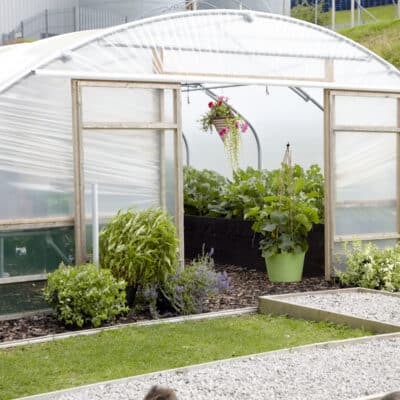


Choosing a durable polytunnel cover is about more than picking the thickest plastic. The best heavy duty polytunnel cover needs to suit your growing conditions, provide the right balance of light and heat, and withstand the wear it will experience over time.
I’ve had my own polytunnel cover for 12 years so far, and it’s still going strong. That’s a good reminder that longevity isn’t determined by thickness alone. Material, installation, exposure and care all play a part.
This guide compares the main cover types and properties to help you choose one that works for your crops and site. If you’re planning your first tunnel, you can choose the right polytunnel cover with help from First Tunnels’ beginner’s guide.
Key Takeaways
- Heavy duty doesn’t simply mean thick. UV stabilisation and material quality matter too.
- Clear, diffused, thermal and reinforced covers offer different benefits.
- Choose according to your crops, site conditions and priorities for light and heat.
- Correct fitting and protection from rubbing can help a cover last longer.
- A suitable, well-maintained cover can reduce premature replacement.
What Makes a Polytunnel Cover Heavy Duty?
A heavy duty cover is designed to provide suitable strength and durability for outdoor growing. The term doesn’t describe one universal specification, so check the product details.
Thickness can contribute to physical strength, but it isn’t a reliable measure of lifespan on its own. A thinner, well-formulated film may perform better than a thicker one that isn’t designed for prolonged outdoor exposure.
Look for:
- UV stabilisation: Helps protect the material from deterioration caused by sunlight.
- Material strength: The film needs to withstand fitting, handling and site conditions.
- Resistance to wear: Contact with the frame, fixings and repeated movement can weaken a cover.
- Suitable formulation: Material and treatments affect how it behaves in sunlight, heat and changing weather.
Installation matters too. A poorly fitted cover that flaps excessively may experience extra stress, regardless of thickness.
What Types of Polytunnel Cover Are Available?
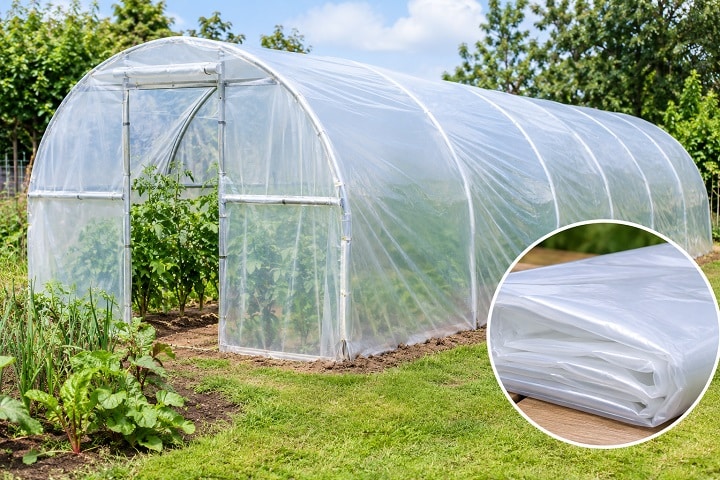
Polytunnel covers are commonly made from polyethylene film. Different formulations and treatments affect light transmission, heat retention and resistance to physical damage.
Some properties overlap. A cover may be both diffused and thermal, for example, or combine UV stabilisation with another treatment. Compare the full specification rather than relying on the product category alone.
| Cover type | Main characteristic | Potential benefit | Best suited to |
|---|---|---|---|
| Clear | Transmits light more directly | High direct light transmission | Growers who prioritise direct sunlight |
| Diffused | Scatters incoming light | More even light distribution | Growing spaces where spreading light is a priority |
| Thermal or thermic | Designed to reduce heat loss | Can help retain warmth in suitable conditions | Growers looking to improve heat retention |
| Reinforced | Includes added strengthening construction | May offer extra resistance to physical damage | Sites where additional physical resistance matters |
| Specialist | Has additional properties or treatments | Can address particular growing needs | Growers with specific priorities, such as condensation management |
Reinforcement may involve mesh or another strengthening construction, but products vary. It doesn’t automatically mean better light transmission, heat retention or lifespan.
Clear vs Diffused Polytunnel Covers
Clear and diffused covers both transmit useful light, but they handle it differently.
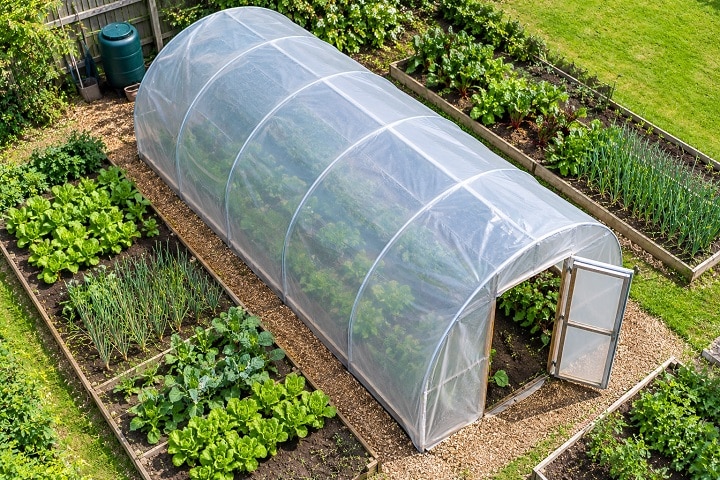
Clear covers allow sunlight to pass through more directly. This can suit growers who prioritise direct light, although sunlight may be more concentrated in some areas than others.
Diffused covers scatter incoming sunlight, helping distribute it more evenly through the growing space. This can reduce the contrast between bright and shaded areas, depending on the product and tunnel layout.
| Clear cover | Diffused cover | |
|---|---|---|
| Light behavior | More direct | More scattered |
| Main strength | Direct light transmission | More even light distribution |
| Main consideration | May create stronger shadows or concentrated sunlight | Light transmission varies by product |
Neither is automatically better. Consider your crops, the sunlight your site receives and how your tunnel is arranged. Diffusion doesn’t remove the need for ventilation or temperature management.
Which Cover Properties Should You Compare?
Product specifications often include technical terms that describe different aspects of performance.
- UV stabilisation: Helps protect polythene from sunlight-related deterioration.
- Light transmission: Describes how much incoming light passes through the cover. The amount reaching plants also depends on season, weather and cover condition.
- Light diffusion: Describes how light is scattered, affecting how evenly it reaches different parts of the tunnel.
- Thermicity: Relates to heat retention and heat transfer. A thermic cover is intended to help reduce heat loss, but the effect depends on the product and conditions.
- Anti-drip properties: Treatments influence how condensation behaves on the inside of the cover, helping water form a film rather than droplets that fall onto plants. Ventilation is still important.
- Thickness and reinforcement: These can contribute to physical resistance, but should be compared alongside material quality and intended use.
 Which Polytunnel Cover Is Best for Your Growing Needs?
 Which Polytunnel Cover Is Best for Your Growing Needs?
The best heavy duty polytunnel cover for your setup balances durability with the conditions your plants need. Start with your crops and site rather than choosing according to one specification alone.
| Your priority | Cover characteristics to consider |
|---|---|
| Long-term durability | UV stabilisation, suitable material strength and resistance to wear |
| More even light | Diffused cover |
| High direct light transmission | Clear or high-transmission cover |
| Heat retention | Thermal or thermic properties |
| Managing condensation | Anti-drip or anti-condensation treatment |
| Additional physical resistance | Suitable reinforced material |
| Sunny or warm site | Light properties suited to your crops, alongside ventilation |
| Exposed site | Appropriate strength, careful fitting and protection from abrasion |
For exposed locations, a reinforced cover may help, but the frame, fixings and installation also contribute to how the structure performs.
A nature-first approach means thinking about longevity and resource use. Choose a cover that suits your conditions, fit it carefully and repair localised damage where practical. The aim is to avoid unnecessary replacement, not to buy the most heavily specified cover regardless of need.
How Long Should a Heavy Duty Polytunnel Cover Last?
There isn’t one lifespan that applies to every cover. Material formulation, UV stabilisation, exposure and installation all influence how long it remains suitable for use.
I’ve had my polytunnel cover for 12 years, and it’s still going strong. That’s my own experience, not a promise that every cover will last as long. Different sites and growing conditions put different demands on the material.
A manufacturer’s stated lifespan or warranty can help you compare products, but it isn’t an absolute guarantee. Check the terms and consider your site conditions.
-
Factors that affect cover lifespan
- UV exposure: UV stabilisation helps, but sunlight still matters.
- Weather: Wind and storms can put additional stress on the cover.
- Fitting and tension: Poor fitting or excessive movement can increase wear.
- Abrasion and heat: Contact with frame components, fixings or hot surfaces can weaken the film.
- Care: Regular inspection and prompt repairs can prevent avoidable damage.
For more guidance on cleaning, inspection and general upkeep, see how to care for your polytunnel cover.
How to Get the Most From Your Polytunnel Cover
Use this checklist when installing a new cover or reviewing an existing one:
- Fit it according to the manufacturer’s instructions.
- Make sure it’s properly tensioned without unnecessary stress.
- Check that it doesn’t flap excessively or rub against the frame.
- Protect it from hot, sharp or abrasive contact points.
- Repair small areas of damage promptly using a suitable method.
- Clean it when needed to maintain light transmission.
- Inspect it after strong winds or challenging weather.
- Check doors and vents so you can manage heat and air movement.
For practical advice on how to keep your polytunnel cool, see First Tunnels’ guidance.
Conclusion: Choosing the Right Heavy Duty Polytunnel Cover
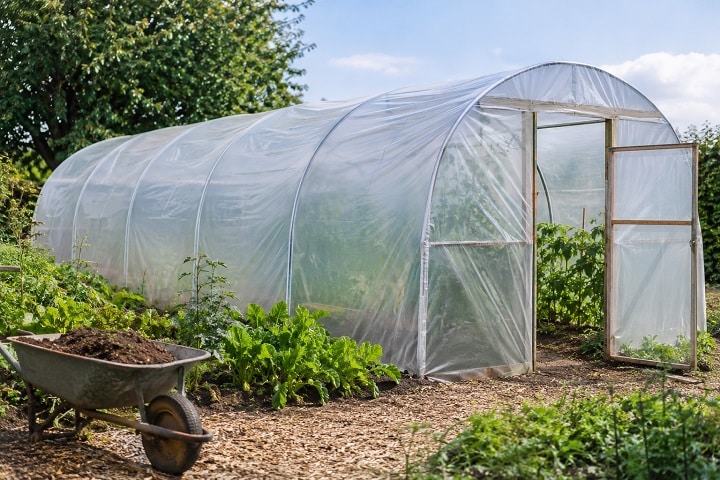
The best heavy duty polytunnel cover isn’t necessarily the thickest or most heavily reinforced option. It’s the one that provides suitable durability while meeting the light, heat and condensation needs of your growing space.
Clear, diffused, thermal and reinforced covers each have different strengths. Consider your crops and local conditions, then compare the full product specification rather than relying on one headline feature.
My own cover has lasted 12 years so far, but the useful lesson isn’t to expect every cover to last the same length of time. Choose carefully, fit it well and look after it. That can help avoid premature replacement and make better use of your growing space.
Explore First Tunnels’ polytunnel and cover options to find a setup that suits your needs.
Frequently Asked Questions
What makes a polytunnel cover heavy duty?
A heavy duty cover combines suitable material strength with UV stabilisation and resistance to environmental wear. Thickness is one factor, alongside material quality, fitting and exposure.
Does a thicker polytunnel cover last longer?
Not always. Lifespan also depends on UV stabilisation, weather, abrasion, installation and maintenance.
What is the difference between clear and diffused covers?
Clear covers transmit light more directly, while diffused covers scatter it to help distribute light more evenly. The right choice depends on your crops and site.
How long does a heavy duty polytunnel cover last?
There is no universal lifespan. My own cover has lasted 12 years so far, but that’s a personal example, not a guarantee for other growing sites. Use the manufacturer’s lifespan or warranty as a guide and check the terms.
What thickness should a polytunnel cover be?
The appropriate thickness depends on the product, intended use and growing conditions. Compare thickness alongside UV stabilisation, material strength and light properties.
Are reinforced polytunnel covers better?
They can offer additional physical resistance, depending on their construction, but aren’t automatically better for every grower. A suitable standard cover, correctly installed and maintained, may be the better choice for some growing spaces.
Sources
Massachusetts Amherst University (UMass Amherst) (2026) Plastic greenhouse film update. Available at: https://www.umass.edu/agriculture-food-environment/greenhouse-floriculture/fact-sheets/plastic-greenhouse-film-update (Accessed: 31 October 2026).
Virginia Cooperative Extension (2026) Controlled Environment Agriculture Coverings and Glazing Materials. Available at: https://www.pubs.ext.vt.edu/content/pubs_ext_vt_edu/en/SPES/spes-821-controlled-environment-agriculture-coverings-and-glazing-materials.html (Accessed: 31 October 2026).