


January may be quiet, but your polytunnel can still be productive. What you can grow depends on where you are in the UK, the weather and whether your tunnel is heated.
Even an unheated tunnel gives crops valuable shelter from wind and winter rain, although it can still freeze at night. Choose hardy crops, protect them when frost is forecast and make a few well-timed sowings while you prepare for the busier weeks ahead.
January in the polytunnel: at a glance
What to sow in a polytunnel in January
January sowing is about timing, not filling every spare patch. Seeds left in cold, saturated compost are more likely to rot than race away. If the ground is frozen, waterlogged or very cold, wait for a milder spell or sow into modules where you can control the conditions.
Hardy crops for an unheated polytunnel
In milder parts of the UK, or in a sheltered tunnel with free-draining soil, try small sowings of:
- Broad beans: sow in deep modules or pots to reduce losses to mice, then plant out when conditions improve. Compact varieties are useful where space is tight.
- Round-seeded peas: choose hardy varieties and protect the seed from rodents. Pea shoots are a quicker option if you want an early edible crop.
- Hardy lettuce and spinach: sow a short row or a few modules rather than a full bed. Germination and growth will be slow in low light.
- Radish, salad onions and turnips: sow only when the soil is workable and roughly 7°C or warmer. A soil thermometer takes the guesswork out of early sowing.
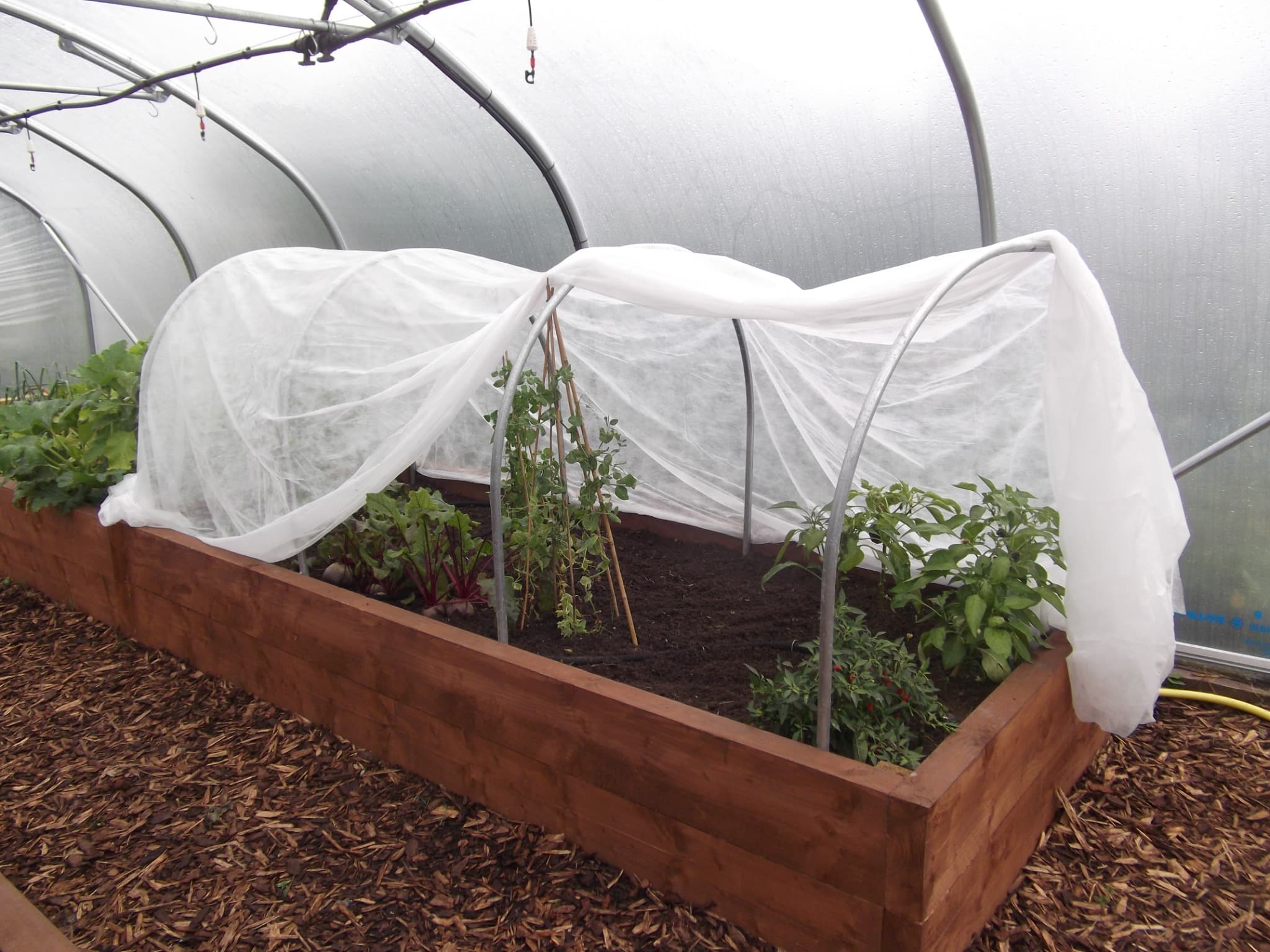
Cover early sowings with a low fleece cloche inside the tunnel. This extra layer creates a useful pocket of protection, but check beneath it regularly for condensation, slugs and signs of damping off.
Crops to start indoors with heat
Long-season crops can be started in January, but only if you can give seedlings warmth and plenty of light after they germinate.
- Chillies, peppers and aubergines: use a heated propagator and move seedlings to a bright, warm, frost-free place as soon as they emerge. If that setup is not available, wait until February or March; later, healthier plants often overtake weak January seedlings.
- Onions from seed: sow in modules or trays with gentle heat, then grow on somewhere bright and frost-free.
- Early lettuce, spinach, salad onions and summer brassicas: start a small batch indoors for planting under cover later.
Avoid sowing tomatoes, cucumbers, courgettes and squash this early for an unheated polytunnel. They grow quickly and are usually better started later, when stronger light and warmer conditions make sturdy plants easier to raise.
What to plant in January
Garlic and elephant garlic can be planted in a polytunnel bed during a mild spell. Choose firm, healthy cloves and set them into free-draining soil. Do not force the job if the ground is frozen or sticky with water.
January is also a useful time to chit first-early seed potatoes in a cool, bright, frost-free place. You are preparing them now, not rushing them into cold tunnel soil.
What to harvest in January
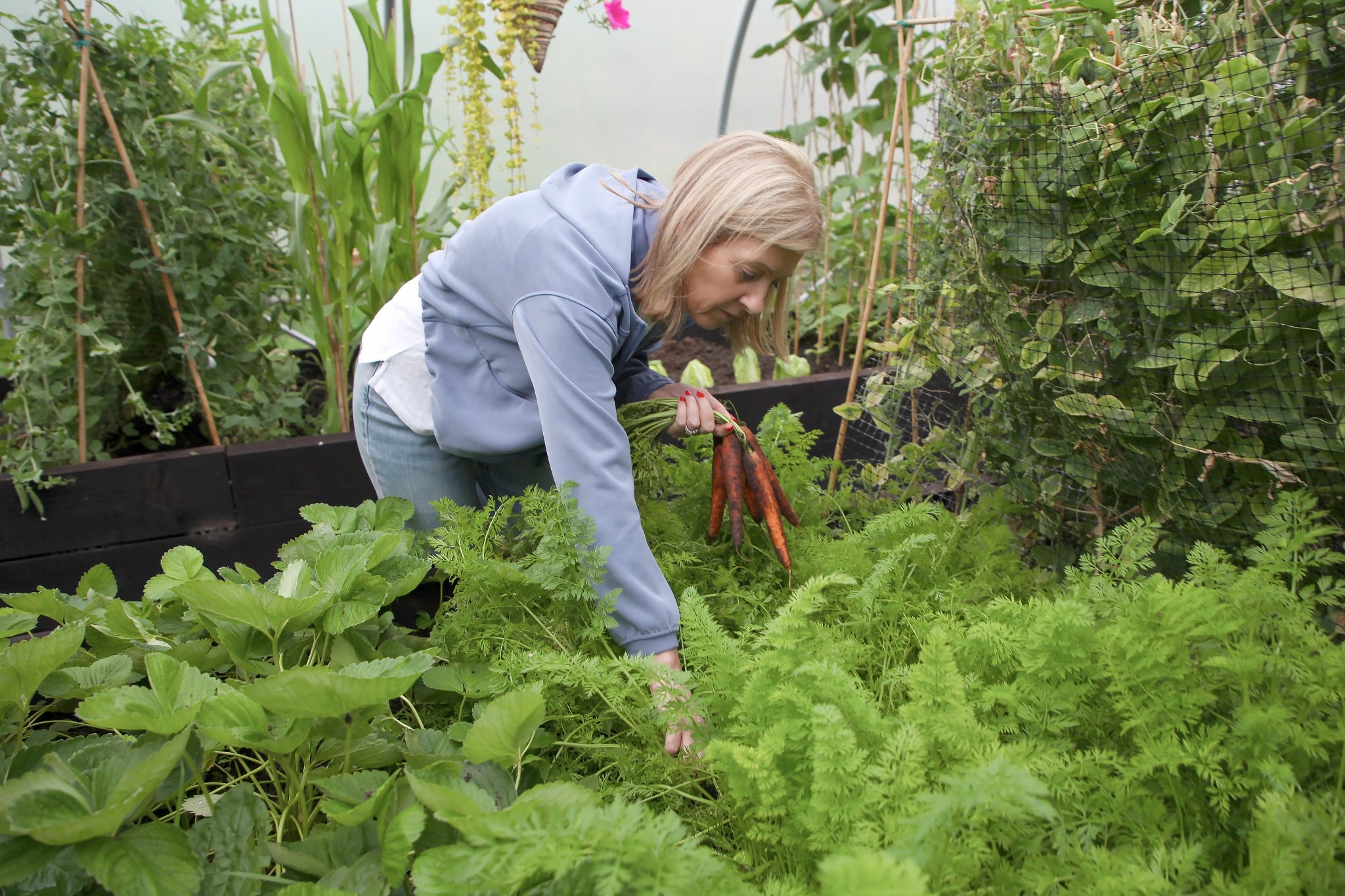
Growth is slow at this time of year, so harvest little and often. Take the outer leaves and leave the heart of leafy plants intact so they can respond when daylight increases.
Depending on what was planted in late summer and autumn, a January polytunnel may provide:
- winter lettuce and mixed salad leaves
- spinach, chard, kale, mizuna and rocket
- coriander and parsley
- radish, spring onions and turnips
- carrots, beetroot, celeriac and kohlrabi
- cabbage, cauliflower and pak choi
Pick leaves on a dry morning once they have thawed. Avoid handling frozen foliage, which is easily damaged. Remove yellowing or diseased leaves promptly to improve airflow and reduce hiding places for pests.
Essential polytunnel jobs for January
1. Ventilate on bright days
Winter ventilation matters. Open a door or vent for a short time on mild, still days to release humid air, then close the tunnel well before temperatures fall. Good airflow helps limit condensation and fungal disease.
2. Add a second layer of frost protection
3. Water sparingly and in the morning
Beds and pots dry much more slowly in January. Check the compost or soil first and water only where needed, aiming at the roots rather than the leaves. Morning watering allows surfaces to dry before the coldest part of the night.
4. Prepare for wind, rain and snow
Check that doors close securely, fix loose fittings and patch small holes with proper polytunnel repair tape on a clean, dry surface. After heavy snow, remove the load carefully with a soft brush from outside rather than allowing it to build up on the cover. Do not work beneath a structure that appears strained or damaged.
5. Keep pests in check
Look under pots, boards and fleece for slugs and snails. Broad beans and peas are particularly tempting to mice, so use secure covers or start them in protected modules. Clear dead leaves and empty pots that give pests somewhere to hide.
6. Improve empty beds
Remove spent plants and add a surface layer of well-rotted compost to vacant beds. Avoid walking on or cultivating saturated soil. Make a simple crop plan now so hungry summer crops are not planted repeatedly in the same spot.
Should you heat a polytunnel in January?
Most hardy winter crops do not need the whole polytunnel to be heated. It is usually more efficient to protect a small area with fleece, a propagator or a partitioned growing space.
If heat is essential, use equipment designed for the size and conditions of your tunnel, follow the manufacturer’s instructions and provide safe ventilation. Combustion heaters can add moisture to the air, which may increase condensation. Refill paraffin equipment outside the growing area so fuel cannot spill onto the soil.