


So, you have decided to get a polytunnel. The next important question is where precisely should you place it? This guide should help you work out the best position for a polytunnel on your property.
Choosing Where to Place a Polytunnel
Selecting the right location for your polytunnel involves the same considerations as determining the placement of other growing spaces and elements within a permaculture garden system. To begin with, we analyse the site, looking at sectors and flows, then we undertake systems analysis to determine the best option.
Key Factors to Consider:
Although the ideal site on paper may not always translate perfectly to the real world, keeping the following factors in mind can help you steer clear of common mistakes and identify the best possible site, taking into account both the opportunities and limitations of your specific environment:
Sunlight
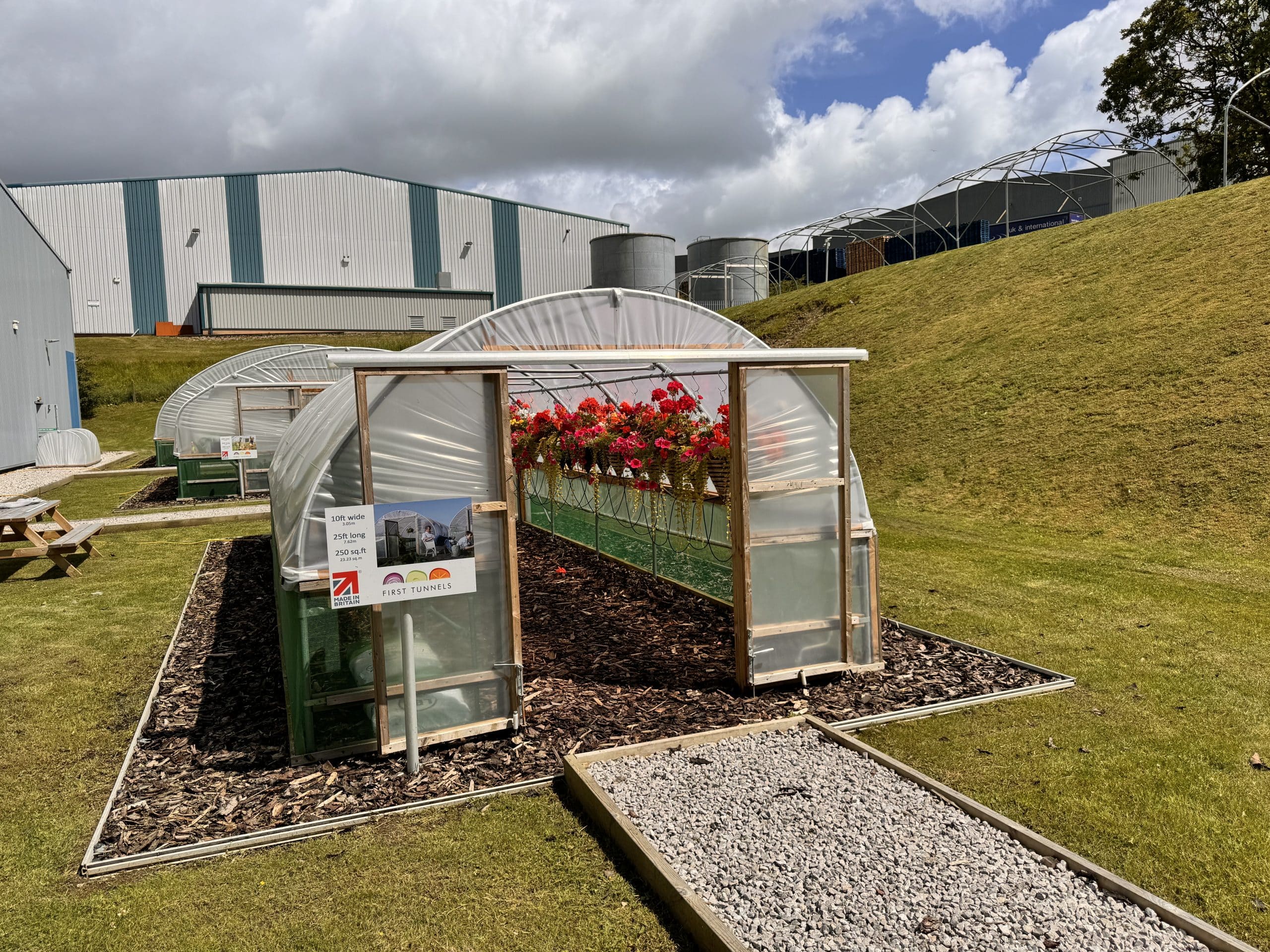
When questioning where to position a polytunnel, you should start by focusing on sunlight.
Unlike many other gardening factors, the sun’s behaviour is entirely predictable. It follows a consistent pattern, rising and setting at specific points in the sky depending on the time of year and your location.
The angle at which sunlight reaches your potential polytunnel site will also change in a reliable way throughout the year. By observing these natural cycles, you can determine the sun’s position at any time of day or year for your specific location.
However, since it’s not always practical to wait and observe for an entire year before placing a polytunnel, online tools like suncalc can be incredibly helpful. By entering your location, date, and time, you can discover where the sunlight will be coming from and its exact direction.
Understanding the sun’s movement and its impact on heat and light at your intended polytunnel site is crucial for determining if it’s a suitable location. Consider not only the direction of sunlight throughout the year but also how high the sun will be in the sky at different times of day.
For a polytunnel used for growing, it’s best to choose a site that receives as much sunlight as possible.
If you plan to use the polytunnel for other purposes, such as storage or housing livestock, a location that offers shade during the hottest part of the day might be more appropriate.
When growing food, avoid locations that remain in heavy shade for most of the day, as these areas can be significantly cooler, which is especially important during winter if you’re cultivating tender plants.
Wind/ Shelter
Another crucial energy flow to consider with where to position a polytunnel on your site is the wind. While wind can be a beneficial resource, excessive wind can pose significant challenges when selecting a location for your polytunnel.
Strong winds can reduce the lifespan of a polytunnel or even cause serious damage if it’s not placed correctly. Therefore, it’s generally advisable to choose a well-sheltered spot for your polytunnel.
To assess how windy a location might be, it’s important to understand the prevailing wind direction in your area. In the UK, prevailing winds typically come from the southwest, but this can vary based on your specific location. Factors such as proximity to the coast and local landscape features can channel the wind in different directions.
For instance, in rural Fife, Scotland, where I live, we usually experience winds from the southwest, but we also frequently get gusts from the southeast as the wind is funnelled up the hill from the Firth of Forth.
If a naturally sheltered site isn’t available, you can still protect your polytunnel by creating windbreaks or shelter belts to reduce the impact of strong winds. Even in extremely windy areas like Orkney, polytunnels can be viable if wind protection measures are implemented.
By understanding the wind patterns at your site and the potential challenges they pose, you can better determine if additional protective measures are necessary.
Orientation
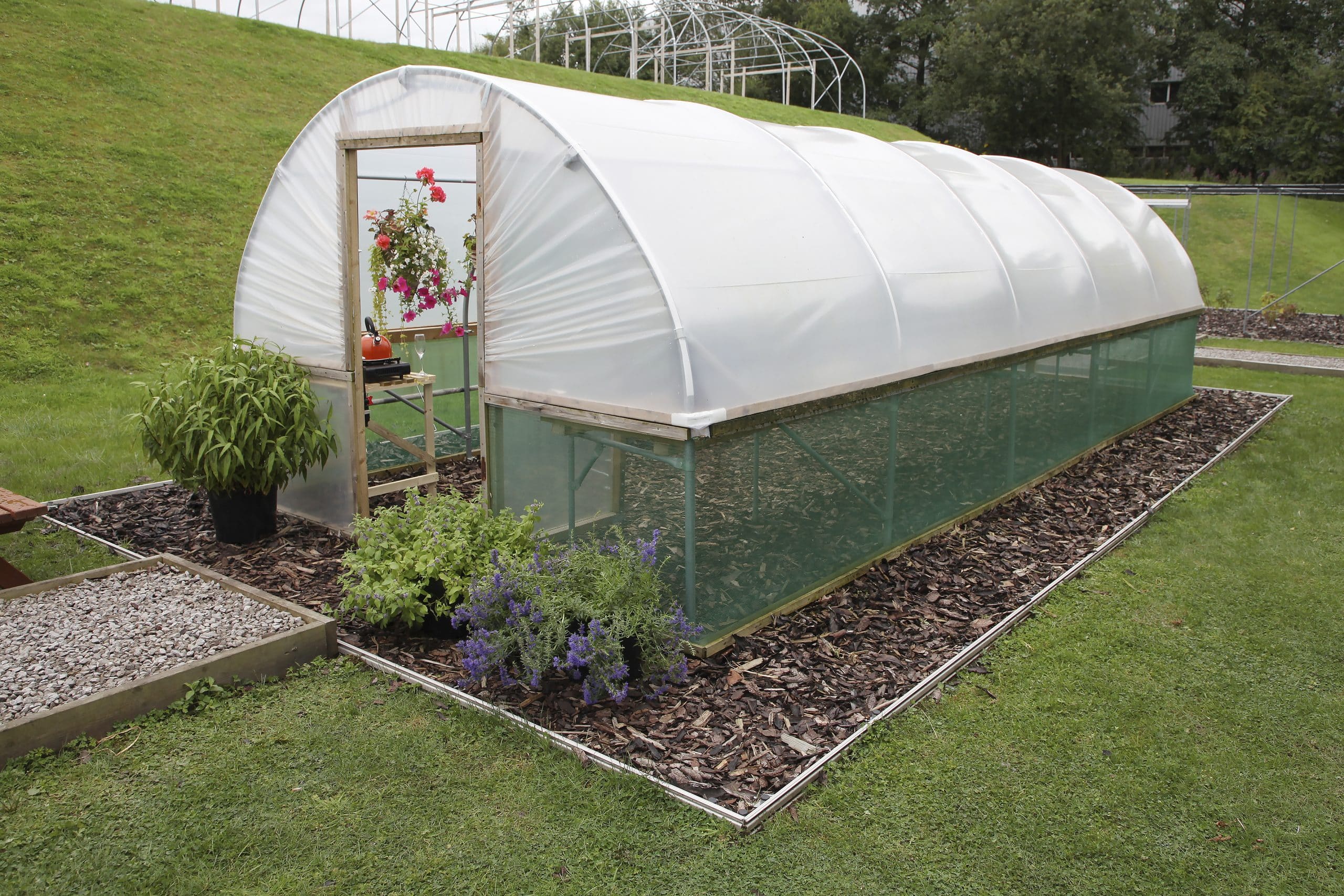
A third factor to consider on where to position a polytunnel is orientation.
Once you’ve established the sun’s path throughout the day and year, and thought about wind, you can also decide on the optimal orientation for your polytunnel.
While other factors might influence your decision, such as the need to place the polytunnel along a site boundary, the ideal orientation is typically either on an east-west or north-south axis.
If the long side faces south, one side will receive more shade than the other. If the long sides face east and west, both sides will receive similar amounts of sunlight, though the northern end may be slightly cooler and less sunny.
Both orientations can work well, depending on how you plan to arrange the interior of the polytunnel and the types of plants you intend to grow. Regardless of your choice, it’s essential to consider sunlight when planning not only the position of the polytunnel but also your planting scheme each year.
You may also wish to orient the tunnel in a specific way to take advantage of through-breezes. Wind can be beneficial in certain circumstances to improve ventilation for polytunnel growers, as well as potentially being a challenge to overcome.
Water – Water Flow and Irrigation Plans
Another critical factor to consider when deciding where to position a polytunnel is water flow. Water can travel across land in various ways, and understanding its movement on your site is essential for determining whether a specific location is suitable for a polytunnel.
Even if you don’t have a visible stream or watercourse on your property, water flow is still relevant. Water moves across all land, often unseen, following the natural laws of physics, and it frequently travels beneath the soil’s surface.
The most basic principle to remember is that water always flows downhill, which might seem obvious, but it’s easy to overlook when planning where to place a polytunnel or other growing areas.
Think about whether the site is prone to waterlogging or flooding. Placing a polytunnel in a natural dip or at the base of a steep slope can result in water pooling inside, leading to waterlogged conditions or even flooding, especially during extreme weather events.
With the increasing frequency of such events due to climate change, it’s important to carefully evaluate whether a site is on a floodplain or too close to a watercourse that might overflow.
You also need to consider how you will water/ irrigate the plants you grow in a polytunnel. Is the site you are considering to position your polytunnel close to that water source? How easy will it be to direct water flow within, and set up your irrigation systems?
Slope
It’s generally advisable, when learning where to position a polytunnel, is to avoid placing a polytunnel on a steep slope. Water on such slopes can destabilize the soil, making the structure less secure and potentially leading to erosion and nutrient loss over time.
As water moves downhill, it often carries nutrients with it, which can reduce soil fertility.
Additionally, a sloped site can make it more challenging to water plants effectively, as water may not be retained long enough for roots to absorb it properly.
Typically, it is best to try to position a polytunnel on a site that is as level as possible.
Existing Ground
A polytunnel might be placed on bare soil, formerly grassy areas, or even on concrete or other hardstanding in some cases. But it is important to think about the current groundcover, along with how you plan to use the polytunnel, when deciding where to place it.
Remember that on areas with hardstanding, water run off may potentially become an issue on the impermeable surface. While not impossible to overcome, this and other issues relating to the existing ground must also be considered.
Surrounding Vegetation
When choosing where to put a polytunnel, the surrounding vegetation must also be considered. Aim to avoid placing a polytunnel too close to trees or shrubs that may grow to penetrate or cause damage to the polytunnel cover, and aim not to place a polytunnel below tree limbs that may fall and cause damage.
Remember, however, that surrounding vegetation can also be crucial in improving conditions in a particular site and making it more suitable as a polytunnel site. This is true, for example, where trees or hedgerows provide a shelter belt or windbreak without casting excessive shade over the potential site.
Accessibility and Ease of Movement Between Garden Elements
When choosing a location for your polytunnel, it’s important to consider not just natural conditions but also your own convenience. Too often, the gardener’s role is overlooked, even though regular maintenance and use are essential for success. This is where the concept of zoning in permaculture becomes useful.
Zoning focuses on practicality, suggesting that elements you visit most often should be closest to your home, known as zone zero. For a domestic polytunnel used for growing vegetables or fruits, zone one is ideal since you’ll likely visit it daily. Zone one might also include kitchen gardens, herb gardens, or compost systems.
However, if your polytunnel houses perennial plants or poultry, which require less frequent attention, it may belong in zone two. Larger, commercial operations might even place a polytunnel in zone three, further from the home. By determining the appropriate zone for your polytunnel, you can ensure it’s conveniently located, saving you time and effort.
Beyond zoning, you can enhance the convenience of using a polytunnel by performing a systems analysis when deciding where to place it and other elements on your site.
Systems analysis involves examining all the components in a system—their inputs, outputs, and characteristics—before determining their optimal placement to reduce the time and effort required to maintain the system.
Taking the time to think through these aspects before setting up your polytunnel can save you significant time later.
For a typical food-growing polytunnel, consider the following:
- Inputs: sunlight, water, human labor, compost, manure, organic matter, pollinators, seeds, and plants.
- Outputs: edible harvests, animal feed, biomass, and compost materials.
- Characteristics: warmth, shelter, and protection.
Identifying other interacting elements, such as water sources, composting areas, and wildlife habitats, is crucial. Position elements you frequently access close to each other, like the water source and polytunnel.
Consider too how the polytunnel’s warmth and shelter could benefit adjacent areas, creating a layout that maximizes beneficial interactions and minimizes maintenance effort. By analysing each element, you can design an efficient and functional site layout, including the optimal placement for your polytunnel.
Is Planning Permission Required?
In the UK, domestic polytunnels typically don’t require planning permission, but certain conditions must be met:
- The polytunnel is for domestic use only.
- It should not exceed 3 meters in height.
- It must be positioned farther from the road than the nearest part of your house.
- The structure should cover less than 50% of your garden in England and Wales, or 30% in Scotland.
- If your property is listed or in a conservation area, planning permission may be necessary.
For commercial polytunnels, planning permission is often required. It’s essential to check with your local authority for specific regulations. Additionally, consider your neighbours’ reactions and how the polytunnel’s placement might affect them, as maintaining good relations can help prevent future conflicts.
How to Position your Polytunnel
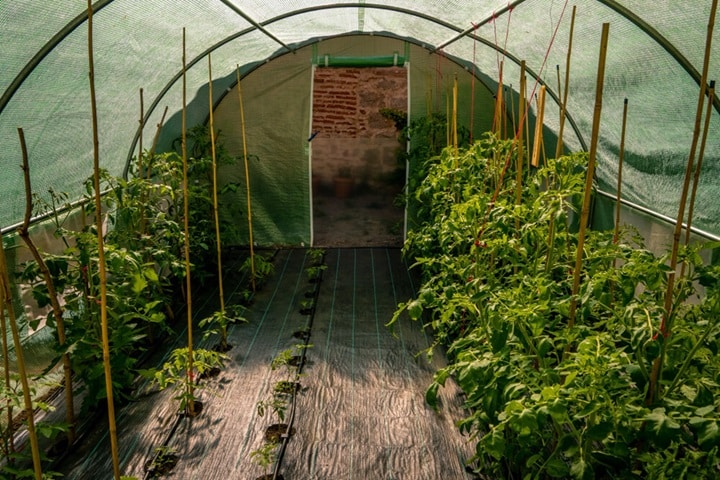
Once you have decided on a position for your polytunnel you need to:
- Clear the area and prepare the site.
- Check you have all the parts required for the build.
- Construct the metal framework for the polytunnel.
- Add the doors, and cover the framework with the polytunnel cover you have chosen.
- Raise the framework to tauten the cover.
Check out our other guides on our blog for more information on actually erecting your polytunnel and putting it into place.
Is your garden looking a little overgrown? Here’s how to tackle an overgrown garden.
FAQs
Do polytunnels need full sun?
For food-producing and other plant-growing polytunnels, a sunny site is typically required. However in hot locations, a little shade in summer during the hottest part of the day may be beneficial, and shade is beneficial for some other polytunnel applications – for livestock polytunnels, for example.
What is the best way to layout a polytunnel?
Some information to help you layout your polytunnel to make the most of the available space can be found here:
Polytunnel layout ideas
Polytunnel pathways
Sources
Stihl. (2023) Tackling an overgrown garden. [online] Available at: https://www.stihl.co.uk/en/garden-ideas-and-advice/garden-maintenance/garden-planning/overgrown-garden [accessed 21/08/24]