

Squash are of course iconic crops of the season. But if you have grown these fruits in your garden then you may well be wondering when and how to harvest your crop. It is important to understand how to do so in order to prevent any of your hard work from going to waste. Don’t forget – you can get kids to like squash as well since they are related to pumpkins – so if you work in education and want to add some spooky activities for the children, be sure to add polytunnels for schools.
Calendar for Growing Squash

In order to be able to harvest squash, of course, you need to start thinking about growing these crops much, much earlier in the year. Don’t forget to introduce companion plants for squash and pumpkin crops too.
The time to harvest of these crops varies with specific varieties but squash will usually be sown in the spring – typically in April or May in the UK, and almost invariably between March and June.
Precise times for sowing squash seeds indoors will depend on where you live and the conditions to be found there. It will also depend on whether you are planning to grow the cucurbits outdoors or in your polytunnel. But the average time to sow squash indoors in the UK is the third week of April.
Squash is then planted out into their final growing positions around the first week of June – again, this is the UK average.
Of course, to obtain a successful harvest from squash, you also need to understand timings for basic care throughout the polytunnel growing season.
With these crops, that largely means making sure that you water well and consistently, mulch around the plants, and feed monthly with an organic liquid plant feed when growing in containers.
It is also useful to think about organic pest control, and companion planting that can help with this and aid your crops in other ways. If you’re wanting to protect your crops from larger pests such as birds, we suggest using fruit cages to cover your plants.
Squash Varieties to Grow
If you have sown and planted squash then you will know that there are many different varieties to choose from. Selecting the right varieties is key to obtaining a successful harvest later in the year.
Broadly speaking, squash are divided into two main categories – summer squash and winter squash.
Summer squash to grow include –
- Courgettes
- Patty pan squashes
- Tromboncino/ zuccheta
- Crookneck squashes
- Straightneck squashes
Winter squash include –
- Acorn squashes
- Butternut squashes
- Red kuri squashes
- Spaghetti squashes
These are just some examples and there are many named cultivars to choose from.
When to Harvest Squash

Which variety or varieties you select will determine when you can expect to obtain a harvest from your crop.
Summer squash are harvested over the summer months – while the fruits are tender and still rather small and are typically cropping between June or July and September or October.
Winter squash are harvested in the autumn, typically in October and usually towards the tail end of the month. These winter squash may be used right away, but they are also sometimes cured and stored over the winter months in a suitable location for later use.
How to Tell When Squash is Ready to Harvest
Summer squash and courgettes are harvested when they are not fully ripened on the vine. In fact, they generally have their best flavour if they are picked while they are still rather small.
Generally speaking, when ready to harvest these fruits will have a rich colour and have grown to the size recommended for harvesting at for the specific cultivar in question.
With winter squash, it can be a little more challenging to determine precisely when your crop is ready to harvest. But we can use our senses to tell us, as there are a range of clues that show us that the fruits are ready to pick.
Winter squash are typically ready to harvest when –
- The fruits are the ripe colour for the variety in question, with a rich hue and glossy sheen.
- The stem just above the fruit is beginning to whither and turn hard.
- The skin of the fruit dents but does not puncture when we press with a nail.
- The fruit sounds a bit hollow when thumped or tapped with a hand.
Knowing the time to harvest for the specific squash you are growing can also guide you. Though this can vary with conditions in a given year, and a number of other factors, knowing this information can help you narrow down when the fruits are likely to be nearly ready for harvest.
How to Harvest Squash
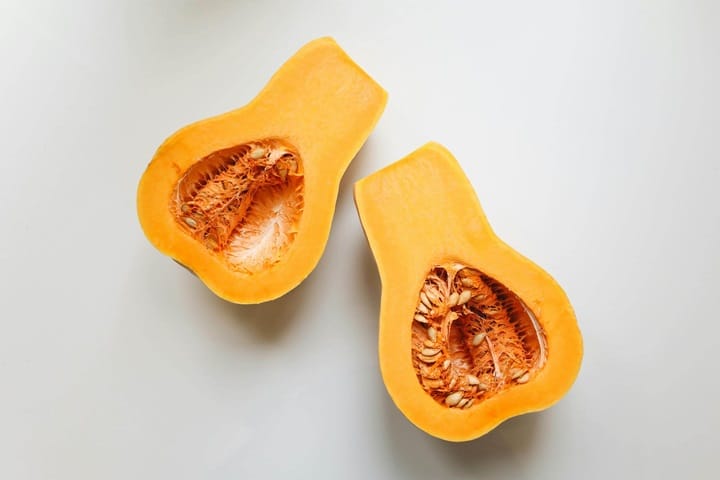
Harvesting summer squash can simply involve twisting or nipping the fruits off the plants. You might also use a clean, sharp gardening knife or a pair of secateurs to cut through the tender stem above the fruit.
When harvesting winter squash, it is likely that you will need a good gardening knife or a pair of garden shears to cut through the tough, hardened and drying stem above the fruit.
Whatever tool you use, make sure that it is clean and sharp. Any jagged tears or pathogen introduction can make the fruit rot or cause diseases and mean that the fruit will not be suitable for longer term storage.
When you are harvesting squash that you mean to store for the winter, it is important to cut through the stem a few centimetres away from the top of the fruit. Leaving a bit of stem sticking out from the squash that you wish to store can reduce the chances that the fruit will rot before you get the chance to use it.
As you harvest, it is a good idea to check over the squash thoroughly. Look for any blemishes, damage, or signs of disease. Any squash with imperfections of these kinds are best used up more quickly, while those that are unscathed will be suitable for storing longer term.
How to Prepare Squash for Storage
Summer squash are not suitable for longer term storage, unless you preserve them through drying, or canning. But many winter squash are and will keep for several months if you prepare them correctly and store them in the right conditions.
In order to prepare these fruits for winter storage, you first need to cure them. Curing squash simply means placing them in a warm, dry and bright location for a time to allow their skins to harden and dry out, and excess water to leave their flesh too.
This curing process increases the time for which your squash can be stored, and it also concentrates the natural sugars in the fruit, which can improve their flavour.
In the UK, we cannot leave our crop outside to cure as they do in warmer and drier locations. A covered porch, perhaps can work and you can use a domestic polytunnel, which I find works well. I use a hanging shelf I constructed within my polytunnel for this purpose (and for curing onions and garlic too). You could also use a mini polytunnel kit for storing smaller varieties of fruits and vegetables.
How to Store Squash after Harvesting
It is important to understand that even once cured, some varieties of winter squash will last much longer in storage than others. Many can however be stored for up to 3 months or so in suitable conditions, and some can store even longer than that.
The key to successfully storing winter squash longer term lies in providing the right conditions when it comes to temperature and humidity.
When it comes to temperatures, it is best to store winter squash at around 10-12 degrees C.. Temperatures should ideally not rise above around 15 degrees C. if you want to keep the fruits for as long as possible.
If you are lucky enough to have a cool pantry then this will of course be the ideal place to store squash for the winter. If you have a cellar space then this could work well too. Of course, you might not have one of the these spaces in your home, so a spare (ideally unheated) room within your home will be the next best thing.
Of course, if you struggle to find a suitable spot to store your fresh produce, then you might also consider cooking and freezing your squash, or researching canning recipes and pressure canning your squash in various forms.
Additionally, with the weather always being uncertain in the UK, sometimes commerical polytunnels are the way to go and grow squash and pumpkins, especially when it comes to storing pumpkins and squash too.
Understanding when is harvest season, as well as how to harvest and store your squash correctly will help you make sure that none of the hard work you put in earlier in the season to grow these crops will go to waste.
If you want to learn more about these crops, try learning about hand pollinating pumpkins in a polytunnel.
FAQs
How do you know when a squash is ready to be picked?
A squash is ready to be picked when its skin turns a deep, solid color and is hard enough that you cannot dent it with your fingernail. Additionally, the stem should start to dry out and turn brown.
What do squash plants look like when ready to harvest?
When ready to harvest, squash plants will have mature fruits with a vibrant, uniform color, and the vines may start to diminish in vigor. The leaves might also begin to yellow and wither.
How big should squash be before picking?
The size of squash at picking depends on the variety. Generally, summer squash should be harvested when they are about 6 to 8 inches long, while winter squash should be left to grow larger until the outer skin hardens. Checking the variety-specific recommendations is best for optimal size and flavor.
Sources
BBC Gardener’s World Magazine. (2021) Types of Squash. Gardener’s World. [online] Available at: https://www.gardenersworld.com/how-to/grow-plants/types-of-squash/ [accessed 29/09/23]