

Choosing the best companion plants for garlic can be important to achieve the best results in your garden.
When growing garlic, as when growing anything else in a polytunnel or elsewhere in your garden, it is important to think about the ways in which you combine plants, and not just the plants themselves. In this article, you will learn about the best companion plants for garlic
Table of Contents
What is Companion Planting?
Companion planting is exactly what it sounds like. It is all about working out which plants will be good companions for one another. It involves thinking about the benefits which plants can confer on each other, and the various ways in which they, and the life around them, interact.
In an organic garden, it is very important to remember that everything is connected. In order to work with nature rather than fighting it, we need to look at plants and our gardens holistically. We cannot simply consider a specific plant in isolation or we risk missing the bigger picture.
Companion planting is often a case of common sense. The more we learn about the various needs of the different crops and other plants we grow, the easier it is to determine which other plants might be good neighbours for them, and which will not.
But while we do know that some plants are or are not compatible with others, for fairly obvious reasons, it is important to remember that some plants can make good companions and we do not know exactly why.
Companion planting sometimes seems to work for reasons we do not yet fully understand. And what seems to work well in one location may not work as well in a different garden. Even your neighbour might experience different results to you.
With companion planting them, experimentation is key. Over time, you will gain experience as a gardener and get to know your own garden better. You will find some companion planting combinations which work particularly successfully for you.
What are the Benefits of Companion Planting?
In order to understand companion planting, and why it is such a good idea, we need to take a look at its goals.
Companion planting can be useful to:
- Make The Most Of Your Space
- Improve Environmental Conditions For Neighbouring Plants
- Maintain Fertility in Your Growing Areas
- Repel, Confuse or Distract Pest Species, or Help Combat or Stave Off Disease
- Attract Beneficial Wildlife
When thinking about which plants to grow together in your garden, it is important to consider these goals and bear them in mind when choosing the right plants for the right places.
Why Garlic is a Good Companion Plant

Garlic is often particularly useful as a companion plant for other crops because it can be grown in space along the sides of a bed, perhaps, helping you to make the most of edge and smaller spaces.
It can also potentially be intercropped with other edible plants. Or used in polycultures that are either mostly annual or largely perennial alongside a number of other food producing plants in a garden.
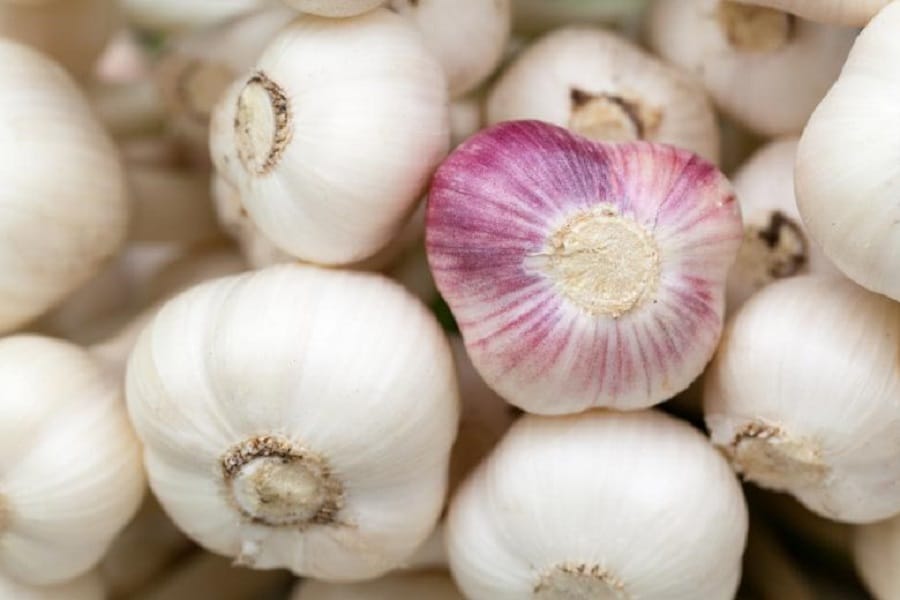
It is also particularly useful in the pest control category since its strong smell can help to repel, confuse or distract a range of pest species that would otherwise trouble crops growing close by.
Garlic can also have fungicidal action, helping prevent fungal diseases in nearby plants, or reducing the damage fungal pathogens can do.
So when we think about companion planting we need to consider the best companion plants for garlic that help and are helped by this plant.
The Best Companion Plants for Garlic
When thinking about the best companion plants for garlic, there are two different categories to consider. First of all, we can think about which plants will benefit from having garlic close by (a much larger category). Then we can also consider plants which will aid the garlic as it grows.
Of course, as we select good companions in any garden, we also need to make sure that we do not introduce too much competition, and that we do not plant combinations that result in negative consequences on the flavour or the yield of the crops that we grow.
Fruits and Vegetables to Plant With Garlic
Fruits and vegetables to plant with garlic typically fall into the first category mentioned above. They benefit more from having garlic close to them than garlic will be their presence.
Some fruits and vegetables that especially benefit from having garlic planted close by are:
- Most fruit trees. (But make sure garlic is planted on a sunny fringe of a fruit tree guild or forest garden as it needs sunny conditions to grow well. While garlic is typically treated as an annual crop, there are garlic varieties that are perennial which are especially well-suited to perennial planting schemes. Consider elephant garlic, for example.)
- Brassica crops – including cabbage, kale, kohlrabi, broccoli, cauliflower etc… Garlic can help to repel pests such as cabbage loopers and many others pests that trouble this plant family.
- Nightshade family crops – potatoes, tomatoes, peppers, aubergines etc… These will benefit from the pest-repelling properties of the garlic as well as from its capacity to keep fungal pathogens (including those that cause blight) at bay.
- Spinach (and other leafy greens). Garlic can, again, repel a range of the pests that might pose a problem for these leafy green crops.
- Carrots. Garlic or other alliums are great intercropped with carrots as they repel or confuse carrot flies and prevent losses of a carrot crop.
- Cucumbers – studies have shown that intercropping with garlic can reduce issues with damping off and other fungal issues in cucumbers early growth.
Herbs to Plant With Garlic
A number of herbs are particular good companions for garlic. There are some that benefit from having garlic close by, but also some can can help your garlic to grow well.
Some herbs said to be particularly beneficial for garlic when planted close by are:
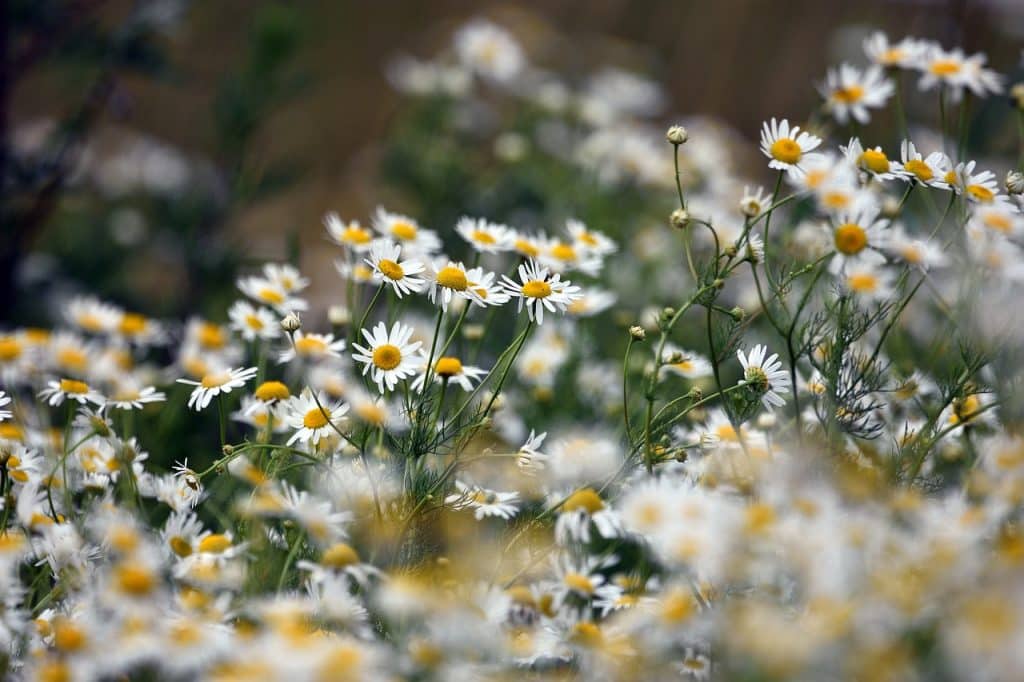
- Chamomile – said to improve garlic’s flavour when grown close by.
- Rue – which can help to repel pests that can be a problem for garlic.
- Summer savory – which may help garlic to grow strongly.
- Tarragon – which some argue speeds garlic’s growth.
- And yarrow – which is a useful companion to garlic and many aromatic herbs as it is said to increase essential oil production.
Flowers to Plant with Garlic
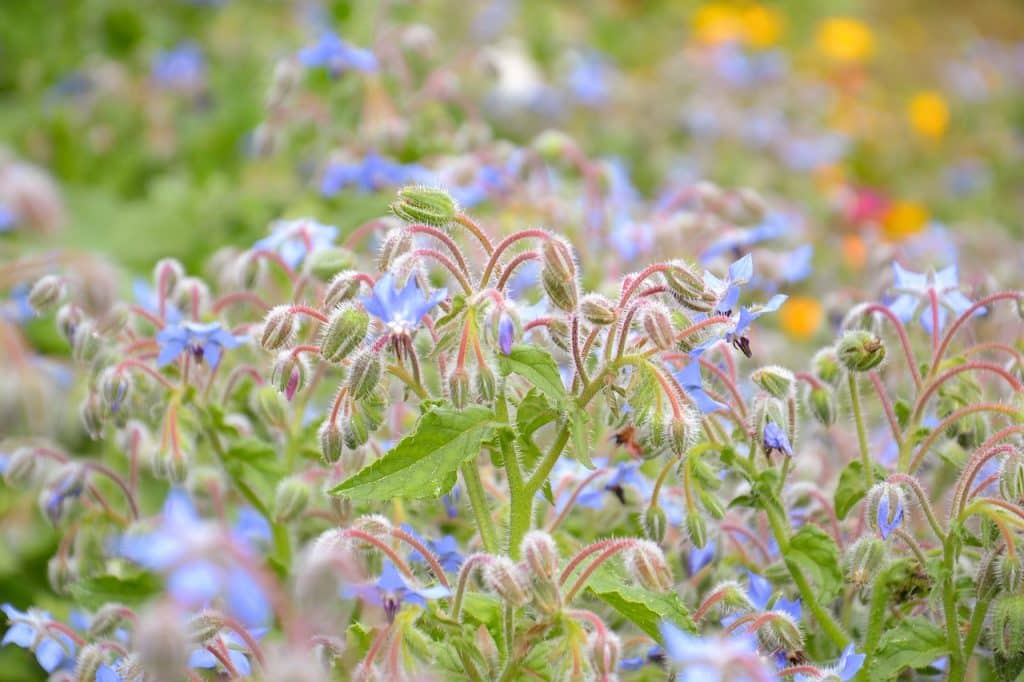
Some flowers can also be beneficial for garlic, while others benefit from having garlic planted nearby. For example:
- French Marigolds (Tagetes patula) are beneficial for garlic as they may help with harmful nematodes in the soil.
- Nasturtiums are a trap crop for certain pests and may help to confuse, repel or distract some that would otherwise be a problem for garlic in the garden.
- Geraniums are often used in companion planting and are believed to improve the health of many other plants placed close by, including garlic.
- Borage is another ‘nurse’ plant that is said to improve the health of many plants when placed close by.
- Roses, like many other plants, benefit from the pest repelling properties of garlic planted around the base.
Plants That You Shouldn’t Plant With Garlic
As you can tell from the above, garlic is a great companion plant for many crops and other plants in a garden. But there are certain plants that will not fare quite so well with garlic around, and which you should therefore avoid placing together with this crop.
For example, you should avoid placing garlic too close to:
- Beans, peas and other legumes. (Since garlic can suppress their growth).
- Asparagus (again, its growth can be stunted by garlic growing nearby).
- Some herbs like sage and parsley (as they too can have their growth affected by garlic growing close by).
Remember, however, that much of what we think we know about companion planting is conjecture and only some has been scientifically verified. But what we do know is that it is important to carefully consider how we combine plants in order to increase our yields and, working with nature, make the most of our gardens.
References:
Thompson & Morgan. (n.d.). French Marigold Seeds. [Accessed 02/06/23] Retrieved from https://search.thompson-morgan.com/seeds/French-Marigold