

Many of us have been taking steps to cut down our carbon footprint, rein in the amount of waste we produce and contribute more to the wellbeing and health of the planet. Going organic is one lifestyle change you can make, which can benefit many aspects of your day-to-day life, your community, and the planet as a whole. The thought of switching from often cheaper, supermarket produced goods to organic growing methods, foods and products is quite overwhelming and is something many people feel they can’t achieve – but going organic is far more achievable than you’d think at first.
Organic is more popular than ever before
In the UK, organic food and produce has soared in popularity with total organic sales in 2020 totalling an estimated £2.79 billion. This is a significant increase of +12.6% compared to the previous year[1]. Some reasons for this increase include:
- A growing awareness of environmental problems.
- A growing awareness of our health and wellbeing, and how food can keep us healthy.
- Inability to access usual supplies from supermarkets due to panic buying caused by the COVID-19 pandemic pushed many people to return to greengrocers, butchers and subscribe to veg box services which sell products that are generally organically sourced.
- The COVID-19 pandemic lockdowns forcing people to shop locally due to travel restrictions and limited online shopping delivery slots.
Although 2020 saw the biggest year-on-year increase in organic sales that we’ve experienced in 15 years, there has been a steady growth in organic popularity since around 2013.
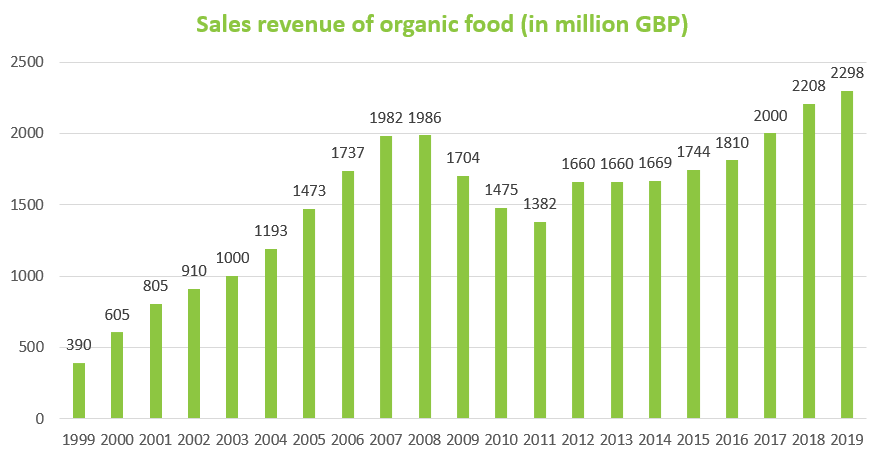
Data from Statista
The chart above shows us that sales revenue for organic produce was on the rise from 1999 to 2008 until the recession hit and people had to return to cheaper food & drink offerings to suit their restricted budgets.
So with the big organic growing switch becoming more popular, you might be curious about how and why you should join in. This guide covers everything you need to know to help you decide whether switching to organic is really worth it.
Guide contents
Read ahead or skip to what you want to know using the links below.
Organic vs. Non-organic
The basic difference between organic and non-organic food is that non-organic, “standard” food relies on the use of chemicals (think pesticides and additives in food given to livestock), man-made, synthetic fertilisers and GMOs (genetically modified organisms). Organic growing food legislation prohibits all of this and more, whilst promoting sustainable methods of food production.
As well as focusing on limiting negative environmental impact, organic growing and food production also looks at promoting ethical social and economic practices[2].
To break the differences down further, this table shows an example of what conventional food growing processes looks like against organic growing processes:
| Conventionally produced food | Organic food |
| Livestock such as cattle, sheep and pigs are fed with GMO feed and given growth hormones | Livestock are not given GMO feed or any kind of hormone |
| Growth is enhanced using chemical fertilisers which can leech into soil, harm wildlife and damage the ecosystem | Crops are grown with natural fertilisers and methods like companion planting and mulching which don’t harm the environment around them |
| Pests are controlled with chemical pesticides and other harmful methods | Pests are controlled naturally using predator animals (ladybirds released to control aphids, for example) and natural pesticides like nematodes |
Is organic food better?
Although organic food has an array of benefits, there is an issue of the cost usually associated with buying organic food which means it isn’t accessible for those who have a tighter budget. In supermarkets, the average price of a bag of carrots is 46p for non-organic, vs. a whopping £1.40 in comparison for organic carrots. On average the ‘organic premium’ is 89% in UK supermarkets – but why?
- Organic food is pricier to produce[3]
- The demand for organic food is massive, and is rising faster than the supply
- Retailers put a higher mark up on organic food because it is seen as a luxury
Although this does put the brakes on organic food becoming popular faster, sourcing organic food from farmers markets or smaller, local shops can significantly reduce the price you pay. Even better, if you have the space, it is always wise to grow your own fruit and veg if you can. A polytunnel or a fruit cage can help to extend your growing season and keep crops protected from the elements and pests without using non-organic methods.
Benefits of organic food
Organic food is best for everyone in most ways, including:
- Less impact on the environment
- Organic meat and vegetables (usually) taste better
But what are all of the benefits of organic food?
Fresher
Organic food is picked when it’s ready and is usually put out for sale very soon after instead of being stored, meaning it is generally fresher and full of flavour.
You know where it’s come from
With organic growing in your own garden or polytunnel, you’ll have a good idea of exactly where it has come from – a huge contrast to supermarket food which goes through dozens of processes and you never know where is has been on its journey to reach your dining table.
Energy efficient
Organic growing techniques are much more energy efficient than widespread commercial farming is for the reasons below.
- Transportation – when you buy produce from a supermarket, a lot of it has to travel a very long way to reach your trolley, which takes a vast amount of energy, fossil fuels and resources. Buying locally produced organic food cuts the, sometimes, 1000s of miles worth of travel right down.
- Imports – chemical fertilisers and feeds like maize, cereals and soya are imported from other countries. These imports use up a massive amount of fossil fuels, and that’s before the food has even reached the supermarket.
Better for the local economy
When you buy organic from a local shop or market (not a supermarket) you are directly contributing to the local economy. This will help to keep local businesses alive and thriving, which in turn will attract more footfall to your area to keep the cycle going. Buying local makes sure that your money ends up in local farmers pockets rather than in the bank accounts of big corporations.
What else can you switch?
As well as organic growing procedures, there are plenty of household items that you should consider switching out for sustainable, organic and eco-conscious brands. Here are some great places to start:
- Beauty products – makeup, skincare and even makeup brushes and wipes all have fantastic sustainable alternatives
- Hair care – when you come to the end of your shampoo and conditioner, try out hair cleansing bars. As well as being much better for your hair, this will reduce the amount of plastic waste you produce.
- Cleaning products – swapping out your detergents and cleaning solutions for products which use natural ingredients will help you to make a positive impact on the environment
- Clothing – ditch the fast-fashion websites and shop at charity shops, vintage stores, and choose clothes which will last longer and can be repaired.
References
Harvey, F. (2021, February). Steep rise in UK’s consumption of organic food. Retrieved from The Guardian: https://www.theguardian.com/environment/2021/feb/10/steep-rise-in-uks-consumption-of-organic-food
Lewin, J. (n.d.). What does organic mean? Retrieved from BBC Good Food: https://www.bbcgoodfood.com/howto/guide/organic
Pettinger, T. (2019, December). Why is organic food so expensive? Retrieved from https://www.economicshelp.org/blog/153999/agriculture/why-is-organic-food-so-expensive/
Sources
[1] https://www.theguardian.com/environment/2021/feb/10/steep-rise-in-uks-consumption-of-organic-food
[2] https://www.bbcgoodfood.com/howto/guide/organic
[3] https://www.economicshelp.org/blog/153999/agriculture/why-is-organic-food-so-expensive/