

If your plants look weak, yellow, droopy, or attract pests despite regular care, the most likely cause is too much water. I see this often when growers assume more water equals healthier growth. In reality, the most common signs of overwatering plants appear long before roots fully fail, and acting quickly can save most plants.
Overwatering happens when soil stays wet for too long, limiting oxygen around roots. This is often more harmful than underwatering because roots can recover from dryness, but rot spreads quickly in saturated soil. Damage can begin in days, especially in containers or poorly drained ground.
This is a mistake almost every gardener makes at some point. Whether you grow indoors, outdoors, or inside a polytunnel, learning to recognise early warning signs is one of the most valuable skills you can develop.
In this guide, I will show you the main signs of overwatering plants, how to prevent it, and how to help plants to recover.
Key Signs Your Plants Are Being Overwatered
- Soil stays wet for several days after watering
- Leaves droop even when soil is moist
- Yellowing often starts with new growth
- Pest activity increases in damp soil
- Growth slows or stops completely
How to Prevent Overwatering
Prevention is always easier than recovery. Over the years, I have found that observation matters more than strict watering schedules.
New gardeners often ask how much to water certain plants, and it is a completely understandable question. When you are starting out, you want clear rules to follow. But the truth is that it is not possible to give a precise answer because watering needs vary depending on a wide range of factors, many of which change week to week or even day to day.
Plant type is one of the biggest influences. A thirsty tomato plant growing quickly in summer will need far more water than a slow growing herb or a drought tolerant Mediterranean plant. Root depth also matters. Shallow rooted plants dry out faster than those with deep, established root systems that can access moisture further down in the soil.
Environmental conditions play a huge role as well. Temperature, wind, humidity, and sunlight all affect how quickly water leaves the soil. During hot, bright weather, plants use water faster through transpiration. In cooler or cloudy conditions, soil can stay damp much longer, increasing the risk of signs of overwatering plants if you follow the same watering routine.
Soil type is another major factor. Sandy soils drain quickly and need more frequent watering. Clay soils hold moisture for longer and can easily become waterlogged. Container growing adds another layer, as pot size, material, and drainage all influence how long water stays around roots.
I have found that the most reliable approach is to observe plants rather than follow fixed schedules. Check soil moisture, watch leaf posture, and learn how your growing space behaves. Over time, watering becomes intuitive rather than guesswork, and plants grow stronger because of it.
Practical Prevention Tips
- Check soil moisture before watering
- Always use pots with drainage holes
- Adjust watering depending on season and temperature
- Consider plant type and root structure
- Monitor indoor vs outdoor conditions
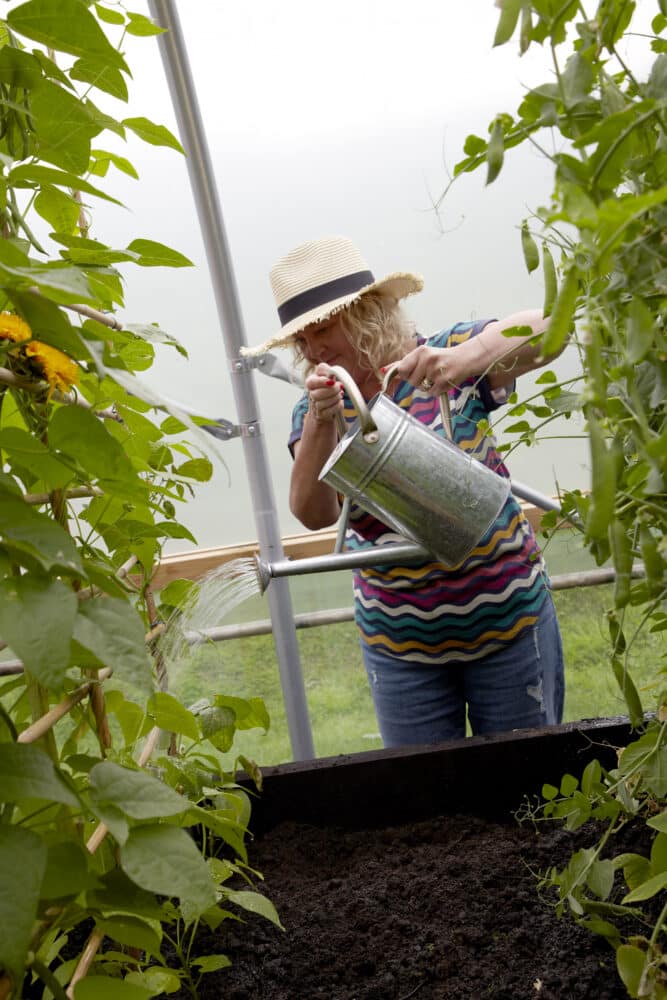
I also find that controlled the growing environment helps to maintain balanced moisture – especially when we experience weather like parts of the UK has over the past few months.
If you want better protection from heavy rain and better moisture control, explore small polytunnels. They allow you to control watering and reduce weather extremes that cause many signs of overwatering plants.
Signs of Overwatered Plants: What To Look For
Most signs of overwatering plants appear above ground before roots completely fail. Catching them early gives you the best chance of recovery.
1. The Pot Sucks in Moisture
Sometimes soil stays sponge like or pulls away from the pot sides.
What I look for:
- Pot feels heavy days after watering
- Soil looks compacted and dark
- Plastic pots often stay wetter longer
The weight of a container is one of the simplest ways to check moisture.
2. The Leaves Are Curling Over
Not all leaf curl means thirst.
Overwatering curl tends to:
- Feel soft rather than dry
- Happen alongside wet soil
- Affect lower leaves first
Excess water disrupts cell pressure and oxygen flow inside the plant.
3. Leaves Are Faded in Colour
Healthy leaves should look vibrant green.
Too much water can dilute nutrients and reduce uptake.
Common colour signs:
| Healthy Leaf | Overwatered Leaf |
|---|---|
| Deep green | Pale green |
| Firm texture | Soft texture |
| Even colour | Patchy fading |
4. Leaves Are Droopy
Droopy leaves with wet soil are one of the clearest signs of overwatering plants.
Roots need oxygen. When soil is saturated, roots suffocate and cannot transport water properly.
5. The Plant Is Spotted or Overgrown
Excess moisture often encourages fungal problems.
Watch for:
- Brown or black spots
- Leggy, weak growth
- Poor airflow around foliage
6. The Plant Starts Sagging
If stems feel soft near the soil line, act quickly. This can be an early sign of rot.
I always check stem firmness when I suspect overwatering.
7. Leaves Are Dropping
Sudden leaf drop is a stress response.
Indoor plants are especially sensitive to this when roots remain wet.
8. Yellowish New Growth
New leaves often show damage first.
When roots are stressed, they cannot supply nutrients to developing growth.
9. You Have a Lot of Pests
Wet soil creates ideal breeding conditions.
Common pests linked to overwatering include:
- Fungus gnats
- Aphids
- Root feeding larvae
10. White Salt Crystals on the Soil Line
Frequent watering can leave mineral deposits behind.
This often indicates soil is not drying properly between watering cycles.
11. Stunted Growth
Plants shift energy into survival mode when roots struggle.
Growth slows even if light and feeding are correct.
12. Edema
Edema looks like blisters or bumps on leaves.
It happens when plants absorb water faster than they can release it. This is more common in humid environments.
13. Green Soil
Algae forms when soil stays wet and receives light.
This is one of the clearest visual signs of overwatering plants.
If soil stays wet for more than 3 to 4 days, roots are likely suffocating.
14. Soil Smells Sour or Rotten
One of the less visible but very reliable signs of overwatering plants is a sour, musty, or rotten smell coming from the soil surface.
When soil stays saturated, oxygen disappears and harmful anaerobic bacteria begin to develop. This often happens before roots fully rot, so it can be an early warning sign if you catch it quickly.

How to Nurture Overwatered Plants Back To Health
If you catch problems early, recovery is very possible.
Step by Step Recovery
- Stop watering immediately
- Improve airflow around the plant
- Remove damaged leaves
- Check roots for rot
- Repot if soil smells sour or roots are black
- Allow soil to dry fully before watering again
I have rescued many plants simply by acting fast and improving drainage.
How to Water Your Plants in The Future
Watering schedules are useful, but observation is better.
Smarter Watering Methods
- Use the finger test to check soil moisture
- Use moisture meters for accuracy
- Research plant specific watering needs
- Adjust watering seasonally
If you want structured crop specific watering advice, the polytunnel crop growing guides provide tailored advice for different plants and growing conditions.
How Do You Fix an Overwatered Plant?
The fastest way to fix an overwatered plant is to remove excess moisture and improve root oxygen immediately.
Quick Fix Checklist
- Drain standing water
- Let soil dry partially
- Prune damaged leaves
- Repot if root rot is present
Fast action often prevents long term damage.
Can a Plant Come Back From Overwatering?
Yes, but it depends on root condition and how quickly you act.
Recovery Depends On
- How long roots stayed wet
- Whether rot has started
- Plant species resilience
Signs Recovery Is Working
- New healthy growth appears
- Soil dries at a normal rate
- Leaf colour improves
When It May Be Too Late
- Mushy black roots
- Rot smell from soil
- Stem collapse at base
Understanding the signs of overwatering plants can save time, money, and disappointment. Moisture balance is one of the most important factors in plant health, whether you grow indoors, outdoors, or in protected environments.
Investing in controlled growing conditions such as polytunnels allows you to manage rainfall, humidity, and watering much more precisely. Over time, this leads to stronger plants and more reliable harvests.
Good growing comes from observation, not guesswork. When you learn to read your plants, you water with confidence.
Sources
Royal Horticultural Society (2023) Watering plants. Website. Available at: https://www.rhs.org.uk/garden-jobs/watering [Accessed 16 February 2026]
University of Minnesota Extension (2022) Watering houseplants. Website. Available at: https://extension.umn.edu/houseplants/watering-houseplants [Accessed 16 February 2026]