

Self-seeding flowers and plants can be very useful for a sustainable and low-maintenance garden. The more plants you have that can self-seed, the more resilient your garden can be, the fewer new plants you will need to buy, and the less work you will need to do each year.
Of course, saving your own seeds can also be a very useful and sustainable strategy for gardeners. There are many seeds that you might collect from your own garden to sow elsewhere, or to store and sow the following year.
But in this guide, we are talking about taking a more passive approach, and allowing plants to flower, set seed, and disperse those seeds on their own, so that new plants pop up around the parent plant.
What self-seeds reliably in one area will not necessarily do so in another. But there are a great many plants that most gardeners in the UK will find to self-seed reliably where they are provided with an appropriate growing location with the right growing conditions to meet their needs. Polytunnel gardening is a great way to help this.
What are self-seeding plants?
Starting at the very beginning, if you are a new gardener you may not be familiar with the term self-seeding plants. So to begin with a definition, self-seeding plants are plants that can successfully sow their own seeds in the soil around them – creating new plants for free.
The seeds may drop close to the parent plant and new plants may grow up right there. In other cases, however, seeds may be dispersed by wind or even animals and pop up elsewhere in your garden with less predictability.
However the seeds disperse, the key idea is that the plants, when left to flower and set seed, will effectively send out those seeds, and new plants will grow from those seeds without your intervention.
If you grow self-seeding plants then your garden can fill with new plants without the need for you to sow more seeds each year.
While you are unlikely to be able to fill a whole garden from a few self-seeding plants, you are likely to be able to create a much lusher, fuller garden much more cheaply if you incorporate some in your planting plans.
Incorporate them:
- In beds and borders among perennials, shrubs and trees.
- Along the edges of pathways to self-seed in paths.
- In your lawn or an area of wildflower meadow.
- Even in your vegetable beds.
Do self-seeded flowers come back year after year?

Some self-seeding plants will be more reliable than others, and which will work well for you can largely be a case of trial and error. You may find that many new plants of a particular species pop up one year, and very few the next. A number of different factors, including the weather in a given year, can affect results.
Some self-seeders that can be fairly reliable in many UK gardens are listed below – but there are of course many, many more that might work just as well, or even better where you live.
When thinking about whether or not certain species will come back year after year, it is also important to understand the lifecycles of different plants.
Remember that some are annual, living, flowering, setting seed and dying all in a single year. Some are biennial, and so will grow vegetation one year, and flower and set seed the next, setting up a two-year cycle when it comes to self-seeding. Others are perennial, and will remain in your garden over multiple years, usually flowering and setting seed each year.
Some Self-Seeding Flowers and Plants
Here are some popular flowering plants that many UK gardeners find will reliably self-seed where they live. But remember, when thinking about which plants might self-seed successfully where you live, climate, microclimate and soil all need to be taken into account.
1. Achillea millefolium
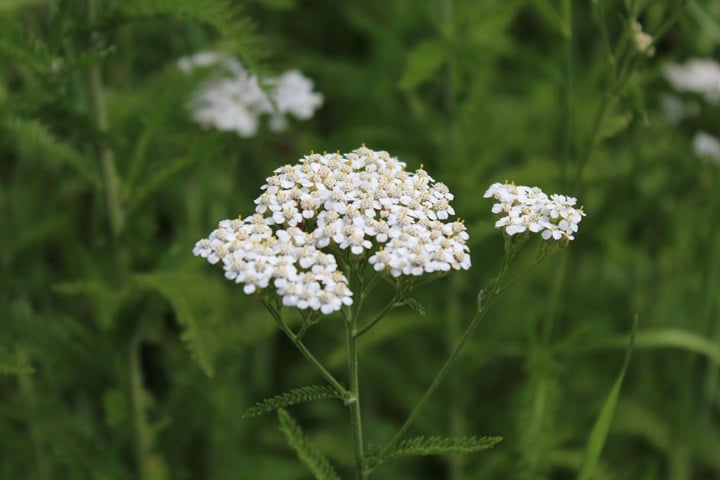
Yarrow is not only a self-seeder in the right setting, but also a very valuable addition to a garden. It is a medicinal herb, and wonderful wildlife-attractant as well as an attractive ornamental for mixed borders, prairie-style planting, or the sunny fringes of a fruit tree guild or forest garden.
2. Alchemilla mollis

An extremely easy to grow perennial, this cottage garden favourite spreads readily by forming clumps and by self-seeding. It can grow in full shade, partial shade or full sun, in most soil types as long as they are moist but well drained.
3. Angelica archangelica

This is another very useful perennial that can self-seed readily in moist but well drained or water retentive chalk, clay or loamy soils. In fertile soils that do not dry out too much, this should spread well throughout a more natural area of your garden.
4. Aquilegia vulgaris

This perennial perfect for shady spots can self-seed reliably in a fertile and free-draining soil. Interestingly, the hue of the flowers on the new plants can differ quite a lot from those of the parent plant because the plants interbreed freely.
5. Digitalis purpurea
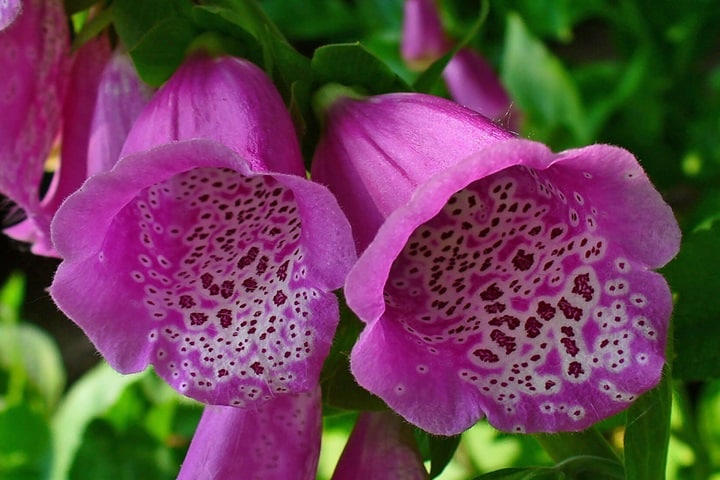
Foxgloves are biennials and are famed for being prolific self-seeders when the plants produce seeds in their second year. Remember that these are poisonous plants and care is required, but these are very valuable wildlife-friendly plants for a garden, as well as looking good and creating that cottage garden look.
6. Geranium pratense

Meadow cranesbill is almost a compulsory addition to any cottage garden, and one found in a great many such gardens across the UK.
7. Lamiums

Many species within the lamium genus are prolific self-seeders – some natives even doing so well that they are sometimes considered to be weeds, though others are commonly used as ornamental garden plants. Many are very useful shade-tolerant perennials, and some, such as Lamium purpureum, even have edible uses.
8. Mysotis sylvatica
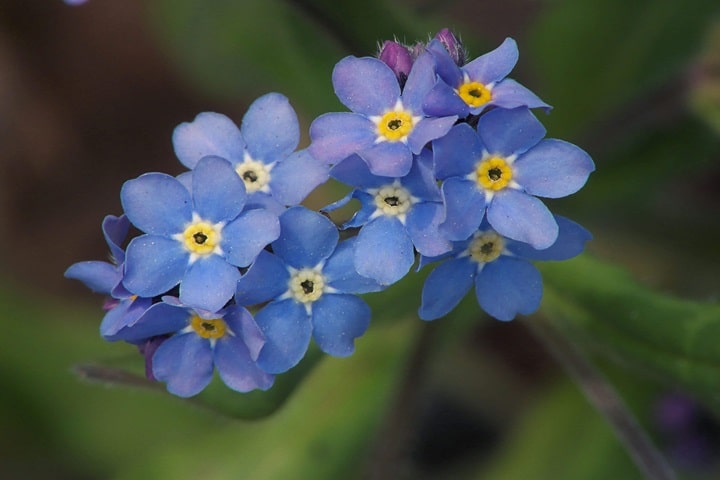
Forget-me-nots are also great self-seeding plants These biennials can grow everywhere if you allow them to self-seed. They can look particularly wonderful when allowed to self-seed among tulips and other spring flowering plants, creating a beautiful blue froth between other plants. The plant grows well and should self-seed reliably in areas of full sun, partial or dappled shade. And can thrive in most soil types.
9. Papaver rhoeas
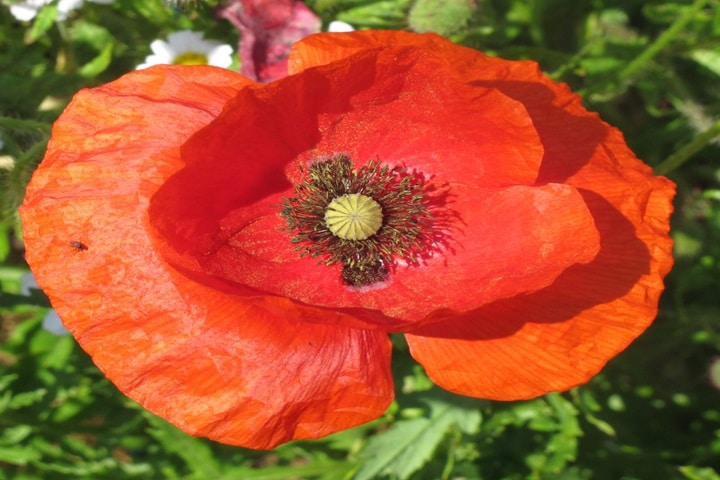
Common poppies, or field poppies may not have blooms that last for long. But once the flowers fade, the seeds are produced and these can reliably germinate and pop up in your garden year after year. They are wonderful as part of an annual wildflower meadow alongside several other annual flowering plants of cornfields that should also self-seed fairly reliably.
10. Verbena bonariensis

Verbena bonariensis and other Verbenas thrive in a full sun position, in a soil that is moist but well-drained. When they are happy in the garden setting these perennials can also self-seed readily.
Give these self-seeding plants a go too…
- Cerinthe
- Eschscholzia californica
- Erigeron
- Eryngium
- Lunaria annua
- Lychnis coronaria
- Meconopsis cambrica
Self-seeding Edibles
Many of the herbs, fruits and vegetables that you grow may also well self-seed if you give them the opportunity to do so.
This is at one and the same time something we sometimes need to look out for and prevent, and a beneficial thing of which we can take advantage in our gardens.
Self-seeding in the vegetable garden can sometimes be a problem because we want to practice crop rotation and avoid the build up of pest and disease problems that comes from growing certain crops in the same beds year after year.
However, ‘volunteer’ plants can allow us to retain annuals and biennials with no extra work, and obtain small additional yields from our growing areas.
11. Coriander
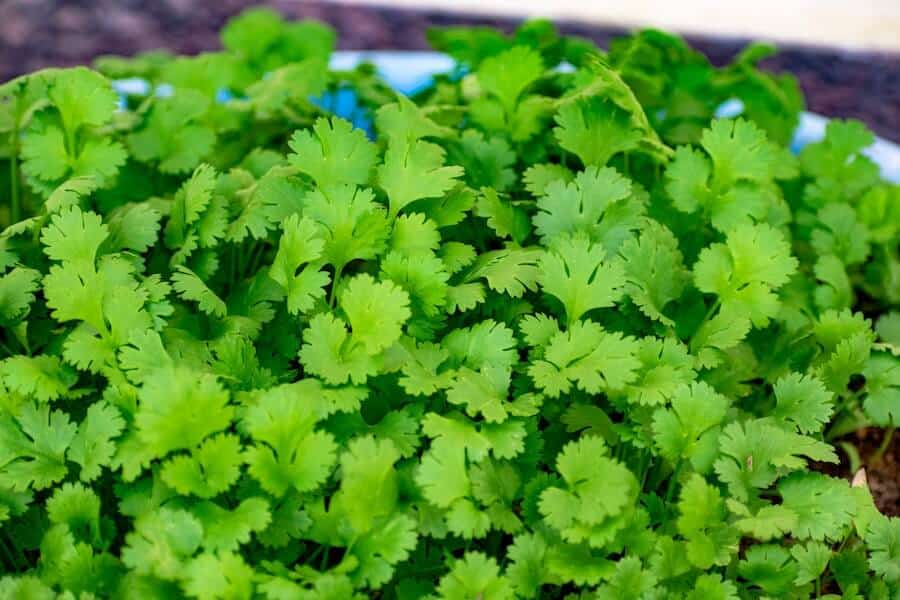
Coriander can be grown either for its leaves or for its seeds. When grown for its seeds, it can also be an attractive flowering plant which looks just as good as many plants commonly cultivated for ornamental beds and borders. And if you do not collect all the seeds for use in your kitchen, these can disperse, and new plants can often emerge. Here is how to grow coriander in a polytunnel.
12. Parsley
Another herb that is often a very reliable self-seeder is the biennial, parsley. It will typically only flower and set seed in its second year as a biennial, but when it does so, will often drop seeds so that new parsley grows up and remains in more or less the same spot over multiple years.
Dill, fennel and chamomile are a few other herbs that can also reliable self seed in the right setting.
Here is how to grow parsley in a polytunnel.
13. Amaranth

What is amaranth? Amaranth and the related quinoa are other reliable self seeders in my own polytunnel and even though I save most of the seeds to eat or sow, some inevitably spill and I let the new plants ‘volunteer’ the following year between other crops.
14. Radishes
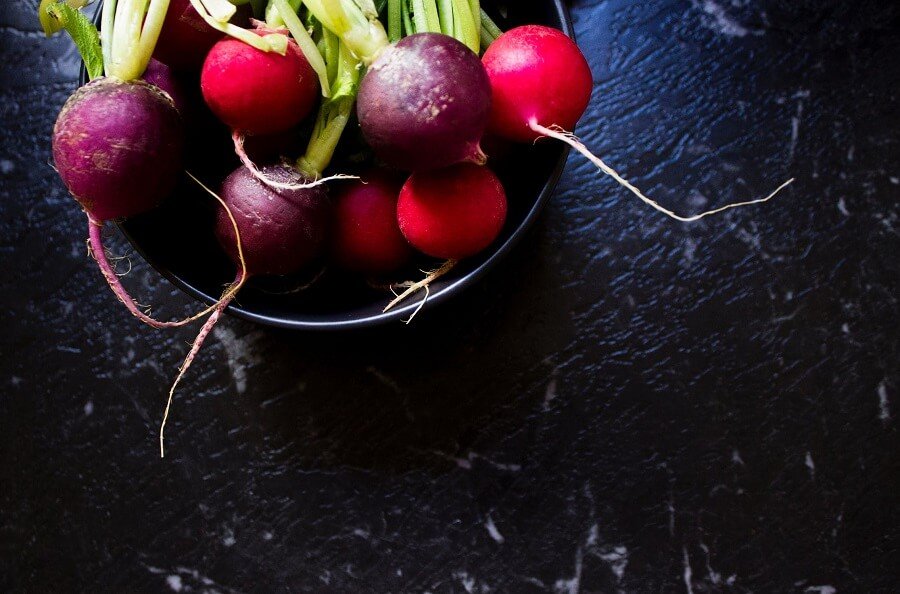
Radishes are one other crop that I let set seed – in part for the edible seed pods that they provide. And there always a few ‘volunteer’ radishes that pop up around plants that I have allowed to flower and set seed and I allow these to grow to provide a little bonus food in the vegetable garden. Here is how to grow radish in a polytunnel.
15. Rocket, lettuce, mustards

Let some salad leaves flower and go to seed and they can often produce large quantities of seeds and in the right conditions, you will often find new plants popping up and providing more salad leaves the following year. And quick crops like these usually won’t be too detrimental to whatever is growing next in the same growing area, and can be harvested before the other plants need the space.
Self-seeding Companion Plants
Many self-seeding flowers are among the best flowering companion plants for your vegetable garden. Here are a few good examples:
16. Borago officinalis
This is an annual that can self-seed very readily in the right setting, and so remain in your garden for years even though individual plants live only a single growing season. It is an excellent plant for a vegetable garden, as well as being attractive, where self-seeded plants can be retained as companion plants, bringing in pollinators and predatory insects for pest control. The flowers are edible too.
17. Calendula
Calendula, sometimes called pot marigolds, are an easy to grow and self-propagating companion plant that can be of benefit to many common crops. They will often pop up each year among other crops proving a boon to bees and other pollinators.
18. Marigolds
Tagetes marigolds, French marigolds in particular, can also self seed as long as the conditions are right. Seeds are usually produced in abundance, so you can potentially let some self-seed while collecting some to sow elsewhere in your garden. These are a very useful companion plant that it can be good to have all over the place.
19. Nasturtiums
Nasturtiums are another excellent companion plant, working well as a trap crop for pests that plague members of the squash family, for example. It is best to collect the seed and resow when these grow outdoors in chillier gardens. But in warmer locations, such as in a polytunnel, they should pop up on their own each year.
20. Chickweed
Weeds of vegetable plots are, of course, also prolific self-seeders, which can sometimes be a bit of a pain. Some weeds, however, can be beneficial and chickweed is one example. An edible in its own right, it can also be useful as a groundcover or living mulch around other crops. So there are some places where it can be beneficial to allow it to grow.
The Best Self-seeding Plants for Shade
In addition to the angelica, yarrow, foxgloves, lamiums and aquilegia mentioned above, some other plants that can self-seed well in a shady spot include primroses, Smyrnium perfoliatum and Solomon’s seal, to give just a few examples.
When NOT to Allow Self-seeding
Obviously, we should be cautious about allowing any non-native species to self-seed prolifically, especially where they may escape into the wider environment. In addition, as mentioned above, we should be careful about self-seeding where we need to maintain crop rotation in a vegetable garden.
And one warning about self-seeding…
Be aware that allowing self-seeding can allow weeds to get a little more established before you can tell them apart from plants that you want. But on the whole, it is possible to allow self-seeding and welcome beneficial wild plants without letting your growing areas get overcome with weeds.
FAQs
What is self-seeding?
Self-seeding is when plants naturally drop seeds after flowering, which then germinate and grow into new plants without human intervention.
Do biennial plants self-seed?
Yes, biennial plants can self-seed, completing their life cycle over two years and often leaving behind seeds in the first year that grow the following year.
What are the self-seeding blue flowers?
Self-seeding blue flowers include plants like forget-me-nots, cornflowers, and borage.
How do you encourage self-seeding?
To encourage self-seeding, avoid deadheading all the flowers, allow some seed heads to mature fully, and provide a suitable bare soil patch for seeds to fall and germinate.
Sources
Parkinson, A., (2023) Eight New Year’s resolutions for your garden in 2024. The Telegraph. [online] Available at: https://www.telegraph.co.uk/gardening/problem-solving/new-years-resolutions-for-your-garden/ [accessed 07/02/2024]