

Sometimes in a garden it can be fun to grow fruits and vegetables with a different hue. Purple vegetables are not only attractive, but healthy too. There are a wide range that you might like to consider growing in your garden.
What Makes Purple Vegetables Purple?
Purple vegetables are purple because they contain a group of pigments known as anthocyanins, which are responsible for creating purple, bluish or deep red hues in plant matter. These anthocyanins are a type of flavonoid, also belonging to a larger group of plant chemicals known as antioxidants.
Antioxidants work in our bodies to destroy free radicals, which occur naturally in our bodies and enter our bodies from exposure to certain unhealthy things. By eating as wide a range of different plants as possible, we consume a range of antioxidants which help to keep us safe and healthy and help us to avoid unnecessary cell damage.
This explains why we should not just eat our greens, but eat vegetables with other hues too.
Do Purple Vegetables Taste Different?
Purple vegetables may look different – but do they taste different too? The truth of the matter is that the anthocyanins in purple vegetables do not usually alter their taste much, if at all.
So you will typically find that in most cases, purple vegetables taste just the same as their green or other coloured counterparts.
One exception to this, however, are purple carrots, which, while raw, can often taste more woody and peppery than their orange, yellow or white counterparts.
Growing Demand
In spite of the fact that they often taste no different, purple vegetables are of increasing interest not only to those looking for ornamentally appealing additions to their gardens, but also to ethical and health-conscious consumers who are aware of the benefits of selecting more unusual heritage crops, and the health benefits of these colourful vegetables.
Health Benefits
Purple vegetables, rich in anthocyanins, should be included in our diets because, as mentioned above, these anthocyanins are antioxidants, helping to reduce cell damage and protect us from a range of chronic diseases.
A diet that is rich in these chemical compounds may help to prevent inflammation, protect against cancers, heart disease and type 2 diabetes, and benefit our memory and overall brain health.
25 Purple Vegetable Varieties to Consider
If you would like to grow purple vegetables in your garden to add to your diet, here are some of the options that you might consider:
1. Purple Amaranth
Amaranthus subspecies and cultivars with purple leaves are a good and healthy leaf-vegetable. Amaranth can be grown both for its leaves and for its seeds, and there are varieties with purple leaves as well as green ones. Purple amaranth can also be an ornamental plant for a garden.
There are several Amaranthus species which have cultivars with purple or deep red leaves, including Amaranthus cruentus, also known as Amaranthus paniculatus or Amaranthus speciosa.
2. Purple Artichoke

Purple globe artichokes are sometimes said to have a subtly different flavour from their green counterparts, slightly nuttier and more earthy. But this flavour difference is very small and not everyone will be able to tell the difference. Some argue that there is no taste or texture difference at all.
Some varieties of artichoke with purple tinged or entirely purple florets include ‘Violetto di Chioggia’, ‘Purple de Provence’, and ‘Carciofo Violetto’.
3. Asparagus

Purple asparagus is also said to have a subtly different taste to its green counterpart. Purple asparagus spears are said to be slightly sweeter and more tender. Note that they are only purple when raw or only briefly cooked and will turn green when they are fully cooked.
‘Pacific purple’, from New Zealand, is the most commonly available purple asparagus in the UK, though you might also be able to get your hands on other varietals including ‘Erasmus and ‘Purple Passion’.
4. Beans
There are a huge range of green beans that actually have green rather than purple pods, and many of these are excellent choices for home growers. French beans , runner beans and other beans commonly grown in UK gardens can also have purple pods.
These not only provide nutrients and taste good, they can also be extremely attractive ornamental plants for your garden. They can look good whether you grow them in a vegetable patch or in an ornamental bed or border.
Try, for example, French beans ‘Amethyst’, ‘Blauhilde’, or ‘Purple Teepee’. Or purple runner beans like ‘Black Knight’ or ‘Chapman’s Purple’.
Of course, there are also many beans that provide purple beans within their pods, some of which can be used fresh but any of which are dried and used as a pulse.
5. Beets
Beetroots are of course another vegetable well known for having a deep red or purplish hue. Some varieties have roots with a more deep purple hue than others, while some are more red, or pink.
Interestingly, unlike many of the other purple vegetables on this list, the purple colour in beetroot does not come from anthocyanins. Rather, it comes from betalain pigments, which replace anthocyanins in some plants.
Betalains are also healthy antioxidants, however, and can also have an extremely beneficial impact on our health.
As well as producing the root vegetable, beetroots also produce edible leaves, and with some varieties these can also have purplish rather than greenish hues.
6. Purple Pak Choi
Pak choi, delicious in salads or stir-fries, is another leaf vegetable that can come in purple as well as in green. Purple pack choi leaves will retain their purple hue if used in salads or cooked just lightly, but will tend to turn green when cooked for longer.
This and a number of other Asian greens can actually be purple leaved, and these make a wonderfully easy cut-and-come-again crop, or can be left to grow to maturity. ‘Red Choi’ is one variety with an award of garden merit from the RHS that you might like to consider.
7. Broccoli
Broccoli can also be purple in hue – both in the florets and sometimes in terms of the leaves too. You can get purple-sprouting broccoli, or purple Calabrese varieties.
Try purple-sprouting broccoli varieties ‘Cardinal’, ‘Claret’,‘Mendocino’,‘Red Admiral’, Red Arrow’, ‘Red Fire’ and ‘Red Spear’, all with an award of garden merit from the RHS.
For purple large-headed broccoli, or Calabrese, you might consider varieties such as ‘Purple Rain’ or
‘Miranda’ for example.
8. Purple Brussels Sprouts
Brussels sprouts can also be purple as well as green. These not only look interesting and attractive in your garden but can also have a slightly sweeter and less pungent flavour than green ones.
The colour of purple Brussels sprouts is retained when they are cooked too, which means that they can also look good on the plate – bringing colour and variety to mid-winter meals. You can find varieties such as ‘Red Ball’ ‘Red Bull’ and ‘Rubine’ in the UK.
9. Purple Cabbage
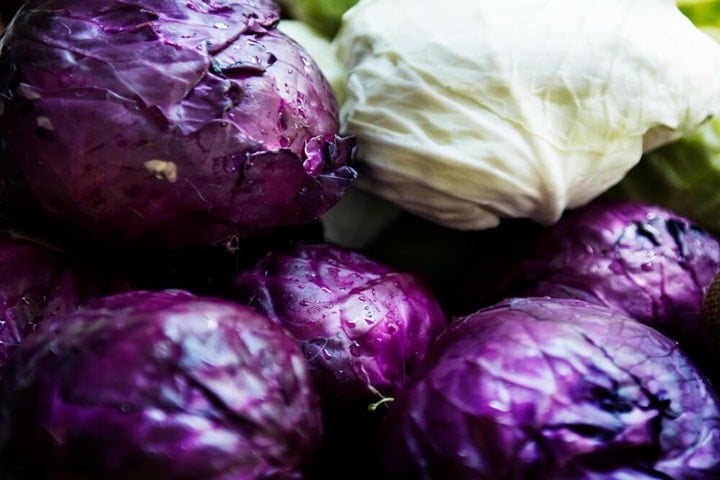
Cabbage, of course, also comes in purple or reddish hues. The colour or red or purple cabbages can differ depending on the pH of the soil where they are grown. On the whole, they will be more reddish in acidic soil, and more purple where the pH is neutral, and more yellowish green in alkaline soil.
Because of this property, of changing with pH, the juice of red or purple cabbages can be used as a homemade pH indicator.
10. Carrots

Carrots that are bright orange of hue are typically most familiar to most consumers. But keen gardeners may well already know that carrots come in a range of hues, and that modern orange varieties came after the originals which were usually purple, yellow or white.
Purple carrots from a range of heritage varieties can look good and taste good too – though they do tend to be less sweet and can often have a more woody texture than modern orange carrot varieties and carrots of other hues.
Some purple carrots are purple only on the outside, and have orangey or paler colour on the inside. Varieties of this kind include ‘Dragon Purple’ for example, which look like carrots would have done when first domesticated thousands of years ago.
11. Cauliflower
Some cauliflowers can be found with heads that have a purple hue. Purple cauliflowers may have a subtle taste difference when compared to white cauliflower but broadly speaking they taste much the same, but deliver additional health benefits due to the anthocyanin they contain.
Some purple cauliflower varieties include: ‘Di Sicilia Violetto’, ‘Graffiti’ and ‘Violet Queen’ to name just a few examples.
12. Chard
Chard varieties such as rainbow chard are often known for the varied colours of their stems. Many varieties of chard have green leaves but there are some which have bronzish, reddish or purple leaves too.
The colours of the stems and leaves of chard do not make a difference to their taste. But choosing a range of different chards with different leaves and stems can add antioxidants to your diet while also visually enhancing your garden.
13. Eggplant
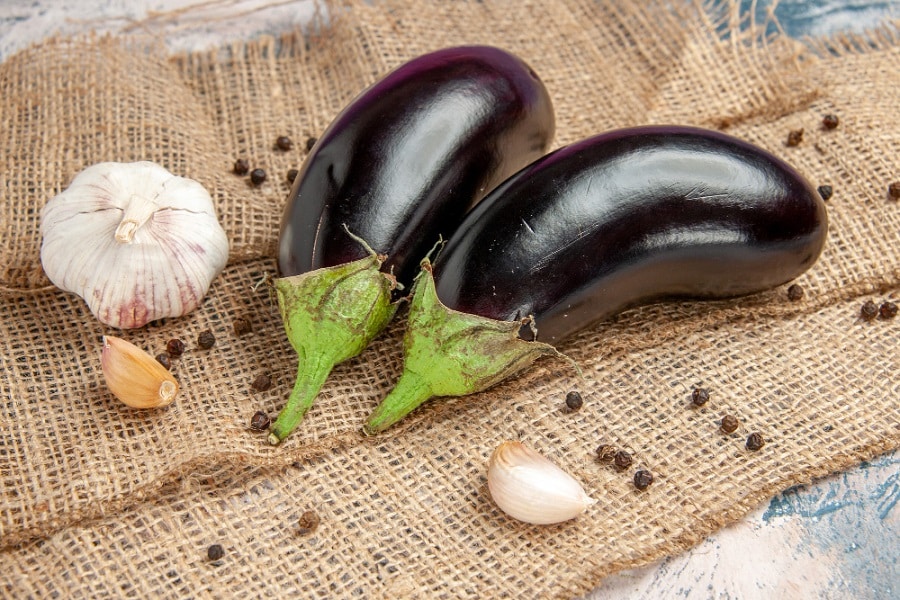
Eggplant or aubergine is of course one vegetable (technically a fruit) which can be purple in hue. These varieties are ready when they are a deep purple, with a rich, glossy sheen.
Eggplants or aubergines as they are usually called in the UK, are not the easiest crop to grow, because they need a long, hot summer to do well. But if you have a polytunnel or greenhouse you can grow them successfully in the UK.
‘Bonica’, ‘Galine’ and ‘Kaberi’ are some recommended deep purple aubergine varieties to grow in the UK.
14. Blue, Red or Purple Kale

Returning to the cabbage family, kale also offers plenty of blue, red or purple varieties that help you to ring the changes and incorporate plenty of antioxidants into your diet.
There are numerous varieties of purple kale that can look excellent as ornamental plants and can be equally at home among flowers in a flowering border as they are in a vegetable garden. These are top edimental plants that also offer easy and often abundant yields of leafy vegetables.
‘Redbor’, ‘Midnight sun’ and ‘Red Russian’ are just a few options to consider growing in your garden. Some have purple ribs and/or veins, some are deep purple all over the leaves. These can bring a lot of variety to your garden.
15. Purple Kohlrabi

Another member of the cabbage family. Kohlrabi is better known in other parts of Europe than it is in the UK. The plant is grown primarily for its bulbous stem, which is the part eaten as a vegetable either raw or cooked.
These stems can be purple in hue as well as green. The purple stems still tend to be green or white on the inside, though they can be a deep purple on the outside. There are a number of interesting purple kohlrabi heritage varieties to choose from.
16. Lettuce
Of course, there are a huge range of lettuce types and varieties to consider growing in your garden and these varieties are definitely not limited to those that are green. There are a range of purple or red lettuce types to consider to add more variety to your salads throughout the year.
17. Orach
Atriplex hortensis rubra, red orach, is another leafy vegetable that can have reddish to purplish hues. This is another salad crop or spinach substitute that can bring visual appeal to your vegetable garden, or which can bring edibles into ornamental schemes in your garden. It has a mild flavour like chard or spinach and the leaves can be used in all of the same ways.
18. Purple Onions

Red onions, also sometimes referred to as purple or blue onions, are the same species as typical white onion bulbs, but they have reddish purple skin and pinkish-purple hues in layers throughout.
19. Peas
In addition to finding a huge variety of peas with green pods, you can also find peas which have purple pods too. ‘Shiraz’, ‘Blauwschokker’ and ‘Purple Magnolia’ are just a few examples.
20. Peppers
Peppers have fruits in a range of hues. Some with purple fruits include ‘Purple beauty’, ‘Purple tiger’, ‘Hot Purple’ and more…
21. Purple Potatoes
Potatoes can also be purple. Some have purple skins, some can be purple all the way through. ‘Salad blue’ and ‘Vitelotte’ are a couple of examples.
22. Purple Spinach
Like the other leafy greens on this list, it is also possible to find purple varieties of spinach, both the perennial spinach and true spinach varieties.
23. Purple Sweet Potatoes

Purple sweet potatoes or purple yams are tubers of Dioscorea alata. There are also purple varieties of the common sweet potato, or Ipomoea batata. There are also Ipomoea varieties with purple leaves.
24. Radishes
Radishes come in a wide range of hues, and many have a reddish or purplish colouration. Sometimes they are purple on the outside, sometimes they can be more purplish all the way through.
25. Swedes & Purple Turnips

Swedes and turnips can also have some purplish colouration, though frequently the colour is only on the outside and the flesh is yellowish or white within.
Ways to Eat Purple Vegetables
To gain the most benefits from the anthocyanins or other antioxidants that they contain, many of the purple vegetables on the list above are best eaten raw or lightly cooked, though of course how you will eat purple vegetables very much depends on the specific vegetable in question.
FAQs
What is the purple root vegetable?
The most common purple root vegetable is the beetroot, but there are also other purple root crops including purple carrots, radishes, turnips and more…
What are purple vegetable gardens?
Purple vegetable gardens can contain many of the purple vegetables listed above including purple cabbage family crops and other leafy vegetables, along with root crops, tubers and more…
Sources
BBC Good Food. (2020) Stir-Fry Recipes. [online] Available at: https://www.bbcgoodfood.com/recipes/collection/stir-fry-recipes [accessed 22/07/24]