

Pressure Canning Garden Produce Safely For Sustainability and Convenience
Pressure canning is not something that is particularly common here in the UK, though in the US and elsewhere it is a much more prevalent method of food preservation. Though this method of preservation does require special equipment, it is a good thing to consider – especially if you are someone who grows their own food at home.
Canning is sometimes called bottling too, though both canning and bottling are misleading terms, because the food is not preserved in either cans or bottles, but rather in glass jars, which go through a process of heating in either a water bath or pressure canner.
Why You Should Be Canning Your Garden Produce
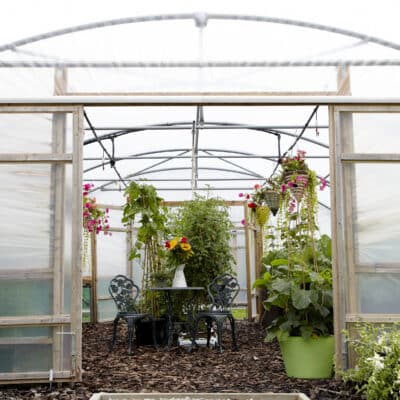
If you have a polytunnel, then you will already be well aware that with an undercover growing area, you can potentially grow and eat from your own garden all year round – not only in the summer months.
But even when you can grow food to harvest through the coldest part of the year, it is still often extremely beneficial to be able to preserve and store food from the main growing season so that you can enjoy a more varied diet over the leanest part of the year, and also be freer from the restrictions of seasonal eating.
Canning is a method of preservation that allows you to enjoy many of the tastes of the summer throughout the rest of the year. And as long as you choose the right canning method for the food you want to preserve, you can store gluts of food safely without taking up a lot of space in a freezer.
Canning can also provide some convenience in modern, busy lives. Since food in cans is stored at room temperature, you don’t need to worry about defrosting things before they can be eaten.
And, with a pressure canner you can preserve not only individual ingredients but also fill jars with multiple ingredients that can give you finished meals, or significantly speed up the time required for meal preparation.
Pressure canning is a method of preservation that uses a pressure canner to superheat steam to get the internal temperatures of the jar contents much higher than can be achieved with any amount of direct heating of their contents.
Though pressure canning requires up front investment in the equipment you will need, long term, as you use your equipment each year, it can be a very sensible investment that can save you both money and time.
What Garden Produce Can You Can?
High-acid foods can be canned using the method known as water bath canning. This method involves using a large pan of water brought to the boil to process jars filled with the produce you wish to preserve.
Fruit jams, jellies and chutneys, for example, and tomato recipes, can be canned using this method. In the UK, most traditional home bottling usually involves ‘open kettle’ processing . Jams and other preserves are made, then just placed into sterilized jars.
But the scientific consensus is that the techniques, which involve further processing of the bottles is the best and safest way to preserve food. Food safety is paramount when preserving food at home.
But not all foods are suitable for water bath canning, and lower acid foods, including many fruits and vegetables grown in kitchen gardens, must be heated to higher temperatures. That requires specific processing times in a pressure canner.
Pressure canning is a method you can use to can low-acid fruits and vegetables, beans, broths, meats and more… and these methods do not rely on the sugars of vinegars of many traditional preserves but on the scientific process of heating, and sealing food in air-tight jars.
Pressure Canning Equipment
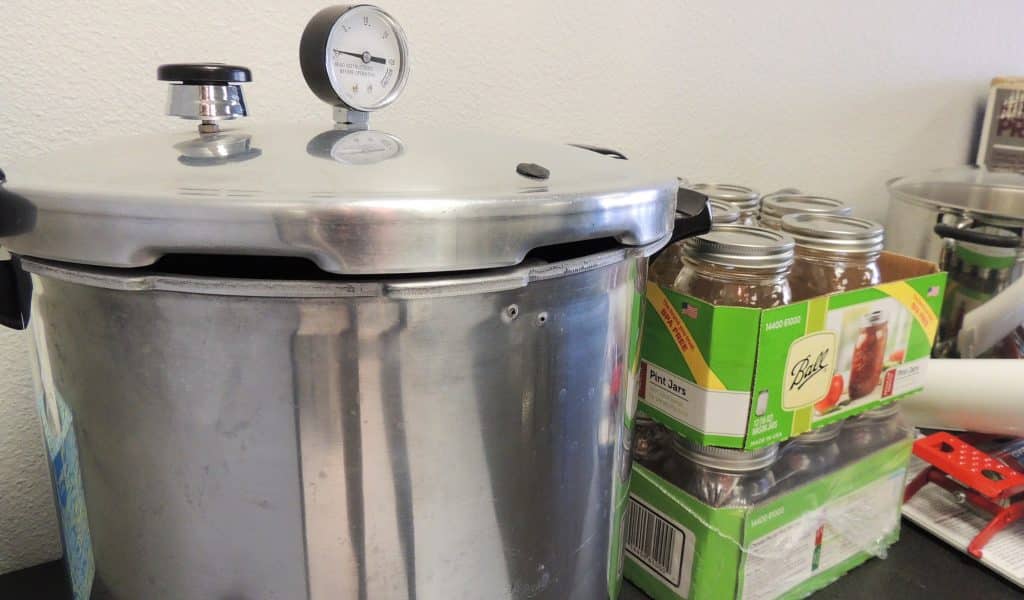
The first thing that you will need if you are interested in pressure canning is a pressure canner. A pressure canner is not the same as a pressure cooker – though pressure canners can also be used as pressure cookers, and for water bath canning too. So though a pressure canner can be expensive, these can do triple duty for those who like to preserve and cook a lot of their own food.
Presto pressure canners are a common make, and the one I myself own. Though there are of course several other brands to consider.
If you want to pressure can, you also need preserving jars. Though some will use screw top jars due to the cost of the jars with two part lids commonly used in canning here in the UK, this is not recommended. Look for tried and tested brands like Ball, Mason, Kilner or Weck to make sure you can rely on these to preserve food safely.
A jar lifter is another useful piece of equipment, which allows you to lift the jars out of the hot water after processing. And you may wish to invest in other tools or utensils that make the process a little easier.
Once you have all the equipment ready, I would also highly recommend that you purchase a book or two on home canning. Since it is very important to follow scientifically tested recipes and to follow the process to the letter.
Pressure canning is not something to be scared of. But it is something to treat with caution and respect so as to avoid any accidents or problems.
Preparing Your Garden Produce For Canning
Learning about home preservation methods like pressure canning also of course involves making sure that you have the gardening knowledge and know-how to grow healthy crops, and harvest them at the correct times. It also involves making sure that you understand how to prepare different crops for canning.
Sometimes, you might bring produce straight from the garden, then simply give it a wash before packing it into jars. At other times, some more prep work and cooking stages will be required before the food ends up in the jars and is ready for processing in your pressure cooker.
Either way, it is generally best to make sure that produce from your garden is canned as soon after you harvest as possible.
Canning Methods
The canning method that you choose will very much depend on what you are working with. With a number of different fruits and vegetables, there will be a couple of different options when it comes to filling your jars.
There is the hot pack method, which involves heating the contents before placing it into pre-warmed jars. And there is a cold/ raw pack method, which involves placing the fruit or vegetables raw into cold jars.
It is important to follow a recipe from beginning to end, and to understand that how you fill your jars will have a bearing on the next stage of the process, and on the finished result. With some fruits and vegetables there can be pros and cons to both of these methods. You may wish to try different recipes to see which you and your family like best as often if can come down to personal preference about texture, appearance and taste.
How To Pressure Can Garden Produce
- Think about which homegrown produce you would like to preserve.
- Find a pressure canning recipe from a trusted source.
- Prepare your pressure canner and get your jars and lids ready.
- Harvest, wash and otherwise prepare the produce you wish to can, making sure that you follow the instructions regarding the sizes of chopped pieces etc. in the particular recipe you are following.
- Note whether you are using a hot pack or raw pack recipe and fill jars accordingly.
- Make sure that you de-bubble the jars (stir around to remove air pockets), and leave the headspace (room at the top of the jar above the food) dictated in the recipe.
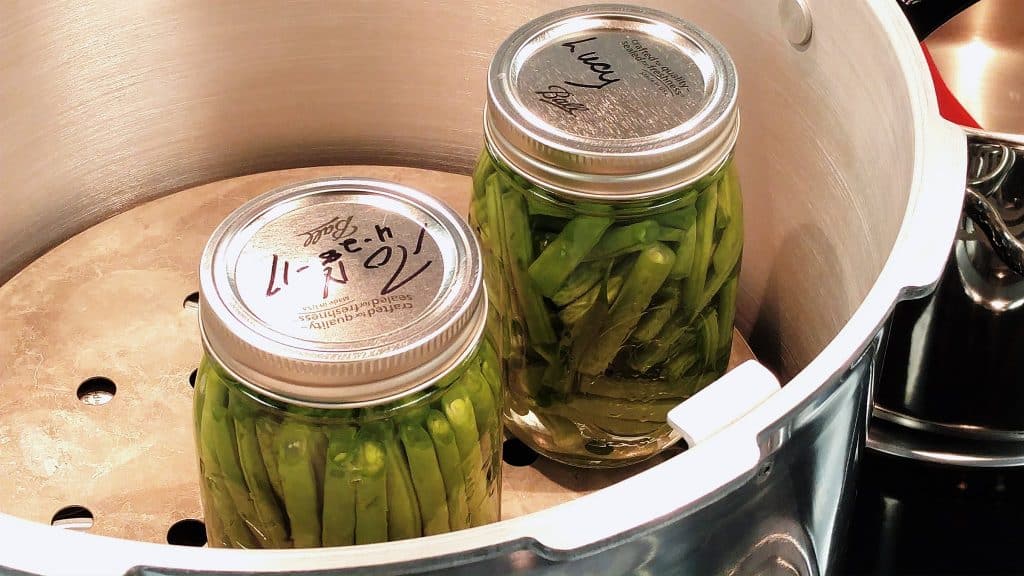
- Next, it is time to process your jars in the pressure canner. (The word ‘process’ in canning refers to the steps that we take to safely preserve food for later use. The goal in this canning stage is to heat jars to the required temperatures and for the correct period of time to kill spoiling or pathogenic micro-organisms, inactivate enzymes, and vent excess air.
In pressure canning you:
- Check and triple check the pressure and processing time required for your recipe. (Make sure you do take your altitude, and also the size of your jars into account.)
- Add the amount of water recommended for your pressure canner. (You can also add a few squirts of vinegar so your cans and canner stay sparkling clean).
- Load the filled jars. (For hot pack recipes, have the water ready simmering around 180F (80C). For raw pack, have the water starting to steam at around 140F (60C).)
- Put the lid on and lock it down.
- If you have a modern canner, leave the weighted gauge off, in older canners, leave the petcock open.
- Crank up the heat and get the water boiling.
- Keep boiling until you start to see steam.
- Once you see steam coming out of the canner steadily, allow it to vent for 10 minutes. (Note: venting time may be longer for some recipes, so be sure to follow instructions.)
- Once the venting is done, close up and bring the canner up to pressure.
- Only start timing the actual processing time when the required pressure is reached.
- Lower the heat to maintain pressure and regulate it to keep pressure where it is needed.
- At the end of the processing time required, turn off the heat.
- Let the pressure drop naturally, still fully closed up. Do not try to rush the cool down. Natural cooling is vital for food safety, and for the quality of your canned food. Bringing the pressure back down too quickly may also cause lids to buckle or seals to breach.
- Once the pressure is back at zero, wait 10 minutes before removing the lid. Then you may remove your jars.
Once you try pressure canning, you are sure to find more and more recipes that you want to try.
References:
https://www.healthycanning.com/why-old-british-method-of-bottling-is-unsafe