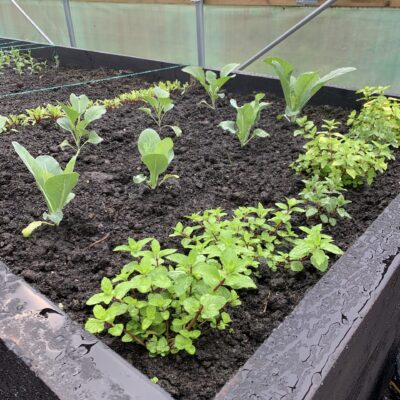


This is the month when you really switch over from growing slow-growing winter greens to the full-fledged joyous growth of the spring. April is one of the busiest and most exciting months in a polytunnel, as seeds are sown and plants begin to grow swiftly as the warmer weather arrives. Peas and broad beans that over-wintered in your polytunnel will begin to grow rapidly in a polytunnel in April, as will any greens that are on the go.
Remember to thin carrots, beetroot and any other under-cover crops that need it, which they may do by the end of the month. Continue to successional sow your favourite crops so you will have a near continuous supply. You may have some new potatoes under cover if you have the space. It is not too late to plant potatoes in your polytunnel. If you already have, towards the end of this month, it will be time to earth them up so as to maximise your yield.
What to Do in a Polytunnel in April
April may be famous for it’s showers… but they’re not something you need to worry about inside your rain free polytunnel. In fact, under cover it should feel more like midsummer, so there will be plenty to keep you occupied while others are bemoaning the clouds!
Make sure everything is adequately watered inside the Polytunnel…introducing an irrigation system helps enormously, especially something that does all the hard work for you like Big Drippa or garden watering systems on a timer.
Make sure you open doors and consider ventilation as it is important even now, this early in the year. Good air flow is crucial to successful polytunnel growing. In addition to opening the doors of your polytunnel, it is also a good idea to be careful when it comes to spacing plants. Adequate spacing will help prevent overcrowding problems later in the year.
Gardening Tips for Your Polytunnel In April
1. Place a stick alongside young plant stems to help guide water straight to the roots.
2. Get a good system going for potting on seedlings as they start springing up. Top your raised beds up with fresh compost.
3. By the end of the month you can often do some serious planting out of things like tomato plants. If you’re planting out lettuce, or other leafy greens, remember to leave enough access for easy watering, weeding, feeding and harvesting.
4. Plant marigolds near the Polytunnel doors to help attract insects to pollinate other crops and add a splash of colour too. Make sure that you put a protective ring of copper around them as slugs just love them. A marigold in a pot can be moved, freeing bed space for something else.
5. Get on top of the weeding and weed little and often – things begin to grow quickly as the weather warms.
6. Before the summer season arrives and your covered-space fills rapidly, make sure you have all the structures, framework, staging and supports that you will need in place, as it is nigh on impossible to place things without damaging anything once your plants take over the space.
7. Wait for warmer temperatures before being tempted to transfer summer crops from your windowsills into your polytunnel. Look at the weather forecast, and consider the climate (including the last frost date) in your area.
Sowing + Growing
This month you can sow – Basil, Cucumber, Melon, Courgettes, Summer squash, Broad beans, French Beans, Carrot, Peas, Broccoli, Cabbage, Strawberries, Radishes……just to name a few. When exactly you can begin to sow seed in your polytunnel rather than on your windowsills indoors will depend on where you live in the UK and on the weather conditions in a given year. Those in the south of England will be able to sow far earlier than those living in the north of Scotland or in mountainous regions. If in doubt, it is usually best to hold off a little longer to make sure that risk of frost has passed in your polytunnel.
Harvesting
The hungry Gap – did you prepare? If you did, you can expect –
Cauliflower, Spring onions, Turnips, Lettuce, Radish, Celery, Cabbage, Broccoli, Broad Beans and more. The ‘hungry gap’ is not as much of a problem with a polytunnel (and of course we have freezers now so can enjoy frozen produce from our polytunnel in April as we can throughout the year. But planning for the hungry gap is one of the most crucial elements in any gardener’s planting schedule. Plan ahead and you really can find abundant food sources in your polytunnel all year round.